ㅁ Add-on 가능: 고객의 요청에 따라 일정한 범위 내에서 Customization이 가능합니다. 자세한 사항은 문의해 주시기 바랍니다.
ㅁ 보고서에 따라 최신 정보로 업데이트하여 보내드립니다. 배송기일은 문의해 주시기 바랍니다.
한글목차
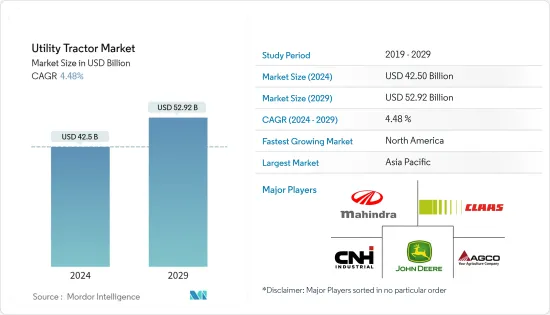
유틸리티 트랙터 시장 규모는 2024년에 425억 달러로 추정되며, 2029년까지 529억 2,000만 달러에 달할 것으로 예측되고 있으며, 예측 기간(2024-2029년) 중 4.48%의 CAGR로 성장합니다.
주요 하이라이트
유틸리티 트랙터는 프론트 로더 작업, 흙 만들기, 운반 등 다양한 작업에 사용할 수 있도록 설계되었습니다. 이 유형의 트랙터는 경작 및 무거운 물건을 견인하는 등의 농업 작업에 사용됩니다. 식량 수요 증가와 농업기계화의 보급으로 전 세계에서 농업에서 기계 사용이 증가하고 있습니다. 유틸리티 트랙터는 농가가 농업 과정을 쉽게 수행 할 수 있도록 도와줍니다.
유틸리티 트랙터는 35마력에서 100마력 범위의 부문으로 구성되어 있으며, 중소규모의 농업 작업을 위한 많은 소형 유틸리티형 트랙터를 포함합니다. 소규모 농가는 평균적인 농업용 트랙터보다 훨씬 작고 가격이 훨씬 저렴하기 때문에 소형 유틸리티 트랙터(40마력-70마력)를 점점 더 많이 채택하고 있습니다. 저렴한 비용에도 불구하고 소형 트랙터는 농가가 백호나 프론트 엔드 로더와 같은 농기계를 사용하여 많은 작업을 수행하여 인건비를 절약할 수 있도록 도와줍니다. 대형(41-50마력) 트랙터에 대한 수요 증가의 주요 이유는 단단한 토양 조건이지만, 인프라 및 건설 분야와 같은 비농업 분야에서의 사용 증가도 이 카테고리 수요 증가에 기여하고 있습니다. 이로 인해 유틸리티 트랙터 산업은 향후 수년간 성장할 것으로 예상됩니다.
유틸리티 트랙터는 프론트 엔드 로더, 백호 등 중요한 전방 또는 후방 부착물을 사용하여 적재 및 굴착을 수행 할 수 있습니다. 그럼에도 불구하고 조경, 파종, 건초 재배, 제설에도 사용할 수 있으므로 이 분야 시장을 전 세계에서 주도하고 있습니다. 인도의 농업기계화 수준은 2019년 40.0%-45.0%로 기록되었습니다. 소규모 및 한계 농가의 거의 80.0%가 5헥타르 미만의 토지를 소유하고 있으며, 농기계 보급이 늦어지고 있습니다. 인도 농업 부문에서 동물의 힘과 인간의 힘의 사용은 크게 감소하고 있습니다. 이들 중 상당수는 트랙터와 디젤 엔진과 같은 화석 연료로 구동되는 차량에 의해 구동됩니다. 이로 인해 전통적인 농업 공정에서 보다 기계화된 농업 공정으로 전환되었습니다.
인도의 기계화 수준은 중국, 브라질 등 다른 신흥 국가에 비해 낮은 수준이지만 확실히 성장 단계에 있습니다. 기계화 수준을 높이기 위해 인도 정부는 다양한 장비에 보조금을 제공하고 프론트엔드 에이전트를 통한 대량 구매를 지원하여 "균형 잡힌 농업기계화"를 추진하고 있으며, 이는 예측 기간 중 유틸리티 트랙터 시장을 강화할 것으로 예상됩니다.
유틸리티 트랙터 시장 동향
농장 기계화에 대한 관심 증가
정밀농업과 생산량을 늘리기 위한 농업 기술의 채택이 증가함에 따라 전 세계 최소 경작지에서 다용도 트랙터에 대한 수요가 증가하고 있습니다. 농기계 사용을 대규모로 장려하는 농업 교육 프로그램 증가도 트랙터 산업을 촉진하고 있습니다. 또한 일부 개발도상국 정부는 주요 농업 공정의 자동화를 지원하기 위해 보조금과 재정 지원을 제공합니다.
또한 다양한 기술 발전으로 GPS 및 텔레매틱스 시스템이 사전 설치된 최신 트랙터가 등장하고 있습니다. 세계 농업용 트랙터 시장은 자동 트랙터의 인기 증가와 농업용으로 사용할 수 있는 원격 모니터링을 위한 무선 연결의 확산으로 인해 견인될 것으로 보입니다.
현대 농업에서 농민의 소득을 늘리기 위해서는 농업기계화가 필수적입니다. 그러나 중국의 농작물 생산에서 기계 사용은 비효율적입니다. 2020년 중국농업대학(CAU)이 실시한 조사에 따르면 전국 농작물 재배 및 수확 기계화율은 71%에 달했습니다.
밀, 쌀, 옥수수의 기계화율은 각각 95%, 85%, 90%를 넘어섰습니다. 중국 정부는 농업기계화를 가속화하기 위해 기계 구매 및 기계 운영에 대한 재정 보조금, 개별 농민에게 기계를 제공하는 협동 조합에 대한 지원 등 농민들에게 기계 사용을 장려하는 일련의 정책을 내놓았습니다.
아시아태평양의 농가도 효율적인 농업의 요구를 충족시키기 위해 맞춤형 기능을 갖춘 유틸리티 트랙터를 원하고 있습니다. 따라서 소비자 수요를 충족시키기 위해 많은 국내외 농기계 제조업체는 미래 시장 성장을 가속하기 위해 다양한 농업 용도에 사용할 수있는 기술적으로 진보된 새로운 유틸리티 트랙터를 개발하고 있습니다.
2022년, 존 디어(John Deere)는 농가을 위한 Gtaor 유틸리티 트랙터를 출시했습니다. 오토트랙(AutoTrac) 보조 조향 시스템은 차량이 밭을 이동할 때 일관되고 반복 가능한 정확성과 효율성을 유지하여 운전자의 생산성을 향상시킵니다. 오토트랙을 통해 농가는 항상 주의를 기울이고 기계 설정과 다양한 밭 조건 제어에 집중할 수 있습니다. 농가는 유틸리티 트랙터를 사용하여 정확한 그리드 샘플링, 살포 및 밭 경계를 설정하는 데 사용합니다.
아시아태평양이 시장을 독점
인도에서는 값싼 노동력이 풍부함에도 불구하고 식량 수요가 증가하고 있으며, 특히 트랙터와 같은 농업기계화 도입이 증가하고 있습니다. 이는 중국도 마찬가지이며, 중국도 마찬가지로 농업기계화 추세를 보이고 있습니다. 여러 가지 이유로 인도와 중국의 농가는 기계화에 대한 관심을 높이고 있습니다. 그 이유 중 하나는 인구 증가와 도시화로 인한 식량 수요 증가로 인해 농업 생산성 향상의 필요성이 대두되고 있기 때문입니다. 또 다른 이유는 인건비 상승으로 인해 기계에 대한 투자의 비용 효율성이 높아졌기 때문입니다.
국내 다목적 트랙터 보급률은 인도 북부, 특히 펀자브, 우타르프라데시, 할리야나 주에서 높은 임베디드니다. 인도에서는 인도 정부의 농업 거시 관리 계획의 기계화 부분에 따라 농업기계화를 촉진하기 위해 보조금이 제공되며, 여기에는 최대 35 출력의 트랙터 구매에 대해 최대 30,000 루피까지 비용의 25%가 포함됩니다. -인도에서는 맞춤형 고용 서비스가 소규모 농가에 이익을 가져다주고 소규모 지주의 이익을 위해 다목적 트랙터를 운영하는 새로운 유형의 기업이들이 등장했습니다. 이러한 요인들은 예측 기간 중 이 지역 시장 성장으로 이어질 것입니다.
중국의 농업기계화 증가 추세의 배경은 농업 투자 증가와 정부의 농업기계화 추진입니다. 농업기계화에 대한 투자는 아시아태평양에서 다목적 트랙터에 대한 수요를 창출하고 있습니다. 중국 국가통계국 데이터에 따르면 중국은 2019년에 61만 7,700대의 트랙터를 생산했습니다. 대형 및 중형 트랙터는 점차 소형 트랙터로 대체되고 있습니다.
2019년 말까지 중국은 대형 및 중형 트랙터 444만 대를 포함해 총 2,224만 대의 농업용 트랙터를 보유하고 있습니다. 중국은 또한 농업용 트랙터와 같은 농기계의 90%를 고급 기계 생산에 중점을 둔 '중국 제조 2025' 계획을 도입하여 2020년까지 중국 부문 점유율의 3분의 1을 차지할 것으로 예상됩니다. 국산 트랙터에 힘을 실어주고 국내 농업용 트랙터 시장을 촉진할 것입니다.
다용도 트랙터는 농업 공정에 사용되며 Mahindra &Mahindra 및 John Deere와 같은 국내 대기업이 제품의 도움으로 이 지역의 농업 관행에 큰 기여를 하고 있습니다. 향후 수년간 시장 성장을 가속할 것입니다. 신흥 국가에서는 농민들의 가처분 소득이 낮고 인건비가 높기 때문에 35마력에서 100마력 사이의 트랙터에 대한 수요가 증가하고 있습니다. 농가는 농지의 크기가 작기 때문에 농업용으로 맞춤화된 소형 컴팩트/유틸리티 트랙터를 선호합니다. 또한 소형 트랙터로 인한 연료 소비 감소는 소규모 농가에 힘을 실어줄 수 있습니다.
유틸리티 트랙터 산업 개요
유틸리티 트랙터 시장은 고도로 통합되어 있으며, 소수의 기업이 시장 점유율의 대부분을 차지하고 있습니다. Deere &Company, CNH Industrial, AGCO Corporation, CLAAS KGaA mbH, Mahindra &Mahindra Corporation이 이 시장의 주요 기업입니다. 신제품 출시, 제휴 및 인수는 주요 세계 기업이 채택하는 주요 전략입니다. 혁신과 확장 외에도 연구개발에 대한 투자와 새로운 제품 포트폴리오 개발은 향후 수년간 중요한 전략이 될 수 있습니다.
기타 혜택
엑셀 형식의 시장 예측(ME) 시트
3개월간의 애널리스트 지원
목차
제1장 서론
조사의 전제조건과 시장의 정의
조사 범위
제2장 조사 방법
제3장 주요 요약
제4장 시장 역학
시장 개요
시장 촉진요인
시장 억제요인
Porter's Five Forces 분석
신규 진출업체의 위협
구매자의 교섭력
공급 기업의 교섭력
대체품의 위협
경쟁 기업간 경쟁의 강도
제5장 시장 세분화
지역
북미
미국
캐나다
기타 북미
유럽
독일
영국
프랑스
스페인
이탈리아
기타 유럽
아시아태평양
중국
일본
인도
기타 아시아태평양
세계의 기타 지역
브라질
남아프리카공화국
기타
제6장 경쟁 구도
가장 많이 채택된 전략
시장 점유율 분석
기업 개요
Deere and Company
CNH Global NV
AGCO Corporation
CLAAS KGaA mbH
Mahindra and Mahindra Corporation
Kubota Corporation
Escorts Group
Tractors and Farm Equipment Limited(TAFE)
Kuhn Group
Yanmar Company Limited
제7장 시장 기회와 향후 동향
KSA
영문 목차
영문목차
The Utility Tractor Market size is estimated at USD 42.5 billion in 2024, and is expected to reach USD 52.92 billion by 2029, growing at a CAGR of 4.48% during the forecast period (2024-2029).
Key Highlights
Utility tractor is designed for various tasks such as front loader work, soil cultivation, and transportation. This type of tractor is used for farming operations such as plowing and pulling heavy implements. Globally the use of machinery in agriculture is increasing due to increased demand for food and higher penetration of farm mechanization. Utility tractors help the farmer carry out the agriculture process with ease.
The utility tractors comprise a range of 35 HP to 100 HP segments, including many compact and utility-type tractors meant for small- to mid-sized farming tasks. Small-scale farmers are increasingly adopting compact utility tractors (40HP-70HP) as they are much smaller than the average agricultural tractors and priced much lower. Despite the low-cost, compact tractors can help farmers perform many tasks with the help of farm equipment, such as backhoes and front-end loaders, and save labor wage expenses. Although a key reason for the increasing demand for larger (41-50 HP) tractors is the hard soil condition, increased use in non-agricultural segments, such as infrastructure and construction fields, has also contributed to the increase in demand in this category, which will boost the utility tractors industry to grow in the coming years.
Utility tractors can work with significant front or rear attachments, like front-end loaders and backhoes, for loading and digging. Still, they can also be used for landscaping, seeding, hay cultivation, and snow removal, which drives the market for this segment globally. The farm mechanization level in India was recorded at 40.0%-45.0% in 2019. The penetration of farm equipment is slow, as almost 80.0% of small and marginal farmers own less than five hectares of land in the country. The agriculture sector in India has witnessed a substantial decline in the use of animal and human power in the agriculture sector. Many of these are driven by fossil fuel-operated vehicles, such as tractors and diesel engines. This has shifted from the traditional agriculture process to a more mechanized one.
Though the level of mechanization in India is lower than in other developing countries, like China and Brazil, it is certainly in a growing phase. To increase the mechanization level, the Indian government has been promoting 'Balanced Farm Mechanization' by providing subsidies on various equipment and supporting bulk buying through front-end agencies, which is expected to strengthen the utility tractors market during the forecast period.
Utility Tractor Market Trends
Growing Preference For Farm Mechanization
Precision farming and the increasing adoption of farm technology to boost production are driving up demand for utility tractors in minimum arable landholdings across the globe. The growing number of farm training programs promoting the use of agricultural machinery on a wide scale is also driving the tractor industry. Moreover, governments in several developing nations are providing subsidies and financial aid to help automate key agricultural processes.
Furthermore, modern tractors with pre-installed GPS and telematics systems have emerged due to different technical breakthroughs. The global agriculture tractor market is likely to be driven by the rising popularity of automated tractors and the widespread use of wireless connectivity for remote monitoring, which can be used for agriculture purposes.
Agricultural mechanization is essential to increase farmers' income in modern agriculture. However, the use of machinery for crop production in China is inefficient. According to a study conducted by China Agricultural University (CAU), Beijing, in 2020, the national crop planting and harvesting mechanization rate reached 71%.
The total mechanization rate of planting and harvesting exceeded 95%, 85%, and 90% for wheat, rice, and maize, respectively. To accelerate agricultural mechanization, the Chinese government issued a series of policies to encourage farmers to use machinery, including financial subsidies for machine purchases and machine operations and support for cooperatives to provide machinery for individual farmers.
Farmers in the Asia-Pacific region also seek utility tractors with tailored features to fulfill their needs for effective farming. So, to meet consumer demand, many international and domestic agriculture machinery manufacturers are developing new technologically advanced utility tractors which can handle various farming applications to push the market to grow in the future.
In 2022, John Deere US launched Gtaor Utility Tractor for Farmers. The AutoTrac-assisted steering system increases operator productivity by maintaining consistent, repeatable accuracy and efficiency as the vehicle moves across the field. With AutoTrac engaged, farmers can remain alert and focused on controlling machine settings and varying field conditions. Farmers use the utility tractor for precise grid sampling, spraying, and field boundary creation.
Asia-Pacific Dominates the Market
Despite abundant and cheap labor in India, there has been a growing demand for food, which has led to an increase in the adoption of farm mechanization, particularly in the form of tractors. This is also true for China, where there has been a similar trend toward mechanization in agriculture. For several reasons, farmers in India and China are increasingly turning to mechanization. One reason is the growing demand for food due to population growth and urbanization, which has led to a need for increased productivity in agriculture. Another reason is the rising cost of labor, which has made it more cost-effective to invest in machinery.
The penetration of utility tractors in the country is higher in North India, particularly in Punjab, Uttar Pradesh, and Haryana. In India, under the mechanization component of the Macro-Management of Agriculture Scheme, by the Indian government, there is a provision of subsidy to promote agricultural mechanization, including 25% of the cost limited to INR 30,000 for buying tractors of up to 35 Power-take-off (PTO) HP. In India, custom hiring services have benefitted smaller farmers, and a new breed of entrepreneurs who operate utility tractors for the benefit of small landholders has emerged. These factors will lead the market to grow in the region during the forecasting period.
The trend behind the increase in farm mechanization in China has been increased agricultural investments and the government's push toward farm mechanization. The investments in farm mechanization create the demand for utility tractors in the Asia Pacific. According to data from the National Bureau of Statistics of China, China produced 617,700 tractors in 2019. Large and medium-sized tractors gradually replaced small tractors.
By the end of 2019, China boasted of 22.24 million agricultural tractors, including 4.44 million large- and medium-sized tractors. China has also introduced the 'Made in China 2025' scheme, which focuses on producing 90% of its agricultural equipment with high-end machines, like agricultural tractors, holding a one-third share of their segments by 2020. This, in turn, boosts indigenously produced tractors and propels the country's agricultural tractor market.
Utility Tractors are being used for the agricultural process, and major players in the country are contributing to it, such as Mahindra & Mahindra and John Deere, with the help of their products, are contributing a lot to the agricultural practices carried out in the region to increase the market growth in the coming years. In developing countries, the demand for 35HP - 100HP tractors is high due to the low disposable income of farmers and high labor costs. Farmers prefer small and customized compact/utility tractors for agricultural purposes due to small farmland sizes. Moreover, lesser fuel consumption by small tractors helps to empower small and marginal farmers.
Utility Tractor Industry Overview
The utility tractors market is highly consolidated, with few players cornering most of the market share. Deere & Company, CNH Industrial, AGCO Corporation, CLAAS KGaA mbH, and Mahindra & Mahindra Corporation are major players in this market. New product launches, partnerships, and acquisitions are the major strategies the leading global companies adopt. Along with innovations and expansions, investments in R&D and developing novel product portfolios will likely be crucial strategies in the coming years.