헬스케어용 가상현실(VR) : 시장 점유율 분석, 업계 동향 및 통계, 성장 예측(2024-2029년)
Virtual Reality in Healthcare - Market Share Analysis, Industry Trends & Statistics, Growth Forecasts (2024 - 2029)
상품코드:1441568
리서치사:Mordor Intelligence
발행일:2024년 02월
페이지 정보:영문
라이선스 & 가격 (부가세 별도)
ㅁ Add-on 가능: 고객의 요청에 따라 일정한 범위 내에서 Customization이 가능합니다. 자세한 사항은 문의해 주시기 바랍니다.
ㅁ 보고서에 따라 최신 정보로 업데이트하여 보내드립니다. 배송기일은 문의해 주시기 바랍니다.
한글목차
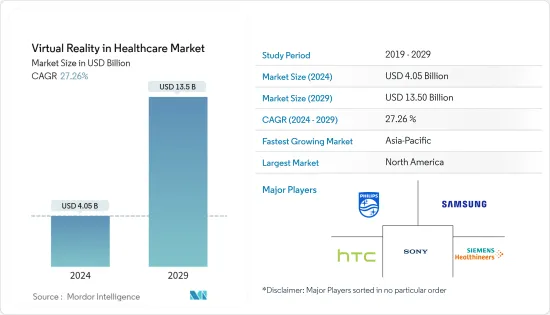
헬스케어용 가상현실(VR) 시장 규모는 2024년 40억 5,000만 달러로 추정되고, 2029년까지 135억 달러에 이를 것으로 예측되며, 예측기간(2024-2029년) 중 27.26%의 연평균 복합 성장률(CAGR)로 성장할 전망입니다.
주요 하이라이트
COVID-19 감염의 팬데믹 중 헬스케어 사업에서 가상현실 기술의 요구가 증가했습니다. 헬스케어용 가상현실(VR)을 사용하면서 의료 종사자들이 신형 바이러스의 영향을 더 잘 이해하고 연구할 수 있게 되었습니다. 의료 관계자는 환자의 몸에 질병이 미치는 영향에 대한 실시간 엑스레이 사진으로부터 인사이트를 얻는 기술에 의해 지원되었습니다. 예를 들어 Elsevier Public Health Emergency Collection이 2020년 8월에 발표한 연구에 따르면 VR 기술은 의사와 COVID-19 감염 환자 간의 상호작용을 줄이는 플랫폼을 개발하고 있습니다. 라이브 비디오 스트리밍을 통해 진행 중인 상황에서 모니터링 시스템을 개선하는 데 도움이 됩니다.
헬스케어 시장에서 기술의 이용 증가에 의해 팬데믹 후에도 시장은 급성장할 것으로 예상되고 있습니다. 그러므로 COVID-19는 팬데믹의 단계를 통해 그리고 팬데믹 후에도 조사 대상 시장의 성장에 큰 영향을 미칩니다.
헬스케어 기술의 진보와 디지털화, 환자 치료에 대한 가상현실의 응용 증가, 헬스케어 비용 및 의료 훈련 증가는 건강 산업에서 증강현실(AR) 기술의 성장과 채택을 촉진할 것으로 예상되는 기본 요인의 일부입니다. 이러한 기술은 수술, 진단, 재활, 교육, 교육 등의 헬스케어에 광범위하게 적용됩니다.
가상현실은 환자의 치료 능력을 높이기 위해 의료 종사자가 사용합니다. 전문가는 건강 상태를 신속하게 식별, 진단, 안내 및 치료할 수 있습니다. 예를 들어, 미국 FDA는 2021년 10월에 안구나 흐릿한 안약 대신 VR 헤드셋을 사용하는 약시(게으른 눈) 아이의 새로운 치료 방법을 승인했습니다.
스미소니언 잡지가 2022년 5월에 게재한 기사에 따르면, 의료 전문가는 환자가 외상 후 스트레스 장애(PTSD)와 불안 장애 등에 대처할 수 있도록 지원하는 기술을 채용하고 있습니다. 그러므로 환자의 치료에서 애플리케이션 증가는 예측 기간 동안 헬스케어용 가상현실(VR)에 대한 수요가 증가할 것으로 예상됩니다.
또한 각국 정부의 디지털 건강 추진 노력도 시장 성장에 기여하고 있습니다. 예를 들어, 2021년 9월, 인도의 나렌드 라모디 총리는 프라단 맨토리 디지털 헬스 미션을 시작했습니다. 이는 전국의 건강 관리 행위를 디지털화하고 환자가 의료 기록을 저장, 액세스 및 공유할 것에 동의할 수 있는 국가 전체의 디지털 의료 생태계를 구축하는 것을 목표로 합니다.
혁신적인 제품에 대한 수요 증가에 대응하기 위한 제조업체의 출시 및 투자 증가가 시장 성장을 가속할 것으로 예상됩니다. 예를 들어, 2021년 3월, AppliedVR은 시리즈 A 자금으로 총 3,500만 달러를 조달했습니다. 이 자금은 만성 통증이 있는 환자를 돕는 몰입형 헤드셋용 소프트웨어 개발을 계속하는 데 사용됩니다. 이러한 노력은 예측 기간 동안 시장 성장을 가속할 것으로 예상됩니다.
그러나 컴퓨터 사양 및 사용 가능한 해상도와 같은 기술적 단점은 시장 성장을 억제합니다.
헬스케어용 가상현실(VR) 시장 동향
통증 관리 부문은 예측 기간 동안 빠르게 성장할 것으로 예상됩니다.
가상현실(VR)은 알려진 다양한 통증을 가진 의료 치료와 관련된 통증과 고통을 관리하는 데 사용됩니다. 임상 현장과 실험 연구에서 VR에 몰두한 참가자들은 통증 수준의 감소와 일반적인 고통 및 불편함을 경험했으며, 고통스러운 의료 절차 중에 다시 VR을 사용하고자 하는 욕망을 보고했습니다. VR은 신체의 복잡한 통증 조절 시스템에 일련의 감정적, 감정 기반인지 및 주의 과정을 작용시켜 비약리학적 진통 형태로 작용합니다.
2021년 9월 Journal of Medical Internet 설문조사에 게재된 연구는 가상현실이 기존 통증 관리 접근법을 대체하는 편리하고 확장 가능하며 매력적인 대안이 될 수 있음을 발견했습니다. 그러므로 통증 관리에서 가상현실의 연구 개발이 증가함에 따라 예측 기간 동안 시장 성장이 촉진될 것으로 예상됩니다.
또한 2021년 11월 미국 FDA는 만성 요통을 완화하는 데 도움이 되는 처방으로 가정용 VR 장치의 판매를 승인했습니다. 하워드 메디컬 스쿨이 2022년 4월에 발표한 기사에 따르면, 하버드 대학과 함께 제공되는 스폴딩 재활 병원은 이 접근법이 모든 유형의 만성 통증을 관리할 수 있는지 여부를 확인하기 위해 수년간 VR을 연구해 왔습니다. 이러한 사례는 예측 기간 동안 시장 성장을 가속할 것으로 예상됩니다.
북미는 계속 시장을 독점할 것으로 예상됩니다.
선진지역인 북미는 현재 헬스케어 시장에서 가상현실을 독점하고 있습니다. 앞으로 몇 년동안 큰 시장 점유율을 유지할 것으로 예상됩니다. 이 지역에서 가장 큰 시장 점유율을 얻는 주요 요인은 확립된 헬스케어 업계 및 헬스케어 현장 전반에 걸쳐 IT 서비스를 조기에 도입하는 것입니다.
미국은 북미 시장의 대부분을 차지합니다. 이는 국내에서의 디지털 헬스케어의 도입이 진행되고 있는 것 외에 주요 시장 기업이 집중되고 있고, 헬스케어 서비스와 인프라에 대한 정부의 자금 제공이 증가하고 있기 때문입니다.
2022년 2월 미국 HHS가 발행한 보고서에 따르면 HHS는 지역 건강 관리 센터를 통한 가상 건강 관리에 대한 액세스와 질 향상에 약 5,500만 달러를 조성했습니다. 이 펀드는 보건 센터가 최신 혁신과 기술을 도입하여 충분한 서비스를 받지 못한 지역사회의 1차 진료 시설을 확장하는 데 도움이 됩니다.
2022년 2월, XRHealth는 메타버스에서 가상 헬스케어 치료를 확대하기 위해 1,000만 달러의 자금을 조달했습니다. 이 기금은 HTC, 브리지스 이스라엘 임팩트 투자 펀드, AARP, StartEngine.com의 클라우드 펀딩 및 기존 투자자들에 의해 지원되었습니다. 이러한 요인은 예측 기간 동안 미국 시장의 성장을 가속할 것으로 예상됩니다.
또한, 2021년 11월 미국 FDA는 인지 행동 치료 및 기타 행동 기법을 사용하여 만성 요통으로 진단된 18세 이상의 환자의 통증 완화를 지원하는 처방전 사용의 몰입형 VR 시스템에서 한 EaseVRx의 판매를 허가했습니다. North Carolina, South Carolina, Georgia 지역에 서비스를 제공하는 보건 시스템의 팀원들은 또한 자연어 처리를 사용하여 어려운 작업장 토론을 연습하고 궁극적으로 무의식적인 편견을 해결하는 실제와 같은 환경에 몰입할 것입니다.
그러므로 규제 당국의 제품 승인 증가로 예측 기간 동안 이 지역 시장 성장이 촉진될 것으로 예상됩니다. 확립된 헬스케어 업계 및 헬스케어 현장 전체에서 IT 서비스의 조기 도입도 시장을 견인할 것으로 예측되고 있습니다.
헬스케어용 가상현실(VR) 업계 개요
헬스케어용 가상현실(VR) 시장은 경쟁이 치열하고 여러 주요 기업으로 구성되어 있습니다. 특히 Koninklijke Philips NV, Samsung Electronics, HTC Corporation, Sony Corporation, Siemens Healthineers와 같은 기업들이 큰 시장 점유율을 유지하고 있습니다.
기타 혜택
엑셀 형식 시장 예측(ME) 시트
3개월의 애널리스트 서포트
목차
제1장 서론
조사의 전제 조건
조사 범위
제2장 조사 방법
제3장 주요 요약
제4장 시장 역학
시장 개요
시장 성장 촉진요인
헬스케어에 있어서의 기술의 진보 및 디지털화
환자 치료에서 가상현실의 응용 증가
헬스케어비 증가
시장 성장 억제요인
컴퓨터 사양 및 사용 가능한 해상도와 같은 기술적 단점
업계의 매력-Porter's Five Forces 분석
구매자의 협상력
공급기업의 협상력
신규 참가업체의 위협
대체 제품의 위협
경쟁 기업간 경쟁 관계의 격렬
제5장 시장 세분화(규모별 시장 가치)
컴포넌트별
하드웨어
소프트웨어
서비스
용도별
통증 관리
교육 및 훈련
수술
환자 케어 관리
재활 및 치료의 시술
기타 용도
최종 용도별
병원 및 진료소
연구기관 및 제약회사
기타 최종 용도
지역별
북미
미국
캐나다
멕시코
유럽
독일
영국
프랑스
이탈리아
스페인
기타 유럽
아시아태평양
중국
일본
인도
호주
한국
기타 아시아태평양
중동 및 아프리카
GCC
남아프리카
기타 중동 및 아프리카
남미
브라질
아르헨티나
기타 남미
제6장 경쟁 구도
기업 프로파일
Koninklijke Philips NV
Samsung Electronics Co. Ltd
EON Reality
CAE Healthcare
Oculus Rift
Medical Realities Ltd
XRHealth USA Inc.
Amelia Virtual Care
HTC Corporation
Sony Corporation
GE Healthcare
Intuitive Surgical
Siemens Healthineers
제7장 시장 기회 및 미래 동향
AJY
영문 목차
영문목차
The Virtual Reality in Healthcare Market size is estimated at USD 4.05 billion in 2024, and is expected to reach USD 13.5 billion by 2029, growing at a CAGR of 27.26% during the forecast period (2024-2029).
Key Highlights
During the COVID-19 pandemic, the need for virtual reality technologies in the healthcare business increased. The use of virtual reality in healthcare allowed medical personnel to better comprehend and study the impact of the new strain. Medical practitioners were aided by technology, which provided real-time radiographic insights into the disease's impact on a patient's body. For instance, as per the study published in August 2020 by Elsevier Public Health Emergency Collection, VR technology develops a platform to reduce the face-to-face interaction of doctors with infected COVID-19 patients. Through live video streaming, it helps to improve surveillance systems in the ongoing situation.
The market is expected to see a surge even after the pandemic due to increased usage of technology in the healthcare market. Thus, COVID-19 has had a significant impact on the growth of the studied market throughout the pandemic phase and even after the pandemic.
Technological advancements and digitalization in healthcare, increasing application of virtual reality in patient treatment, and rising healthcare expenditure and medical training are some of the fundamental factors anticipated to boost the growth and adoption of augmented reality (AR) technologies in the healthcare industry. These technologies have wide applications in healthcare, including surgeries, diagnostics, rehabilitation, training, and education.
Virtual reality is being used by healthcare practitioners to increase patient treatment capacity. Professionals can quickly identify, diagnose, teach and treat health conditions. For instance, in October 2021, the US FDA approved a new method of treating children with amblyopia (lazy eye) that replaces eye patches and blurring eye drops with a VR headset.
According to an article published in May 2022 by Smithsonian Magazine, medical professionals are embracing technology to help patients deal with post-traumatic stress disorder (PTSD), anxiety disorders, and more. Thus, the increasing applications in the treatment of patients are expected to increase the demand for virtual reality in healthcare during the forecast period.
Furthermore, initiatives taken by the governments of various nations to promote digital health are also contributing to the growth of the market. For instance, in September 2021, Indian Prime Minister Narendra Modi rolled out the Pradhan Mantri Digital Health Mission. It is aimed at digitalizing healthcare practices across the nation, creating a country-wide digital health ecosystem that will enable patients to store, access, and consent to share health records.
The increasing launches and investments by manufacturers to meet the growing demand for innovative products are expected to drive market growth. For instance, in March 2021, AppliedVR raised a total of USD 35 million in Series A funding that will be used to continue the development of software for an immersive headset to help patients with chronic pain. Such initiatives are expected to boost the growth of the market over the forecast period.
However, technical shortcomings, such as computer specifications and the available resolution, are restraining the market's growth.
Virtual Reality (VR) in Healthcare Market Trends
Pain Management Segment is Expected to Grow at a High Pace Over the Forecast Period
Virtual reality (VR) has been used to manage pain and distress associated with a wide variety of known painful medical procedures. In clinical settings and experimental studies, participants immersed in VR experienced reduced pain levels and general distress/unpleasantness and reported a desire to use VR again during painful medical procedures. VR acts as a nonpharmacologic form of analgesia by exerting an array of emotional affective, emotion-based cognitive, and attentional processes on the body's intricate pain modulation system.
The study published in the Journal of Medical Internet Research in September 2021 found that virtual reality can be a useful, scalable, and appealing alternative to existing pain management approaches. Thus, the increasing research and development for virtual reality in pain management are expected to boost the market's growth over the forecast period.
Moreover, in November of 2021, the US FDA authorized the marketing of a prescription home-use VR device to help reduce chronic low back pain. As per an article published in April 2022 by Harward Medical School, Harvard-affiliated Spaulding Rehabilitation Hospital has been studying VR for a few years to see if the approach has the potential to manage any type of chronic pain. Such instances are expected to boost the growth of the market over the forecast period.
North America is Expected to Continue Dominating the Market
North America, being a developed region, is currently dominating the virtual reality in the healthcare market. It is expected to hold a significant market share for a few more years. The major factors responsible for the region's largest market share are the well-established healthcare industry and the early adoption of IT services across healthcare settings.
The United States holds the majority of the market in the North American region. This is due to the higher adoption of digital healthcare in the country, along with the high concentration of key market players and increased government funding for healthcare services and infrastructure.
As per the report published by the US HHS in February 2022, HHS awarded around USD 55 million to increase virtual healthcare access and quality through community healthcare centers. The funding will help the health centers adopt the latest innovations and technologies to expand facilities for primary care for underserved communities.
In February 2022, XRHealth raised USD 10 million in funding to expand virtual healthcare treatment in the Metaverse. The funding was backed by HTC, Bridges Israel impact investment fund, AARP, and crowdfunding on StartEngine.com and existing investors. Such factors are anticipated to propel the market's growth in the United States over the forecast period.
Moreover, in November 2021, the US FDA authorized the marketing of EaseVRx, a prescription-use immersive VR system that uses cognitive behavioral therapy and other behavioral methods to help with pain reduction in patients 18 years of age and older with diagnosed chronic lower back pain. Team members across the health system, which serves locations in North Carolina, South Carolina, and Georgia, will also immerse themselves in a lifelike environment that uses natural language processing to practice difficult workplace discussions - and ultimately address unconscious bias - in a supportive, non-threatening environment.
Thus, the increasing product approval by the regulatory authorities is expected to boost the growth of the market in the region over the forecast period. A well-established healthcare industry and the early adoption of IT services across healthcare settings are also projected to drive the market.
Virtual Reality (VR) in Healthcare Industry Overview
The virtual reality in helathcare market is competitive and consists of several major players. Companies like Koninklijke Philips NV, Samsung Electronics Co. Ltd, HTC Corporation, Sony Corporation, and Siemens Healthineers, among others, hold a substantial market share.
Additional Benefits:
The market estimate (ME) sheet in Excel format
3 months of analyst support
TABLE OF CONTENTS
1 INTRODUCTION
1.1 Study Assumptions
1.2 Scope of the Study
2 RESEARCH METHODOLOGY
3 EXECUTIVE SUMMARY
4 MARKET DYNAMICS
4.1 Market Overview
4.2 Market Drivers
4.2.1 Technological Advancements and Digitalization in Healthcare
4.2.2 Increasing Application of Virtual Reality in Patient Treatment
4.2.3 Rising Healthcare Expenditure
4.3 Market Restraints
4.3.1 Technical Shortcomings, such as Computer Specifications and the Available Resolution
4.4 Industry Attractiveness - Porter's Five Forces Analysis
4.4.1 Bargaining Power of Buyers/Consumers
4.4.2 Bargaining Power of Suppliers
4.4.3 Threat of New Entrants
4.4.4 Threat of Substitute Products
4.4.5 Intensity of Competitive Rivalry
5 MARKET SEGMENTATION (Market Value By Size - USD million)