


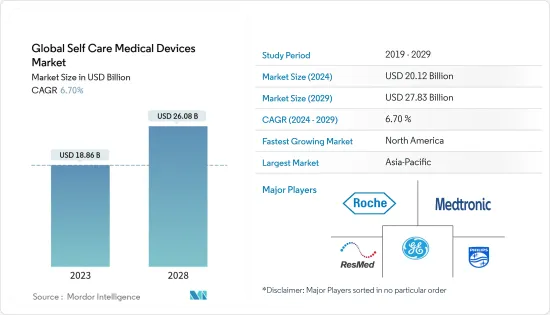
세계 셀프케어 의료기기 시장 규모는 2024년 201억 2,000만 달러에 이를 것으로 추정됩니다. 2029년에는 278억 3,000만 달러에 달할 것으로 예상되며, 예측 기간(2024-2029년) 동안 6.70%의 연평균 복합 성장률(CAGR)을 나타낼 전망입니다.
전 세계적으로 COVID19 팬데믹으로 인해 인력 부족과 과중한 업무에 시달리고 있는 병원과 의료 시스템에 큰 압박을 가하고 있습니다. 2022년 1월 보건의료관리포럼(Healthcare Management Forum)에 게재된 '코로나19 팬데믹 기간 중 재택의료 모니터링: 앨버타 주 1차의료의 타당성 연구 결과'라는 제목의 연구에 따르면, 환자들은 재택의료 모니터링 기술에 만족하고 있으며, 60% 이상은 환자들은 추적 조사 후 삶의 질이 향상되었습니다고 보고했습니다. 환자가 주치의나 응급실을 방문하는 빈도도 전년 대비 감소했습니다. 또한, 2020년 11월 Journal of Family Medicine and Primary Care에 게재된 '당뇨병과 고혈압 동반 질환을 앓고 있는 사람들을 위한 코로나19 팬데믹 상황에서 자가 관리의 역할'이라는 제목의 연구에 따르면, 식습관, 예방법, 복약 순응도 예방 조치, 복약 순응도, 가정 기반 운동, 혈당 및 혈압 자가 측정, 저염, 발 자가 검사, 스트레스 관리 등이 모두 자가 관리에 필요한 요소로 제시되었습니다. 따라서 셀프 케어를 모니터링하기 위해 COVID-19 기간 동안 셀프 케어 장치에 대한 수요가 증가했습니다. 따라서 셀프 케어 의료기기는 COVID-19 전염병이 유행하는 동안 긍정적인 영향을 받았습니다.
심혈관 질환(CVD), 당뇨병과 같은 만성 질환 및 생활습관병의 유병률 증가와 소비자의 건강 인식이 높아짐에 따라 환자의 건강 상태를 지속적으로 추적할 수 있는 장치에 대한 수요가 증가하고 있습니다. 세계보건기구(WHO)의 2021년 7월 최신 정보에 따르면, 심혈관 질환은 관상동맥질환, 뇌혈관질환, 류마티스성 심장질환, 선천성 심장질환 등을 포함한 전 세계 주요 사망 원인으로 꼽힙니다. 또한 국제당뇨병연맹(IDF)의 당뇨병 아틀라스 10판 2021년판 데이터에 따르면 2021년에는 약 5억 3,700만 명의 성인(20-79세)이 당뇨병을 앓고 있는 것으로 나타났습니다. 이 관계자는 당뇨병을 앓고 있는 총 인구가 2030년까지 6억 4,300만 명, 2045년까지 7억 8,300만 명으로 증가할 것으로 예상하고 있습니다. 당뇨병의 부담이 증가함에 따라 보다 기술적으로 진보된 자가 관리 의료기기에 대한 수요가 증가할 가능성이 높습니다.
또한 WHO에 따르면 2030년까지 지구상의 6명 중 1명이 60세 이상이 될 것이라고 합니다. 60세 이상 인구는 2020년 10억 명에서 2050년까지 14억 명으로 증가할 것으로 예상되며, 2050년까지 전 세계 60세 이상 인구는 두 배인 21억 명에 달할 것으로 예상됩니다. 2020년부터 2050년까지 80세 이상 인구는 3배 증가한 4억 2,600만 명에 달할 것으로 예상됩니다.
시장 관계자들은 시장 수익을 늘리기 위해 제품 출시, 제품 개발, 협업, 확장 등 다양한 전략을 채택했습니다. 예를 들어, 2021년 11월 세계 헬스케어 기업 Abbott는 인도의 당뇨병을 앓고 있는 성인과 어린이(4세 이상), 임신성 당뇨(당뇨병) 여성이 사용할 수 있는 연속 혈당 모니터링(CGM) 기술인 FreeStyle Libre 시스템을 발표했습니다. 임신 중에도 언제 어디서든 혈당 수치를 확인할 수 있어 혈당 조절을 개선할 수 있습니다.
따라서 앞서 언급한 모든 요인들이 예측 기간 동안 시장을 견인할 것으로 예상됩니다. 그러나 대체 장치의 가용성과 높은 제품 비용으로 인해 예측 기간 동안 시장이 제한될 것입니다.
혈당 측정기는 다른 자가 관리 의료기기에 비해 가장 큰 시장 점유율을 차지했습니다. 당뇨병 진단을 받은 사람의 수는 앉아있는 생활 방식, 나쁜 식습관 및 노인 인구 증가로 인해 꾸준히 증가하고 있습니다. 또한, 기술 발전과 당뇨병 관리에 대한 인식이 높아짐에 따라 혈당 모니터 시장은 예측 기간 동안 성장할 것입니다. 예를 들어, 국제당뇨병연맹의 2021년 9월 보고서에 따르면 2021년에는 약 5억 3,700만 명의 성인(20-79세)이 당뇨병을 앓고 있을 것으로 예상됩니다. 2030년에는 6억 4,300만 명, 2045년에는 7억 8,300만 명으로 늘어날 것으로 예측됩니다.
이 나라 시장 관계자들은 시장 수익을 높이기 위해 제품 출시, 제품 개발, 협업, 확장 등 다양한 전략을 채택했습니다. 2021년 7월, 텔모(Telmo Corporation)는 일본에서 Dexcom G6 연속 혈당 모니터링 시스템을 출시했습니다. 이 제품은 미국에 본사를 둔 Dexcom, Inc.가 제조하고 Termo가 일본 내 독점 판매 계약을 체결했습니다.
마찬가지로 2021년 11월, POGO 자동 혈당 모니터링 시스템(Intuity Medical)은 13세 이상의 당뇨병 환자를 대상으로 식품의약국으로부터 승인을 받았습니다. 미국에서는 새로운 유형의 혈당 모니터링 시스템을 통해 사용자가 손가락을 찌르거나 측정기에 테스트 스트립을 삽입하는 대신 버튼 한 번만 누르면 테스트 할 수 있습니다.
따라서 앞서 언급한 모든 요인들이 예측 기간 동안 해당 부문의 성장을 가속할 것으로 예상됩니다.
정부 당국의 지원으로 인한 신제품 증가와 함께 만성 질환의 부담 증가와 노인 인구 증가로 인해 미국에서는 셀프 케어 의료에 대한 수요가 증가하고 있습니다.
COVID19 팬데믹은 미국의 의료 서비스 제공 환경을 변화시켰고, 셀프 케어 모니터링으로 새로운 전환을 가져왔습니다. 또한, 미국 내 코로나19가 유행하던 2020년 4월, 미국 북동부 지역에서 제출된 의료 및 치과 청구 중 원격 의료 청구는 20%를 차지했습니다.
질병통제예방센터(CDC)가 발표한 2022년 1월 업데이트된 전국 당뇨병 통계 보고서에 따르면 약 3,730만 명(미국 인구의 11.3%)이 당뇨병을 앓고 있다고 합니다. 또한, 같은 자료에 따르면 2021년에는 성인 2,850만 명을 포함한 2,870만 명이 당뇨병 진단을 받았다고 합니다. 또한 2020년 7월에 발표된 캐나다 통계청의 '고령자 및 인구 고령화 통계'라는 제목의 보고서에 따르면 2020년 65세 이상 인구는 약 6,835,866명입니다. 심장병과 같은 만성질환은 고령층에서 발병률이 높고, 고령층에 영향을 미칠 가능성이 더 높기 때문에 고령층의 부담이 환자 모니터링 시스템에 대한 수요를 증가시킬 것입니다. 이는 이 지역의 자가 관리 의료기기에 대한 수요를 증가시킬 것입니다.
또한, 미국의 높은 성장 잠재력으로 인해 미국에서 사업을 운영하는 기업들은 경쟁사보다 우위를 점하기 위해 신제품 승인을 신청하고 있으며, 이는 조사 대상인 미국 시장 예측 기간 동안 성장을 더욱 확대할 것으로 예상됩니다. 예를 들어, 2021년 1월 오므론 헬스케어(Omron Healthcare)는 최초의 웨어러블 혈압계인 하트 가이드(Heart Guide)의 소매 가능성을 보고했습니다. 많은 기대를 모았던 손목시계형 오실로메트릭 혈압계인 HeartGuide는 510,000개의 FDA 승인을 획득했습니다.
셀프케어 의료기기 시장은 비교적 세분화되어 있습니다. 다양한 의료기기 제조업체가 시장에서 활동하고 있으며, 일부 셀프 케어 의료기기 전문 제조업체도 있습니다. 업계는 경쟁이 치열하며, 업계 참가자와 다른 의료기기 제조업체 간의 파트너십 및 협정을 체결하여 셀프 케어 의료기기의 기능을 자사 기기에 통합하는 경향이 증가하고 있습니다. 주요 시장 기업로는 Medtronic plc., Koninklijke Philips NV, Bayer Healthcare LLC, General Electric Company, F. Hoffmann-La Roche AG, Johnson &Johnson 등이 있습니다.
The Global Self Care Medical Devices Market size is estimated at USD 20.12 billion in 2024, and is expected to reach USD 27.83 billion by 2029, growing at a CAGR of 6.70% during the forecast period (2024-2029).
Globally, the COVID-19 pandemic put enormous pressure on hospitals and healthcare systems that were understaffed and overworked. According to the study titled "Home health monitoring during the COVID pandemic: Results from a feasibility study in Alberta primary care," published in the Healthcare management forum in January 2022, Patients were comfortable with the home healthcare monitoring technology, and more than 60% patients reported an improvement in their quality of life after follow-up. Patients also visited their family physician/emergency department less frequently than in the previous year. Moreover, according to the study titled "Role of self-care in COVID-19 pandemic for people living with comorbidities of diabetes and hypertension" published in the Journal of Family Medicine and Primary Care in November 2020, Dietary precautions, medication adherence, home-based exercises, self-monitoring of blood glucose and blood pressure, salt reduction, self-foot examination, and stress management are all suggested as necessary elements of self-care. Thus, to monitor self-care, the demand for self-care devices increased during COVID-19. Thus, self-care medical devices were positively impacted during the COVID-19 pandemic.
There has been an increase in demand for devices that can continuously track patients' physical well-being due to the rising prevalence of chronic and lifestyle diseases such as cardiovascular disease (CVD) and diabetes, as well as rising consumer health awareness. According to the July 2021 update by the World Health Organization, cardiovascular diseases are the leading cause of death around the world, including diseases like coronary heart disease, cerebrovascular disease, rheumatic heart disease, congenital heart disease, and others. Additionally, according to the data published by the International Diabetes Federation (IDF) Diabetes Atlas Tenth Edition 2021, in the year 2021, approximately 537 million adults (aged 20-79 years) were living with diabetes. The same source estimated that the total number of people living with diabetes is projected to rise to 643 million by 2030 and 783 million by 2045. The rising burden of diabetes is likely to increase the demand for more technically advanced self-care medical devices.
Furthermore, according to the WHO, by 2030, one out of every six people on the planet will be 60 years old or older. The number of people aged 60 and up is expected to rise from 1 billion in 2020 to 1.4 billion by 2050. By 2050, the global population of people aged 60 and above will get double to reach 2.1 billion. Between 2020 and 2050, the number of people aged 80 and above is expected to triple, reaching 426 million.
The market players adopted various strategies such as product launches, product developments, collaborations, and expansions to increase their market revenue. For instance, in November 2021, Abbott, the global healthcare launched the FreeStyle Libre system, the continuous glucose monitoring (CGM) technology available for adults and children (above the age of four) living with diabetes in India and women with gestational diabetes (diabetes during pregnancy), allowing them to check their glucose levels at any time and from any location, resulting in better glucose control.
Thus, all aforementioned factors are anticipated to drive the market over the forecast period. However, the availability of alternative devices and the high cost of the products restraint the market over the forecast period.
Blood glucose monitors had the largest market share when compared to other self-care medical devices. The number of people diagnosed with diabetes has been steadily increasing due to sedentary lifestyles, poor dietary habits, and the growing geriatric population. Furthermore, technological advancements and growing awareness about diabetes management are driving the market for blood glucose monitors to grow over the forecast period. For instance, as per the September 2021 report of the International Diabetes Federation, in 2021, approximately 537 million adults (20-79 years) were living with diabetes. The total number of people living with diabetes is projected to rise to 643 million by 2030 and 783 million by 2045.
The market players in the country adopted various strategies such as product launches, product developments, collaborations, and expansions to increase their market revenue. In July 2021, Terumo Corporation launched Dexcom G6 continuous glucose monitoring system in Japan. Dexcom, Inc., based in the United States, manufactures the product and Terumo holds the exclusive distribution agreement in Japan.
Similarly, in November 2021, The POGO Automatic Blood Glucose Monitoring System (Intuity Medical) was cleared by the Food and Drug Administration for people with diabetes aged 13 and up. In the United States, a new type of blood sugar monitoring system allows users to test with a single button press rather than finger-sticking or inserting test strips into a meter.
Thus, all aforementioned factors are anticipated to drive the segment growth over the forecast period.
With the increase in product launches supported by the government authorities, the rising burden of chronic diseases and the increasing geriatric population are leading to a rise in demand for self-care medical in the United States.
The COVID-19 pandemic has changed the landscape of healthcare delivery in the United States, with a new shift toward self-care monitoring. According to a research article by Darren Roblyer published in the Journal of Biomedical Optics in October 2020, industrial and academic research projects use these devices to predict a variety of health outcomes and disease states, including surgical recovery, overall mortality, mental health, heart conditions, and other diseases states. Adding to that, in April 2020, during the COVID-19 pandemic in the United States, telehealth claims accounted for 20% of submitted medical and dental claims in the northeastern United States.
According to the National Diabetes Statistics Report updated in January 2022 published by the Centers for Disease Control and Prevention (CDC), around 37.3 million people have diabetes (11.3% of the United States population). Additionally, as per the same source, 28.7 million people, including 28.5 million adults were diagnosed with diabetes in 2021. Furthermore, according to the Statistics Canada Report titled 'Older adults and population aging statistics, published in July 2020, the number of people aged 65 years or over is about 6,835,866 in 2020. Since chronic diseases such as cardiac diseases have a high prevalence in the older population and have more chances to affect the older population, the burden of the geriatric population will drive the demand for patient monitoring systems, thereby boosting the demand for self-care medical devices in the region.
In addition, due to the high growth potential of the United States, the companies operating in the country are filing for new product approvals to have an edge over their competitors, which is further expected to augment the growth of the studied market in the country over the forecast period. For Instance, in January 2021, Omron Healthcare reported retail availability for HeartGuide, the first wearable blood pressure monitor. The highly-anticipated HeartGuide, an oscillometric blood pressure monitor in the design of a wrist watch, received 510K FDA clearance as a medical device.
The self-care medical devices market is moderately fragmented. Various medical device manufacturers are operating in the market, along with several specialized self-care medical device manufacturers. The industry is highly competitive, and there is a growing trend of partnerships and agreements between the industry participants and other medical device manufacturers to incorporate self-care medical device functionalities into their devices. Some of the key market players include Medtronic plc., Koninklijke Philips N.V., Bayer HealthCare LLC, General Electric Company, F. Hoffmann-La Roche AG, and Johnson & Johnson.