실리콘 카바이드(SiC) 시장 : SiC 디스크리트 디바이스별, 전압 범위별, 자동차용 SiC 디바이스 - 예측(-2030년)
Silicon Carbide (SiC) Market by SiC Discrete Device, Voltage Range, Automotive SiC Device - Global Forecast to 2030
상품코드:1880369
리서치사:MarketsandMarkets
발행일:2025년 10월
페이지 정보:영문 274 Pages
라이선스 & 가격 (부가세 별도)
ㅁ Add-on 가능: 고객의 요청에 따라 일정한 범위 내에서 Customization이 가능합니다. 자세한 사항은 문의해 주시기 바랍니다.
한글목차
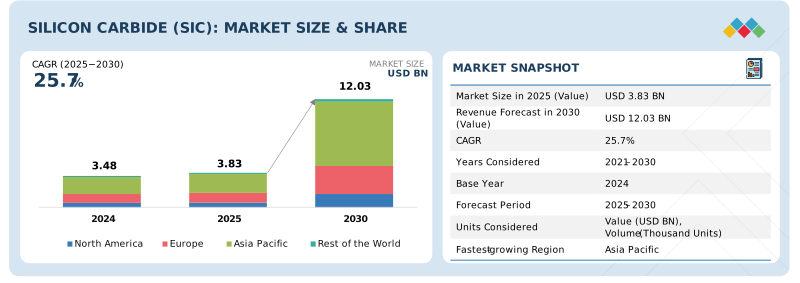
세계의 실리콘 카바이드(SiC) 시장 규모는 2025년 38억 3,000만 달러에서 2030년까지 120억 3,000만 달러에 이를 것으로 예측되어 CAGR 25.7%의 성장이 전망됩니다.
조사 범위
조사 대상 기간
2021-2030년
기준 연도
2024년
예측 기간
2025-2030년
단위
10억 달러
부문
SiC 디스크리트 디바이스, SiC 모듈, 전압 범위, 매체, 지역
대상 지역
북미, 유럽, 아시아태평양, 기타 지역
실리콘 카바이드(SiC) 시장은 전기자동차에 SiC 디바이스의 적용 확대와 산업 및 에너지 분야의 고효율 파워 일렉트로닉스에 대한 수요 증가로 인해 견조한 성장세를 보이고 있습니다. 자동차 제조업체는 트랙션 인버터, 온보드 충전기, 급속 충전 시스템에 SiC MOSFET 및 모듈을 채택하고 있으며, 재생 에너지 및 그리드 인프라 프로젝트에서 SiC를 활용하여 더 높은 효율성과 신뢰성을 실현하고 있습니다.
와이드 밴드갭 기술, 웨이퍼 미세화, 기판 품질의 발전으로 성능이 향상되고 시스템 비용이 낮아지고 있어 보다 폭넓은 채용이 가능해졌습니다. 이러한 요인으로 인해 차세대 전력 시스템에서 실리콘에서 SiC로의 전환이 가속화되고 있습니다. 동시에 통신, 운송, 산업 자동화 분야에서도 소형, 에너지 효율, 고온 내성 디바이스에 대한 수요가 증가함에 따라 시장은 큰 기회를 보이고 있습니다. 재료 및 패키징 분야의 지속적인 혁신과 세계 생산 능력의 확대는 더 큰 확장성을 촉진하고 SiC가 보다 지속 가능한 미래를 위해 파워 일렉트로닉스를 재정의할 수 있도록 돕고 있습니다.
"디바이스별로는 실리콘 카바이드(SiC) 모듈이 실리콘 카바이드(SiC) 시장에서 가장 빠른 성장세를 기록할 것입니다. "
산업계가 소형의 통합된 고효율 전력 관리 솔루션을 점점 더 많이 찾고 있는 가운데, SiC 모듈은 실리콘 카바이드(SiC) 시장에서 가장 빠른 성장을 기록할 것으로 예측됩니다. 개별 장치와 달리, 모듈은 여러 SiC 부품을 단일 패키지에 통합하여 더 높은 전력 밀도, 단순화된 시스템 설계, 향상된 열 성능을 제공합니다. 이러한 특성으로 인해 전기자동차 파워트레인, 급속 충전 인프라, 산업용 모터 구동 장치, 재생 에너지 시스템 등 견고하고 확장 가능한 솔루션이 필요한 용도에서 특히 높은 가치를 발휘하고 있습니다. 전기 모빌리티로의 전환이 큰 촉진요인으로 작용하고 있으며, 자동차 제조업체들은 SiC 모듈을 채택하여 주행거리 향상과 에너지 손실을 줄이는 효율적인 트랙션 인버터와 온보드 충전 시스템을 제공합니다. 재생에너지에서는 SiC 모듈이 높은 전압을 최소한의 손실로 처리하여 태양광과 풍력 발전의 변환 효율을 향상시키고 있습니다. 또한, 데이터센터 및 통신 인프라에서도 전력 사용 효율 향상과 운영 비용 절감을 위해 이러한 모듈의 채택이 확대되고 있습니다. 패키징 기술이 발전하고 규모의 경제가 제조를 확대하면서 SiC 모듈의 원가 경쟁력이 높아져 급속한 보급이 더욱 가속화되고 있습니다. 성능, 신뢰성, 확장성을 겸비한 이 모듈은 세계 실리콘 카바이드(SiC) 시장에서 가장 빠르게 성장하는 분야입니다.
"전압 범위별로는 중전압 범위(1,700V-3,300V)가 실리콘 카바이드(SiC) 시장에서 가장 큰 점유율을 차지할 것으로 예상했습니다. "
1,700V-3,300V의 중간 전압 범위가 예측 기간 동안 실리콘 카바이드(SiC) 시장에서 가장 큰 점유율을 차지할 것으로 예측됩니다. 이 분야는 기존 실리콘 솔루션이 효율성, 열 관리 및 전력 밀도 측면에서 한계에 직면한 고성능 용도의 기반이 되고 있습니다. 주요 성장 분야로는 고전압 및 고온 환경에서 안정적인 작동이 요구되는 전기철도 견인, 풍력 터빈, 산업용 구동장치, 고출력 EV 인버터 등이 있습니다. 중전압 SiC 디바이스는 스위칭 손실을 줄이고 열 안정성을 향상시켜 에너지 효율과 시스템 소형화를 우선시하는 열악한 환경에 매우 적합합니다. 운송 부문, 특히 전기 철도 및 대형 전기자동차에서 이러한 장치는 효율성 향상과 항속거리 개선을 촉진하고 있습니다. 재생에너지 분야에서는 태양광 인버터와 풍력에너지 변환 시스템에서 더 높은 출력과 신뢰성을 실현합니다. 산업계가 에너지 절약, 컴팩트한 디자인, 지속가능성을 점점 더 중요시하는 가운데, 중전압 SiC 제품군은 전체 시장 보급에 있어 가장 큰 요인으로 작용하고 있으며, 산업 및 전력 집약적 부문에서 장기적인 우위를 확보할 수 있습니다.
세계의 실리콘 카바이드(SiC) 시장에 대해 조사 분석했으며, 주요 촉진요인과 억제요인, 경쟁 구도, 향후 동향 등의 정보를 전해드립니다.
목차
제1장 서론
제2장 조사 방법
제3장 주요 요약
제4장 중요 지견
실리콘 카바이드 시장 기업에 있어서 매력적인 기회
실리콘 카바이드 시장 : 업계별
실리콘 카바이드 시장 : 디바이스별
실리콘 카바이드 시장 : 전압 범위별
아시아태평양의 실리콘 카바이드 시장 : 업계별, 국가별(2025년)
실리콘 카바이드 시장 : 지역별
제5장 시장 개요
서론
시장 역학
성장 촉진요인
성장 억제요인
기회
과제
공급망 분석
생태계 분석
투자 및 자금조달 시나리오
고객의 비즈니스에 영향을 미치는 동향/파괴적 변화
기술 분석
주요 기술
보완 기술
인접 기술
가격 결정 분석
SIC 디바이스 평균 판매 가격 동향 : 주요 기업별
평균 판매 가격 동향 : 디바이스별
디바이스 평균 판매 가격 동향 : 지역별
주요 이해관계자와 구입 기준
Porter의 Five Forces 분석
사례 연구 분석
무역 분석
수입 시나리오(HS코드 284920)
수출 시나리오(HS코드 284920)
특허 분석
규제 상황
규제기관, 정부기관, 기타 조직
기준과 규제
주요 컨퍼런스 및 이벤트(2024년-2025년)
실리콘 카바이드 시장에 대한 AI/생성형 AI의 영향
실리콘 카바이드 시장에 대한 2025년 미국 관세의 영향
서론
주요 관세율
가격 영향 분석
국가/지역에 대한 영향
업계에 대한 영향
제6장 SIC 디바이스 결정 구조
서론
CUBIC (3C-SIC/ZINC BLENDE)
HEXAGONAL (4H-SIC AND 6H-SIC)
RHOMBOHEDRAL (15R-SIC)
제7장 SIC 재료 유형
서론
그린 SIC
블랙 SIC
제8장 각 웨이퍼 사이즈 실리콘 카바이드 시장 동향
서론
150mm 이하
150mm 이상
제9장 실리콘 카바이드 시장 : 디바이스별
서론
SIC 디스크리트 디바이스
SIC 모듈
제10장 실리콘 카바이드 시장 : 업계별
서론
자동차
에너지 및 전력
산업
운송
통신
기타 업계
제11장 실리콘 카바이드 시장 : 전압 범위별
서론
1,200V 이하
1,201-1,700V
1,701-3,300V
3,300V 이상
제12장 실리콘 카바이드 시장 : 지역별
서론
북미
북미의 거시경제 전망
미국
캐나다
멕시코
유럽
유럽의 거시경제 전망
영국
독일
프랑스
이탈리아
스페인
폴란드
북유럽 국가
기타 유럽
아시아태평양
아시아태평양의 거시경제 전망
중국
일본
한국
인도
호주
인도네시아
말레이시아
태국
베트남
기타 아시아태평양
기타 지역
기타 지역 거시경제 전망
중동
아프리카
남미
제13장 경쟁 구도
서론
주요 시장 진출기업의 전략/강점
시장 점유율 분석(2024년)
기업 평가와 재무 지표
브랜드/제품 비교
주요 기업의 매출 분석(2020년-2024년)
기업 평가 매트릭스 : 주요 기업(2024년)
기업 평가 매트릭스 : 스타트업/중소기업(2024년)
경쟁 시나리오와 동향
제14장 기업 개요
서론
주요 기업
STMICROELECTRONICS
SEMICONDUCTOR COMPONENTS INDUSTRIES, LLC
INFINEON TECHNOLOGIES AG
WOLFSPEED, INC.
ROHM CO., LTD.
FUJI ELECTRIC CO., LTD.
TOSHIBA ELECTRONIC DEVICES & STORAGE CORPORATION
MICROCHIP TECHNOLOGY INC.
MITSUBISHI ELECTRIC CORPORATION
ROBERT BOSCH GMBH
기타 기업
SEMIKRON DANFOSS
NAVITAS SEMICONDUCTOR
TT ELECTRONICS
VISHAY INTERTECHNOLOGY, INC.
WEEN SEMICONDUCTORS
MINEBEA POWER SEMICONDUCTOR DEVICE INC.
SOLITRON DEVICES, INC.
SANAN IC
BYD SEMICONDUCTOR
LITTELFUSE, INC.
TYCO TIANRUN, INC.
NEXPERIA
INVENTCHIP TECHNOLOGY CO., LTD.
DIODES INCORPORATED
MCC
SIC 웨이퍼 제조업체
SOITEC
XIAMEN POWERWAY ADVANCED MATERIAL CO., LTD.
COHERENT CORP.
SK SILTRON CO., LTD.
TANKEBLUE CO., LTD.
제15장 부록
LSH
영문 목차
영문목차
The global silicon carbide (SiC) market is estimated to be valued at USD 12.03 billion by 2030, up from USD 3.83 billion in 2025, at a CAGR of 25.7%.
Scope of the Report
Years Considered for the Study
2021-2030
Base Year
2024
Forecast Period
2025-2030
Units Considered
Value (USD Billion)
Segments
By SiC Discrete Device, SiC Module, Voltage Range, Medium and Region
Regions covered
North America, Europe, APAC, RoW
The silicon carbide (SiC) market is experiencing robust growth, driven by the increasing deployment of SiC devices in electric vehicles and the rising demand for efficient power electronics across industrial and energy applications. Automakers are adopting SiC MOSFETs and modules for traction inverters, onboard chargers, and fast-charging systems, while renewable energy and grid infrastructure projects are leveraging SiC to achieve higher efficiency and reliability.
Advancements in wide-bandgap technologies, wafer scaling, and substrate quality are enhancing performance and lowering system costs, enabling broader adoption. These drivers are collectively accelerating the transition from silicon to SiC in next-generation power systems. At the same time, the market presents strong opportunities in telecommunications, transportation, and industrial automation, where the need for compact, energy-efficient, and high-temperature-resistant devices is growing. Ongoing innovations in materials and packaging, along with the expansion of global production capacity, are fostering greater scalability and enabling SiC to redefine power electronics for a more sustainable future.
"SiC modules to record fastest growth in silicon carbide (sic) market based on device"
SiC modules are expected to register the fastest growth in the silicon carbide (SiC) market as industries increasingly demand compact, integrated, and high-efficiency solutions for power management. Unlike discrete devices, modules integrate multiple SiC components within a single package, providing higher power density, simplified system design, and enhanced thermal performance. This makes them particularly valuable for applications requiring robust and scalable solutions, such as electric vehicle powertrains, fast-charging infrastructure, industrial motor drives, and renewable energy systems. The shift toward e-mobility is a major driver, with automakers adopting SiC modules to deliver efficient traction inverters and onboard charging systems that improve range and reduce energy losses. In renewable energy, SiC modules enhance the performance of solar and wind power conversion by handling higher voltages with minimal losses. Additionally, data centers and telecom infrastructure are increasingly adopting these modules to improve power usage effectiveness and reduce operational costs. As packaging technology improves and economies of scale expand manufacturing, SiC modules are becoming more cost-competitive, further fueling their rapid adoption. Their combination of performance, reliability, and scalability positions them as the fastest-growing segment in the global silicon carbide (SiC) market.
"Medium (1,700 V to 3,300 V) voltage range to account for largest share of silicon carbide (SiC) market based on voltage range"
The medium voltage range, spanning 1,700 V to 3,300 V, is projected to account for the largest share of the silicon carbide (SiC) market during the forecast period. This segment has become the backbone of high-performance applications where traditional silicon solutions face limitations in terms of efficiency, thermal management, and power density. Key growth areas include electric rail traction, wind turbines, industrial drives, and high-power EV inverters, all of which demand reliable operation under high voltage and temperature conditions. Medium-voltage SiC devices offer lower switching losses and improved thermal stability, making them highly suitable for demanding environments that prioritize energy efficiency and reduced system footprint. In transportation, particularly electric trains and heavy-duty electric vehicles, these devices are driving efficiency gains and range improvements. In renewable energy, they enable higher output and reliability in solar inverters and wind energy conversion systems. With industries increasingly targeting energy savings, compact designs, and sustainability, the medium voltage SiC range is positioned as the largest contributor to overall market adoption, ensuring long-term dominance across industrial and power-intensive sectors.
"Europe to account for second-largest market share in 2025."
Europe is expected to hold the second-largest share of the global silicon carbide (SiC) market, driven by strong government support for electrification, renewable energy adoption, and industrial modernization. The region is at the forefront of the electric vehicle revolution, with leading automakers and suppliers integrating SiC MOSFETs and modules into powertrains, onboard chargers, and charging infrastructure to meet strict emission reduction targets. Europe's ambitious green deal and carbon neutrality goals are fueling investments in renewable energy projects, such as solar farms, wind power, and smart grids, where SiC technology enhances efficiency, reliability, and grid stability. The industrial automation and transportation sectors are also embracing SiC devices to improve power density and lower operational costs in rail traction, robotics, and aerospace applications. In addition, European semiconductor players and research institutions are investing heavily in advancing wafer production and packaging technologies, thereby ensuring a secure supply chain and fostering regional innovation ecosystems. With its strong regulatory push toward sustainability and leadership in automotive and energy technologies, Europe is positioned to remain a critical growth region for the SiC market, consolidating its role as the second-largest contributor globally.
The breakdown of the primary participants' profiles in the silicon carbide (SiC) market is as follows.
By Company Type: Tier 1 - 45%, Tier 2 - 35%, and Tier 3 - 20%
By Designation Type: C-level Executives - 40%, Directors - 30%, and Others - 30%
By Region: Europe - 20%, North America - 40%, Asia Pacific - 30%, Rest of the World (RoW) - 10%
Note: Other designations include sales, marketing, and product managers.
The three tiers of the companies are based on their total revenues as of 2024: Tier 1: >USD 1 billion, Tier 2: USD 500 million-1 billion, and Tier 3: USD 500 million.
The major players in the silicon carbide (SiC) market with a significant global presence include STMicroelectronics (Switzerland), Semiconductor Components Industries, LLC (US), Infineon Technologies AG (Germany), Wolfspeed, Inc. (US), ROHM Co., Ltd. (Japan), and others.
Research Coverage
The report segments the silicon carbide (SiC) market and forecasts its size by device type, voltage range, vertical, and region. It also provides a comprehensive review of the drivers, restraints, opportunities, and challenges that influence market growth. The report encompasses both qualitative and quantitative aspects of the market.
Reasons to buy the report:
The report will assist market leaders/new entrants in this market by providing information on the approximate revenues for the overall silicon carbide (SiC) market and its related segments. This report will help stakeholders understand the competitive landscape and gain valuable insights to strengthen their market position and develop effective go-to-market strategies. The report also helps stakeholders understand the pulse of the market, providing them with information on key market drivers, restraints, opportunities, and challenges.
The report provides insights into the following pointers:
Analysis of key drivers (growing deployment of SiC devices in EVs, increasing demand for power electronics, and growing demand for renewable energy systems), restraints (high efficacy of alternative technologies for power electronics and high cost of SiC devices), opportunities (growing adoption of SiC devices in telecommunications industry and ongoing quality enhancements of SiC substrates and epitaxy processes), and challenges (material defects and designing and packaging issues in SiC devices, and supply chain and capacity constraints)
Product Development/Innovation: Detailed insights on upcoming technologies, research and development activities, and new product launches in the silicon carbide (SiC) market.
Market Development: Comprehensive information about lucrative markets by analyzing the silicon carbide (SiC) market across varied regions
Market Diversification: Exhaustive information about new products, untapped geographies, recent developments, and investments in the silicon carbide (SiC) market
Competitive Assessment: In-depth assessment of market shares, growth strategies, and product offerings of leading players, including STMicroelectronics (Switzerland), Semiconductor Components Industries, LLC (US), Infineon Technologies AG (Germany), Wolfspeed, Inc. (US), and ROHM Co., Ltd. (Japan)
TABLE OF CONTENTS
1 INTRODUCTION
1.1 STUDY OBJECTIVES
1.2 MARKET DEFINITION
1.3 STUDY SCOPE
1.3.1 INCLUSIONS AND EXCLUSIONS
1.3.1.1 Company: Inclusions and exclusions
1.3.1.2 Device: Inclusions and exclusions
1.3.1.3 Voltage range: Inclusions and exclusions
1.3.1.4 Vertical: Inclusions and exclusions
1.3.1.5 Region: Inclusions and exclusions
1.3.2 MARKETS COVERED
1.3.3 YEARS CONSIDERED
1.4 CURRENCY CONSIDERED
1.5 UNITS CONSIDERED
1.6 LIMITATIONS
1.7 STAKEHOLDERS
1.8 SUMMARY OF CHANGES
2 RESEARCH METHODOLOGY
2.1 RESEARCH DATA
2.1.1 SECONDARY DATA
2.1.1.1 Major secondary sources
2.1.1.2 Key data from secondary sources
2.1.2 PRIMARY DATA
2.1.2.1 List of primary interview participants
2.1.2.2 Breakdown of primaries
2.1.2.3 Key industry insights
2.1.2.4 Key data from primary sources
2.1.3 SECONDARY AND PRIMARY RESEARCH
2.2 MARKET SIZE ESTIMATION
2.2.1 BOTTOM-UP APPROACH
2.2.1.1 Approach to estimate market size using bottom-up analysis (demand side)
2.2.2 TOP-DOWN APPROACH
2.2.2.1 Approach to estimate market size using top-down analysis (supply side)
2.3 FACTOR ANALYSIS
2.3.1 SUPPLY-SIDE ANALYSIS
2.4 MARKET GROWTH ASSUMPTIONS
2.5 DATA TRIANGULATION
2.6 RESEARCH ASSUMPTIONS
2.7 RISK ASSESSMENT
3 EXECUTIVE SUMMARY
4 PREMIUM INSIGHTS
4.1 ATTRACTIVE OPPORTUNITIES FOR PLAYERS IN SILICON CARBIDE MARKET
4.2 SILICON CARBIDE MARKET, BY VERTICAL
4.3 SILICON CARBIDE MARKET, BY DEVICE
4.4 SILICON CARBIDE MARKET, BY VOLTAGE RANGE
4.5 ASIA PACIFIC: SILICON CARBIDE MARKET, BY VERTICAL AND COUNTRY, 2025
4.6 SILICON CARBIDE MARKET, BY REGION
5 MARKET OVERVIEW
5.1 INTRODUCTION
5.2 MARKET DYNAMICS
5.2.1 DRIVERS
5.2.1.1 Growing deployment of SiC devices in EVs
5.2.1.2 Increasing demand for power electronics
5.2.1.3 Rising demand for renewable energy systems
5.2.1.4 Increasing initiatives and investments in SiC devices
5.2.2 RESTRAINTS
5.2.2.1 High efficacy of alternative technologies for power electronics
5.2.2.2 High cost of SiC devices
5.2.3 OPPORTUNITIES
5.2.3.1 Growing adoption of SiC devices in telecommunications industry
5.2.3.2 Ongoing quality enhancements of SiC substrates and epitaxy processes
5.2.4 CHALLENGES
5.2.4.1 Material defects and designing & packaging issues in SiC devices