해초 풍미 시장 : 시장 기회, 성장 요인, 산업 동향 분석 및 예측(2026-2035년)
Seaweed Flavor Market Opportunity, Growth Drivers, Industry Trend Analysis, and Forecast 2026 - 2035
상품코드:1936537
리서치사:Global Market Insights Inc.
발행일:2026년 02월
페이지 정보:영문 190 Pages
라이선스 & 가격 (부가세 별도)
ㅁ Add-on 가능: 고객의 요청에 따라 일정한 범위 내에서 Customization이 가능합니다. 자세한 사항은 문의해 주시기 바랍니다.
한글목차
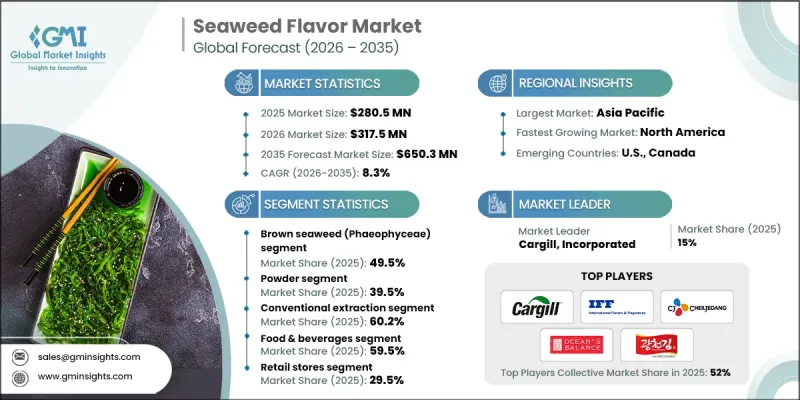
세계의 해초 풍미 시장은 2025년에 2억 8,050만 달러로 평가되었고, 2035년까지 연평균 복합 성장률(CAGR) 8.3%로 성장할 전망이며, 6억 5,030만 달러에 이를 것으로 예측됩니다.
시장 성장은 건강 및 웰빙에 대한 관심 증가에 견인되고 있습니다. 해초는 천연 영양이 풍부하지만 낮은 칼로리이기 때문에 건강 지향 소비자에게 매우 매력적입니다. 깨끗한 라벨의 동향은 최소한의 가공을 한 천연 풍미제를 선호하는 경향이 있으며, 해초는 합성 향료를 대체하는 선호되는 옵션으로 자리 잡고 있습니다. 식물 유래의 식생활이 보급되는 가운데, 해조 풍미는 스프, 소스, 스낵, 레토르트 식품 등 혁신적인 식품 용도로 활용되어, 맛을 강화하는 동시에 요오드나 항산화 물질이라고 하는 기능성 메리트를 제공합니다. 환경 지속가능성 및 천연의 복잡한 풍미를 갖춘 해조류는 조미료, 향신료, 대체 단백질 제품에도 채용이 진행되고 있습니다. 아시아태평양은 문화적 친화성과 요리 용도로 시장을 선도하고 있으며 유럽에서는 자연스럽고 지속 가능한 매력으로부터 수요가 높아지고 있습니다. 북미에서는 퓨전 요리의 동향과 식물성 식품 운동의 혜택을 받고 있습니다.
시장 범위
시작 연도
2025년
예측 연도
2026-2035년
시작 시 가치
2억 8,050만 달러
예측 금액
6억 5,030만 달러
CAGR
8.3%
갈조(Phaeophyceae) 부문은 49.5%의 점유율을 차지했으며, 2035년까지 연평균 복합 성장률(CAGR) 8%를 나타낼 것으로 예측됩니다. 갈조류는 풍부한 맛과 미네랄 함량이 높다는 평가를 받고 있으며, 수프, 소스, 조미료 등의 맛을 주는 용도에 매우 적합합니다. 그 깊은 풍미와 안정된 성능으로 천연의 맛 향상을 요구하는 많은 식품 제조업체에 있어서 클래식한 선택지로서 확립되고 있습니다.
분말 해초 풍미 부문은 2025년에 39.5%의 점유율을 차지했으며, 2035년까지 연평균 복합 성장률(CAGR) 7.9%를 나타낼 것으로 예측됩니다. 분말 해조는 범용성이 높고, 안정된 풍미와 건조 혼합물, 스낵 및 조미료에 대한 용이한 배합이 가능하며, 균일한 풍미와 장기 보존성이 요구되는 분야에서 중요한 역할을 합니다. 액체 추출물은 용해가 빠르고 맛이 응축되어 음료와 소스에 선호됩니다. 한편, 고형 추출물은 고밀도 영양과 강한 맛을 제공하므로 프리미엄 기능성 식품에 이상적입니다.
북미의 해초 풍미 시장은 2025년에 20.4%의 점유율을 차지했고, 성장은 가속화되고 있습니다. 식물 유래 제품이나 클린 라벨 제품의 소비자에 의한 채용 확대 및 식품 기술의 진보가 수요를 견인하고 있습니다. 이 지역의 첨단 제조 능력 및 지속 가능한 솔루션에 대한 규제 중심은 환경 친화적이고 혁신적인 풍미 제품의 생산을 촉진하고 있으며, 북미는 해초 풍미 제품에 중요한 시장으로 자리를 잡고 있습니다.
목차
제1장 조사 방법 및 범위
제2장 주요 요약
제3장 업계 인사이트
생태계 분석
공급자의 상황
이익률
각 단계에서의 부가가치
밸류체인에 영향을 주는 요인
혁신
업계에 미치는 영향요인
성장 촉진요인
식물성 식품의 혁명
감염의무화와 건강의식의 고조
지속가능성 및 재생 농업에 관한 인사이트
업계의 잠재적 위험 및 과제
중금속 및 요오드 오염에 대한 우려
유기 인증 기준의 단편화
시장 기회
바이오 리파이너리의 상업화
북미 및 유럽에서의 생산 확대
성장 가능성 분석
규제 상황
북미
유럽
아시아태평양
라틴아메리카
중동 및 아프리카
Porter's Five Forces 분석
PESTEL 분석
가격 동향
지역별
유형별
장래 시장 동향
기술 및 혁신 동향
현재 기술 동향
신흥 기술
특허 상황
무역 통계(HS코드)
주요 수입국
주요 수출국
지속가능성 및 환경면
지속가능한 대처
폐기물 감축 전략
생산에 있어서의 에너지 효율
환경에 배려한 대처
탄소발자국 고려
제4장 경쟁 구도
서문
기업의 시장 점유율 분석
지역별
북미
유럽
아시아태평양
라틴아메리카
중동 및 아프리카
기업 매트릭스 분석
주요 시장 기업의 경쟁 분석
경쟁 포지셔닝 매트릭스
주요 발전
합병 및 인수
제휴 및 협업
신제품 발매
사업 확대 계획
제5장 시장 추계 및 예측 : 유형별(2022-2035년)
갈조류(Phaeophyceae)
다시마(라미나리아속, 사카리나속)
미역(Undaria pinnatifida)
아스코피람 노도삼
기타 갈조류(마크로시스티스, 후코이데스)
홍조류(Rhodophyceae)
노리(Porphyra/Pyropia속)
달스(팔마리아 팔마타)
카라기난 생산 해조류(유케우마속, 카파피카스속, 그라실라리아속)
기타 홍조류
녹조류(Chlorophyceae)
김(Ulva속)
기타 녹조류
제6장 시장 추계 및 예측 : 형태별(2022-2035년)
분말
액체 추출물
고형 추출물
플레이크
시트 및 랩
전엽
제7장 시장 추계 및 예측 : 가공 기술별(2022-2035년)
기존 추출법
알칼리 추출
수계 추출
선진 추출 기술
효소 보조 추출법(EAE)
초임계 유체 추출(SFE)
마이크로파 보조 및 초음파 추출
펄스 전계(PEF)
바이오 리파이너리 및 캐스케이드 처리
제8장 시장 추계 및 예측 : 용도별(2022-2035년)
음식
식물 유래의 고기 대체품
기능성 음료
스낵
조미료 및 향신료
수프, 부용, 국물
베이커리 및 과자류
유제품 및 유제품 대체품
조리용 원료(외식 산업용)
뉴트라슈티컬 및 영양보조식품
동물사료 및 반려동물 식품
화장품 및 퍼스널케어
제9장 시장 추계 및 예측 : 유통 채널별(2022-2035년)
소매점
온라인 소매
외식 산업 및 호스피탈리티 업계
도매업체
제10장 시장 추계 및 예측 : 지역별(2022-2035년)
북미
미국
캐나다
유럽
독일
영국
프랑스
스페인
이탈리아
기타 유럽
아시아태평양
중국
인도
일본
호주
한국
기타 아시아태평양
라틴아메리카
브라질
멕시코
아르헨티나
기타 라틴아메리카
중동 및 아프리카
사우디아라비아
남아프리카
아랍에미리트(UAE)
기타 중동 및 아프리카
제11장 기업 프로파일
Cargill, Incorporated
IFF(International Flavors & Fragrances Inc.)
CJ CheilJedang/bibigo
Ocean's Balance(Formerly Maine Coast Sea Vegetables)
KwangcheonKim Co., Ltd.
Nagai Nori Co., Ltd.
Seaweed & Co.
Mara Seaweed
This is Seaweed Ltd.
Wild Irish Seaweeds
Hispanagar
Seagarden AS
The Seaweed Company
Green Fresh(Fujian) Foodstuff Co., Ltd.
Marusan
Ocean Organics
AJY
영문 목차
영문목차
The Global Seaweed Flavor Market was valued at USD 280.5 million in 2025 and is estimated to grow at a CAGR of 8.3% to reach USD 650.3 million by 2035.
The market's growth is driven by the rising focus on health and wellness, as seaweed is naturally nutrient-rich while remaining low in calories, appealing strongly to health-conscious consumers. Clean-label trends favor minimally processed, natural flavoring agents, positioning seaweed as a preferred alternative to synthetic flavors. Plant-based diets are gaining traction, and seaweed flavor is increasingly used in innovative food applications, enhancing the savory profile of soups, sauces, snacks, and ready-to-eat meals while contributing functional benefits like iodine and antioxidants. Environmentally sustainable and naturally complex in flavor, seaweed is being adopted in seasonings, condiments, and alternative protein products. Asia-Pacific leads the market due to cultural familiarity and culinary use, Europe is experiencing uptake for its natural and sustainable appeal, and North America benefits from fusion cuisine trends and the plant-based food movement.
Market Scope
Start Year
2025
Forecast Year
2026-2035
Start Value
$280.5 Million
Forecast Value
$650.3 Million
CAGR
8.3%
The brown seaweed (Phaeophyceae) segment held a 49.5% share and is projected to grow at a CAGR of 8% by 2035. Brown seaweed is favored for its rich umami taste and mineral content, making it highly suitable for savory applications like soups, sauces, and seasonings. Its flavor depth and consistent performance have established it as the go-to choice for many food manufacturers seeking natural savory enhancement.
The powdered seaweed flavor segment held a share of 39.5% in 2025 and is expected to grow at a CAGR of 7.9% through 2035. Powdered seaweed is highly versatile, offering stability and ease of blending into dry mixes, snacks, and seasonings where uniform flavor and extended shelf life are critical. Liquid extracts are preferred in beverages and sauces for quick solubility and concentrated flavor delivery, while solid extracts are ideal for premium functional foods, providing dense nutrition and strong taste.
North America Seaweed Flavor Market accounted for a 20.4% share in 2025, and its growth is accelerating. Consumer adoption of plant-based and clean-label products, combined with advancements in food technology, is driving demand. The region's advanced manufacturing capabilities and regulatory emphasis on sustainable solutions are encouraging the production of eco-friendly and innovative flavor offerings, positioning North America as a significant market for seaweed flavor products.
Key players in the Global Seaweed Flavor Market include CJ CheilJedang / bibigo, Ocean Organics, Cargill, Incorporated, Green Fresh (Fujian) Foodstuff Co., Ltd., Mara Seaweed, KwangcheonKim Co., Ltd., Ocean's Balance, Seaweed & Co., Nagai Nori Co., Ltd., Seagarden AS, This is Seaweed Ltd., The Seaweed Company, Marusan, Wild Irish Seaweeds, and Hispanagar. Companies in the seaweed flavor market strengthen their position through product innovation, introducing new forms like powders, liquids, and solid extracts to cater to diverse applications. They focus on sustainability by sourcing eco-friendly seaweed and promoting traceability to appeal to conscious consumers. Strategic collaborations with food and beverage manufacturers enable tailored flavor solutions, while R&D investments enhance umami and functional profiles. Geographic expansion, marketing campaigns emphasizing natural and clean-label benefits, and partnerships with culinary professionals help increase visibility and adoption.
Table of Contents
Chapter 1 Methodology & Scope
1.1 Market scope and definition
1.2 Research design
1.2.1 Research approach
1.2.2 Data collection methods
1.3 Data mining sources
1.3.1 Global
1.3.2 Regional/Country
1.4 Base estimates and calculations
1.4.1 Base year calculation
1.4.2 Key trends for market estimation
1.5 Primary research and validation
1.5.1 Primary sources
1.6 Forecast model
1.7 Research assumptions and limitations
Chapter 2 Executive Summary
2.1 Industry 360° synopsis
2.2 Key market trends
2.2.1 Regional
2.2.2 Type
2.2.3 Form
2.2.4 Processing technology
2.2.5 Application
2.2.6 Distribution channel
2.3 TAM Analysis, 2026-2035
2.4 CXO perspectives: Strategic imperatives
2.4.1 Executive decision points
2.4.2 Critical success factors
2.5 Future Outlook and Strategic Recommendations
Chapter 3 Industry Insights
3.1 Industry ecosystem analysis
3.1.1 Supplier landscape
3.1.2 Profit margin
3.1.3 Value addition at each stage
3.1.4 Factor affecting the value chain
3.1.5 Disruptions
3.2 Industry impact forces
3.2.1 Growth drivers
3.2.1.1 Plant-based food revolution
3.2.1.2 Salt reduction mandates & health consciousness