Two Wheeler Market Opportunity, Growth Drivers, Industry Trend Analysis, and Forecast 2026 - 2035
상품코드:1928964
리서치사:Global Market Insights Inc.
발행일:2026년 01월
페이지 정보:영문 250 Pages
라이선스 & 가격 (부가세 별도)
ㅁ Add-on 가능: 고객의 요청에 따라 일정한 범위 내에서 Customization이 가능합니다. 자세한 사항은 문의해 주시기 바랍니다.
한글목차
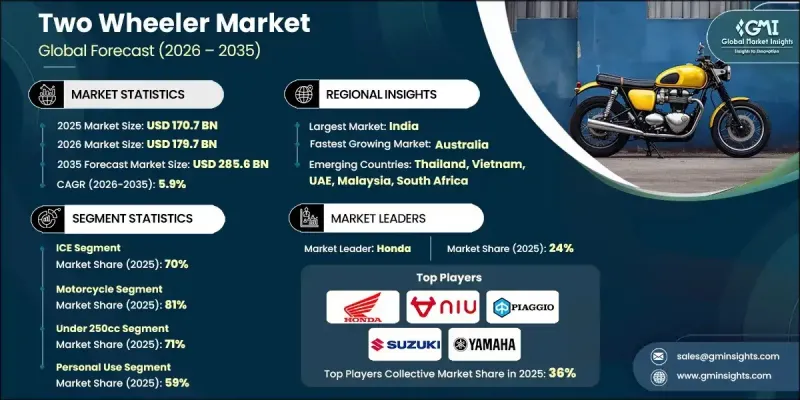
세계의 이륜차 시장은 2025년에 1,707억 달러로 평가되었고, 2035년까지 연평균 복합 성장률(CAGR) 5.9%로 성장하여 2,856억 달러에 이를 것으로 예측되고 있습니다.
시장 확대의 배경에는 여러 지역에서 전기자동차 제조업체의 급격한 성장과 더 깨끗하고 지속 가능한 교통수단에 대한 전 세계적인 관심 증가가 있습니다. 환경 인식의 향상과 규제 압력으로 인해 전기 이륜차로의 전환이 가속화되고 있으며, 전 세계 개인 이동수단의 패턴이 재편되고 있습니다. 지속적인 기술 발전으로 차량 성능, 효율성, 편의성이 향상되어 선진국과 개발도상국 모두에서 보급 확대를 뒷받침하고 있습니다. 전 세계적으로 배출량 감축을 위한 노력이 강화되는 가운데, 전기 모빌리티 솔루션에 대한 수용이 꾸준히 확대되고 있습니다. 동시에, 업계는 변화하는 소비자 선호도, 도심의 교통체증 문제, 차량 공학의 발전에 대응하여 계속 진화하고 있습니다. 친환경 교통수단에 대한 정책적 지원과 수요 증가로 인해 전기 오토바이와 스쿠터의 보급이 확대되고 있으며, 이륜차 시장은 미래 모빌리티 생태계에서 중요한 기여자로 자리매김하고 있습니다.
시장 범위
개시 연도
2025년
예측 기간
2026-2035년
개시 연도 가치
1,707억 달러
예측 금액
2,856억 달러
CAGR
5.9%
내연기관 부문은 2025년에 70%의 점유율을 차지할 것으로 예상되며, 2026년부터 2035년까지 연평균 복합 성장률(CAGR) 5%를 나타낼 것으로 예측됩니다. 개발도상국에서는 전기자동차에 비해 초기 비용이 저렴하기 때문에 내연기관 이륜차가 지속적으로 구매자들의 관심을 끌고 있습니다. 합리적인 가격, 폭넓은 제품 라인업, 탄탄한 유통망은 비용에 민감한 소비자들에게 현실적인 선택이 될 수 있도록 도와줍니다. 또한, 광범위한 주유 인프라의 존재는 내연기관 이륜차에 대한 지속적인 수요를 더욱 뒷받침하고 있습니다.
오토바이 부문은 2025년 81%의 점유율을 차지할 것으로 예상되며, 2026년부터 2035년까지 연평균 복합 성장률(CAGR) 5.9%로 성장할 것으로 전망됩니다. 도시 인구 증가와 대중교통 시스템에 대한 부담 증가로 인해 편리하고 경제적인 이동수단인 이륜차에 대한 의존도가 높아지고 있습니다. 이동성, 낮은 운영 비용, 주차 용이성, 특히 인구가 밀집된 도시 지역에서의 일상적인 출퇴근에 적합합니다.
인도 이륜차 시장은 2025년 21%의 점유율을 차지하며 269억 달러 규모 시장을 형성할 것으로 예측됩니다. 레저용으로 오토바이가 사용되는 성숙한 시장과 달리 인도 시장은 주로 일상적인 교통 수요에 의해 주도되고 있습니다. 중국에서의 구매 결정은 저렴한 가격, 연비 효율성, 장기적인 신뢰성에 크게 영향을 받고 있으며, 이륜차는 다양한 소비자층에게 필수적인 이동 수단으로 자리 잡고 있습니다.
목차
제1장 조사 방법과 범위
제2장 주요 요약
제3장 업계 인사이트
생태계 분석
공급업체 상황
이익률 분석
비용 구조
각 단계 부가가치
밸류체인에 영향을 미치는 요인
파괴적 변화
업계에 대한 영향요인
성장 촉진요인
전동 이륜차에 수요 증가
배터리 및 모터 시스템 기술적 진보
도시화 확대와 교통 정체
상승하는 연료 가격과 환경 문제에 대한 우려
업계의 잠재적 리스크&과제
전기자동차 고액의 초기 비용
전기자동차용 인프라 제약
시장 기회
전기자동차 보급 확대
신흥 시장 성장
스마트 기술 통합
정부 지원에 의한 인프라 정비
성장 가능성 분석
규제 상황
북미
연방 규제 프레임워크
주 레벨에서의 규제 차이
캐나다 규제 환경
유럽
EU 규제 구조
CE마킹 및 적합성 요건
국내 도입 차이
퍼스널 모빌리티 디바이스 규제
오토바이 안전기준과 개인보호장비(PPE) 규제
아시아태평양
중국 규제 구조
인도 규제 환경
ASEAN 조화화에의 임해
일본 규제 구조
기타 지역별 차이
라틴아메리카
브라질 규제 구조
멕시코 규제 환경
지역간조화를 향한 대처
중동 및 아프리카
걸프협력회의(GCC) 프레임워크
남아프리카공화국 규제 환경
지역개발 구상
Porter의 Five Forces 분석
PESTEL 분석
기술과 혁신 동향
현재 기술 동향
신기술
가격 동향
지역별
제품별
생산 통계
생산 거점
소비 거점
수출입
비용 내역 분석
특허 분석
지속가능성과 환경면
지속가능한 실천
폐기물 감축 전략
생산 에너지 효율
친환경 이니셔티브
탄소발자국에 관한 고려사항
소비자 구매 행동과 선호도 분석
총소유 비용(TCO) 분석
브랜드 인지도와 로열티 분석
전동 이륜차 에코시스템 철저 분석
배터리 교환 방식과 고정 배터리 방식 비교
충전 인프라 정비 상황
배터리 리스·구독 모델
제4장 경쟁 구도
서론
기업의 시장 점유율 분석
북미
유럽
아시아태평양
라틴아메리카
중동 및 아프리카
주요 시장 기업의 경쟁 분석
경쟁 포지셔닝 매트릭스
전략적 전망 매트릭스
주요 발전
인수합병(M&A)
제휴 및 협업
신제품 발매
사업 확대 계획과 자금조달
제5장 시장 추산·예측 : 차량별, 2022-2035
오토바이
크루저 오토바이
스포츠 오토바이
투어링 오토바이
스탠다드/네이킷드바이크
어드벤처/듀얼 스포츠 오토바이
오프로드/다트바이크
스쿠터
대형 스쿠터
원부2종 스쿠터
제6장 시장 추산·예측 : 추진력별, 2022-2035
내연기관(ICE)
전기식
제7장 시장 추산·예측 : 배기량별, 2022-2035
250 cc미만
250 cc-500cc
500 cc-1000cc
1000cc 이상
제8장 시장 추산·예측 : 최종 용도별, 2022-2035
개인 이용
상업용
제9장 시장 추산·예측 : 유통 채널별, 2022-2035
오프라인
온라인
제10장 시장 추산·예측 : 지역별, 2022-2035
북미
미국
캐나다
유럽
영국
독일
프랑스
이탈리아
스페인
폴란드
네덜란드
벨기에
아시아태평양
중국
인도
일본
한국
대만
미얀마
태국
베트남
싱가포르
인도네시아
ANZ
라틴아메리카
브라질
아르헨티나
멕시코
중동 및 아프리카
아랍에미리트
사우디아라비아
남아프리카공화국
제11장 기업 개요
세계 기업
Bajaj
Hero
Honda
Piaggio
Suzuki
TVS
Yamaha
Premium Motorcycle Brands
BMW Motorrad
Ducati
Harley-Davidson
KTM
Royal Enfield
Kawasaki
Electric Two Wheeler Manufacturers
Ather
Ola Electric
Revolt
Ultraviolette
Yadea
Zero Motorcycles
Niu Technologies
LSH
영문 목차
영문목차
The Global Two Wheeler Market was valued at USD 170.7 billion in 2025 and estimated to grow at a CAGR of 5.9% to reach USD 285.6 billion by 2035.
Market expansion is driven by the rapid rise in electric vehicle producers across multiple regions and the growing global emphasis on cleaner and more sustainable transportation. Environmental awareness and regulatory pressure are accelerating the shift toward electric two-wheelers, which is reshaping personal mobility patterns worldwide. Ongoing technological progress is improving vehicle performance, efficiency, and usability, supporting wider adoption across both developed and developing economies. As global efforts to reduce emissions increase, acceptance of electric mobility solutions is increasing steadily. At the same time, the industry is evolving in response to changing consumer preferences, urban congestion challenges, and advancements in vehicle engineering. Electric motorcycles and scooters are gaining broader acceptance due to supportive policy frameworks and increasing demand for environmentally responsible transportation options, positioning the two-wheeler market as a key contributor to future mobility ecosystems.
Market Scope
Start Year
2025
Forecast Year
2026-2035
Start Value
$170.7 Billion
Forecast Value
$285.6 Billion
CAGR
5.9%
The internal combustion engine segment accounted for 70% share in 2025 and is projected to register a CAGR of 5% between 2026 and 2035. In developing economies, ICE two-wheelers continue to attract buyers due to their lower upfront cost compared to electric alternatives. Affordable pricing, broad product availability, and strong distribution networks make these vehicles a practical choice for cost-sensitive consumers. The presence of extensive refueling infrastructure further supports the sustained demand for ICE-powered two-wheelers.
The motorcycles segment held 81% share in 2025 and is expected to grow at a CAGR of 5.9% from 2026 to 2035. Rising urban populations and increasing pressure on public transportation systems are encouraging greater reliance on motorcycles as a convenient and economical mode of travel. Their maneuverability, low operating costs, and ease of parking make them well-suited for daily commuting, particularly in densely populated urban areas.
India Two Wheeler Market held 21% share and generated USD 26.9 billion in 2025. Unlike mature markets where two-wheelers are often used for leisure, the Indian market is primarily driven by daily transportation needs. Purchasing decisions in the country are heavily influenced by affordability, fuel efficiency, and long-term reliability, making two-wheelers an essential mobility solution for a broad consumer base.
Key companies operating in the Global Two Wheeler Market include Yamaha, Honda, Bajaj, Hero, Suzuki, Royal Enfield, Piaggio, Yadea, Kawasaki, BMW Motorrad, and Harley-Davidson. Companies in the two wheeler market are reinforcing their market positions through product diversification, investment in electric mobility, and expansion across high-growth regions. Manufacturers are focusing on cost optimization and localized production to improve affordability and strengthen supply chains. Strategic investments in research and development are enabling continuous improvements in performance, efficiency, and design. Many players are also enhancing dealer networks and after-sales services to improve customer engagement and brand loyalty.
Table of Contents
Chapter 1 Methodology & Scope
1.1 Research approach
1.2 Quality Commitments
1.2.1 GMI AI policy & data integrity commitment
1.2.1.1 Source consistency protocol
1.3 Research Trail & Confidence Scoring
1.3.1 Research Trail Components
1.3.2 Scoring Components
1.4 Data Collection
1.4.1 Partial list of primary sources
1.5 Data mining sources
1.5.1 Paid sources
1.5.1.1 Sources, by region
1.6 Base estimates and calculations
1.6.1 Base year calculation for any one approach
1.7 Forecast model
1.7.1 Quantified market impact analysis
1.7.1.1 Mathematical impact of growth parameters on forecast
1.8 Research transparency addendum
1.8.1 Source attribution framework
1.8.2 Quality assurance metrics
1.8.3 Our commitment to trust
Chapter 2 Executive Summary
2.1 Industry 3600 synopsis, 2022 - 2035
2.2 Key market trends
2.2.1 Regional
2.2.2 Vehicle
2.2.3 Propulsion
2.2.4 Displacement
2.2.5 End use
2.2.6 Distribution channel
2.3 TAM Analysis, 2026-2035
2.4 CXO perspectives: Strategic imperatives
2.4.1 Executive decision points
2.4.2 Critical success factors
2.5 Future outlook and strategic recommendations
Chapter 3 Industry Insights
3.1 Industry ecosystem analysis
3.1.1 Supplier landscape
3.1.2 Profit margin analysis
3.1.3 Cost structure
3.1.4 Value addition at each stage
3.1.5 Factor affecting the value chain
3.1.6 Disruptions
3.2 Industry impact forces
3.2.1.1 Growth drivers
3.2.1.2 Rise in demand for electric two-wheelers
3.2.1.3 Technological advancements in battery and motor systems
3.2.1.4 Expansion of urbanization and traffic congestion
3.2.1.5 High fuel prices and environmental concerns
3.2.2 Industry pitfalls and challenges
3.2.2.1 High initial cost of electric vehicles
3.2.2.2 Infrastructure limitations for electric vehicles
3.2.3 Market opportunities
3.2.3.1 Expansion of electric vehicle adoption
3.2.3.2 Growth in emerging markets
3.2.3.3 Integration of smart technology
3.2.3.4 Government-backed infrastructure development