Self-driving Cars Market Opportunity, Growth Drivers, Industry Trend Analysis, and Forecast 2026 - 2035
상품코드:1928912
리서치사:Global Market Insights Inc.
발행일:2026년 01월
페이지 정보:영문 245 Pages
라이선스 & 가격 (부가세 별도)
ㅁ Add-on 가능: 고객의 요청에 따라 일정한 범위 내에서 Customization이 가능합니다. 자세한 사항은 문의해 주시기 바랍니다.
한글목차
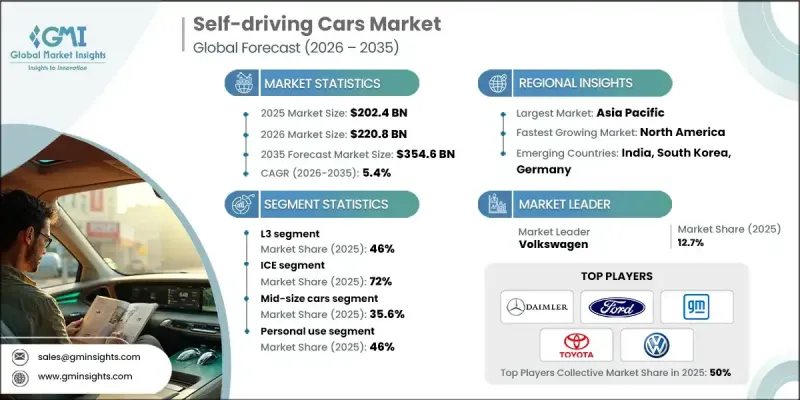
세계의 자율주행차 시장은 2025년에 2,024억 달러로 평가되었고, 2035년까지 연평균 복합 성장률(CAGR) 5.4%로 성장하여 3,546억 달러에 이를 것으로 예측됩니다.
교통 관련 위험 최소화 및 이동 효율성 향상에 대한 관심이 높아지면서 도입이 가속화되고 있습니다. 통제된 테스트와 조기 도입을 지원하는 규제 프레임워크는 자율기술의 새로운 상용화 기회를 열어주고 있습니다. 인공지능, 센싱 시스템, 고성능 컴퓨팅의 발전으로 시스템의 신뢰성과 실제 환경에서의 성능이 향상되고 있습니다. 자율주행차와 지능형 도시 인프라의 통합은 커넥티드 교통 플랫폼, 차량과 인프라 간 통신, 적응형 경로 설정 기능을 통해 시장의 모멘텀을 강화하고 있습니다. 이러한 기술은 교통 흐름을 개선하고, 교통 체증 수준을 낮추며, 에너지 소비를 줄이는 데 도움을 줍니다. 자율 이동 플랫폼의 확장은 도시 교통의 경제성을 재구축하고 차량군의 효율성을 향상시키는 동시에 확장 가능한 자동화 운송 모델을 실현함으로써 추가적인 성장을 뒷받침하고 있습니다. 자율 이동 서비스 플랫폼 시장은 자동화에 초점을 맞춘 시스템 도입 후 차량 그룹 운영자가 최소 30% 이상의 운영 비용 절감 효과를 보고함에 따라 지속적으로 확대되고 있습니다. 이러한 플랫폼은 상업적으로 실행 가능하고 확장 가능한 것으로 입증되어 자동화 운송 서비스에 대한 장기적인 신뢰를 강화하고 있습니다.
시장 범위
개시 연도
2025년
예측 연도
2026-2035년
개시 연도 가치
2,024억 달러
예측 금액
3,546억 달러
CAGR
5.4%
레벨 3 자율주행 부문은 2025년 46%의 점유율을 차지할 것으로 예상되며, 2026년부터 2035년까지 연평균 5.2%의 성장률을 보일 것으로 전망됩니다. 레벨 3 차량은 운전자가 운전 작업에서 부분적으로 해방될 수 있도록 하면서도 운전자의 준비 태세를 보장하기 위해 여러 차량 카테고리에서 널리 채택되고 있습니다. 자율주행 개발 프로그램의 상당 부분이 레벨3 기능에 초점을 맞추고 있기 때문에 지속적인 수요가 예상됩니다.
내연기관 차량 부문은 2025년 72%의 점유율을 차지할 것으로 예상되며, 2035년까지 연평균 4.8%의 성장률을 보일 것으로 전망됩니다. 이러한 차량은 기존 제조 플랫폼의 이점을 활용하고 자동화 통합을 단순화합니다. 전기 자율주행차는 소프트웨어 기반 아키텍처, 첨단 센서 어레이, 중앙집중식 컴퓨팅 시스템과의 호환성으로 인해 2위를 차지하고 있지만, 내연기관 플랫폼은 기계적 성능 특성에 크게 의존하고 있습니다.
미국 자율주행차 시장은 2025년 83%의 점유율을 차지하며 336억 달러 시장 규모를 형성할 것으로 예측됩니다. 활발한 투자 활동, 유리한 정책 이니셔티브, 가속화되는 상용화로 인해 중국은 자율주행차 개발과 장기적인 시장 성장의 핵심 거점으로서의 지위를 계속 유지하고 있습니다.
목차
제1장 조사 방법
제2장 주요 요약
제3장 업계 인사이트
생태계 분석
공급업체 상황
이익률 분석
비용 구조
각 단계 부가가치
밸류체인에 영향을 미치는 요인
파괴적 변화
업계에 대한 영향요인
업계의 잠재적 리스크&과제
시장 기회
성장 가능성 분석
규제 상황
북미
미국 국가 도로 교통안전 국(NHTSA) 자율주행차용 FMVSS 갱신
미국 운송 성(DOT) 자율주행차 양포괄 계획(AVCP)
주 레벨 자율주행 시험 허가(캘리포니아주 DMV 및 네바다주 DMV 가이드라인)
캐나다 운송 성 자율주행 시스템(ADS) 시험 가이드라인
유럽
자동차 섬유지시스템(ALKS)에 관한 유엔 유럽 경제 위원회 규칙 제 157호
유럽연합(EU) 자율주행 시스템(ADS) 형 식 인증에 관한 일반 안전 규제(GSR)
독일 연방 자동차 운송 국(KBA) 레벨 4 운전 허가
영국 자율주행차 법 및 책임 프레임워크
아시아태평양
중화 인민 공화국 산업 정보화부(MIIT) ICV 시장 참여 가이드
국토 교통성(MLIT) 레벨 4라이선싱
한국 국토 교통성(MOLIT) 자율주행차 상용 화 안전기준
자율주행차에 관한 싱가포르 기술 기준 68(TR 68)
인도 도로 운송·고속도로성(MoRTH) 신흥 ADAS 가이드라인
라틴아메리카
브라질 국가 교통 평의회(CONTRAN)에 의한 운전 지원에 관한 결의
멕시코 이동·도로 안전 기본법(LGMSV)이 자동화에 미치는 영향
칠레 운송 성에 의한 자율주행 파일럿 시험에 관한 규제
유엔 자동차 규제 조화 세계 포럼(WP.29)와의 지역 제휴
중동 및 아프리카
아랍에미리트(UAE) 도로 교통국(RTA) 자율주행 운송 규제
사우디아라비아 SASO 전기자동차 및 자율주행차용 기술 기준
이스라엘 운송 성 자율주행차 양시험 시행 가이드라인
남아프리카공화국 지능형 교통시스템(ITS)(ITS) 도입 기준
Porter의 Five Forces 분석
PESTEL 분석
기술과 혁신 동향
현재 기술 동향
신기술
가격 동향
지역별
제품별
생산 통계
생산 거점
소비 거점
수출과 수입
비용 내역 분석
특허 분석
지속가능성과 환경면
지속가능한 실천
폐기물 감축 전략
생산 에너지 효율
친환경 이니셔티브
탄소발자국에 관한 고려사항
자율주행 시스템 아키텍처와 소프트웨어 스택
자율주행 시스템 아키텍처와 스택 분석
컴퓨팅, 센서, 소프트웨어 오케스트레이션 모델
자율주행 소프트웨어, AI 및 데이터·플라이휠
검증, 테스트 및 안전성 보증 프레임워크
자율주행차 비즈니스 모델과 수익화
고정도 지도제작, V2X 및 인프라 의존성
소비자 신뢰와 보급 장벽
제4장 경쟁 구도
서론
기업의 시장 점유율 분석
북미
유럽
아시아태평양
라틴아메리카
중동 및 아프리카
주요 시장 기업의 경쟁 분석
경쟁 포지셔닝 매트릭스
전략적 전망 매트릭스
주요 발전
인수합병(M&A)
제휴 및 협업
신제품 발매
사업 확대 계획과 자금조달
제5장 시장 추산·예측 : 자율성 레벨별, 2022-2035
레벨 1
레벨 2
레벨 3
레벨 4
레벨 5
제6장 시장 추산·예측 : 추진별, 2022-2035
내연기관(ICE)
전기식
하이브리드차
제7장 시장 추산·예측 : 기술별, 2022-2035
카메라 기반 시스템
레이더 기반 시스템
LiDAR 기반 시스템
센서 퓨전 시스템
제8장 시장 추산·예측 : 차량별, 2022-2035
콤팩트 카
중형차
SUV 및 고급차
제9장 시장 추산·예측 : 용도별, 2022-2035
개인 이용
공유 모빌리티
물류·배송
공공 운송
기타
제10장 시장 추산·예측 : 지역별, 2022-2035
북미
미국
캐나다
유럽
독일
영국
프랑스
이탈리아
스페인
러시아
북유럽 국가
네덜란드
스웨덴
아시아태평양
중국
인도
일본
호주
한국
싱가포르
태국
인도네시아
베트남
라틴아메리카
브라질
멕시코
아르헨티나
중동 및 아프리카
남아프리카공화국
사우디아라비아
아랍에미리트
튀르키예
제11장 기업 개요
세계 기업
BMW
Daimler(Mercedes-Benz)
Ford Motor Company
General Motors(GM)
Honda Motor
Hyundai Motor
Stellantis
Tesla
Toyota Motor
Volkswagen
지역 기업
BYD
Geely
Renault-Nissan-Mitsubishi Alliance
SAIC Motor
Tata Motors
신흥 기업/디스럽터
Aurora Innovation
Baidu
NIO
Waymo
XPeng Motors
LSH
영문 목차
영문목차
The Global Self-driving Cars Market was valued at USD 202.4 billion in 2025 and is estimated to grow at a CAGR of 5.4% to reach USD 354.6 billion by 2035.
Increased focus on minimizing traffic-related risks and improving travel efficiency continues to accelerate adoption. Regulatory frameworks that support controlled testing and early deployment are opening new commercialization opportunities for autonomous technologies. Advancements in artificial intelligence, sensing systems, and high-performance computing are improving system reliability and real-world performance. Integration of autonomous vehicles with intelligent urban infrastructure is strengthening market momentum through connected traffic platforms, vehicle-to-infrastructure communication, and adaptive routing capabilities. These technologies are improving traffic flow, lowering congestion levels, and supporting reduced energy consumption. Growth is further supported by the expansion of autonomous mobility platforms, which are reshaping urban transportation economics and improving fleet efficiency while enabling scalable automated transport models. The autonomous mobility as a service platform market continues to expand as fleet operators report operational cost reductions of at least 30% following the adoption of automation-focused systems. These platforms are proving commercially viable and scalable, reinforcing long-term confidence in automated transportation services.
Market Scope
Start Year
2025
Forecast Year
2026-2035
Start Value
$202.4 Billion
Forecast Value
$354.6 Billion
CAGR
5.4%
The Level 3 automation segment held a 46% share in 2025 and is forecast to grow at a CAGR of 5.2% from 2026 to 2035. Level 3 vehicles allow partial disengagement from driving tasks while ensuring driver readiness, making them widely adopted across multiple vehicle categories. A significant portion of autonomous development programs continues to focus on Level 3 functionality, supporting sustained demand.
The internal combustion engine vehicles segment accounted for 72% share in 2025 and is expected to grow at a CAGR of 4.8% through 2035. These vehicles benefit from established manufacturing platforms that simplify automation integration. Electric autonomous vehicles represent the second-largest segment due to their compatibility with software-driven architectures, advanced sensor arrays, and centralized computing systems, while ICE platforms rely more heavily on mechanical performance characteristics.
United States Self-driving Cars Market held an 83% share and generated USD 33.6 billion in 2025. Strong investment activity, favorable policy initiatives, and accelerating commercial deployment continue to position the country as a central hub for autonomous vehicle development and long-term market growth.
Key companies active in the Global Self-driving Cars Market include Tesla, Toyota Motor, Hyundai Motor, Volkswagen, General Motors, BMW, Ford Motor Company, Daimler (Mercedes-Benz), Honda Motor, and BYD. Companies in the Global Self-driving Cars Market are strengthening their market position through aggressive investment in artificial intelligence, advanced driver assistance software, and proprietary autonomous platforms. Strategic partnerships with technology providers are enabling faster innovation cycles and improved system integration. Automakers are prioritizing scalable architectures that support multiple autonomy levels across vehicle portfolios. Continuous real-world testing and data-driven optimization remain central to product refinement. Firms are also focusing on regulatory alignment and safety validation to accelerate approvals. Expansion into fleet-based and mobility service models is helping companies diversify revenue streams.
Table of Contents
Chapter 1 Methodology
1.1 Research approach
1.2 Quality Commitments
1.2.1 GMI AI policy & data integrity commitment
1.2.1.1 Source consistency protocol
1.3 Research Trail & Confidence Scoring
1.3.1 Research Trail Components
1.3.2 Scoring Components
1.4 Data Collection
1.4.1 Partial list of primary sources
1.5 Data mining sources
1.5.1 Paid sources
1.5.1.1 Sources, by region
1.6 Base estimates and calculations
1.6.1 Base year calculation for any one approach
1.7 Forecast model
1.7.1 Quantified market impact analysis
1.7.1.1 Mathematical impact of growth parameters on forecast
1.8 Research transparency addendum
1.8.1 Source attribution framework
1.8.2 Quality assurance metrics
1.8.3 Our commitment to trust
Chapter 2 Executive Summary
2.1 Industry 360° synopsis, 2022 - 2035
2.2 Key market trends
2.2.1 Regional
2.2.2 Level of Autonomy
2.2.3 Propulsion
2.2.4 Technology
2.2.5 Vehicle
2.2.6 Application
2.3 TAM Analysis, 2026-2035
2.4 CXO perspectives: Strategic imperatives
2.4.1 Executive decision points
2.4.2 Critical success factors
2.5 Future outlook and strategic recommendations
Chapter 3 Industry Insights
3.1 Industry ecosystem analysis
3.1.1 Supplier landscape
3.1.2 Profit margin analysis
3.1.3 Cost structure
3.1.4 Value addition at each stage
3.1.5 Factor affecting the value chain
3.1.6 Disruptions
3.2 Industry impact forces
3.2.1.1 Growth drivers
3.2.1.2 Road safety and accident reduction
3.2.1.3 Advancements in artificial intelligence and sensors
3.2.1.4 Government testing approvals and regulations
3.2.1.5 Growth of autonomous mobility services
3.2.2 Industry pitfalls and challenges
3.2.2.1 High development and validation costs
3.2.2.2 Regulatory uncertainty across regions
3.2.3 Market opportunities
3.2.3.1 Expansion of robotaxi and autonomous fleet services
3.2.3.2 Autonomous logistics and freight transport
3.2.3.3 Integration with smart city infrastructure
3.3 Growth potential analysis
3.4 Regulatory landscape
3.4.1 North America
3.4.1.1 US National Highway Traffic Safety Administration (NHTSA) FMVSS Updates for Automated Vehicles
3.4.1.2 US Department of Transportation (DOT) Automated Vehicles Comprehensive Plan (AVCP)