자전거용 기어 시프터 시장 : 기회, 성장 요인, 산업 동향 분석 및 예측(2026-2035년)
Bicycle Gear Shifter Market Opportunity, Growth Drivers, Industry Trend Analysis, and Forecast 2026 - 2035
상품코드:1913409
리서치사:Global Market Insights Inc.
발행일:2025년 12월
페이지 정보:영문 235 Pages
라이선스 & 가격 (부가세 별도)
ㅁ Add-on 가능: 고객의 요청에 따라 일정한 범위 내에서 Customization이 가능합니다. 자세한 사항은 문의해 주시기 바랍니다.
한글목차
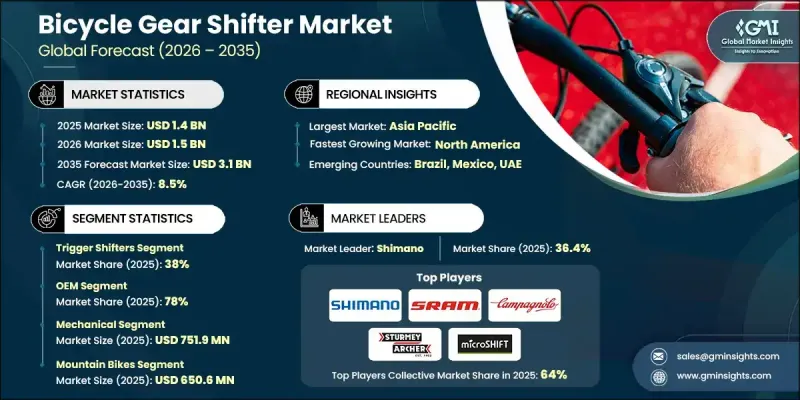
세계의 자전거용 기어 시프터 시장은 2025년 14억 달러로 평가되었으며, 2035년까지 연평균 복합 성장률(CAGR) 8.5%로 성장해 31억 달러에 이를 것으로 예측됩니다.
시장 성장은 고성능 및 맞춤형 자전거의 인기 상승, 전동 자전거의 보급 확대, 레크리에이션 및 통근 목적의 사이클링 수요 급증에 의해 견인되고 있습니다. 도시 인구 증가와 사이클링 애호가가 효율적이고 인체공학에 근거한 신뢰성이 높은 이동수단을 요구하는 가운데, 다양한 지형에서 쾌적성, 성능, 안전성을 최적화하기 위해서는 첨단 기어 시프터의 존재가 필수적입니다. 전자식 변속 시스템, 유압식 쉬프터, 스마트 접속 모듈, 경량이고 내구성이 뛰어난 소재 등의 기술 혁신은 현대의 자전거를 변화시켜 보다 매끄러운 기어 체인지, 라이더의 제어성 향상, 유지보수 경감, 에너지 효율적인 조작을 실현하고 있습니다. 경기 사이클링, 산악 자전거, 도시형 모빌리티 프로그램, 피트니스 지향의 사이클링 참여 확대도 시장 확대를 추진하고 있습니다. 무선 변속기, 인체공학 기반 핸들바 설계, 다단 카세트 호환성, 전자식 트리거 시스템 등의 추가 혁신은 사용 편의성, 부품 내구성, 종합적인 라이딩 만족도를 향상시켜 보다 광범위한 보급과 시장 성장을 가속합니다.
시장 범위
시작 연도
2025년
예측 연도
2026-2035년
시작 규모
14억 달러
예측 금액
31억 달러
CAGR
8.5%
트리거 시프터 부문은 2025년에38%의 점유율을 차지했고, 2026년부터 2035년까지 CAGR 7.9%를 보일 것으로 예측됩니다. 트리거 시프터는 정밀한 기어 제어, 인체공학 기반 설계, 산악 자전거, 하이브리드 자전거, 전동 자전거와의 폭넓은 호환성, 신속한 반응, 내구성으로 시장을 독점하고 있으며, 경기용 및 레크리에이션용 사이클리스트 모두에게 선호되는 옵션이 되고 있습니다.
OEM 부문은 2025년 78%의 점유율을 차지했고, 2035년까지 연평균 복합 성장률(CAGR) 8.2%를 보일 것으로 예측됩니다. OEM 채널은 산악 자전거, 도로 자전거, 하이브리드 자전거 및 전기 자전거 부문의 신차에 고품질의 시프터를 통합하여 성장을 이끌고 있습니다. 이를 통해 부품의 진정성, 최적의 구동계 성능, 원활한 호환성, 일관된 라이더 경험을 보장하며, OEM은 대규모 생산 및 고급 자전거를 위한 우선 옵션으로서의 지위를 확고하게 하고 있습니다.
중국의 자전거용 기어 시프터 시장은 2025년에 33%의 점유율을 차지하며 2억 3,820만 달러 규모가 되었습니다. 이 지역은 급속한 도시화, 자전거 보급 확대, 전동 자전거 플릿의 확충, 레크리에이션, 통근 및 경기용 사이클링 수요 증가 등의 혜택을 받고 있습니다. 강력한 제조 능력, 효율적인 유통 네트워크, 증가하는 소비자 의식이 세계 시장에서 이 지역의 주도적인 지위를 지원합니다.
목차
제1장 조사 방법과 범위
제2장 주요 요약
제3장 업계 인사이트
생태계 분석
공급자의 상황
이익률
비용 구조
각 단계에서의 부가가치
밸류체인에 영향을 주는 요인
혁신
업계에 미치는 영향요인
성장 요인
전동 자전거 및 고성능 자전거의 보급 확대
기술 혁신
레크리에이션 및 통근용 사이클링의 확대
커스터마이즈와 성능에 대한 수요
업계의 잠재적 위험 및 과제
고급 시프터의 고비용
신흥 시장에서의 낮은 인지도
시장 기회
전동 자전거 부문의 확대
OEM 제조업체 및 스마트 오토바이 플랫폼과의 제휴
스마트 및 커넥티드 시프터
프리미엄 및 커스터마이즈 가능한 시프터
성장 가능성 분석
규제 상황
북미
16 CFR Part 1512 - 자전거 안전 요건; ISO 표준 준수
CPSC 준수 기준 ; ISO 4210 적합성; CAN/CSA 요건
유럽
EN ISO 4210(DIN 조화 규격); 일반 제품 안전 지령(GPSD); CE 마킹 필수
EN ISO 4210 준거; GPSD(일반 제품 안전 지령) 틀; 형식 승인 요건
EN ISO 4210 : 2023 GPSD 요건; 브렉시트 후 EN 표준과의 일관성
아시아태평양
자전거 부품의 GB/T 규;변속 기구의 QC/T 규격정부 지정 검사
IS(인도 규격) 2411 - 자전거(안전 요건); ISO 4210 준거; 인도 규격국(BIS) 인증
자전거 부품의 JIS 규격; ISO 4210 채용; 시프터 내구성에 관한 엄격한 기계적 안전 요건
라틴아메리카
ABNT(브라질 기술 규격 협회) 규격; ISO 4210; 시장 진입을 위한 INMETRO 인증 요건
중동 및 아프리카
GSO(걸프 표준화 기구) 규격; ISO 4210 준거; 현지 안전 인증 요건
SABS(남아프리카 표준국) 준거; ISO 4210에 적합; 현지 제품 인증
Porter's Five Forces 분석
PESTEL 분석
기술과 혁신 동향
현재의 기술 동향
신흥기술
가격 동향
지역별
제품별
생산 통계
생산 거점
소비 거점
수출입
비용 내역 분석
특허 분석
지속가능성과 환경면
지속가능한 대처
폐기물 감축 전략
생산에서의 에너지 효율
환경에 배려한 대처
탄소발자국에 관한 고려 사항
소비자 행동 및 동향 분석
투자 및 자금 조달 분석
주요 기업에 의한 R&D 투자
자전거 기술 분야의 벤처 캐피탈
M&A 활동
부품 제조업체에 대한 프라이빗 에퀴티의 관심
제4장 경쟁 구도
소개
기업의 시장 점유율 분석
북미
유럽
아시아태평양
라틴아메리카
중동 및 아프리카
주요 시장 기업의 경쟁 분석
경쟁 포지셔닝 매트릭스
전략적 전망 매트릭스
주요 발전
인수합병
제휴 및 협업
신제품 발매
사업 확대 계획과 자금 조달
제5장 시장 추계 및 예측 : 제품별, 2022-2035년
트리거 시프터
트위스트
바엔드
그립
전자기기
기타
제6장 시장 추계 및 예측 : 기술별, 2022-2035년
기계식
전자
유압
제7장 시장 추계 및 예측 : 용도별, 2022-2035년
산악 자전거
로드 바이크
도시형 자전거
투어링용 자전거
기타
금속 기반
복합재료
제8장 시장 추계 및 예측 : 유통 채널별, 2022-2035년
OEM
애프터마켓
제9장 시장 추계 및 예측 : 지역별, 2022-2035년
북미
미국
캐나다
유럽
영국
독일
프랑스
이탈리아
스페인
벨기에
네덜란드
스웨덴
아시아태평양
중국
인도
일본
호주
싱가포르
한국
베트남
인도네시아
라틴아메리카
브라질
멕시코
아르헨티나
중동 및 아프리카
아랍에미리트(UAE)
남아프리카
사우디아라비아
제10장 기업 프로파일
글로벌 기업
Box Components
Campagnolo
FSA(Full Speed Ahead)
Magura
microSHIFT
Rotor bike component
Shimano
SRAM
SunRace Sturmey-Archer
Tektro
Rivendell Bicycle Works
지역 기업
Acros
Blackspire
Exustar
KCNC
KMC Chain
PROWHEEL
Reverse Components
Syntace
TruVativ
Veloce
신흥 제조업체
BikeYoke
Gevenalle
JAGWIRE
Pinion
JHS
영문 목차
영문목차
The Global Bicycle Gear Shifter Market was valued at USD 1.4 billion in 2025 and is estimated to grow at a CAGR of 8.5% to reach USD 3.1 billion by 2035.
Market growth is fueled by the increasing popularity of high-performance and customized bicycles, the rising adoption of electric bikes, and a surge in recreational and commuter cycling. As urban populations and cycling enthusiasts seek efficient, ergonomic, and reliable mobility solutions, advanced gear shifters are becoming indispensable for optimizing comfort, performance, and safety across diverse terrains. Technological advancements such as electronic shifting systems, hydraulic shifters, smart connectivity modules, and lightweight, durable materials are transforming modern bicycles, providing smoother gear transitions, enhanced rider control, reduced maintenance, and energy-efficient operation. Market expansion is further supported by growing participation in competitive cycling, mountain biking, urban mobility programs, and fitness-oriented cycling. Additional innovations like wireless derailleurs, ergonomic handlebar designs, multi-speed cassette compatibility, and electronic trigger systems improve usability, component longevity, and overall riding satisfaction, driving broader adoption and market growth.
Market Scope
Start Year
2025
Forecast Year
2026-2035
Start Value
$1.4 Billion
Forecast Value
$3.1 Billion
CAGR
8.5%
The trigger shifters segment held 38% share in 2025 and is projected to grow at a CAGR of 7.9% from 2026 to 2035. Trigger shifters dominate the market due to their precise gear control, ergonomic design, broad compatibility with mountain, hybrid, and electric bikes, quick response, and durability, making them a preferred choice for both competitive and recreational cyclists.
The OEM segment held 78% share in 2025 and is expected to grow at a CAGR of 8.2% through 2035. OEM channels drive growth by integrating high-quality shifters with new bicycles across mountain, road, hybrid, and electric bike segments. This ensures component authenticity, optimal drivetrain performance, seamless compatibility, and consistent rider experience, solidifying OEM as the preferred choice for large-scale production and premium bicycles.
China Bicycle Gear Shifter Market held 33% share, generating USD 238.2 million in 2025. The region benefits from rapid urbanization, widespread cycling adoption, expansion of e-bike fleets, and growing demand in recreational, commuter, and competitive cycling. Strong manufacturing capabilities, efficient distribution networks, and rising consumer awareness support the region's leadership in the global market.
Leading companies in the Global Bicycle Gear Shifter Market include microShift, SRAM, Campagnolo, Paul Components, Rivendell Bicycle Works, Shimano, Tektro, Pinion, SunRace, Sturmey Archer, and Box Components. To strengthen their presence, companies focus on continuous product innovation, introducing advanced electronic, hydraulic, and smart connectivity shifters for various bicycle segments. Strategic collaborations with OEMs and e-bike manufacturers ensure integration into new bicycles and fleet programs. Firms invest in lightweight, durable materials and ergonomic designs to enhance performance and customer satisfaction. Expanding distribution networks, strengthening after-sales support, and developing customizable solutions for competitive, commuter, and recreational riders further solidify market foothold.
Table of Contents
Chapter 1 Methodology & Scope
1.1 Market scope and definition
1.2 Research design
1.2.1 Research approach
1.2.2 Data collection methods
1.3 Data mining sources
1.3.1 Global
1.3.2 Regional/Country
1.4 Base estimates and calculations
1.4.1 Base year calculation
1.4.2 Key trends for market estimation
1.5 Primary research and validation
1.5.1 Primary sources
1.6 Forecast
1.7 Research assumptions and limitations
Chapter 2 Executive Summary
2.1 Industry 360° synopsis, 2022 - 2035
2.2 Key market trends
2.2.1 Regional
2.2.2 Product
2.2.3 Technology
2.2.4 Application
2.2.5 Distribution channel
2.3 TAM Analysis, 2026-2035
2.4 CXO perspectives: Strategic imperatives
2.4.1 Executive decision points
2.4.2 Critical success factors
2.5 Future outlook and strategic recommendations
Chapter 3 Industry Insights
3.1 Industry ecosystem analysis
3.1.1 Supplier Landscape
3.1.2 Profit Margin
3.1.3 Cost structure
3.1.4 Value addition at each stage
3.1.5 Factor affecting the value chain
3.1.6 Disruptions
3.2 Industry impact forces
3.2.1 Growth drivers
3.2.1.1 Rising adoption of e-bikes and high-performance bicycles
3.2.1.2 Technological innovations
3.2.1.3 Growing recreational and commuter cycling
3.2.1.4 Demand for customization and performance
3.2.2 Industry pitfalls and challenges
3.2.2.1 High cost of advanced shifters
3.2.2.2 Limited awareness in emerging markets
3.2.3 Market opportunities
3.2.3.1 Expansion in e-bike segment
3.2.3.2 Collaborations with OEMs and smart-bike platforms
3.2.3.3 Smart & Connected Shifters
3.2.3.4 Premium & Customizable Shifters
3.3 Growth potential analysis
3.4 Regulatory landscape
3.4.1 North America
3.4.1.1 16 CFR Part 1512 - Bicycle Safety Requirements; ISO standards compliance
3.4.1.2 CPSC aligned standards; ISO 4210 compliance; CAN/CSA requirements
3.4.2 Europe
3.4.2.1 EN ISO 4210 (DIN harmonized); General Product Safety Directive (GPSD); CE marking required
3.4.2.2 EN ISO 4210 compliance; GPSD framework; Type approval requirements
3.4.2.3 EN ISO 4210:2023; GPSD requirements; Post-Brexit alignment with EN standards
3.4.3 Asia Pacific
3.4.3.1 GB/T standards for bicycle components; QC/T standards for gear mechanisms; Government-mandated inspections
3.4.3.2 IS (Indian Standards) 2411 - Cycles (Safety Requirements); ISO 4210 alignment; Bureau of Indian Standards (BIS) certification
3.4.3.3 JIS standards for bicycle components; ISO 4210 adoption; Strict mechanical safety requirements for shifter durability
3.4.4 Latin America
3.4.4.1 ABNT (Associacao Brasileira de Normas Tecnicas) standards; ISO 4210; INMETRO certification requirements for market entry
3.4.5 Middle East and Africa
3.4.5.1 GSO (Gulf Standardization Organization) standards; ISO 4210 compliance; Local safety certification requirements
3.4.5.2 SABS (South African Bureau of Standards) alignment; ISO 4210 compliance; Local product certification
3.5 Porter's analysis
3.6 PESTEL analysis
3.7 Technology and Innovation Landscape
3.7.1 Current technological trends
3.7.2 Emerging technologies
3.8 Price trends
3.8.1 By region
3.8.2 By product
3.9 Production statistics
3.9.1 Production hubs
3.9.2 Consumption hubs
3.9.3 Export and import
3.10 Cost breakdown analysis
3.11 Patent analysis
3.12 Sustainability and Environmental Aspects
3.12.1 Sustainable practices
3.12.2 Waste reduction strategies
3.12.3 Energy efficiency in production
3.12.4 Eco-friendly initiatives
3.12.5 Carbon footprint considerations
3.13 Consumer Behavior & Trends Analysis
3.14 Investment & Funding Analysis
3.14.1 R&D investment by major players
3.14.2 Venture capital in cycling technology
3.14.3 M&A activity
3.14.4 Private equity interest in component manufacturers