Bicycle Bottom Bracket Market Opportunity, Growth Drivers, Industry Trend Analysis, and Forecast 2026 - 2035
상품코드:1892855
리서치사:Global Market Insights Inc.
발행일:2025년 12월
페이지 정보:영문 240 Pages
라이선스 & 가격 (부가세 별도)
ㅁ Add-on 가능: 고객의 요청에 따라 일정한 범위 내에서 Customization이 가능합니다. 자세한 사항은 문의해 주시기 바랍니다.
한글목차
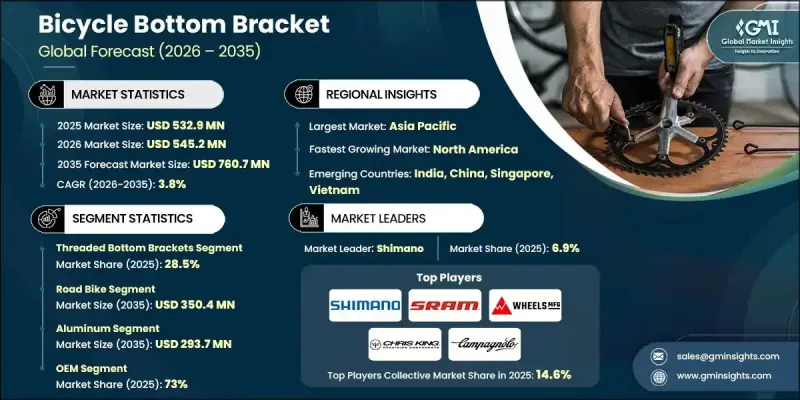
세계의 자전거 바텀 브래킷 시장은 2025년에 5억 3,290만 달러로 평가되었고, 2035년까지 연평균 복합 성장률(CAGR) 3.8%로 성장하여 7억 6,070만 달러에 이를 것으로 예측됩니다.
피트니스, 출퇴근, 레저 목적으로 자전거를 타는 인구가 증가함에 따라 내구성과 효율성이 뛰어난 파워트레인 부품에 대한 수요가 지속적으로 증가하고 있습니다. 라이더들이 중급에서 고급 자전거에 대한 투자를 늘리면서 OEM 제조업체와 애프터마켓 공급업체 모두에서 장수명 바텀 브래킷에 대한 수요가 증가하고 있습니다. 전체 시장 전망은 광범위한 자전거 산업 전반의 모멘텀을 반영하고 있으며, 여러 지역에서 강력한 성장 추세가 확인되고 있습니다. 전기자전거의 보급 확대가 주요 촉진요인이 될 것으로 보입니다. 이들 모델에는 고토크 대응, 부하 분산 개선, 진동 제어 강화가 가능한 바텀 브래킷이 요구됩니다. 이러한 변화로 인해 제조업체들은 첨단 베어링과 내구성 소재를 통합한 강화된 설계를 개발해야 하는 상황에 처해 있습니다. 전 세계적으로 전기 자전거의 판매가 가속화됨에 따라 자전거 브랜드는 긴 수명과 견고한 성능을 제공하는 바텀 브래킷 시스템에 더욱 중점을 두고 있습니다. 베어링 기술, 가공 정밀도, 마찰 감소 방법의 지속적인 발전으로 이 카테고리의 성능 기준은 향상되고 있습니다. 우수한 강성 중량비, 보다 효과적인 씰링, 긴 서비스 간격을 갖춘 제품을 제공하는 브랜드는 경쟁 우위를 강화하고 업그레이드 주기 확대 및 OEM 채택에 기여하고 있습니다.
시장 범위
개시 연도
2025년
예측 연도
2026-2035년
개시 연도 시장 규모
5억 3,290만 달러
예측 금액
7억 6,070만 달러
CAGR
3.8%
나사식 바텀 브래킷 부문은 2025년에 28.5%의 점유율을 차지하며 2035년까지 1억 7,730만 달러에 달할 것으로 예측됩니다. 이 구조는 안정적인 착용감, 내구성이 뛰어난 구조, 간단한 설치 과정으로 여전히 높은 평가를 받고 있습니다. 출퇴근용, 투어링용, 스틸 프레임, 그리고 복원에 중점을 둔 자전거의 지속적인 사용은 새로운 프레임 표준이 보급되고 있음에도 불구하고 그 중요성이 지속되고 있음을 보여줍니다. 애프터마켓의 강력한 수요로 인해 나사식 시스템은 시장에서 중요한 위치를 차지하고 있습니다.
로드바이크 용도 부문은 2025년 51.35%의 점유율을 차지할 것으로 예상되며, 2035년에는 3억 5,040만 달러에 달할 것으로 예측됩니다. 로드 사이클링은 효율성, 경량 부품, 부드러운 베어링, 통합된 성능을 중시합니다. 기존 시장에서는 안정적인 교체 수요가 유지되는 반면, 개발도상국에서는 프리미엄 바텀 브래킷 채택과 정기적인 업그레이드 기회가 확대되고 있습니다.
미국 자전거 바텀 브래킷 시장은 2025년 8,990만 달러로 평가되었습니다. 국내 자갈 라이딩의 급속한 보급으로 인해 견고한 밀봉 성능, 오염 저항성, 장기 내구성을 갖춘 바텀 브래킷에 대한 수요가 증가하고 있습니다. 혼합 지형에서도 장기적인 신뢰성, 최소한의 유지보수, 일관된 성능을 원하는 라이더가 증가함에 따라 고급 애프터마켓 솔루션에 대한 관심이 더욱 높아지고 있습니다.
목차
제1장 조사 방법
시장 범위와 정의
조사 설계
조사 접근
데이터 수집 방법
데이터 마이닝 소스
세계
지역별/국가별
기본 추정치와 계산
기준연도 계산
시장 추정 주요 동향
1차 조사와 검증
1차 정보
예측 모델
조사의 전제조건과 제한 사항
제2장 주요 요약
제3장 업계 인사이트
생태계 분석
공급업체 상황
이익률 분석
비용 구조
각 단계별 부가가치
밸류체인에 영향을 미치는 요인
파괴적 변화
업계에 대한 영향요인
성장 촉진요인
업계의 잠재적 리스크&과제
시장 기회
성장 가능성 분석
규제 상황
북미
미국 : 소비자 제품 안전 위원회(CPSC) 연방 규칙집(CFR) 제16편 제 1512부
캐나다 : 국제 표준화 기구(ISO) 4210
유럽
독일 : 독일 규격 협회(DIN) 유럽 규격(EN) ISO 4210
영국 : 유럽 규격(EN) ISO 4210/영국 적합성 평가(UKCA)
프랑스 : 유럽 규격(EN) ISO 4210
아시아태평양
중국 : 국가 표준(GB) 3565
인도 : 인도 규격(IS) 10613
일본 : 일본공업규격(JIS) D 9110
라틴아메리카
브라질 : 브라질 기술 규격 협회(ABNT) 브라질 규격(NBR) ISO 4210
멕시코 : 국제 표준화 기구(ISO) 4210
중동 및 아프리카
남아프리카공화국 : 남아프리카공화국 국가 규격(SANS) 311
사우디아라비아 : 사우디 규격·계량·품질 기구(SASO) 만안 표준화 기구(GSO) ISO 4210
Porter's Five Forces 분석
PESTEL 분석
기술과 혁신 동향
현재 기술 동향
신기술
가격 동향
지역별
제품별
생산 통계
생산 거점
소비 거점
수출입
가격 분석과 시장 경제학
지역별
제공별
비용 내역 분석
특허 분석
지속가능성과 환경 측면
지속가능한 대처
폐기물 감축 전략
생산 에너지 효율
친환경 이니셔티브
탄소발자국에 관한 고려사항
전망과 기회
제4장 경쟁 구도
서론
기업의 시장 점유율 분석
북미
유럽
아시아태평양
라틴아메리카
중동 및 아프리카
주요 시장 기업의 경쟁 분석
경쟁 포지셔닝 매트릭스
전략적 전망 매트릭스
주요 발전
인수합병(M&A)
제휴 및 협업
신제품 발매
사업 확대 계획과 자금조달
제5장 시장 추산 및 예측 : 제공별, 2021-2034
주요 동향
Threaded bottom bracket
Press-fit bottom bracket
External bottom bracket
Cartridge bottom bracket
기타
제6장 시장 추산 및 예측 : 용도별, 2021-2034
주요 동향
로드 바이크
마운틴 바이크
레이싱 바이크
그래블 바이크
제7장 시장 추산 및 예측 : 재료별, 2021-2034
주요 동향
강재
알루미늄
탄소섬유
티타늄
복합재료
제8장 시장 추산 및 예측 : 유통 채널별, 2021-2034
주요 동향
OEM
애프터마켓
제9장 시장 추산 및 예측 : 최종 용도별, 2022-2035
주요 동향
전문/경기용 자전거 운전자
레크리에이션 자전거 운전자
통근 이용자
자전거 제조업체
제10장 시장 추산 및 예측 : 지역별, 2022-2035
주요 동향
북미
미국
캐나다
유럽
독일
영국
프랑스
이탈리아
스페인
러시아
북유럽 국가
포르투갈
크로아티아
아시아태평양
중국
인도
일본
호주
한국
싱가포르
태국
인도네시아
베트남
라틴아메리카
브라질
멕시코
아르헨티나
중동 및 아프리카
남아프리카공화국
사우디아라비아
아랍에미리트(UAE)
튀르키예
제11장 기업 개요
세계 기업
Campagnolo
Full Speed Ahead(FSA)
Hope Technology
Praxis Works
Race Face
Shimano
SRAM
Wheels Manufacturing
White Industries
지역 제조업체
Cane Creek Cycling Components
Chris King Precision Components
MicroSHIFT
Stronglight
Sugino
SunRace
Token Products
VP Components
Emerging/Disruptor Players
BBInfinite
C-Bear
CeramicSpeed
Enduro Bearings
Hambini Engineering
Kogel Bearings
AbsoluteBlack
Tripeak Bearings
LSH
영문 목차
영문목차
The Global Bicycle Bottom Bracket Market was valued at USD 532.9 million in 2025 and is estimated to grow at a CAGR of 3.8% to reach USD 760.7 million by 2035.
Increasing participation in cycling for fitness, commuting, and leisure continues to elevate the need for durable and efficient power-train components. As riders invest in mid-range and premium bicycles, demand from both OEMs and aftermarket suppliers for long-lasting bottom brackets is expanding. The overall market outlook mirrors the momentum seen across the broader cycling industry, with strong growth trends visible in multiple regions. The rising adoption of electric bicycles is expected to be a major catalyst, as these models require bottom brackets capable of handling higher torque, improved load distribution, and enhanced vibration control. This shift is pushing manufacturers to develop reinforced designs that incorporate advanced bearings and durable materials. With e-bike sales accelerating globally, bicycle brands are placing greater emphasis on bottom bracket systems that deliver longevity and robust performance. Continuous advancements in bearing technology, machining precision, and friction-reduction methods are raising the performance standards within the category. Brands offering products with superior stiffness-to-weight ratios, more effective seals, and longer service intervals are strengthening their competitive edge and contributing to growing upgrade cycles and OEM adoption.
Market Scope
Start Year
2025
Forecast Year
2026-2035
Start Value
$532.9 Million
Forecast Value
$760.7 Million
CAGR
3.8%
The threaded bottom brackets segment held a 28.5% share in 2025 and is projected to reach USD 177.3 million by 2035. This configuration remains valued for its dependable fit, durable construction, and straightforward installation process. Its continued usage in commuter, touring, steel-frame, and restoration-focused bicycles highlights its ongoing relevance, even as newer frame standards gain traction. Strong aftermarket demand ensures threaded systems remain a vital part of the market.
The road bike application segment held a 51.35% share in 2025 and is anticipated to reach USD 350.4 million by 2035. Road cycling places high importance on efficiency, lightweight components, smooth bearings, and integrated performance. Established markets maintain steady replacement demand, while developing regions present expanding opportunities for premium bottom bracket adoption and regular upgrades.
US Bicycle Bottom Bracket Market was valued at USD 89.9 million in 2025. The rapid rise of gravel riding in the country is increasing the need for bottom brackets that offer robust sealing, contamination resistance, and extended durability. Riders seeking long-term reliability, minimal maintenance, and consistent performance across mixed terrain are driving greater interest in advanced aftermarket solutions.
Leading companies in the Global Bicycle Bottom Bracket Market include Campagnolo, Cane Creek Cycling Components, Chris King Precision Components, Enduro Bearings, Full Speed Ahead, Shimano, SRAM, Token Products, and Wheels Manufacturing. Companies in the Global Bicycle Bottom Bracket Market are strengthening their positions by advancing bearing technology, refining material engineering, and increasing product compatibility across multiple frame standards. Many manufacturers are investing in enhanced sealing systems, precision machining, and friction-reducing coatings to deliver smoother, longer-lasting performance. Product diversification aimed at serving both e-bike platforms and performance cycling segments is becoming a core strategic priority. Partnerships with OEMs help secure long-term integration into new bicycle models, while aftermarket-focused brands continue to expand upgrade options for riders seeking improved durability. Firms are also optimizing manufacturing processes to maintain consistent quality and reduce weight without sacrificing stiffness. Marketing efforts centered on product reliability, ease of maintenance, and technical innovation further reinforce brand competitiveness.
Table of Contents
Chapter 1 Methodology
1.1 Market scope and definition
1.2 Research design
1.2.1 Research approach
1.2.2 Data collection methods
1.3 Data mining sources
1.3.1 Global
1.3.2 Regional/Country
1.4 Base estimates and calculations
1.4.1 Base year calculation
1.4.2 Key trends for market estimation
1.5 Primary research and validation
1.5.1 Primary sources
1.6 Forecast model
1.7 Research assumptions and limitations
Chapter 2 Executive Summary
2.1 Industry 360° synopsis, 2022 - 2035
2.2 Key market trends
2.2.1 Regional
2.2.2 Offering
2.2.3 Application
2.2.4 Material
2.2.5 Distribution channel
2.2.6 End Use
2.3 TAM Analysis, 2026-2035
2.4 CXO perspectives: Strategic imperatives
2.4.1 Executive decision points
2.4.2 Critical success factors
2.5 Future outlook and strategic recommendations
Chapter 3 Industry Insights
3.1 Industry ecosystem analysis
3.1.1 Supplier landscape
3.1.2 Profit margin analysis
3.1.3 Cost structure
3.1.4 Value addition at each stage
3.1.5 Factor affecting the value chain
3.1.6 Disruptions
3.2 Industry impact forces
3.2.1.1 Growth drivers
3.2.1.2 Growth in global bicycle sales
3.2.1.3 Expansion of e-bike market
3.2.1.4 Advancements in material technology
3.2.1.5 Rising popularity of performance cycling
3.2.1.6 Aftermarket customization growth
3.2.2 Industry pitfalls and challenges
3.2.2.1 Compatibility issues across bb standards
3.2.2.2 High cost of advanced materials
3.2.3 Market opportunities
3.2.3.1 E-bike-specific bb designs
3.2.3.2 Growth in gravel/adventure cycling
3.2.3.3 Integrated and smart component adoption
3.2.3.4 Lightweight frame integration
3.3 Growth potential analysis
3.4 Regulatory landscape
3.4.1 North America
3.4.1.1 US: Consumer Product Safety Commission (CPSC) 16 Code of Federal Regulations (CFR) part 1512
3.4.1.2 Canada: International Organization for Standardization (ISO) 4210
3.4.2 Europe
3.4.2.1 Germany: Deutsches Institut fur Normung (DIN) European Norm (EN) ISO 4210
3.4.2.2 UK: European Norm (EN) ISO 4210 / United Kingdom Conformity Assessed (UKCA)
3.4.2.3 France: European Norm (EN) ISO 4210
3.4.3 Asia Pacific
3.4.3.1 China: Guobiao (GB) 3565
3.4.3.2 India: Indian Standard (IS) 10613
3.4.3.3 Japan: Japanese Industrial Standard (JIS) D 9110
3.4.4 Latin America
3.4.4.1 Brazil: Associacao Brasileira de Normas Tecnicas (ABNT) Norma Brasileira (NBR) ISO 4210
3.4.4.2 Mexico: International Organization for Standardization (ISO) 4210
3.4.5 Middle East & Africa
3.4.5.1 South Africa: South African National Standard (SANS) 311
3.4.5.2 Saudi Arabia: Saudi Standards, Metrology and Quality Organization (SASO) Gulf Standardization Organization (GSO) ISO 4210