


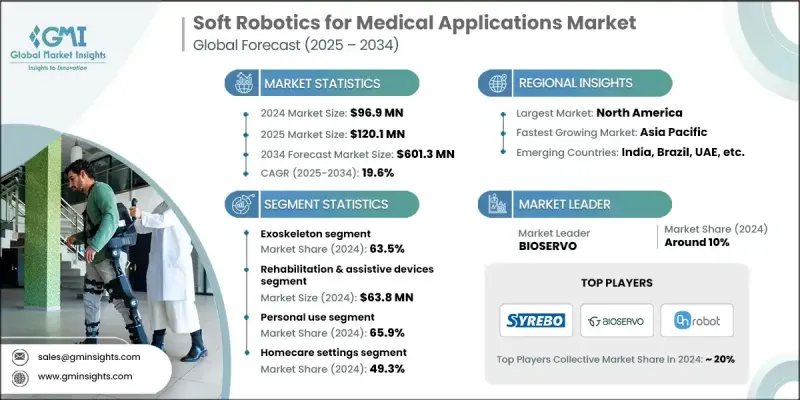
세계의 의료용 소프트 로보틱스 시장은 2024년에 9,690만 달러로 평가되었고, 2034년까지 연평균 복합 성장률(CAGR) 19.6%를 나타내 6억 130만 달러에 달할 것으로 예측되고 있습니다.
시장 성장의 주요 요인은 재료 과학과 로봇 기술의 급속한 발전에 있습니다. 엘라스토머, 하이드로겔, 형상 기억 폴리머 등의 유연한 재료의 개발로 인체와 안전하게 상호작용할 수 있는 유연하고 생체적합성이 높은 로봇 장치의 창출이 가능해졌습니다. 이러한 재료는 로봇이 신체의 윤곽에 적응할 수 있어 환자의 편안함을 향상시키고 부상 위험을 최소화합니다. 고급 센서와 통합된 소프트 로보틱스 시스템은 근육 활동, 압력, 관절의 움직임을 실시간으로 모니터링할 수 있어 치료의 정확성을 높이고 개별화된 재활을 가능하게 합니다. 이 기술적 진화는 의료 절차, 웨어러블 건강 장치, 재활 도구 및 임베디드 시스템에서 소프트 로보틱스의 활용을 확대하고 있습니다. 원격 의료, 원격 모니터링, 환자 중심 케어의 등장은 회복, 가동성, 장기적인 건강 증진을 촉진하기 위해 소프트 로보틱스 기술의 활용을 더욱 추진하고 있습니다.
| 시장 범위 | |
|---|---|
| 시작 연도 | 2024년 |
| 예측 연도 | 2025-2034년 |
| 시작 가치 | 9,690만 달러 |
| 예측 금액 | 6억130만 달러 |
| CAGR | 19.6% |
웨어러블 의료기기는 지속적인 건강 관리와 원격 치료로 매우 높은 인기를 얻고 있습니다. 소프트 로보틱스는 이 분야에 혁명을 가져오고, 재활 지원, 동작 보조, 수면의 질 향상을 촉진하는 보다 적응성이 높고 경량으로 쾌적한 웨어러블 기기를 제공합니다. 로봇 장갑과 엑소슈트 등 가정용으로 설계된 기기는 운동 기능에 제한이 있는 분이나 신경질환을 가진 환자가 스스로 치료를 받을 수 있게 하고 있습니다. 디지털 용도 및 클라우드 기반 시스템과의 통합은 실시간 모니터링, 데이터 공유 및 맞춤 치료 조정을 제공합니다. 환자의 자립성과 편의성에 대한 의식이 증가함에 따라, 웨어러블 소프트 로보틱스 솔루션은 현대 의료 시스템의 중요한 요소가되고 있습니다.
2024년 기준에서 외골격 부문은 63.5%의 점유율을 차지했습니다. 이동에 어려움을 겪는 개인 증가 외에도 외상과 노화와 관련된 운동 장애의 증례 증가는이 부문의 확대를 뒷받침합니다. 소프트로보틱스 외골격은 고도의 센서와 액추에이터를 이용해 신체의 자연스러운 움직임을 재현하여 보행·입위·재활 운동 능력의 회복을 지원합니다. 유연하고 경량인 구조로, 병원, 재택 케어 환경, 재활센터 등 다양한 환경에서의 사용에 적합합니다.
재택 관리 환경 부문은 2024년 49.3%의 점유율을 차지했습니다. 재택 재활에 소프트 로보틱스의 도입은 편리하고 저렴한 치료 솔루션을 제공함으로써 환자의 회복을 변화시키고 있습니다. 가정용으로 설계된 장치는 의료 종사자의 원격 감시를 가능하게 하면서 사용자의 편의성과 조작의 용이성에 중점을 둡니다. 이러한 기술은 통원 횟수 감소와 회복 성과 전체 향상에 기여하며 환자가 익숙한 환경에서 자발적으로 치료를 관리할 수 있습니다.
북미의 의료용 소프트 로보틱스 시장은 2024년에 52.6%의 점유율을 차지했으며 예측 기간을 통해 계속 주도적 입장을 유지할 것으로 전망됩니다. 이 지역의 이점은 첨단 의료 인프라, 연구 개발에 대한 많은 투자, 로봇 기술 및 지원 기술의 조기 도입에 의해 지원됩니다. 고령화 인구 증가와 만성 질환의 유병률 상승은 재활 및 지원 로봇 시스템에 대한 수요를 견인하여 지역 시장 성장을 더욱 강화하고 있습니다.
의료용 소프트웨어 로보틱스 시장의 주요 기업으로는 BIOSERVO, HUNIC, MyoSwiss, OnRobot, Roceso Technologies, SYREBO, SIFSOF, Somnox, SRT 등이 있습니다. 이 시장의 기업은 시장에서의 지위 강화를 위해 제품 혁신, 기술 제휴, 임상 검증에 주력하고 있습니다. 많은 기업들이 의료 용도에서 안전성, 편안함, 적응성을 높이는 생체적합성 재료 및 센서 통합 시스템 개발에 투자하고 있습니다. 병원, 연구기관, 재활센터와의 전략적 제휴는 실세계에서의 응용범위와 보급률의 확대에 기여하고 있습니다. 또, 웨어러블 디바이스나 재택 케어 기기의 사용성을 향상시키기 위해, 소형화와 무선 접속성의 실현을 우선 과제로 하고 있습니다.
The Global Soft Robotics for Medical Applications Market was valued at USD 96.9 million in 2024 and is estimated to grow at a CAGR of 19.6% to reach USD 601.3 million by 2034.
The market growth is primarily driven by rapid advancements in materials science and robotics technology. The development of soft materials such as elastomers, hydrogels, and shape-memory polymers has enabled the creation of flexible and biocompatible robotic devices that can safely interact with the human body. These materials allow the robots to adapt to body contours, improving patient comfort and minimizing the risk of injury. When integrated with advanced sensors, soft robotic systems can monitor muscle activity, pressure, and joint movement in real time, enhancing precision in therapy and enabling personalized rehabilitation. This technological evolution is expanding the use of soft robotics in medical procedures, wearable health devices, rehabilitation tools, and implantable systems. The rise of telemedicine, remote monitoring, and patient-centered care is further promoting the use of soft robotic technologies to enhance recovery, mobility, and long-term well-being.
| Market Scope | |
|---|---|
| Start Year | 2024 |
| Forecast Year | 2025-2034 |
| Start Value | $96.9 Million |
| Forecast Value | $601.3 Million |
| CAGR | 19.6% |
The wearable medical devices are gaining immense popularity for continuous health tracking and remote therapy. Soft robotics is revolutionizing this segment by delivering more adaptable, lightweight, and comfortable wearables that support rehabilitation, assist movement, and promote better sleep quality. Devices designed for home use, such as robotic gloves and exosuits, are enabling patients with limited mobility or neurological disorders to undergo therapy independently. Integration with digital applications and cloud-based systems ensures real-time monitoring, data sharing, and personalized treatment adjustments. With growing awareness around patient independence and convenience, wearable soft robotic solutions are becoming a vital part of modern healthcare systems.
The exoskeleton segment held a 63.5% share in 2024. The increasing number of individuals with mobility challenges, coupled with rising cases of trauma and age-related movement disorders, is fueling this segment's expansion. Soft robotic exoskeletons replicate the body's natural movements by using advanced sensors and actuators, helping users regain the ability to walk, stand, and perform rehabilitative exercises. Their flexible, lightweight structure makes them suitable for various settings, including hospitals, home care environments, and rehabilitation centers.
The home care settings segment held a 49.3% share in 2024. The adoption of soft robotics in home-based rehabilitation is transforming patient recovery by offering convenient and affordable care solutions. Devices designed for home use focus on user comfort and ease of operation while allowing remote supervision by healthcare providers. Such technologies help reduce hospital visits and enhance overall recovery outcomes, empowering patients to manage therapy independently in familiar surroundings.
North America Soft Robotics for Medical Applications Market held 52.6% share in 2024 and is projected to continue leading throughout the forecast period. The region's dominance is supported by its advanced healthcare infrastructure, significant investment in R&D, and early adoption of robotic and assistive technologies. A growing elderly population and the increasing prevalence of chronic conditions are driving demand for rehabilitation and assistive robotic systems, further strengthening regional market growth.
Prominent players in the Global Soft Robotics for Medical Applications Market include BIOSERVO, HUNIC, MyoSwiss, OnRobot, Roceso Technologies, SYREBO, SIFSOF, Somnox, and SRT. Companies in the Soft Robotics for Medical Applications Market are focusing on product innovation, technological collaboration, and clinical validation to strengthen their market position. Many are investing in the development of biocompatible materials and sensor-integrated systems that enhance safety, comfort, and adaptability in medical use. Strategic partnerships with hospitals, research institutions, and rehabilitation centers are helping expand real-world applications and adoption rates. Firms are also prioritizing miniaturization and wireless connectivity to improve usability in wearable and home care devices.