재활용 플라스틱 시장 기회, 성장 촉진요인, 업계 동향 분석 및 예측(2025-2034년)
Recycled Plastics Market Opportunity, Growth Drivers, Industry Trend Analysis, and Forecast 2025 - 2034
상품코드:1876546
리서치사:Global Market Insights Inc.
발행일:2025년 11월
페이지 정보:영문 230 Pages
라이선스 & 가격 (부가세 별도)
ㅁ Add-on 가능: 고객의 요청에 따라 일정한 범위 내에서 Customization이 가능합니다. 자세한 사항은 문의해 주시기 바랍니다.
한글목차
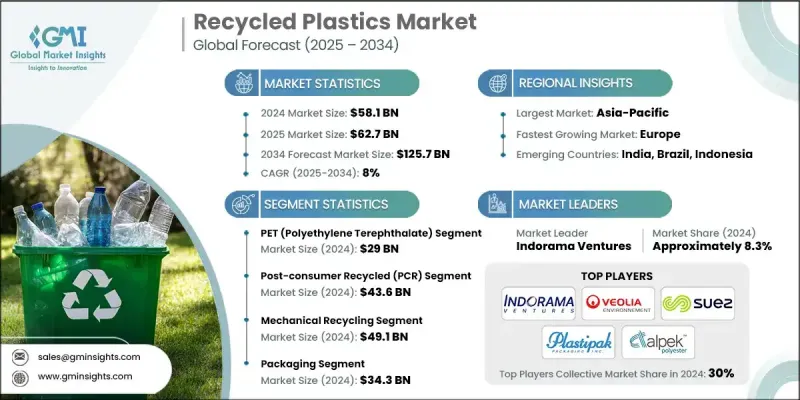
세계의 재활용 플라스틱 시장은 2024년에 581억 달러로 평가되었으며, 2034년까지 연평균 복합 성장률(CAGR) 8%를 나타내 1,257억 달러에 이를 것으로 예측됩니다.
주요 섹터 기업에서 탄소 배출량 최소화와 환경 폐기물 억제를 목적으로 한 재활용 플라스틱의 채용이 확대되고 있기 때문에 업계는 강한 기세를 보이고 있습니다. 원유 가격 상승과 기업의 지속가능성 목표는 처녀 수지에서 재활용 플라스틱으로의 전환을 촉진하고 있습니다. 필름이나 다층 용도에 필요한 순도를 달성할 수 없는 경우가 많기 때문에 기계적 재생 분쇄로부터 탈중합 등의 화학적 재생 방법에 대한 주목이 높아지고 있습니다. 대규모 프로젝트와 투자는 폐기물 감소와 재료 순환성에 대한 장기적인 해결책으로 재활용에 대한 신뢰가 높아지고 있음을 보여줍니다. 수직통합이 주요 경쟁 전략으로 부상하고 있으며, 많은 소비재 제조업체와 패션 브랜드가 원료 확보와 재료 회수 능력 강화를 위해 재활용 사업에 대한 투자와 인수를 추진하고 있습니다. 이 추세는 지속가능성, 효율성 및 처녀 고분자에 대한 의존성 감소를 선호하는 폐쇄형 루프 시스템을 구축하기 위한 시장 전반의 변화를 뒷받침합니다.
시장 범위
시작 연도
2024년
예측 연도
2025-2034년
시작 가치
581억 달러
예측 금액
1,257억 달러
CAGR
8%
PET 부문은 2024년에 290억 달러로 평가되었으며 2025년과 2034년 사이에 7.9%의 연평균 복합 성장률(CAGR)을 나타낼 전망입니다. 음료 및 섬유 부문 수요 증가로 PET는 계속 지배적인 지위를 유지하고 있습니다. 재생 소재의 사용 의무화나 업사이클 섬유 생산에 대한 관심의 고조가, 병으로부터 병에의 재활용 시스템의 보급을 가속시키고 있습니다. 패션업계에서는 브랜드가 rPET 섬유를 적극적으로 채용하는 움직임이 더욱 수요를 뒷받침하고 있으며, 원재료 조달에 있어서 큰 변화를 가져오는 동시에 세계 생산자에게 강력한 성장 기회를 창출하고 있습니다.
포장 부문은 2024년에 343억 달러로 평가되었으며, 2034년까지 연평균 복합 성장률(CAGR) 7.8%를 나타내 59%의 점유율을 차지할 것으로 추정됩니다. 포장 용도는 세계의 재생 폴리머 생산량의 절반 이상을 소비하며, 보다 엄격한 품질 기준과 추적성 기준을 채택하고 있습니다. 식품 등급 rPET의 사용은 재생재의 인증과 추적성을 의무화하는 새로운 규제 요건에 따라 급증하고 있습니다. 퍼스널케어 용기나 가정용 세제 포장 등의 비식품 용도에서는 보다 높은 재생재 함유율을 지정하는 경향이 강해지고 있어, 소비재 제조 분야 전체에서 냄새 억제형 재생 HDPE 및 PP그레이드 수요를 한층 더 자극하고 있습니다.
미국의 재활용 플라스틱 시장은 2024년 88억 달러 규모에 이르렀으며, 2034년까지 연평균 복합 성장률(CAGR) 8%를 나타낼 것으로 예측됩니다. 이 지역에서는 분산형 재활용 네트워크에서 수직 통합형 시스템으로의 전환이 진행되고 있으며, 원료의 안정적인 공급과 공급망의 강화가 도모되고 있습니다. 캘리포니아 및 미국 남동부와 같은 지역에서는 관민 협력을 통해 고품질 재생 재료(특히 rPET 및 rHDPE)에 대한 액세스가 확대되고 있습니다. AI를 활용한 선별기술의 진보와 매스밸런스 인증기준의 도입으로, 특히 유럽 및 북미의 경질 포장 용도에 있어서 재생재의 품질과 균일성이 대폭 향상되고 있습니다.
세계의 재활용 플라스틱 시장에서 주요 기업로서 Veolia Environnement, Indorama Ventures, Alpek Polyester / DAK Americas, Plastipak Holdings (Clean Tech), Suez SA 등을 들 수 있습니다. 재활용 플라스틱 시장의 주요 기업은 시장에서의 존재감과 경쟁력을 높이기 위해 몇 가지 전략적 노력을 추진하고 있습니다. 보다 높은 순도 수준을 달성하고 혼합 또는 오염된 폐기물 스트림을 처리하기 위해 화학 재활용 기술에 많은 투자를 실시했습니다. 안정적인 원료 공급을 확보하고 재활용 능력을 확대하기 위해 전략적인수와 파트너십을 구축하고 있습니다. 또한 재료의 추적성과 공급의 안정성을 확보하기 위해 폐쇄 루프 시스템과 수직 통합형 생산 모델의 개발도 진행되고 있습니다.
목차
제1장 조사 방법
시장 범위와 정의
조사 설계
조사 접근
데이터 수집 방법
데이터 마이닝의 출처
세계
지역별/국가별
기본 추정치와 계산
기준연도 계산
시장 추정에서의 주요 동향
1차 조사 및 검증
1차 정보
예측 모델
조사의 전제조건과 제한 사항
제2장 주요 요약
제3장 업계 인사이트
생태계 분석
공급자의 상황
이익률
각 단계에서의 부가가치
밸류체인에 영향을 주는 요인
파괴적 혁신
업계에 미치는 영향요인
성장 촉진요인
업계의 잠재적 위험 및 과제
시장 기회
성장 가능성 분석
규제 상황
북미
유럽
아시아태평양
라틴아메리카
중동 및 아프리카
Porter's Five Forces 분석
PESTEL 분석
가격 동향
지역별
향후 시장 동향
기술과 혁신 동향
현재의 기술 동향
신흥기술
특허 상황
무역 통계(주 : 무역 통계는 주요 국가에서만 제공됨)
주요 수입국
주요 수출국
지속가능성과 환경적 측면
지속가능한 실천
폐기물 감축 전략
생산에 있어서 에너지 효율
환경에 배려한 대처
탄소발자국에 관한 고려 사항
제4장 경쟁 구도
서론
기업의 시장 점유율 분석
지역별
북미
유럽
아시아태평양
라틴아메리카
중동 및 아프리카
기업 매트릭스 분석
주요 시장 기업의 경쟁 분석
경쟁 포지셔닝 매트릭스
주요 발전
인수 및 합병
파트너십 및 협업
신제품 발매
사업 확장 계획
제5장 시장 추계·예측 : 폴리머 유형별(2025-2034년)
주요 동향
PET(폴리에틸렌 테레프탈레이트)
병-병 재활용
섬유 용도
HDPE(고밀도 폴리에틸렌)
PP(폴리프로필렌)
LDPE(저밀도 폴리에틸렌)
PS(폴리스티렌)
기타(PVC, ABS, PC)
제6장 시장 추계·예측 : 원료 유형별(2025-2034년)
주요 동향
소비 후 재활용(PCR)
지자체 수거 시스템
보증금 반환 제도
소매점 회수 프로그램
산업 폐기물 재활용(PIR)
제7장 시장 추계·예측 : 재활용 기술별(2025-2034년)
주요 동향
기계적 재활용
화학적 재활용
열분해
탈중합
가스화
첨단 재활용 기술
제8장 시장 추계·예측 : 최종 용도별(2025-2034년)
주요 동향
포장
식품용 포장
비식품용 포장
자동차
내장 용도
외장 용도
건설 및 건축
섬유 및 의류
전자 및 전기
기타
제9장 시장 추계·예측 : 지역별(2025-2034년)
주요 동향
북미
미국
캐나다
유럽
독일
영국
프랑스
이탈리아
스페인
기타 유럽
아시아태평양
중국
인도
일본
호주
한국
기타 아시아태평양
라틴아메리카
브라질
멕시코
아르헨티나
기타 라틴아메리카
중동 및 아프리카
사우디아라비아
남아프리카
아랍에미리트(UAE)
기타 중동 및 아프리카
제10장 기업 프로파일
Indorama Ventures(IVL)
Veolia Environnement
Suez SA
Plastipak Holdings(Clean Tech)
Alpek Polyester/DAK Americas
Far Eastern New Century(FENC)
MBA Polymers
KW Plastics
Envision Plastics
Biffa plc
Evergreen(formerly CarbonLite)
Loop Industries
Waste Management(WM Recycle America)
PETCO(South Africa)
RPC bpi recycled products
Ultra-Poly Plastics
REMONDIS
ALPLA Recycling
TOMRA Recycling
PureCycle Technologies
KTH
영문 목차
영문목차
The Global Recycled Plastics Market was valued at USD 58.1 billion in 2024 and is estimated to grow at a CAGR of 8% to reach USD 125.7 billion by 2034.
The industry is experiencing strong momentum as companies across major sectors are increasingly adopting recycled plastics to minimize carbon emissions and curb environmental waste. Rising crude oil prices and corporate sustainability targets are driving the transition from virgin resins to recycled alternatives. The focus is shifting toward chemical recycling methods such as depolymerization, as mechanical regrind often fails to achieve the required purity for films and multilayer applications. Large-scale projects and investments indicate growing confidence in recycling as a long-term solution to waste reduction and material circularity. Vertical integration is emerging as a leading competitive strategy, with many fast-moving consumer goods companies and fashion brands financing or acquiring recycling operations to secure feedstock and enhance material recovery capabilities. This trend underscores a market-wide shift toward building closed-loop systems that prioritize sustainability, efficiency, and reduced reliance on virgin polymers.
Market Scope
Start Year
2024
Forecast Year
2025-2034
Start Value
$58.1 Billion
Forecast Value
$125.7 Billion
CAGR
8%
The PET segment was valued at USD 29 billion in 2024 and is forecast to register a 7.9% CAGR between 2025 and 2034. PET continues to dominate due to increased demand from the beverage and textile sectors. The growing emphasis on recycled content mandates and upcycled textile production has accelerated bottle-to-bottle recycling systems. The fashion industry is further reinforcing demand as brands increasingly use rPET fibers, marking a significant transformation in raw material sourcing and creating strong growth opportunities for producers worldwide.
The packaging segment was valued at USD 34.3 billion in 2024 and is estimated to grow at a CAGR of 7.8% through 2034, accounting for a 59% share. Packaging applications consume more than half of global recycled polymer output and are adopting stricter quality and traceability standards. Food-grade rPET usage has surged following new regulatory requirements that enforce recyclate certification and traceability. Non-food applications such as personal care containers and household cleaner packaging are now specifying higher recycled content levels, further stimulating demand for odor-controlled recycled HDPE and PP grades across consumer goods manufacturing.
U.S. Recycled Plastics Market reached USD 8.8 billion in 2024 and is expected to record an 8% CAGR by 2034. The region is transitioning from fragmented recycling networks to vertically integrated systems that enhance feedstock availability and supply chain stability. Public-private collaborations are expanding access to high-quality recycled materials, particularly rPET and rHDPE, in regions such as California and the southeastern United States. Advancements in AI-enabled sorting technologies and the implementation of mass balance certification standards are significantly improving recyclate quality and consistency, especially in rigid packaging applications across Europe and North America.
Key players active in the Global Recycled Plastics Market include Veolia Environnement, Indorama Ventures, Alpek Polyester / DAK Americas, Plastipak Holdings (Clean Tech), and Suez SA. Leading companies in the Recycled Plastics Market are pursuing several strategic initiatives to enhance their market presence and competitiveness. They are investing heavily in chemical recycling technologies to achieve higher purity levels and to process mixed or contaminated waste streams. Strategic acquisitions and partnerships are being established to secure a consistent feedstock supply and expand recycling capacity. Firms are also developing closed-loop systems and vertically integrated production models to ensure material traceability and supply stability.
Table of Contents
Chapter 1 Methodology
1.1 Market scope and definition
1.2 Research design
1.2.1 Research approach
1.2.2 Data collection methods
1.3 Data mining sources
1.3.1 Global
1.3.2 Regional/Country
1.4 Base estimates and calculations
1.4.1 Base year calculation
1.4.2 Key trends for market estimation
1.5 Primary research and validation
1.5.1 Primary sources
1.6 Forecast model
1.7 Research assumptions and limitations
Chapter 2 Executive Summary
2.1 Industry 360° synopsis
2.2 Key market trends
2.2.1 Regional
2.2.2 Polymer Type
2.2.3 Source Type
2.2.4 Recycling Technology
2.2.5 End use
2.3 TAM Analysis, 2025-2034
2.4 CXO perspectives: Strategic imperatives
2.4.1 Executive decision points
2.4.2 Critical success factors
2.5 Future Outlook and Strategic Recommendations
Chapter 3 Industry Insights
3.1 Industry ecosystem analysis
3.1.1 Supplier Landscape
3.1.2 Profit Margin
3.1.3 Value addition at each stage
3.1.4 Factor affecting the value chain
3.1.5 Disruptions
3.2 Industry impact forces
3.2.1 Growth drivers
3.2.2 Industry pitfalls and challenges
3.2.3 Market opportunities
3.3 Growth potential analysis
3.4 Regulatory landscape
3.4.1 North America
3.4.2 Europe
3.4.3 Asia Pacific
3.4.4 Latin America
3.4.5 Middle East & Africa
3.5 Porter's analysis
3.6 PESTEL analysis
3.7 Price trends
3.7.1 By region
3.8 Future market trends
3.9 Technology and Innovation landscape
3.9.1 Current technological trends
3.9.2 Emerging technologies
3.10 Patent Landscape
3.11 Trade statistics (Note: the trade statistics will be provided for key countries only)
3.11.1 Major importing countries
3.11.2 Major exporting countries
3.12 Sustainability and Environmental Aspects
3.12.1 Sustainable Practices
3.12.2 Waste Reduction Strategies
3.12.3 Energy Efficiency in Production
3.12.4 Eco-friendly Initiatives
3.13 Carbon Footprint Considerations
Chapter 4 Competitive Landscape, 2024
4.1 Introduction
4.2 Company market share analysis
4.2.1 By region
4.2.1.1 North America
4.2.1.2 Europe
4.2.1.3 Asia Pacific
4.2.1.4 LATAM
4.2.1.5 MEA
4.3 Company matrix analysis
4.4 Competitive analysis of major market players
4.5 Competitive positioning matrix
4.6 Key developments
4.6.1 Mergers & acquisitions
4.6.2 Partnerships & collaborations
4.6.3 New Product Launches
4.6.4 Expansion Plans
Chapter 5 Market Estimates and Forecast, By Polymer Type, 2025 - 2034 (USD Million, Kilo Tons)
5.1 Key trends
5.2 PET (Polyethylene terephthalate)
5.2.1 Bottle-to-bottle recycling
5.2.2 Textile fiber applications
5.3 HDPE (High-density polyethylene)
5.4 PP (Polypropylene)
5.5 LDPE (Low-density polyethylene)
5.6 PS (Polystyrene)
5.7 Others (PVC, ABS, PC)
Chapter 6 Market Estimates and Forecast, By Source Type, 2025 - 2034 (USD Million, Kilo Tons)
6.1 Key trends
6.2 Post-consumer recycled (PCR)
6.2.1 Municipal collection systems
6.2.2 Deposit-return schemes
6.2.3 Retail take-back programs
6.3 Post-industrial recycled (PIR)
Chapter 7 Market Estimates and Forecast, By Recycling Technology, 2025 - 2034 (USD Million, Kilo Tons)
7.1 Key trends
7.2 Mechanical recycling
7.3 Chemical recycling
7.3.1 Pyrolysis
7.3.2 Depolymerization
7.3.3 Gasification
7.4 Advanced recycling technologies
Chapter 8 Market Estimates and Forecast, By End use, 2025 - 2034 (USD Million, Kilo Tons)
8.1 Key trends
8.2 Packaging
8.2.1 Food-grade packaging
8.2.2 Non-food packaging
8.3 Automotive
8.3.1 Interior applications
8.3.2 Exterior applications
8.4 Construction and building
8.5 Textiles and apparel
8.6 Electronics and electrical
8.7 Others
Chapter 9 Market Estimates and Forecast, By Region, 2025 - 2034 (USD Million, Kilo Tons)