Personalized Nutrition Market Opportunity, Growth Drivers, Industry Trend Analysis, and Forecast 2025 - 2034
상품코드:1871221
리서치사:Global Market Insights Inc.
발행일:2025년 10월
페이지 정보:영문 230 Pages
라이선스 & 가격 (부가세 별도)
ㅁ Add-on 가능: 고객의 요청에 따라 일정한 범위 내에서 Customization이 가능합니다. 자세한 사항은 문의해 주시기 바랍니다.
한글목차
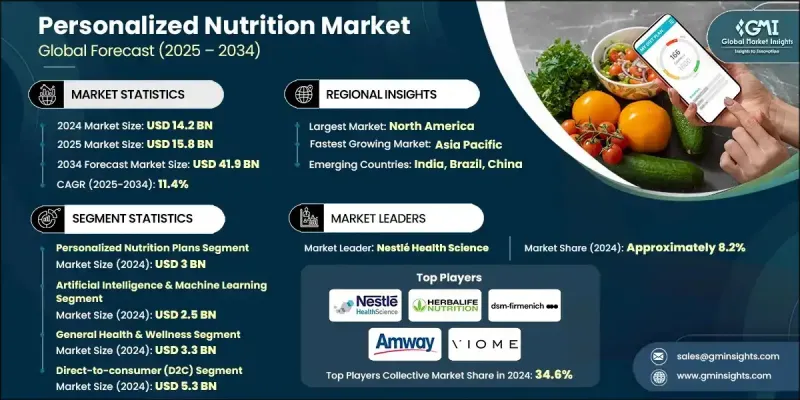
세계의 맞춤형 영양 시장은 2024년 142억 달러로 평가되었으며, 2034년까지 연평균 복합 성장률(CAGR) 11.4%로 성장하여 419억 달러에 이를 것으로 예측됩니다.
최근 유전체학와 디지털 헬스 플랫폼의 진보, 그리고 개별화된 웰니스 솔루션에 대한 관심이 높아짐에 따라 시장은 계속 확대되고 있습니다. 뉴트리유전체학와 마이크로바이옴에 초점을 맞춘 다이어트에 대한 관심 증가는 과학적 연구와 상업적 혁신의 교차점이 확대되고 있음을 보여줍니다. 유행에 따라 면역 지원과 예방 영양 솔루션을 요구하는 개인이 증가함에 따라 맞춤형 건강 접근법의 도입이 크게 가속화되었습니다. 맞춤형 웰빙 서비스는 실시간 데이터 분석, 유전자 검사 및 생체 측정 추적을 통합하고 적응력이 높고 정밀한 영양 권장 사항을 제공하는 경향이 있습니다. AI 기반 플랫폼, 스마트 웨어러블 및 모바일 애플리케이션의 조합은 소비자가 자신의 건강을 모니터링하고 관리하는 방식을 변화시키고 적극적이고 데이터 중심의 웰빙 관리로의 전환을 촉진합니다. 자기 측정, 편의성 및 커스터마이제이션을 추구하는 세계 동향은 매일 영양 및 건강 습관에서 맞춤형 통찰과 측정 가능한 결과를 제공하는 솔루션에 대한 수요를 더욱 강화하고 있습니다.
시장 범위
시작 연도
2024년
예측 기간
2025-2034년
시작 금액
142억 달러
예측 금액
419억 달러
CAGR
11.4%
맞춤형 영양 계획 부문은 2024년 30억 달러에 달했고, 2025년에서 2034년까지 연평균 복합 성장률(CAGR) 12%를 보일 것으로 예측됩니다. 이 확장은 디지털 추적 도구, DNA 및 마이크로 바이옴 검사, 구독 기반 식단 및 보충 프로그램의 소비자에 의한 채용 증가로 추진되고 있습니다. 스마트 영양 플랫폼은 현재 사용자 데이터를 통합하고 특정 건강 요구를 충족하도록 설계된 맞춤식 다이어트 지도, 기능성 식품 및 보충제를 제공합니다. AI를 활용한 계획 시스템의 보급에 의해 실시간으로의 식사 조정이 가능해져 정밀 영양 솔루션을 요구하는 소비자의 지속률과 성과의 향상을 도모하고 있습니다.
인공지능(AI) 및 머신러닝 부문은 2024년 25억 달러로 평가되었으며 2025년부터 2034년까지 연평균 복합 성장률(CAGR) 9.7%를 보일 것으로 예측됩니다. AI와 유전체학, 빅데이터, 행동 분석의 통합은 영양 조언이 개인화되는 방식을 재구성하고 있습니다. 고급 알고리즘은 유전자 프로파일, 마이크로바이옴 구성, 생활 습관 지표를 분석하고 개인의 생물학적 반응에 맞는 권장 사항을 제공합니다. 연결 장치, 모바일 앱 및 웨어러블 센서의 조합을 통해 사용자는 진행 상황을 지속적으로 추적하여 적응형 및 사용자 중심 영양 관리를 지원합니다.
북미의 맞춤형 영양 시장은 2024년 54억 달러에 달했습니다. 미국은 견고한 디지털 헬스 인프라, 확대하는 소비자를 위한 직접 판매 브랜드, 고급 유전체 검사 능력으로 이 성장을 이끌고 있습니다. 캐나다도 예방의료와 개인화 웰빙 기술에 주력하여 현저한 진전을 보이고 있지만, 2024년 시장 규모는 10억 달러를 밑돌고 있습니다. 이 지역의 기술적 성숙도와 소비자의 혁신 수용성은 업계의 주도적 지위를 지속적으로 지원하고 있습니다.
세계 맞춤형 영양 시장에서 활동하는 주요 기업으로는 Amway, Nestle Health Science, DSM-Firmenich, Herbalife Nutrition, Viome 등이 있습니다. 맞춤형 영양 시장의 기반 강화를 위해 주요 기업은 디지털 전환, 전략적 제휴, 제품 혁신에 중점을 둔 전략을 추진하고 있습니다. 각 회사는 AI 기반의 분석 플랫폼을 확충하고, 고도로 맞춤형 영양 분석과 개별 대응형 보충 프로그램을 제공합니다. 바이오테크놀러지 기업이나 디지털 헬스 스타트업과의 연계에 의해 DNA나 마이크로바이옴을 기반으로 한 제품 개발의 가속을 도모하고 있습니다.
목차
제1장 조사 방법
시장 범위와 정의
조사 설계
조사 접근
데이터 수집 방법
데이터 마이닝 소스
세계
지역별/국가별
기본 추정치와 계산
기준연도 계산
시장 추정에서의 주요 동향
1차 조사 및 검증
1차 정보
예측 모델
조사의 전제조건과 제한 사항
제2장 주요 요약
제3장 업계 인사이트
생태계 분석
공급자의 상황
이익률
각 단계에서의 부가가치
밸류체인에 영향을 주는 요인
혁신
업계에 미치는 영향요인
성장 촉진요인
업계의 잠재적 위험 및 과제
시장 기회
성장 가능성 분석
규제 상황
북미
유럽
아시아태평양
라틴아메리카
중동 및 아프리카
Porter's Five Forces 분석
PESTEL 분석
가격 동향
지역별
장래 시장 동향
기술과 혁신의 상황
현재의 기술 동향
신흥기술
특허 상황
무역 통계(주: 무역 통계는 주요 국가에서만 제공됨)
주요 수입국
주요 수출국
지속가능성과 환경적 측면
지속가능한 대처
폐기물 감축 전략
생산에 있어서의 에너지 효율
환경에 배려한 대처
탄소발자국에 관한 고려 사항
제4장 경쟁 구도
소개
기업의 시장 점유율 분석
지역별
북미
유럽
아시아태평양
라틴아메리카
중동 및 아프리카
기업 매트릭스 분석
주요 시장 기업의 경쟁 분석
경쟁 포지셔닝 매트릭스
주요 발전
인수합병
제휴 및 협력관계
신제품 발매
사업 확대 계획
제5장 시장 추계 및 예측 : 제품 및 서비스 유형별, 2025-2034년
주요 동향
액티브 측정 및 평가 툴
DNA 및 유전자 검사 키트
마이크로바이옴 및 장내 환경 검사
혈액 바이오마커 분석
웨어러블 건강 트래커
모바일 건강 앱
맞춤형 영양 계획
식사 및 식단 계획 플랫폼
정기 구입형 영양 서비스
AI 활용 영양 어드바이스
맞춤형 보충제
커스텀 비타민 및 미네랄
프로바이오틱스 프리바이오틱스
기능성 식음료
스포츠 영양학
맞춤형 식품 제품
맞춤형 식사 키트
기능성 간식
강화 식품
컨설팅 및 코칭 서비스
등록 영양사 및 관리 영양사에 의한 상담
건강 및 웰빙 코칭
원격 영양 서비스
제6장 시장 추계 및 예측 : 기술별, 2025-2034년
주요 동향
인공지능(AI) 및 머신러닝
빅데이터 분석
유전체학 및 뉴트리유전체학
마이크로바이옴 시퀀싱
디지털 헬스 플랫폼
모바일 애플리케이션
웨어러블 디바이스 통합
데이터 보안 및 추적성을 위한 블록체인
제7장 시장 추계 및 예측 : 용도별, 2025-2034년
주요 동향
종합 건강 및 웰빙
체중 관리
스포츠 및 피트니스
소화기 및 장 건강
질병 예방 및 관리
당뇨병
심혈관 건강
식품 알레르기 및 불내증
기타 만성질환
건강한 고령화
소아영양학
제8장 시장 추계 및 예측 : 최종 용도별, 2025-2034년
주요 동향
소비자용 직접 판매(D2C)
기업용 건강 증진 프로그램
의료 제공업체
피트니스 및 스포츠 센터
연구기관 및 학술기관
식음료 제조업체
약국 및 소매점
제9장 시장 추계 및 예측 : 지역별, 2025-2034년
주요 동향
북미
미국
캐나다
유럽
독일
영국
프랑스
이탈리아
스페인
기타 유럽
아시아태평양
중국
인도
일본
호주
한국
기타 아시아태평양
라틴아메리카
브라질
멕시코
아르헨티나
기타 라틴아메리카
중동 및 아프리카
사우디아라비아
남아프리카
아랍에미리트(UAE)
기타 중동 및 아프리카
제10장 기업 프로파일
Nestle Health Science
Herbalife Nutrition
DSM-Firmenich
Amway
Viome
Nutrigenomix
Persona Nutrition
Care/of
DayTwo
23andMe
InsideTracker
Noom
MyFitnessPal
Teladoc Health
Habit
FoodMarble
GNC Holdings
Bayer AG
Abbott Laboratories
Unilever
JHS
영문 목차
영문목차
The Global Personalized Nutrition Market was valued at USD 14.2 Billion in 2024 and is estimated to grow at a CAGR of 11.4% to reach USD 41.9 Billion by 2034.
The market has expanded in recent years due to advancements in genomics, digital health platforms, and an increasing emphasis on tailored wellness solutions. The rising interest in nutrigenomics and microbiome-focused diets highlights the growing intersection between scientific research and commercial innovation. The pandemic significantly accelerated the adoption of personalized health approaches as individuals sought immune-supportive and preventive nutrition solutions. Personalized wellness services are increasingly integrating real-time data analytics, genetic testing, and biometric tracking to deliver adaptive and precise nutritional recommendations. The combination of AI-based platforms, smart wearables, and mobile applications is transforming how consumers monitor and manage their health, encouraging a shift toward proactive and data-driven wellness management. The global trend toward self-quantification, convenience, and customization continues to strengthen demand for solutions that offer personalized insights and measurable results in daily nutrition and health routines.
Market Scope
Start Year
2024
Forecast Year
2025-2034
Start Value
$14.2 Billion
Forecast Value
$41.9 Billion
CAGR
11.4%
The personalized nutrition plans segment reached USD 3 Billion in 2024 and is forecast to grow at a CAGR of 12% during 2025-2034. This expansion is driven by increasing consumer adoption of digital tracking tools, DNA and microbiome testing, and subscription-based meal and supplement programs. Smart nutrition platforms now integrate user data to offer customized diet guidance, functional foods, and supplements designed to target specific health needs. The growing use of AI-powered planning systems allows real-time dietary adjustments, improving adherence and results for consumers pursuing precision nutrition solutions.
The artificial intelligence and machine learning segment was valued at USD 2.5 Billion in 2024 and is projected to grow at a CAGR of 9.7% from 2025 to 2034. AI integration with genomics, big data, and behavioral analytics is reshaping how nutritional advice is personalized. Advanced algorithms analyze genetic profiles, microbiome compositions, and lifestyle metrics to deliver recommendations tailored to individual biological responses. The combination of connected devices, mobile apps, and wearable sensors enables users to track progress continuously, supporting adaptive and user-centric nutrition management.
North America Personalized Nutrition Market reached USD 5.4 Billion in 2024. The United States leads this growth due to its strong digital health infrastructure, expanding direct-to-consumer brands, and sophisticated genomic testing capabilities. Canada is also showing notable progress, focusing on preventive healthcare and personalized wellness technologies, although its market value remains below USD 1 Billion in 2024. The region's technological maturity and consumer openness to innovation continue to drive its leading position in the industry.
Major companies active in the Global Personalized Nutrition Market include Amway, Nestle Health Science, DSM-Firmenich, Herbalife Nutrition, and Viome. To strengthen their foothold in the Personalized Nutrition Market, key players are pursuing strategies focused on digital transformation, strategic partnerships, and product innovation. Companies are expanding their AI-based analytics platforms to offer hyper-personalized nutrition insights and tailored supplement programs. Collaborations with biotech firms and digital health startups help accelerate the development of DNA- and microbiome-driven products.
Table of Contents
Chapter 1 Methodology
1.1 Market scope and definition
1.2 Research design
1.2.1 Research approach
1.2.2 Data collection methods
1.3 Data mining sources
1.3.1 Global
1.3.2 Regional/Country
1.4 Base estimates and calculations
1.4.1 Base year calculation
1.4.2 Key trends for market estimation
1.5 Primary research and validation
1.5.1 Primary sources
1.6 Forecast model
1.7 Research assumptions and limitations
Chapter 2 Executive Summary
2.1 Industry 360° synopsis
2.2 Key market trends
2.2.1 Regional
2.2.2 Product/service type
2.2.3 Technology
2.2.4 Application
2.2.5 End Use
2.3 TAM Analysis, 2025-2034
2.4 CXO perspectives: Strategic imperatives
2.4.1 Executive decision points
2.4.2 Critical success factors
2.5 Future Outlook and Strategic Recommendations
Chapter 3 Industry Insights
3.1 Industry ecosystem analysis
3.1.1 Supplier landscape
3.1.2 Profit margin
3.1.3 Value addition at each stage
3.1.4 Factor affecting the value chain
3.1.5 Disruptions
3.2 Industry impact forces
3.2.1 Growth drivers
3.2.2 Industry pitfalls and challenges
3.2.3 Market opportunities
3.3 Growth potential analysis
3.4 Regulatory landscape
3.4.1 North America
3.4.2 Europe
3.4.3 Asia Pacific
3.4.4 Latin America
3.4.5 Middle East & Africa
3.5 Porter's analysis
3.6 PESTEL analysis
3.7 Price trends
3.7.1 By region
3.8 Future market trends
3.9 Technology and Innovation landscape
3.9.1 Current technological trends
3.9.2 Emerging technologies
3.10 Patent Landscape
3.11 Trade statistics (Note: the trade statistics will be provided for key countries only)
3.11.1 Major importing countries
3.11.2 Major exporting countries
3.12 Sustainability and environmental aspects
3.12.1 Sustainable practices
3.12.2 Waste reduction strategies
3.12.3 Energy efficiency in production
3.12.4 Eco-friendly initiatives
3.13 Carbon footprint considerations
Chapter 4 Competitive Landscape, 2024
4.1 Introduction
4.2 Company market share analysis
4.2.1 By region
4.2.1.1 North America
4.2.1.2 Europe
4.2.1.3 Asia Pacific
4.2.1.4 LATAM
4.2.1.5 MEA
4.3 Company matrix analysis
4.4 Competitive analysis of major market players
4.5 Competitive positioning matrix
4.6 Key developments
4.6.1 Mergers & acquisitions
4.6.2 Partnerships & collaborations
4.6.3 New Product Launches
4.6.4 Expansion Plans
Chapter 5 Market Estimates and Forecast, By Product/Service Type, 2025 - 2034 (USD Billion)