


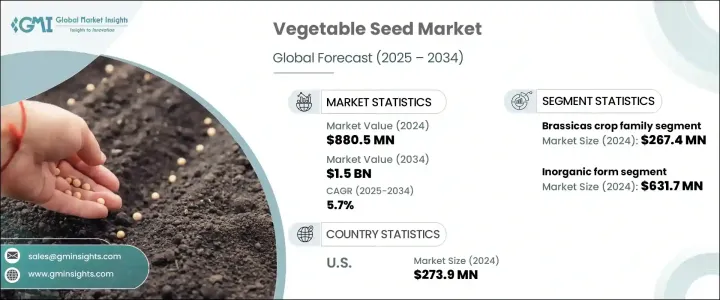
세계의 야채 씨앗 시장은 2024년에는 8억 8,050만 달러로 평가되었고 신선한 농산물에 대한 전 세계 수요 증가, 씨앗 개발 발전, 지속 가능한 농업 관행의 실시 증가 등을 배경으로 2034년에는 15억 달러에 달할것으로 예측되며, CAGR 5.7%로 성장할 전망입니다.
이러한 성장은 건강, 영양, 기후 회복력이 중심이 되고 있는 글로벌 식품 시스템의 역동적인 변화를 반영합니다. 특히 도시 및 준도시 지역에서 식물성 식단의 이점에 대한 소비자 인식이 지속적으로 높아지면서 신선한 야채에 대한 수요가 꾸준히 증가하고 있습니다. 라이프스타일과 관련된 건강 문제가 급증하고 유기농 및 클린 라벨 제품에 대한 선호도가 높아지면서 소비자들은 더 신선하고 영양이 풍부한 야채를 선호하고 있습니다.
이러한 추세는 지속 가능한 농업에 대한 정부의 강력한 지원과 씨앗 기술 분야 전반의 R&D 활동 강화로 더욱 강화되고 있습니다. 기업들은 더 나은 수확량, 해충에 대한 탄력성, 향상된 영양 프로필을 제공하는 품종을 개발하기 위해 CRISPR 및 마커 보조 선발을 포함한 첨단 육종 기술을 활용하고 있습니다. 수경 재배, 아쿠아포닉스, 수직 농업과 같은 제어 환경 농업의 인기가 높아지면서 정밀 농업 환경에 맞는 고성능 야채 씨앗에 대한 새로운 길이 열리고 있습니다. 또한 공급망 효율성, 농업 운영의 디지털화, 통합 해충 관리 시스템은 지역 전반에 걸쳐 야채 작물 생산의 전반적인 생산성과 수익성을 향상시키고 있습니다.
| 시장 범위 | |
|---|---|
| 시작 연도 | 2024년 |
| 예측 연도 | 2025-2034년 |
| 시작 금액 | 8억 8,050만 달러 |
| 예측 금액 | 15억 달러 |
| CAGR | 5.7% |
특히 신흥 시장에서 소비자들이 더 건강한 식단으로 전환함에 따라 신선하고 영양이 풍부한 야채에 대한 수요가 빠르게 증가하고 있습니다. 재래식 및 생명공학 씨앗 육종 분야의 기술 혁신으로 수확량이 향상되고, 질병 저항성이 강화되고, 작물이 기후 변화에 더 잘 견딜 수 있게 되었습니다. 꾸준한 도시화 추세로 인해 통제된 환경과 제한된 공간에 적합한 특수 고성능 야채 씨앗이 필요한 수경 재배 및 수직 재배 시스템의 도입이 가속화되고 있습니다. 이러한 변화로 인해 씨앗 개발자들은 혁신을 우선시하여 진화하는 도시 농업 모델에 부합하는 프리미엄급 품종을 개발하도록 장려하고 있습니다.
다양한 야채 종류에 대한 소비자의 관심과 환경에 대한 인식이 높아지는 것도 수요를 촉진하고 있습니다. 소비자들은 이제 가보, 유기농, 유전자 변형이 없는 야채를 찾고 있으며, 이에 따라 지속 가능성 목표를 지원하는 프리미엄 야채 씨앗의 채택이 증가하고 있습니다. 특히 기후 변화로 인해 식량 안보가 전 세계적인 관심사로 떠오르면서 주요 업계에서는 향상된 특성을 가진 씨앗를 개발하는 데 주력하고 있습니다. 여기에는 해충, 가뭄, 극한 온도에 대한 저항성 등 대규모 재배에 더욱 안정적인 특성을 가진 씨앗이 포함됩니다. 기업들은 탄력적이고 대응력이 뛰어난 농업 시스템을 구축하기 위해 씨앗 생산 및 기술 통합부터 간소화된 유통 플랫폼에 이르기까지 가치 사슬 전반에 걸쳐 상당한 투자를 하고 있습니다.
2024년 브로콜리, 양배추, 콜리플라워와 같은 야채를 포함한 브라시카 카테고리는 다양한 기후 조건에서 잘 자라는 능력과 풍부한 비타민 및 항산화 물질로 인해 2억 6,740만 달러의 시장 가치를 창출했습니다. 영양을 넘어 신선 소비와 가공 식품에 널리 사용되어 상업적으로도 매력적입니다. 또한 브라시카는 윤작을 통해 토양의 건강을 증진하고 해충을 자연적으로 억제함으로써 재생 농업을 지원하므로 신흥 시장과 기존 시장 모두에서 지속 가능한 농업 시스템을 위한 전략적 작물로 주목받고 있습니다.
씨앗 유형별로는 무기 씨앗이 2024년 6억 3,170만 달러로 75.7%의 압도적인 시장 점유율을 차지할 것으로 예상됩니다. 이러한 하이브리드 품종은 더 높은 수확량, 더 빠른 성장 주기, 해충 및 질병에 대한 더 나은 저항성을 제공하도록 특별히 개발되었습니다. 기계화와 농약이 많이 사용되는 집약적인 농업 환경에서 높은 성능을 발휘하기 때문에 생산량을 최적화하고 일관된 공급망에 대한 증가하는 수요를 충족하고자 하는 상업적 재배자에게 선호되는 선택입니다. 글로벌 식품 공급망이 더욱 통합되고 까다로워지면서 하이브리드 씨앗 채택에 대한 관심은 여전히 높습니다.
미국의 야채 씨앗 시장은 2024년에 2억 7,390만 달러에 달했으며 2034년까지 5.5%의 연평균 성장률(CAGR)로 성장할 것으로 예상됩니다. 현지에서 재배한 신선한 농산물에 대한 소비자의 관심이 증가하면서 시장이 지속적으로 성장하고 있습니다. 식품 선호도가 변화하고 건강에 대한 인식이 높아지면서 잎야채, 토마토, 오이 같은 야채에 대한 수요가 증가하고 있습니다. 이는 영양가, 수확량 안정성, 질병 내성 개선에 중점을 두고 유기농 및 일반 씨앗 혁신에 대한 더 많은 투자로 이어지고 있습니다.
코르테바 아그리스 사이언스(Corteva Agriscience), 신젠타 그룹(Syngenta Group), 어드밴타 시즈(Advanta Seeds), 엔자 자덴(Enza) Zaden)과 같은 대기업은 시장 입지를 강화하기 위해 내병성 잡종과 기후 탄력성 품종에 대한 R&D 노력을 우선순위에 두고 있습니다. 또한 시장 도달 범위를 개선하고 규제 요건을 준수하기 위해 지역 유통업체와의 전략적 파트너십을 확대하고 있습니다. 이러한 노력은 기업이 글로벌 지속가능성 목표에 부합하는 동시에 다양한 농업 생태계에서 진화하는 재배자의 요구를 충족하는 데 도움이 되고 있습니다.
The Global Vegetable Seed Market was valued at USD 880.5 million in 2024 and is estimated to grow at a CAGR of 5.7% to reach USD 1.5 billion by 2034, driven by the rising global demand for fresh produce, advancements in seed development, and increasing implementation of sustainable agricultural practices. This growth reflects a dynamic shift in global food systems, where health, nutrition, and climate resilience are taking center stage. As consumer awareness about the benefits of plant-based diets continues to rise, particularly in urban and semi-urban regions, the demand for fresh vegetables is witnessing steady traction. The surge in lifestyle-related health issues and a growing inclination toward organic and clean-label products are pushing consumers toward fresher, more nutrient-rich vegetables.
These trends are further reinforced by strong governmental support for sustainable agriculture and heightened R&D activity across the seed technology space. Companies are leveraging advanced breeding techniques, including CRISPR and marker-assisted selection, to develop varieties that offer better yields, resilience to pests, and improved nutritional profiles. The rising popularity of controlled-environment agriculture-such as hydroponics, aquaponics, and vertical farming-is also opening up new avenues for high-performance vegetable seeds customized for precision farming environments. Additionally, supply chain efficiencies, the digitization of agricultural operations, and integrated pest management systems are enhancing the overall productivity and profitability of vegetable crop production across regions.
| Market Scope | |
|---|---|
| Start Year | 2024 |
| Forecast Year | 2025-2034 |
| Start Value | $880.5 Million |
| Forecast Value | $1.5 Billion |
| CAGR | 5.7% |
As consumers shift toward healthier diets, especially in emerging markets, the need for fresh, nutrient-rich vegetables is rapidly increasing. Technological innovations in both conventional and biotech seed breeding are improving yields, enhancing disease resistance, and enabling crops to better withstand climate variability. The steady urbanization trend is accelerating the adoption of hydroponic and vertical farming systems, which require specialized, high-performance vegetable seeds tailored for controlled environments and limited space. This shift is encouraging seed developers to prioritize innovation, leading to premium-grade varieties that align with evolving urban agriculture models.
Consumer interest in diverse vegetable types and growing environmental awareness are also fueling demand. Shoppers are now seeking out heirloom, organic, and non-GMO vegetables, prompting higher adoption of premium vegetable seeds that support sustainability goals. With food security becoming a global concern, especially in the wake of climate-related disruptions, major industry players are doubling down on developing seeds with enhanced traits. These include resistance to pests, drought, and extreme temperatures-making them more reliable for large-scale cultivation. Companies are investing significantly across the value chain, from seed production and technology integration to streamlined distribution platforms, in order to build resilient and responsive agricultural systems.
In 2024, the brassicas category-including vegetables like broccoli, cabbage, and cauliflower-generated USD 267.4 million in market value due to their ability to thrive across various climatic conditions and their rich profile of vitamins and antioxidants. Their popularity extends beyond nutrition; they are widely used in both fresh consumption and processed food applications, making them commercially attractive. Brassicas also support regenerative agricultural practices by enhancing soil health through crop rotation and naturally deterring pests, which makes them a strategic crop for sustainable farming systems now gaining traction in both emerging and established markets.
By seed type, inorganic seeds captured a dominant 75.7% market share, accounting for USD 631.7 million in 2024. These hybrid varieties are specifically developed to deliver higher yields, quicker growth cycles, and better resistance to pests and diseases. Their high performance in intensive farming environments-where mechanization and agrochemicals are heavily used-makes them a preferred choice for commercial growers looking to optimize output and meet the growing demand for consistent supply chains. As global food supply networks become more integrated and demanding, the focus on hybrid seed adoption remains strong.
The U.S. Vegetable Seed Market reached USD 273.9 million in 2024 and is anticipated to grow at a CAGR of 5.5% through 2034. Increasing consumer interest in locally grown, farm-fresh produce continues to boost the market. Shifting food preferences and heightened awareness around health are driving demand for vegetables like leafy greens, tomatoes, and cucumbers. This is translating into greater investment in seed innovation-both organic and conventional-with a sharp focus on improving nutritional value, yield stability, and disease tolerance.
To strengthen their market position, leading players such as Corteva Agriscience, Syngenta Group, Advanta Seeds, and Enza Zaden are prioritizing R&D efforts in disease-resistant hybrids and climate-resilient varieties. They are also expanding strategic partnerships with regional distributors to improve their market reach and comply with regulatory requirements. These initiatives are helping companies align with global sustainability targets while catering to evolving grower needs across diverse agricultural ecosystems.