


세계의 상용 밀가루 시장은 2024년 529억 달러로 평가되었고, 2025년부터 2034년까지 CAGR 3.9%를 나타낼 것으로 예측됩니다.
시장 확대의 주요 요인은 구운 과자 수요 증가, 도시화의 진전, 소비자의 식습관의 진화, 포장 식품 소비의 급증입니다. 밀링 공정의 기술 진보는 효율성 향상과 비용 절감을 가져오고, 시장의 성장을 더욱 강화하고 있습니다.
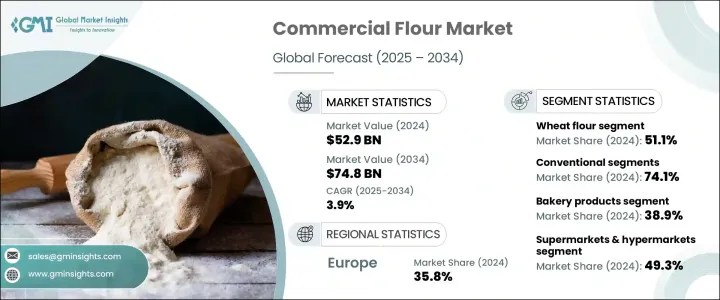
시장은 곡물가루 유형별로 분류되어 밀가루가 우세하고 2024년 시장 점유율의 51.1%를 차지하고 있습니다. 시장 성장에 크게 기여하고 있습니다. 글루텐 프리나 아시아 요리에 인기있는 쌀가루나, 스낵 과자나 토르티야에 널리 사용되는 옥수수 가루 등, 다른 제품 유형도 확대를 지지하고 있습니다. 호밀가루는 특수한 빵 시장에서 이용되며 보리가루나 귀리가루는 조식용 시리얼 등 건강 지향의 제품으로 인기를 모으고 있습니다. 글루텐 프리 분야 수요가 증가하고 있습니다. 기타, 메밀 가루, 퀴노아 가루, 수수 가루, 스펠트 밀가루 등의 틈새 밀가루는 영양가가 높은 대체품을 요구하는 소비자에게 대응하고 있습니다.
| 시장 범위 | |
|---|---|
| 시작 연도 | 2024년 |
| 예측 연도 | 2025-2034년 |
| 시작 금액 | 529억 달러 |
| 예측 금액 | 748억 달러 |
| CAGR | 3.9% |
시장은 유기 곡물과 기존 곡물 범주로 나뉘며, 2024년에는 기존 곡물이 총 매출의 74.1%를 차지했습니다. 밀, 쌀, 옥수수, 호밀, 보리 등의 기존 곡물은 범용성이 높고 널리 사용되고 있기 때문에 계속 우위를 차지하고 있습니다. 옥수수 가루는 특히 라틴아메리카에서 수요가 늘어나고 있지만, 유전자 변형과 옥수수에 대한 우려로 한계가 있습니다.
상업용 곡물은 주로 베이커리 제품에 사용되었으며 2024년 시장 점유율의 38.9%를 차지했습니다. 곡물과 글루텐 프리 대체품에도 기술 혁신이 보입니다. 국수와 파스타는 특히 아시아태평양, 유럽, 북미에서 시장의 성장에 크게 기여하고 있습니다.
유통 채널별로는 슈퍼마켓 및 하이퍼마켓이 2024년 49.3%로 최대 시장 점유율을 차지하며 CAGR 4.4%로 확대될 것으로 예상됩니다. 이 소매점에서는 글루텐 프리와 유기농과 같은 특별한 선택사항을 포함한 폭넓은 밀가루의 구색을 제공하며, 건강 지향 소비자에 대응하고 있습니다.
2024년 상용 곡물 시장은 유럽이 견인하여 총 매출의 35.8%를 차지했습니다. 정부의 정책과 투명성이 높은 표시기준은 업계 내 혁신과 안정을 촉진하고 있습니다.
The Global Commercial Flour Market was valued at USD 52.9 billion in 2024 and is expected to grow at a CAGR of 3.9% from 2025 to 2034. The market expansion is primarily driven by rising demand for baked goods, increasing urbanization, evolving consumer eating habits, and a surge in packaged food consumption. Consumers are shifting toward refined flour alternatives that are perceived as healthier, such as whole grain and fortified flour. Additionally, the food service industry is contributing significantly to the demand for processed flour, as restaurants, hotels, and food manufacturers continue to grow in emerging markets. Technological advancements in milling processes are improving efficiency and reducing costs, which further strengthens market growth. New milling technologies enhance the quality of flour and optimize production, while health-conscious trends drive demand for gluten-free and organic options.
The market is categorized by flour type, with wheat flour dominating, accounting for 51.1% of the market share in 2024. Wheat flour remains a key ingredient in bakery products, including bread, cakes, and pastries, making it a significant contributor to market growth. Other flour types are also supporting expansion, such as rice flour, which is popular in gluten-free and Asian cuisines, and corn flour, which is widely used in snack production and tortillas. Rye flour finds its place in specialty bread markets, while barley and oat flour gain traction in health-focused products like breakfast cereals. Specialty flours, including chickpea and almond flour, are witnessing increased demand from plant-based and gluten-free sectors. Other niche flour types, such as buckwheat, quinoa, sorghum, and spelt, cater to consumers seeking nutritious alternatives.
| Market Scope | |
|---|---|
| Start Year | 2024 |
| Forecast Year | 2025-2034 |
| Start Value | $52.9 Billion |
| Forecast Value | $74.8 Billion |
| CAGR | 3.9% |
The market is divided into organic and conventional categories, with conventional flour accounting for 74.1% of total sales in 2024. This segment is projected to grow at a 6.1% CAGR due to increasing demand and established supply chains. Conventional flours such as wheat, rice, corn, rye, and barley continue to dominate due to their versatility and widespread use. However, supply chain challenges and price volatility affect certain segments, particularly rice flour. Corn flour is experiencing demand growth, especially in Latin America, but concerns over genetically modified corn present limitations. Rye and barley flours maintain steady but slow expansion as they serve niche markets focused on artisanal baking and health foods.
Commercial flour is primarily used in bakery products, which accounted for 38.9% of the market share in 2024. This segment benefits from strong demand for bread, cakes, cookies, and pastries, as consumers increasingly opt for convenient and packaged baked goods. The market is also seeing innovation in whole grain and gluten-free alternatives. Noodles and pasta contribute significantly to market growth, particularly in the Asia-Pacific, European, and North American regions, where demand for quick-to-prepare meals continues to rise. Specialty flours like chickpea and quinoa flour are diversifying the pasta segment as health-conscious consumers seek alternative ingredients.
By distribution channel, supermarkets and hypermarkets held the largest market share at 49.3% in 2024 and are expected to expand at a 4.4% CAGR. These retail outlets provide a broad selection of flours, including specialty options like gluten-free and organic varieties, catering to health-conscious consumers. Competitive pricing and promotional strategies influence purchasing trends, with private-label brands offering budget-friendly alternatives. Specialty flours, while more expensive, continue to attract niche consumer groups.
Europe led the commercial flour market in 2024, contributing 35.8% of total revenue. Rising consumption of bakery goods, increased health awareness, and regulatory changes are shaping the regional market. Government policies supporting local grain production and transparent labeling standards drive innovation and stability within the industry. Flour consumption is further propelled by the growing preference for convenience foods and rising disposable income levels.