


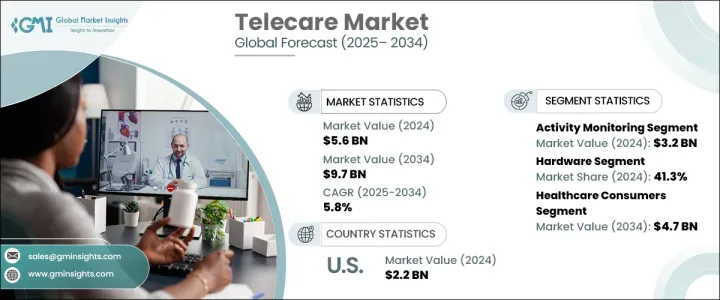
세계의 텔레케어 시장은 2024년에는 56억 달러로 평가되었으며, 2025-2034년 CAGR 5.8%로 꾸준히 확대될 것으로 전망됩니다.
비용 효과적이고 사용하기 쉬운 헬스케어 솔루션에 대한 수요가 계속 증가함에 따라 원격 관리 서비스는 업계의 변화에 중요한 역할을 수행합니다. 당뇨병, 고혈압, 심혈관 질환 등 만성 질환의 만연이 확대되고 있어 지속적인 모니터링 및 사전관리의 필요성이 높아지고 있습니다. 헬스케어 비용이 전 세계적으로 증가하는 가운데 텔레케어는 원격 모니터링을 통해 통원을 줄이고 환자의 전귀를 개선함으로써 실행 가능한 대체 수단을 제시하고 있습니다.

시장의 성장은 텔레케어 솔루션의 효율성과 도달도를 높이는 기술의 진보에 의해 더욱 촉진됩니다. 웨어러블 디바이스, AI 주도 애플리케이션, 스마트 센서는 환자 케어에 혁명을 가져오고 실시간 건강 추적 및 예측 분석을 가능하게 합니다. 이 기술 혁신으로 헬스케어 공급자는 예방 조치를 강구할 수 있으며, 환자의 건강을 개선하고 응급 입원을 줄이는 시기적절한 개입을 제공할 수 있습니다. 텔레케어 솔루션이 고도화됨에 따라, 전자 진료기록카드(EHR)나 원격 의료 플랫폼과의 통합에 의해, 환자와 간병인 간의 원활한 소통이 보증됩니다. 전 세계 정부 및 헬스케어 기관도 정책과 자금 제공을 통해 원격케어 도입을 지원하고 있으며, 현대 헬스케어 시스템에서 그 역할을 강화하고 있습니다.
| 시장 범위 | |
|---|---|
| 시작 연도 | 2024년 |
| 예측 연도 | 2025-2034년 |
| 시작 금액 | 56억 달러 |
| 예측 금액 | 97억 달러 |
| CAGR | 5.8% |
시장은 주로 활동 모니터링 및 원격 복약 관리의 2가지 서비스 유형으로 구분됩니다. 2024년에는 활동 모니터링 분야가 시장을 선도해 32억 달러에 이르렀습니다. 세계 고령화 인구의 증가로, 바이탈 사인, 이동 능력, 일상 활동의 트래킹에 도움이 되기 때문에, 특히 혼자 사는 고령자에게 있어서는, 이러한 솔루션에 대한 수요가 큰폭으로 증가하고 있습니다. 피트니스 트래커 및 스마트워치를 포함한 웨어러블 헬스 기술은 심박수, 산소 수준, 수면 패턴 등 주요 건강 지표 모니터링에 점점 더 많이 이용되고 있습니다. 실시간 최신 정보를 제공함으로써 이러한 장치는 간병인이나 의료 전문가에게 시기적절한 개입을 제공할 힘을 줍니다.
컴포넌트의 경우 텔레케어 시장에는 하드웨어, 소프트웨어 및 서비스가 포함되어 있습니다. 하드웨어 분야는 센서 기반 기술과 모바일 헬스 도구의 진보에 견인되어 2024년 시장 점유율은 41.3%였습니다. 포도당 모니터, 혈압계, 심박센서 등의 기기는 환자 모니터링 능력을 향상시키고 원격 헬스 추적을 가능하게 해 병원의 부담을 덜어주고 있습니다. 헬스케어 시스템이 예방 의료로 전환되는 가운데, 이러한 기술은 의료비를 최소화하면서 환자의 건강을 확보하기 위해서 불가결한 것이 되고 있습니다.
미국의 텔레케어 시장은 2024년에 22억 달러로 평가되었는데, 이는 만성 질환의 이환율이 높고, 원격 헬스케어 솔루션에 대한 수요가 높아지고 있는 것이 주요인입니다. 원격의료를 전문으로 하는 헬스케어 신흥기업의 급증 및 원격의료 분야에 대한 많은 투자가 원격의료 서비스의 급속한 혁신 및 보급으로 이어졌습니다. 업계가 계속 진화하는 가운데 AI, IoT를 활용한 건강 모니터링, 규제 지원의 진보가 향후 몇 년간 시장 성장을 더욱 가속화할 것으로 보입니다.
The Global Telecare Market was valued at USD 5.6 billion in 2024 and is set to expand steadily at a CAGR of 5.8% between 2025 and 2034. As the demand for cost-effective and accessible healthcare solutions continues to rise, telecare services are playing a crucial role in transforming the industry. The growing prevalence of chronic diseases, including diabetes, hypertension, and cardiovascular conditions, has driven the need for continuous monitoring and proactive management. With healthcare costs increasing globally, telecare presents a viable alternative by reducing hospital visits and improving patient outcomes through remote monitoring.
The market's growth is further fueled by technological advancements that enhance the efficiency and reach of telecare solutions. Wearable devices, AI-driven applications, and smart sensors are revolutionizing patient care, allowing for real-time health tracking and predictive analytics. This innovation enables healthcare providers to take preventive measures, offering timely interventions that improve patient health and reduce emergency hospitalizations. As telecare solutions become more sophisticated, their integration with electronic health records (EHRs) and telehealth platforms ensures seamless communication between patients and caregivers. Governments and healthcare organizations worldwide are also supporting telecare adoption through policies and funding, reinforcing its role in modern healthcare systems.
| Market Scope | |
|---|---|
| Start Year | 2024 |
| Forecast Year | 2025-2034 |
| Start Value | $5.6 Billion |
| Forecast Value | $9.7 Billion |
| CAGR | 5.8% |
The market is segmented into two primary service types: activity monitoring and remote medication management. In 2024, the activity monitoring segment led the market, reaching USD 3.2 billion. The rising global aging population has significantly increased the demand for these solutions, as they help track vital signs, mobility, and daily activities, particularly for seniors living alone. Wearable health technology, including fitness trackers and smartwatches, is increasingly utilized for monitoring key health metrics such as heart rate, oxygen levels, and sleep patterns. By providing real-time updates, these devices empower caregivers and medical professionals to deliver timely interventions.
Regarding components, the telecare market includes hardware, software, and services. The hardware segment held a 41.3% market share in 2024, driven by advancements in sensor-based technology and mobile health tools. Devices like glucose monitors, blood pressure cuffs, and heart rate sensors are improving patient monitoring capabilities, allowing for remote health tracking and reducing the burden on hospitals. As healthcare systems shift towards preventive care, these technologies are becoming indispensable for ensuring patient well-being while minimizing medical expenses.
The U.S. Telecare Market was valued at USD 2.2 billion in 2024, largely due to the country's high incidence of chronic diseases and growing demand for remote healthcare solutions. A surge in healthcare startups specializing in telemedicine, coupled with significant investments in the telehealth sector, has led to rapid innovation and widespread adoption of telecare services. As the industry continues to evolve, advancements in AI, IoT-powered health monitoring, and regulatory support will further accelerate market growth in the coming years.