


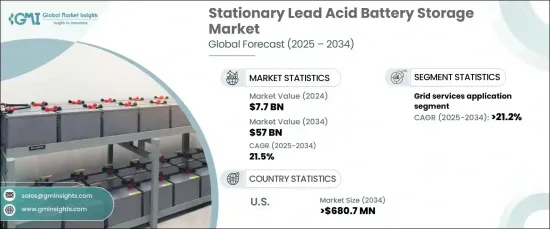
세계의 고정형 납축전지 시장은 2024년에 77억 달러로 평가되었으며, 2025년부터 2034년에 걸쳐 CAGR 21.5%로 성장할 전망입니다.
다양한 분야에서 안정적인 에너지 저장 솔루션에 대한 수요가 증가하면서 이러한 성장이 촉진되고 있습니다. 이러한 배터리는 특히 비용 효율성과 신뢰할 수 있고 오래 지속되는 에너지 저장 기능을 제공한다는 점에서 높은 평가를 받고 있습니다. 다용도로 사용할 수 있어 상업용, 산업용, 주거용에서 선호되는 배터리입니다. 기술 발전으로 성능, 효율성, 내구성이 크게 향상되어 대체 에너지 저장 기술의 등장에도 불구하고 여전히 그 가치를 인정받고 있습니다. 이러한 배터리는 일관된 에너지 요구 사항을 충족하는 데 적합하기 때문에 중요 부문에서 중단 없는 전력 공급에 대한 필요성이 증가함에 따라 수요가 계속 증가하고 있습니다.
고정형 납축전지는 전력 수요가 일정한 산업에서 백업 전력 수요를 지원하는 데 매우 중요합니다. 방전율이 높고 수명이 길기 때문에 대규모 에너지 저장 시스템에 매우 신뢰할 수 있습니다. 또한 이 배터리는 비용 효율적이고 재활용이 비교적 쉽기 때문에 지속 가능한 솔루션을 제공합니다. 신흥 시장에서는 경제성과 재활용 인프라 구축으로 인해 납축전지 시스템을 점점 더 많이 채택하고 있습니다. 그러나 리튬 이온 배터리와 같은 최신 기술이 경쟁하고 있으며, 납축전지는 대용량 용도에 안정적인 성능을 제공하는 능력으로 여전히 선호되고 있습니다.
| 시장 범위 | |
|---|---|
| 시작 연도 | 2024년 |
| 예측 연도 | 2025-2034년 |
| 시작 금액 | 77억 달러 |
| 예측 금액 | 570억 달러 |
| CAGR | 21.5% |
그리드 서비스에서 납축전지 시스템의 사용은 예측 기간 동안 21.2%의 CAGR로 크게 성장할 것으로 예상됩니다. 납축전지의 신뢰성과 비용 이점은 피크 부하 관리 및 비상 전원 공급과 같은 필수 그리드 운영에 적합합니다. 전력회사는 그리드를 안정화하고 재생 에너지원을 통합하며 대규모 에너지 수요를 효율적으로 충족할 수 있다는 점에서 이러한 배터리의 가치를 높이 평가합니다. 이 부문의 강력한 성장 잠재력은 전 세계 에너지 저장 환경에서 이 배터리의 지속적인 중요성을 강조합니다.
미국의 고정형 납축전지 저장 시장은 2034년까지 6억 8,070만 달러를 넘어설 것으로 예상됩니다. 산업 및 상업 환경에서 신뢰할 수 있는 백업 전력에 대한 수요가 주요 성장 동력입니다. 또한 이러한 배터리는 그리드 부하를 관리하고 재생 에너지 저장을 통합하여 유틸리티를 지원합니다. 설계의 혁신으로 안전성이 향상되고 수명 주기가 연장되어 채택률이 더욱 높아졌습니다. 납 취급 및 폐기에 관한 엄격한 규제로 인해 어려움이 있지만, 배터리 재활용 기술의 발전을 장려하여 지속 가능성에 기여하고 있습니다.
The Global Stationary Lead Acid Battery Storage Market, valued at USD 7.7 billion in 2024, is expected to grow at a CAGR of 21.5% from 2025 to 2034. The increasing demand for reliable energy storage solutions across various sectors is fueling this growth. These batteries are particularly valued for their cost-effectiveness and ability to provide dependable, long-lasting energy storage. Their versatility makes them a preferred choice in commercial, industrial, and residential applications. Technological advancements have significantly improved their performance, efficiency, and durability, ensuring their relevance despite the emergence of alternative energy storage technologies. The rising need for uninterrupted power supply across critical sectors continues to drive demand, as these batteries are well-suited to meet consistent energy requirements.
Stationary lead-acid batteries are crucial in supporting backup power needs in industries with consistent power demands. Their high discharge rates and extended lifespan make them highly dependable for large-scale energy storage systems. These batteries also offer a sustainable solution, as they are cost-effective and relatively easy to recycle. Emerging markets increasingly adopt lead-acid battery systems due to their affordability and established recycling infrastructure. However, newer technologies such as lithium-ion batteries present competition, and lead-acid batteries remain favored for their ability to deliver reliable performance for high-capacity applications.
| Market Scope | |
|---|---|
| Start Year | 2024 |
| Forecast Year | 2025-2034 |
| Start Value | $7.7 Billion |
| Forecast Value | $57 Billion |
| CAGR | 21.5% |
The use of lead-acid battery systems in grid services is projected to grow significantly over the forecast period, with a CAGR of 21.2%. Their reliability and cost advantages make them suitable for essential grid operations such as peak load management and emergency power supply. Utilities value these batteries for their capacity to stabilize grids, integrate renewable energy sources, and meet large-scale energy demands efficiently. The strong growth potential in this segment highlights their continued importance in the global energy storage landscape.
The stationary lead-acid battery storage market in the United States is anticipated to surpass USD 680.7 million by 2034. The demand for dependable backup power in industrial and commercial settings is a key growth driver. These batteries also support utilities by managing grid loads and integrating renewable energy storage. Innovations in design have improved safety and extended lifecycle performance, further enhancing their adoption. While stricter regulations surrounding lead handling and disposal present challenges, they also incentivize advancements in battery recycling technologies, contributing to their sustainability.