Quantum Computing Arms Race: Post-GPU Era Global Crisis and Taiwan´s Positioning
상품코드:1952843
리서치사:TrendForce
발행일:2026년 01월
페이지 정보:영문 16 Pages
라이선스 & 가격 (부가세 별도)
한글목차
AI의 컴퓨팅 수요가 기하급수적으로 증가함에 따라 기존 실리콘 기반 칩의 물리적 한계가 빠르게 드러나고 있습니다. 세계는 파괴적인 '포스트 GPU 시대'로 가속화하고 있으며, 양자컴퓨팅은 더 이상 실험실 이론에 머물지 않고 신약개발과 금융 리스크 관리를 재구성할 수 있는 양날의 검으로 부상하고 있습니다. 국가 차원의 암호화 시스템을 위협하여 '양자 위기'를 일으킬 수도 있습니다.
엔비디아의 하이브리드 컴퓨팅 전략부터 IonQ, Rigetti와 같은 경쟁 기술 로드맵, 그리고 미국, 중국, 유럽, 일본을 포함한 국가 차원의 경쟁에 이르기까지 향후 10년은 컴퓨팅 능력의 패권을 놓고 벌이는 치열한 경쟁으로 정의될 것입니다. 이러한 배경 속에서 대만공급망은 결정적인 질문에 직면해 있습니다. 양자컴퓨팅 시대, 우리는 어떤 포지셔닝을 취해야 하는가?
주요 하이라이트
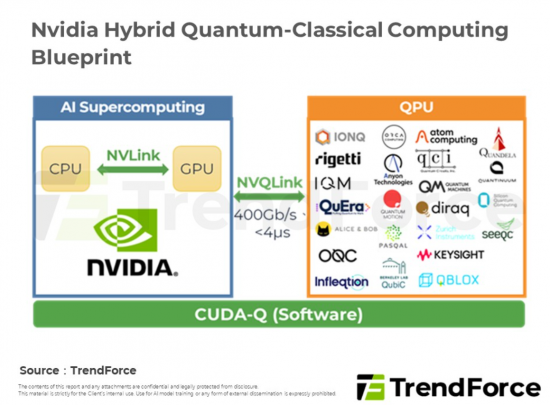
엔비디아의 하이브리드 플랫폼 우위: 엔비디아는 양자 컴퓨팅을 GPU를 보완하는 기술로서 양자 컴퓨팅을 포지셔닝하고 있습니다. 고속 전용 인터커넥트 및 CUDA-Q 소프트웨어 플랫폼을 도입하여 다양한 양자 하드웨어를 통합하고, 단일 하드웨어 유형에 의존하지 않고 하이브리드 컴퓨팅 시대의 생태계 주도권을 확보하고자 합니다.
하드웨어 철학의 분기 : 하드웨어의 전망은 대조적인 접근 방식으로 정의됩니다. IonQ는 이온 트랩을 통한 정확성과 네트워크 안정성을 우선시하는 반면, Rigetti는 반도체 기반 초전도 회로를 통한 속도와 확장성에 초점을 맞추었습니다.
양자 위기와 세계 군비경쟁: 양자컴퓨팅은 생물의학 및 금융 분야에서 비약적인 발전을 약속하는 한편, 세계 암호화 표준을 위협한다('양자 위기'). 이로 인해 미국, 중국, 유럽, 일본 간 국방 및 인프라 분야에 걸친 국가 차원의 군비경쟁이 벌어지고 있습니다.
대만의 전략적 역할: 대만은 첨단 반도체 제조 능력을 바탕으로 세계 양자 하드웨어 공급망의 핵심을 담당하고 있습니다. 또한 포스트 양자 사이버 보안 위협에 대한 방어 기반을 구축하기 위해 물리적 지문 기술 개발을 진행하고 있습니다.
목차
제1장 AI가 물리적 한계에 다다르면서 세계는 양자 주도 '포스트 GPU 시대'에 돌입한다.
제2장 NVIDIA의 양자 분야에 대한 야망 : QPU의 구축이 아니라 양자 시대의 '플랫폼 지배자'로의 변혁
제3장 양자 기술의 분기 속에서의 아키텍처 경쟁 : IonQ와 Rigetti의 철학과 플랫폼 방향성
제4장 다가오는 양자 시대 : 지수함수적 기술 진보와 양자 위기에 대한 카운트다운
제5장 세계의 양자 경쟁 : 미국, 중국, 유럽, 일본에서 전략적 분기와 인프라 정비 경로
제6장 양자 위기와 대만의 전략적 포지셔닝 : 암호 리스크로부터 산업의 전환점으로
제7장 TRI의 견해
KSA
영문 목차
영문목차
As AI compute demand grows exponentially, the physical limits of traditional silicon-based chips are rapidly becoming apparent. The world is accelerating into a disruptive "post-GPU era," in which quantum computing is no longer confined to laboratory theory but is emerging as a double-edged force capable of reshaping drug discovery and financial risk management-even triggering a "quantum crisis" by undermining national-level encryption systems.
From NVIDIA's hybrid-computing strategy to the competing technical roadmaps of IonQ and Rigetti, and from the national-level arms race unfolding across the United States, China, Europe, and Japan, the next decade will be defined by a high-stakes contest for computational supremacy. Against this backdrop, Taiwan's supply chain faces a defining question: how will it position itself in the era of quantum computing?
Key Highlights
Nvidia's Hybrid Platform Dominance: Nvidia views quantum computing as complementary to GPUs. By deploying high-speed dedicated interconnects and the CUDA-Q software platform, Nvidia aims to integrate diverse quantum hardware, securing ecosystem leadership in the hybrid computing era without betting on a single hardware type.
Diverging Hardware Philosophies: The hardware landscape is defined by contrasting approaches. IonQ prioritizes precision and networking stability via ion traps, whereas Rigetti focuses on speed and scalability through semiconductor-based superconducting circuits.
The Quantum Crisis and Global Arms Race: While quantum computing promises breakthroughs in biomedicine and finance, it threatens global encryption standards (the "Quantum Crisis"). This has triggered a state-level arms race among the U.S., China, Europe, and Japan, spanning defense and infrastructure.
Taiwan's Strategic Role: Taiwan leverages its advanced semiconductor manufacturing capabilities to anchor the global quantum hardware supply chain. Additionally, it is developing physical fingerprint technology to establish a defensive moat against post-quantum cybersecurity threats.
Table of Contents
1. The world is entering a quantum-driven "post-GPU era" as AI approaches physical limits
Figure 1: Schematic of Quantum Superposition in a Quantum Computer
Table 1: Classical Computers vs. Quantum Computers
2. Nvidia's Quantum Ambition: Not Building QPUs, but Transforming into the "Platform Ruler" of the Quantum Era