


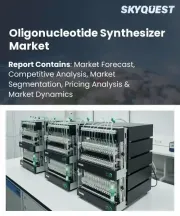
세계의 올리고뉴클레오티드 합성기 시장 규모는 2024년에 18억 2,000만 달러로 평가되었고, 2025년 20억 달러에서 2033년까지 43억 2,000만 달러로 성장할 전망입니다. 또한 예측 기간(2026-2033년) CAGR은 10.09%를 나타낼 것으로 예측됩니다.
연구, 진단, 치료 분야에서 정밀한 핵산 도구에 대한 수요가 증가함에 따라 세계 올리고뉴클레오티드 합성기 시장은 빠르게 성장하고 있습니다. 유전자 편집, 안티센스 치료, mRNA 백신 개발에 필수적인 합성 올리고뉴클레오타이드에 대한 수요가 이러한 성장을 견인하고 있습니다. 이는 분자 서열을 신약 개발 및 임상 진단에서 실용적인 솔루션으로 전환하는 역할을 하기 때문입니다. 자동화 기술과 고체상 화학의 발전으로 업계는 분산형 탁상형 합성 장비로 진화하여 처리 시간과 비용을 절감하고 있습니다. 이러한 변화는 고순도 및 대규모 라이브러리를 생성할 수 있는 고순도, 고처리량, 고신뢰성 합성 장비에 대한 수요 증가를 강조하며, 자동화 정제 및 품질 모니터링 분야의 기술 혁신을 촉진하고 있습니다. 그 결과, 이러한 추세는 장비 판매, 서비스 다각화, 전략적 제휴를 촉진하고 새로운 상업적 기회를 창출하고 있습니다.
세계 올리고뉴클레오타이드 합성 장비 시장 성장 촉진요인
올리고뉴클레오티드 기반 치료제에 대한 수요 증가는 합성 장비 기술에 대한 투자를 촉진하고 제조업체들이 생산 능력을 강화하고 제품 라인을 다양화할 수 있는 계기가 되었습니다. 신뢰성과 유연성을 겸비한 합성 플랫폼은 임상 및 전임상 프로그램에 필수적이며, 구매 및 업그레이드의 필요성이 증가하고 있습니다. 이러한 수요 증가로 인해 벤더들은 처리량 최적화, 처리시간 단축, 재현성 향상에 집중할 수밖에 없었고, 이는 연구자 및 바이오제약 기업에게 확고한 신뢰를 가져다주었습니다. 그 결과, 이러한 상호 작용은 선순환 구조를 만들어 지속적인 채택과 기술 발전을 촉진하여 시장의 지속적인 성장을 견인하고 상업적 및 연구적 협력을 강화하는 선순환 구조를 형성하고 있습니다.
세계 올리고뉴클레오타이드 합성 장비 시장 성장 억제요인
세계 올리고뉴클레오타이드 합성 장비 시장은 첨단 합성 장비에 따른 높은 초기 자본 투자라는 심각한 장벽에 직면해 있습니다. 이로 인해 소규모 연구소나 신생 생명공학 기업들은 이러한 재정적 투입을 주저할 수 있습니다. 이 투자는 종종 다른 중요한 연구 우선순위와 충돌하여 잠재적 구매자가 조달을 지연시키고 대신 아웃소싱이나 구식 기술을 선택하게 됩니다. 그 결과, 제조업체는 운영 비용 절감 효과를 즉각적으로 체감할 수 없는 예산을 중시하는 고객에게 자사 제품의 장기적인 가치를 증명하기 어려워집니다. 이러한 상황은 자금력을 갖춘 기관이 시장 상황을 지배하는 구조를 만들어 전체 시장의 확대를 제한하고, 혁신적인 기술의 빠른 보급을 가로막고 있습니다.
세계 올리고뉴클레오타이드 합성 장비 시장 동향
세계 올리고뉴클레오타이드 합성 장비 시장에서는 고도의 자동화 및 로봇 공학의 도입에 힘입어 눈에 띄는 추세가 진행 중입니다. 이러한 기술적 진화를 통해 높은 처리량 생산과 사이클 타임 단축을 실현하고, 기업은 생산 공정의 효율성을 높일 수 있습니다. 모듈식 소프트웨어 기반 플랫폼에 대한 투자는 프로토콜의 표준화와 재현성을 높이고, 품질 저하 없이 배치 크기의 확장성을 지원합니다. 그 결과, 제조업체는 수요 변동에 적응하고 위탁 개발업체와의 협력을 촉진할 수 있는 체제를 갖추게 됩니다. 또한, 자동화를 통해 전문적인 수작업에 대한 의존도를 줄이고, 운영 탄력성을 강화하며, 숙련된 전문가들이 올리고뉴클레오타이드 합성의 혁신적인 발전에 집중할 수 있도록 지원합니다.
Global Oligonucleotide Synthesizer Market size was valued at USD 1.82 Billion in 2024 and is poised to grow from USD 2.0 Billion in 2025 to USD 4.32 Billion by 2033, growing at a CAGR of 10.09% during the forecast period (2026-2033).
The global oligonucleotide synthesizer market is expanding rapidly due to an increased need for precise nucleic acid tools used in research, diagnostics, and therapeutics. The demand for synthesized oligos, critical for gene editing, antisense therapies, and mRNA vaccine development, propels this growth as they transform molecular sequences into practical solutions for drug discovery and clinical diagnostics. The industry has evolved towards decentralized benchtop synthesizers thanks to advancements in automation and solid-phase chemistry, resulting in reduced turnaround times and costs. This shift emphasizes the rising need for higher-throughput, reliable synthesizers capable of producing large libraries with high purity, thereby prompting innovation in automated purification and quality monitoring. Consequently, this trend fosters instrument sales, service diversification, and strategic partnerships, leading to new commercial opportunities.
Top-down and bottom-up approaches were used to estimate and validate the size of the Global Oligonucleotide Synthesizer market and to estimate the size of various other dependent submarkets. The research methodology used to estimate the market size includes the following details: The key players in the market were identified through secondary research, and their market shares in the respective regions were determined through primary and secondary research. This entire procedure includes the study of the annual and financial reports of the top market players and extensive interviews for key insights from industry leaders such as CEOs, VPs, directors, and marketing executives. All percentage shares split, and breakdowns were determined using secondary sources and verified through Primary sources. All possible parameters that affect the markets covered in this research study have been accounted for, viewed in extensive detail, verified through primary research, and analyzed to get the final quantitative and qualitative data.
Global Oligonucleotide Synthesizer Market Segments Analysis
Global oligonucleotide synthesizer market is segmented by type, technology, form factor, application, end-user and region. Based on type, the market is segmented into Standard Synthesizers, High-Throughput Synthesizers, Custom Synthesizers and Integrated Synthesizers. Based on technology, the market is segmented into Solid-Phase Synthesis, Liquid-Phase Synthesis, Microarray Technology and Polymerase Chain Reaction (PCR)-Based Methods. Based on form factor, the market is segmented into Bench-top Synthesizers, Portable Synthesizers, Modular Synthesizers and Automated Synthesizers. Based on application, the market is segmented into Research & Development, Diagnostic Applications, Therapeutic Applications and Forensic Applications. Based on end-user, the market is segmented into Academic Institutions, Pharmaceutical Companies, Biotechnology Firms and Diagnostic Laboratories. Based on region, the market is segmented into North America, Europe, Asia Pacific, Latin America and Middle East & Africa.
Driver of the Global Oligonucleotide Synthesizer Market
The increasing demand for oligonucleotide-based therapeutics has spurred investments in synthesizer technologies, prompting manufacturers to enhance their production capabilities and diversify their product offerings. Reliable and flexible synthesis platforms are essential for clinical and preclinical programs, which fuels the need for purchases and upgrades. This heightened demand compels vendors to focus on optimizing throughput, minimizing turnaround times, and improving reproducibility, thereby instilling confidence in researchers and biopharmaceutical companies. Consequently, this interplay generates a positive feedback loop, promoting ongoing adoption and technological advancements that drive continuous market growth and strengthen commercial and research collaborations.
Restraints in the Global Oligonucleotide Synthesizer Market
The Global Oligonucleotide Synthesizer market faces significant barriers due to the high initial capital investment associated with advanced synthesizers, which can deter smaller laboratories and emerging biotech companies from making such financial commitments. This investment often competes with other critical research priorities, causing potential buyers to delay procurement and opt for outsourcing or older technologies instead. As a result, manufacturers encounter difficulties in demonstrating the long-term value of their products to budget-conscious customers who do not immediately see operational savings. Consequently, this scenario creates a market landscape dominated by well-funded institutions, limiting overall expansion and hindering the rapid adoption of innovative technologies.
Market Trends of the Global Oligonucleotide Synthesizer Market
The Global Oligonucleotide Synthesizer market is experiencing a significant trend driven by the adoption of advanced automation and robotics. This technological evolution facilitates high-throughput manufacturing and shorter cycle times, allowing firms to streamline production processes. Investment in modular, software-driven platforms enhances protocol standardization and reproducibility, supporting scalable batch sizes without compromising quality. Consequently, manufacturers are better equipped to adapt to fluctuating demand and foster collaboration with contract developers. Furthermore, automation reduces reliance on specialized manual labor, thereby bolstering operational resilience and enabling skilled professionals to focus on innovative advancements in oligonucleotide synthesis.