


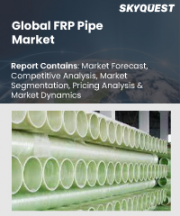
FRP 파이프 시장 규모는 2024년에 44억 7,000만 달러로 평가되었으며, 2025년 46억 4,000만 달러에서 2033년까지 63억 달러로 성장할 전망입니다. 예측 기간(2026-2033년) 동안 CAGR은 3.9%로 예측됩니다.
섬유강화플라스틱(FRP) 파이프 시장은 다양한 산업 분야에서 강력한 성장과 수요 증가를 보이고 있습니다. 고강도, 내식성, 경량성, 내구성 등 우수한 특성을 인정받아 석유 및 가스, 수처리, 화학, 인프라 분야에서 활용이 확대되고 있습니다. 지속가능한 솔루션에 대한 관심이 높아지면서 시장 확대가 가속화되고 있으며, 이 파이프는 기존 소재에 대한 친환경적인 대안을 제시합니다. 특히 개발도상국의 인프라 프로젝트에 대한 투자가 수요를 더욱 촉진하고 있습니다. 비부식성 재료를 권장하는 엄격한 규정도 성장에 기여하고 있습니다. 기술 발전과 지속적인 연구 개발 노력으로 FRP 파이프의 성능과 비용 효율성이 향상되고 있습니다. 높은 초기 비용과 경쟁 소재 등의 문제가 존재하지만, 산업 부문이 확대됨에 따라 시장의 상승 추세는 여전히 유망합니다.
FRP 파이프 시장 촉진요인
FRP 파이프 시장의 성장을 이끄는 중요한 요인은 여러 분야에서 내구성과 내식성이 뛰어난 배관 솔루션에 대한 수요가 증가하고 있기 때문입니다. 산업 공정이 진화하고 더욱 엄격해짐에 따라 열악한 환경을 견디고 장기적인 신뢰성을 제공하는 재료에 대한 요구가 증가하고 있습니다. FRP 파이프는 뛰어난 내식성으로 인해 강철이나 콘크리트 등 기존 재료가 열화되기 쉬운 일부 응용 분야에서 이상적인 선택으로 평가받고 있습니다. 이러한 내구성이 뛰어난 배관에 대한 수요 증가는 석유 및 가스, 수자원 관리, 화학 처리와 같은 주요 산업에서 FRP 파이프의 채택을 촉진하고 있습니다.
FRP 파이프 시장 억제요인
FRP 파이프 시장이 직면한 가장 큰 문제는 기존 소재에 비해 초기 투자비용이 높다는 점입니다. FRP 파이프는 유지보수 및 교체 비용 절감으로 장기적으로 상당한 비용을 절감할 수 있지만, 특히 예산 제약이 심한 프로젝트에서는 높은 초기 비용이 장벽이 될 수 있습니다. 이러한 경제적 요인으로 인해 비용 효율성이 중요한 분야에서는 잠재적 사용자가 FRP 파이프의 채택을 주저하는 경우도 있습니다. 그러나 제조 공정의 지속적인 개선과 규모의 경제를 통한 이점으로 인해 향후 이 문제는 완화될 것으로 예상됩니다.
FRP 파이프 시장 동향
전 세계 FRP 파이프 시장은 산업계와 소비자 모두의 환경 인식이 높아지면서 친환경적이고 지속가능한 솔루션으로 큰 전환이 진행되고 있습니다. 기업들은 재활용 소재를 활용하고 탄소발자국을 줄인 FRP 파이프 개발에 우선순위를 두어 친환경 대체품에 대한 수요 증가에 대응하고 있습니다. 이러한 혁신적인 제품들은 성능 기준을 충족할 뿐만 아니라, 인프라 개발의 지속가능성과 환경 친화적 관행에 대한 관심이 높아지는 추세에 부합하는 제품입니다. 이러한 시장 동향은 환경에 미치는 영향을 최소화하면서 운영 효율성을 높이는 친환경 솔루션에 대한 업계 전반의 움직임을 반영하고 있으며, 지속가능한 FRP 기술에 대한 성장과 투자를 촉진하고 있습니다.
FRP Pipe Market size was valued at USD 4.47 Billion in 2024 and is poised to grow from USD 4.64 Billion in 2025 to USD 6.3 Billion by 2033, growing at a CAGR of 3.9% during the forecast period (2026-2033).
The Fiber Reinforced Plastic (FRP) pipe market is witnessing strong growth and heightened demand across numerous industries. Recognized for their remarkable attributes, including high strength, corrosion resistance, lightweight nature, and durability, FRP pipes are increasingly utilized in oil and gas, water treatment, chemical, and infrastructure sectors. A growing focus on sustainable solutions is propelling market expansion, as these pipes offer environmentally friendly alternatives to conventional materials. Investment in infrastructure projects, particularly in developing regions, is further boosting demand. Stringent regulations favoring non-corrosive materials also contribute to growth. Technological advancements and ongoing R&D efforts enhance FRP pipes' performance and cost-effectiveness. Though challenges like high initial costs and competing materials exist, the market's upward trend remains promising as industrial sectors expand.
Top-down and bottom-up approaches were used to estimate and validate the size of the FRP Pipe market and to estimate the size of various other dependent submarkets. The research methodology used to estimate the market size includes the following details: The key players in the market were identified through secondary research, and their market shares in the respective regions were determined through primary and secondary research. This entire procedure includes the study of the annual and financial reports of the top market players and extensive interviews for key insights from industry leaders such as CEOs, VPs, directors, and marketing executives. All percentage shares split, and breakdowns were determined using secondary sources and verified through Primary sources. All possible parameters that affect the markets covered in this research study have been accounted for, viewed in extensive detail, verified through primary research, and analyzed to get the final quantitative and qualitative data.
FRP Pipe Market Segments Analysis
Global FRP Pipe Market is segmented by Application, Diameter, Pressure Rating, Resin, Manufacturing Process and Region. Based on Application, the market is segmented into Oil and Gas, Retail Fuel, Water/Wastewater, Sewage, Pulp/Paper, Chemical/Industrial, Others. Based on Diameter, the market is segmented into Small, Medium, Large. Based on Pressure Rating, the market is segmented into Less than 150 psi, 150-300 psi, more than 300 psi. Based on Resin, the market is segmented into Polyester Composites, Epoxy Composites, Vinyl Ester Composites. Based on Manufacturing Process, the market is segmented into Filament Welding, Centrifugal Casting, Others. Based on Region, the market is segmented into North America, Europe, Asia Pacific, Latin America and Middle East & and Africa.
Driver of the FRP Pipe Market
A significant factor driving the growth of the FRP pipe market is the rising demand for durable and corrosion-resistant piping solutions across multiple sectors. As industrial processes evolve and become increasingly rigorous, there is a heightened need for materials that can endure harsh environments and offer long-term reliability. FRP pipes are highly regarded for their exceptional resistance to corrosion, positioning them as an ideal option in applications where conventional materials, such as steel or concrete, are susceptible to deterioration. This growing need for resilient piping is fueling the acceptance of FRP pipes in critical industries, including oil and gas, water management, and chemical processing.
Restraints in the FRP Pipe Market
A significant challenge facing the FRP pipe market is the elevated initial investment required for these materials when compared to conventional options. Although FRP pipes provide considerable long-term savings through lower maintenance and replacement costs, the higher upfront expenditure can be a barrier, especially for projects with strict budget constraints. This financial consideration may lead some potential users to hesitate in choosing FRP pipes, particularly in sectors where cost-effectiveness is a pivotal factor. However, continuous improvements in manufacturing processes and the benefits of economies of scale are likely to alleviate this challenge in the future.
Market Trends of the FRP Pipe Market
The global FRP pipe market is witnessing a significant shift towards eco-friendly and sustainable solutions, driven by heightened environmental awareness among industries and consumers alike. Companies are increasingly prioritizing the development of FRP pipes that utilize recycled materials and possess a reduced carbon footprint, catering to the growing demand for greener alternatives. These innovative products not only meet performance standards but also align with the rising commitment to sustainability and environmentally responsible practices in infrastructure development. This market trend reflects a broader industry movement towards eco-conscious solutions that enhance operational efficiency while minimizing environmental impacts, propelling growth and investment in sustainable FRP technologies.