


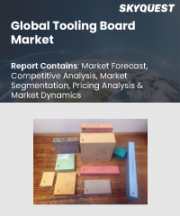
세계의 툴링 보드 시장 규모는 2024년에 129억 7,000만 달러로 평가되었으며, 2025년 135억 7,000만 달러에서 2033년까지 194억 4,000만 달러로 성장할 전망입니다. 예측 기간(2026-2033년) 동안 CAGR은 4.6%로 예측됩니다.
항공우주, 방위, 운송, 건설 부문의 시제품 개발 수요가 증가함에 따라 세계 툴링 보드 시장은 크게 확대될 것으로 예상됩니다. 주로 폴리우레탄과 에폭시 수지로 제조되는 이 가공 가능한 판재는 저밀도와 우수한 치수 안정성을 갖추고 있어 마스터 모델, 지그, 고정구, 금형 등의 용도에 금속이나 목재와 같은 기존 재료의 효과적인 대체재로 활용되고 있습니다. 북미, 특히 미국에서는 항공우주 및 방위 분야의 지출 증가와 자동차 기술 발전으로 인해 큰 폭의 성장이 예상됩니다. 또한, 전기자동차 연구개발에 대한 관심이 높아지면서 시제품에 대한 수요가 더욱 증가할 것으로 보입니다. 자동차 산업은 첨단 기계 도입이 계속 진화하고 있으며, 해양 산업은 석유 및 가스 운송 활동의 증가에 대응하여 생산 확대 태세를 갖추고 있습니다.
세계 툴링 보드 시장 촉진요인
항공우주, 방위, 자동차 등 다양한 분야에서 시제품에 대한 수요가 증가하면서 툴링 보드 시장의 성장을 주도하고 있습니다. 각 산업계가 제조 공정의 혁신과 효율화를 추구하면서 프로토타입을 효율적으로 제작하기 위한 툴링보드에 대한 의존도가 더욱 높아지고 있습니다. 고품질의 내구성이 뛰어난 소재에 대한 이러한 수요는 제조업체가 설계 엔지니어링 문제를 해결하는 데 중요한 역할을 하며 시장을 주도하는 원동력이 되고 있습니다. 정확하고 정밀한 프로토타이핑을 가능하게 하는 툴링 보드의 다재다능함은 시장에서 더 많은 발전과 투자를 촉진하는 중요한 촉매제 역할을 하고 있습니다.
세계 툴링보드 시장 억제요인
세계 툴링 보드 시장은 산업에서 억제요인이 될 수 있는 특정 한계에 직면해 있습니다. 툴링 보드는 우수한 가공성으로 유명하지만, 일부 대체 재료가 제공하는 높은 수준의 디자인 커스터마이징과 동등한 수준을 제공하지 못할 수 있습니다. 이러한 잠재적인 단점은 프로젝트에서 더 높은 유연성을 원하는 제조업체와 설계자의 선호도에 영향을 미칠 수 있습니다. 결과적으로, 고도로 세밀하고 맞춤형 설계의 필요성은 특정 응용 분야에서 툴링 보드의 채택을 제한할 수 있으며, 궁극적으로 시장 성장과 시장 내 다른 대안과 비교하여 이러한 재료의 경쟁에 영향을 미칠 수 있습니다.
세계 툴링 보드 시장 동향
세계 툴링 보드 시장에서는 산업 분야에서 효율성과 비용 효율성이 점점 더 중요해지면서 경량 솔루션으로의 전환이 진행되고 있습니다. 이러한 추세에는 저밀도 폴리우레탄과 에폭시 수지로 만든 툴링 보드의 채택이 포함되며, 이는 전체 제품의 무게를 줄일 뿐만 아니라 다양한 응용 분야에서 성능 향상에 기여합니다. 제조업체들이 공정 최적화와 지속가능성 목표를 달성하기 위해 노력하는 가운데, 경량화를 촉진하는 소재에 대한 수요는 계속 증가하고 있습니다. 이러한 진화는 재료 기술의 발전과 경량 공구의 장점에 대한 이해도가 높아짐에 따라 향후 몇 년 동안 시장의 견고한 성장과 혁신을 기대할 수 있습니다.
Global Tooling Board Market size was valued at USD 12.97 Billion in 2024 and is poised to grow from USD 13.57 Billion in 2025 to USD 19.44 Billion by 2033, growing at a CAGR of 4.6% during the forecast period (2026-2033).
The global market for tooling boards is set to expand significantly, fueled by rising demands in aerospace, defense, transportation, and construction sectors for prototype development. These machinable slabs, predominantly made from polyurethane and epoxy, offer low density and exceptional dimensional stability, effectively replacing traditional materials such as metal and wood in applications like master models, jigs, fixtures, and molds. In North America, especially in the United States, significant growth is expected, driven by increased spending in aerospace and defense, and advancements in technology for vehicles. Additionally, a growing focus on electric vehicle R&D is likely to enhance the demand for prototypes. The automotive sector is also evolving, with companies embracing advanced machinery while marine industries are poised to boost production in response to rising oil and gas transportation activities.
Top-down and bottom-up approaches were used to estimate and validate the size of the Global Tooling Board market and to estimate the size of various other dependent submarkets. The research methodology used to estimate the market size includes the following details: The key players in the market were identified through secondary research, and their market shares in the respective regions were determined through primary and secondary research. This entire procedure includes the study of the annual and financial reports of the top market players and extensive interviews for key insights from industry leaders such as CEOs, VPs, directors, and marketing executives. All percentage shares split, and breakdowns were determined using secondary sources and verified through Primary sources. All possible parameters that affect the markets covered in this research study have been accounted for, viewed in extensive detail, verified through primary research, and analyzed to get the final quantitative and qualitative data.
Global Tooling Board Market Segments Analysis
Global Tooling Board Market is segmented by Material, Type, Application, and region. Based on Material, the market is segmented into Aluminum, Steel, High-Strength Steel, Stainless Steel and Composite. Based on Type, the market is segmented into Modular Tooling Boards, Solid Tooling Boards, Perforated Tooling Boards, Magnetic Tooling Boards and Specialty Tooling Boards. Based on Application, the market is segmented into Aerospace, Automotive, Construction, Electronics, Industrial Manufacturing, Medical and Military. Based on region, the market is segmented into North America, Europe, Asia Pacific, Latin America and Middle East & Africa.
Driver of the Global Tooling Board Market
The rising need for prototypes across various sectors such as aerospace, defense, and automotive significantly propels the growth of the tooling board market. As industries seek to innovate and streamline their production processes, the reliance on tooling boards for the efficient creation of prototypes has intensified. This demand for high-quality, durable materials plays a crucial role in enabling manufacturers to meet their design and engineering challenges, thereby driving the market forward. The versatility of tooling boards in facilitating accurate and precise prototyping serves as a vital catalyst, encouraging further advancements and investments within the market.
Restraints in the Global Tooling Board Market
The Global Tooling Board market faces certain limitations that can act as restraints in the industry. Although tooling boards are known for their excellent machinability, they may not provide the same level of intricate design customization available with some alternative materials. This potential drawback can impact the preferences of manufacturers and designers seeking greater flexibility in their projects. As a result, the need for highly detailed and customized designs could restrict the adoption of tooling boards in certain applications, ultimately influencing market growth and the competitiveness of these materials in comparison to other options in the market.
Market Trends of the Global Tooling Board Market
The Global Tooling Board market is witnessing a significant shift towards lightweight solutions as industries increasingly prioritize efficiency and cost-effectiveness. This trend encompasses the adoption of lower density polyurethane and epoxy tooling boards, which not only reduce overall product weight but also enhance performance across applications. As manufacturers seek to optimize their processes and align with sustainability goals, the demand for materials that facilitate lightweighting continues to grow. This evolution is driven by advancements in material technologies and an evolving understanding of the benefits that lightweight tooling can bring, positioning the market for robust growth and innovation in the coming years.