


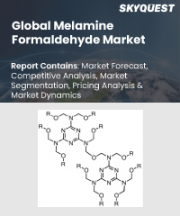
세계의 멜라민 포름알데히드 시장 규모는 2024년에 189억 9,000만 달러로 평가되었으며, 2025년 200억 8,000만 달러에서 2033년까지 312억 8,000만 달러로 성장할 전망입니다. 예측 기간(2026-2033년) 동안 CAGR은 5.7%로 예측됩니다.
멜라민 포름알데히드는 멜라민과 포름알데히드로부터 형성되는 합성 수지로 열경화성 아미노플라스틱으로 뛰어난 내구성, 경도, 범용성으로 유명합니다. 내열성과 내화성이 우수한 이 화학적으로 안정된 수지는 파티클보드 및 합판용 접착제, 라미네이트 표면, 자동차 도료, 식기세척기용 식기 등 다양한 분야에서 활용되고 있습니다. 높은 질소 함량으로 방열성을 높이고, 할로겐 프리 난연제 대체품으로 특수 도료 및 보호 장비에 적합합니다. 그 결과 침구, 가구, 전자기기 산업에서 채용이 확대되고 있습니다. 엄격한 규제와 원자재 비용이 문제가 될 수 있지만, 요소 포름알데히드에서 멜라민 포름알데히드로의 전환은 시장 내 큰 성장 기회를 가져올 것으로 예상됩니다.
멜라민 포름알데히드 시장 촉진요인
멜라민 포름알데히드 시장은 다양한 분야의 폭넓은 용도에 힘입어 견조한 성장세를 보이고 있습니다. 이 내구성이 뛰어나고 범용성이 높은 열경화성 수지는 뛰어난 내열성과 내화성을 인정받아 파티클보드 및 합판용 접착제, 라미네이트재, 자동차 도료, 식기세척기용 식기 등 다양한 제품에 적합합니다. 자동차, 가구, 건설, 섬유 등의 산업이 지속적으로 확대되면서 멜라민 포름알데히드의 수요가 크게 증가하고 있습니다. 엄격한 품질 및 안전 요구 사항을 충족하는 신뢰할 수 있는 솔루션을 찾는 기업이 늘어남에 따라 고성능 소재에 대한 수요 증가가 시장 발전의 주요 촉진요인이 되고 있습니다.
멜라민 포름알데히드 시장 억제요인
멜라민 포름알데히드 시장은 주로 포름알데히드 배출에 따른 환경 및 건강 문제를 해결하기 위한 엄격한 정부 규제로 인해 심각한 제약에 직면해 있습니다. 각국에서는 멜라민 포름알데히드 사용을 제한하는 엄격한 가이드라인이 제정되어 있어 시장 확대에 걸림돌이 될 수 있습니다. 또한, 멜라민 포름알데히드 제조에 필요한 원자재 가격의 변동은 제조업체에 또 다른 문제를 야기하고 성장 전망을 저해할 수 있습니다. 시장의 지속가능한 발전을 보장하기 위해서는 이해관계자들이 환경 친화적인 대체품 개발에 집중하고, 규제 요건과 변동하는 생산 비용으로 인한 복잡한 문제를 해결하는 것이 매우 중요합니다.
멜라민 포름알데히드 시장 동향
멜라민 포름알데히드 시장은 다양한 분야의 친환경 소재에 대한 수요 증가를 배경으로 괄목할 만한 성장세를 보이고 있습니다. 업계에서는 할로겐계 난연제에서 탈피하여 내열성, 내화성이 우수한 멜라민 포름알데히드가 특히 목재용 접착제, 라미네이트, 표면 코팅 등 건설 및 자동차 분야의 응용 분야에서 주목받고 있습니다. 또한, 외식업계의 식기세척기 대응 식기에 대한 수요 증가는 시장의 잠재력을 더욱 확대시키고 있습니다. 또한 연구개발에 대한 지속적인 투자로 멜라민 포름알데히드의 특성이 향상되어 특수 도료 및 소방복에 적용되고 있습니다. 엄격한 규제와 원자재 가격 변동 등의 과제가 남아있는 반면, 산업 분야에서 내구성과 내화학성이 우수한 소재가 요구되는 가운데 시장은 지속적으로 큰 폭의 성장세를 보이고 있습니다.
Melamine Formaldehyde Market size was valued at USD 18.99 Billion in 2024 and is poised to grow from USD 20.08 Billion in 2025 to USD 31.28 Billion by 2033, growing at a CAGR of 5.7% during the forecast period (2026-2033).
Melamine formaldehyde, a synthetic resin formed from melamine and formaldehyde, is recognized for its outstanding durability, hardness, and versatility as a thermosetting aminoplast. With superior heat and fire resistance, this chemically stable resin is utilized across various sectors, including adhesives for particleboard and plywood, laminated surfaces, automotive coatings, and dishwasher-safe tableware. Its high nitrogen content enhances its role as a heat sink, providing a halogen-free flame retardant alternative, suitable for specialized paints and protective gear. As a result, it is increasingly adopted in the bedding, furniture, and electronics industries. While stringent regulations and raw material costs may present challenges, the shift from urea formaldehyde to melamine formaldehyde promises significant growth opportunities within the market.
Top-down and bottom-up approaches were used to estimate and validate the size of the Melamine Formaldehyde market and to estimate the size of various other dependent submarkets. The research methodology used to estimate the market size includes the following details: The key players in the market were identified through secondary research, and their market shares in the respective regions were determined through primary and secondary research. This entire procedure includes the study of the annual and financial reports of the top market players and extensive interviews for key insights from industry leaders such as CEOs, VPs, directors, and marketing executives. All percentage shares split, and breakdowns were determined using secondary sources and verified through Primary sources. All possible parameters that affect the markets covered in this research study have been accounted for, viewed in extensive detail, verified through primary research, and analyzed to get the final quantitative and qualitative data.
Melamine Formaldehyde Market Segments Analysis
Global Melamine Formaldehyde Market is segmented by Type, by Form, by Application, by End Use and by Region. Based on Type, the market is segmented into Methylated, Non-Methylated Formaldehyde. Based on Form, the market is segmented into Liquid, Powder. Based on Application, the market is segmented into Laminates, Wood Adhesives, Molding Compounds, Surface Coatings, Others. Based on End Use, the market is segmented into Automotive, Construction and Building, Electronics, Wood & Furniture, Packaging, Chemicals, Other. Based on region, the market is segmented into North America, Europe, Asia Pacific, Latin America and Middle East & Africa.
Driver of the Melamine Formaldehyde Market
The melamine formaldehyde market is experiencing robust growth driven by its diverse applications across multiple sectors. This durable and versatile thermosetting resin is prized for its exceptional heat and fire resistance, which makes it ideal for a variety of products, including adhesives for particleboard and plywood, laminates, automotive coatings, and dishwasher-safe tableware. As industries such as automotive, furniture, construction, and textiles continue to expand, the demand for melamine formaldehyde is increasing significantly. This rising need for high-performance materials is a key factor fueling the market's development, as companies seek reliable solutions that meet their stringent quality and safety requirements.
Restraints in the Melamine Formaldehyde Market
The melamine formaldehyde market faces significant constraints primarily stemming from stringent governmental regulations aimed at addressing environmental and health concerns associated with formaldehyde emissions. Various countries have enacted strict guidelines that limit the usage of melamine formaldehyde, which can hinder market expansion. Furthermore, the volatility in the prices of raw materials necessary for producing melamine formaldehyde introduces additional challenges for manufacturers, potentially stunting growth prospects. To ensure the ongoing development of the market, it is crucial for stakeholders to focus on creating eco-friendly alternatives and navigating the complexities introduced by regulatory requirements and fluctuating production costs.
Market Trends of the Melamine Formaldehyde Market
The melamine formaldehyde market is experiencing notable growth driven by an increasing preference for eco-friendly materials across various sectors. Industries are shifting away from halogen-based flame retardants, opting for melamine formaldehyde due to its excellent heat and fire resistance, making it attractive for applications in construction and automotive sectors, particularly in wood adhesives, laminates, and surface coatings. The rising demand for dishwasher-safe tableware in the foodservice industry further amplifies market potential. Additionally, ongoing investments in research and development are enhancing melamine formaldehyde's properties, leading to its use in specialized paints and firefighting apparel. Challenges such as stringent regulations and raw material price volatility remain, yet the market continues to trend towards substantial growth as industries seek durable, chemically resistant materials.