


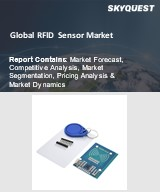
세계의 RFID 센서 시장 규모는 2024년에 239억 2,000만 달러로 평가되며, 2025년 275억 3,000만 달러에서 2033년까지 848억 달러로 성장할 전망입니다. 예측 기간(2026-2033년)의 CAGR은 15.1%로 예측됩니다.
RFID 센서 세계 시장은 자산 추적, 재고 관리, 보안 강화 등 다양한 분야 수요 증가에 힘입어 큰 잠재력을 보여주고 있습니다. 전파를 통해 통신하는 태그와 리더로 구성된 RFID 기술은 공급망 모니터링에서 안전한 결제 방식에 이르기까지 다양한 용도에 필수적인 기술입니다. 실시간 위치 정보 시스템, 센서 네트워크, 5G 등 첨단 커넥티비티 기술, 특히 사물인터넷(IoT)의 맥락에서 RFID 디바이스의 중요성은 계속 증가하고 있습니다. 또한 기업은 보안 대책 강화의 필요성에 따라 자원 최적화 및 업무 효율성 향상을 위해 RFID 도입을 추진하고 있습니다. RFID와 AI, 머신러닝과 같은 신기술의 융합은 혁신적인 솔루션, 예측 분석, 의사결정 프로세스 개선의 길을 열어가고 있습니다.
세계 RFID 센서 시장 활성화 요인
세계 RFID 센서 시장은 IoT 생태계에서 중요한 역할, 즉 다양한 스마트 기기 및 센서의 연결성과 데이터 수집을 가능하게 한다는 점에서 큰 영향을 받고 있습니다. 인더스트리 4.0의 발전이 가속화됨에 따라 이러한 센서는 자산 추적, 예지보전, 실시간 모니터링을 강화하고 산업 공정의 지속적인 디지털화 및 자동화에 필수적인 역할을 하고 있습니다. RFID 기술을 통합함으로써 기업은 업무 효율을 최적화하고, 자원 관리를 개선하며, 업무에 대한 귀중한 인사이트를 확보하여 다양한 분야의 성장과 혁신을 촉진할 수 있습니다. RFID 센서에 대한 의존도가 높아지는 것은 현대 산업 활동에서 RFID 센서의 중요성이 증가하고 있음을 반영합니다.
세계 RFID 센서 시장 성장 억제요인
세계 RFID 센서 시장은 다양한 RFID 시스템 및 표준 간의 호환성 문제로 인해 많은 어려움을 겪고 있습니다. 이는 기존 인프라 및 소프트웨어 솔루션과의 원활한 통합을 방해할 수 있습니다. 이러한 상호운용성 부족은 특히 여러 벤더가 관여하는 복잡한 환경에서 RFID 도입의 확장성과 적응성을 제한하는 경우가 많습니다. 기업이 RFID 기술을 도입하는 과정에서 이러한 호환성 문제는 서로 다른 시스템이 효과적으로 연동되도록 하는 데 있으며, 복잡성을 야기하고, 궁극적으로 다양한 운영 환경에서 RFID 도입의 전반적인 효율성과 성능에 영향을 미칩니다. 다양한 용도에서 RFID 기술의 이점을 극대화하기 위해서는 이러한 문제를 해결하는 것이 매우 중요합니다.
세계 RFID 센서 시장 동향
세계 RFID 센서 시장은 신흥 시장의 기술 도입 증가에 힘입어 견고한 성장세를 보이고 있습니다. 급속한 산업화, 도시화, 대규모 인프라 구축 등의 요인으로 인해 특히 아시아태평양, 라틴아메리카, 중동 및 아프리카에서 RFID 솔루션에 대한 수요가 증가하고 있습니다. 이들 국가들은 인프라 현대화에 대한 투자를 우선순위로 두고 물류, 제조, 소매 등 다양한 분야에서 업무 효율성과 경쟁력 향상을 위해 노력하고 있습니다. 기업이 실시간 추적 및 재고 관리의 이점을 인식함에 따라 RFID 센서의 통합이 확대될 것으로 예상되며, 진화하는 세계 시장 환경에서 RFID 센서의 역할을 더욱 공고히할 것입니다.
Global RFID Sensors Market size was valued at USD 23.92 Billion in 2024 and is poised to grow from USD 27.53 Billion in 2025 to USD 84.8 Billion by 2033, growing at a CAGR of 15.1% during the forecast period (2026-2033).
The global market for RFID sensors demonstrates significant potential, driven by increasing demands across various sectors, including asset tracking, inventory management, and security enhancements. RFID technology, composed of tags and readers that communicate via radio waves, is essential for applications ranging from supply chain monitoring to secure payment methods. As real-time location systems, sensor networks, and advanced connectivity like 5G gain traction, the relevance of RFID devices continues to rise, especially within the context of the Internet of Things. Additionally, businesses are motivated to adopt RFID for improved resource optimization and operational efficiency, responding to the need for enhanced security measures. The intersection of RFID with emerging technologies such as AI and machine learning is also paving the way for innovative solutions, predictive analytics, and improved decision-making processes.
Top-down and bottom-up approaches were used to estimate and validate the size of the Global RFID Sensors market and to estimate the size of various other dependent submarkets. The research methodology used to estimate the market size includes the following details: The key players in the market were identified through secondary research, and their market shares in the respective regions were determined through primary and secondary research. This entire procedure includes the study of the annual and financial reports of the top market players and extensive interviews for key insights from industry leaders such as CEOs, VPs, directors, and marketing executives. All percentage shares split, and breakdowns were determined using secondary sources and verified through Primary sources. All possible parameters that affect the markets covered in this research study have been accounted for, viewed in extensive detail, verified through primary research, and analyzed to get the final quantitative and qualitative data.
Global RFID Sensors Market Segments Analysis
Global RFID Sensors Market is segmented by Type, Frequency Range, Application, End-use Industry and region. Based on Type, the market is segmented into Active and Passive. Based on Frequency Range, the market is segmented into Low Frequency, High Frequency and Ultra-High Frequency. Based on Application, the market is segmented into Access Control, Livestock Tracking, Ticketing, Cashless Payment, Inventory Management and Others. Based on End-use Industry, the market is segmented into Transportation, Logistic & Supply Chain, Manufacturing, Retail, Healthcare, Aerospace & Defense, Agriculture and Others. Based on region, the market is segmented into North America, Europe, Asia Pacific, Latin America and Middle East & Africa.
Driver of the Global RFID Sensors Market
The Global RFID Sensors market is significantly influenced by their vital role in the Internet of Things (IoT) ecosystem, facilitating vital connectivity and data collection for various smart devices and sensors. As Industry 4.0 advancements gain momentum, these sensors enhance asset tracking, predictive maintenance, and real-time monitoring, which are essential for the ongoing digitization and automation of industrial processes. By integrating RFID technologies, businesses can optimize operational efficiency, improve resource management, and gain valuable insights into their operations, thus driving growth and innovation within various sectors. This growing reliance on RFID sensors reflects their increasing importance in modern industrial practices.
Restraints in the Global RFID Sensors Market
Challenges arise in the Global RFID Sensors market due to compatibility issues among various RFID systems and standards, which can hinder seamless integration with current infrastructure and software solutions. This lack of interoperability often restricts the scalability and adaptability of RFID implementations, especially in complex environments involving multiple vendors. As businesses seek to adopt RFID technology, these compatibility concerns can lead to complications in ensuring that different systems work together effectively, ultimately impacting the overall efficiency and performance of RFID deployments in diverse operational settings. Addressing these challenges is crucial for maximizing the benefits of RFID technology across various applications.
Market Trends of the Global RFID Sensors Market
The global RFID sensors market is experiencing a robust trend driven by the increasing adoption of technology in emerging markets. Factors such as rapid industrialization, urbanization, and substantial infrastructure development are catalyzing the demand for RFID solutions, particularly in regions like Asia Pacific, Latin America, and the Middle East & Africa. These nations are prioritizing investments in modernizing their infrastructure, thus enhancing operational efficiency and competitiveness across various sectors, including logistics, manufacturing, and retail. As businesses recognize the advantages of real-time tracking and inventory management, the integration of RFID sensors is expected to expand, further solidifying their role in the evolving global market landscape.