


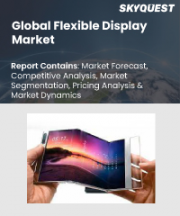
플렉서블 디스플레이 시장 규모는 2024년에 243억 5,000만 달러로 평가되며, 2025년 330억 7,000만 달러에서 2033년까지 3,824억 5,000만 달러로 성장할 전망입니다. 예측 기간(2026-2033년)의 CAGR은 35.8%로 예측됩니다.
플렉서블 디스플레이 시장은 민생 전자기기 보급 확대와 화질 향상에 대한 수요 증가를 배경으로 견고한 성장세를 보이고 있습니다. 이 혁신적인 디스플레이는 구부리거나 접거나 감을 수 있으며, 기존 제품에 비해 높은 내구성을 제공합니다. 시장 상황은 중간 정도의 분산 상태이며, 지역 기업과 세계 기업이 혼재되어 있습니다. 스마트폰용 플렉서블 OLED 패널은 기존 디스플레이에 비해 얇고, 가볍고, 내구성이 뛰어나며, 우수한 대체품으로 자리매김하고 있습니다. 플렉서블 기술의 채택은 아직 발전 단계에 있지만, 스마트폰 분야에서 큰 잠재력을 가지고 있습니다. 또한 아시아태평양의 신규 진출기업이 적극적으로 특허를 취득하며 시장 경쟁을 심화시키는 한편, 기존 제조업체들은 신제품 출시를 위해 생산 기술 혁신에 많은 투자를 하고 있습니다.
플렉서블 디스플레이 시장 활성화 요인
가볍고 휴대성이 높은 전자기기에 대한 수요 증가는 세계 플렉서블 디스플레이 시장을 촉진하는 주요 시장 성장 촉진요인입니다. 소비자와 산업계 모두 기능성과 미적 감각을 겸비한 혁신적인 솔루션을 찾고 있는 가운데, 플렉서블 디스플레이는 초박형 및 휘어지는 화면을 구현할 수 있는 수단으로 기기의 디자인과 사용 편의성을 향상시킬 수 있습니다. 스마트폰, 웨어러블 기기, 각종 가전제품의 응용 확대와 디스플레이 기술의 발전이 맞물리면서 각 제조업체들은 플렉서블 디스플레이 솔루션에 대한 투자를 확대하고 있습니다. 이러한 변화는 사용자 경험의 개인화 및 커스터마이징의 지속적인 추세로 인해 더욱 가속화되고 있으며, 플렉서블 디스플레이는 다양한 분야에서 매력적인 선택이 되고 있습니다.
플렉서블 디스플레이 시장 성장 억제요인
세계 플렉서블 디스플레이 시장의 주요 시장 성장 억제요인 중 하나는 플렉서블 디스플레이 기술과 관련된 높은 제조 비용입니다. OLED 및 기타 플렉서블 기판과 같은 첨단 소재의 생산에는 특수한 장비와 공정이 필요하며, 이는 운영 비용 증가로 이어집니다. 이로 인해 최종 제품 가격이 상승하고, 기존의 경질 디스플레이에 비해 플렉서블 디스플레이가 더 많은 소비자층이 쉽게 접근할 수 없게 되었습니다. 또한 내구성, 성능, 생산시 수율과 관련된 기술적 과제는 제조업체의 생산 규모 확대를 더욱 방해할 수 있으며, 이는 결국 시장 성장과 보급률에 영향을 미칠 수 있습니다.
플렉서블 디스플레이 시장 동향
플렉서블 디스플레이 시장은 전 세계 스마트폰 수요의 급증에 힘입어 괄목할 만한 성장세를 보이고 있습니다. 스마트폰이 일상 생활에 없어서는 안 될 필수품으로 자리 잡으면서 소비자들은 보다 혁신적이고 다기능적인 디스플레이 기술을 요구하고 있습니다. 이에 따라 주요 업계 기업은 사용자 경험을 개선하고 진화하는 취향에 부응하는 첨단 플렉서블 디스플레이 개발에 많은 투자를 하고 있습니다. 스마트폰에 플렉서블 디스플레이의 통합은 미관과 기능성을 향상시킬 뿐만 아니라 웨어러블 기기, 자동차 및 기타 가전제품의 새로운 응용 분야로의 길을 열어 시장 환경의 역동적인 변화를 주도하고 있습니다.
Flexible Display Market size was valued at USD 24.35 Billion in 2024 and is poised to grow from USD 33.07 Billion in 2025 to USD 382.45 Billion by 2033, growing at a CAGR of 35.8% during the forecast period (2026-2033).
The flexible display market is experiencing robust growth, fueled by the increasing prevalence of consumer electronics and a rising demand for enhanced image quality. These innovative displays can be bent, folded, and rolled, offering greater durability compared to traditional options. The market landscape is moderately fragmented, featuring a mix of regional and global players. Flexible OLED panels in smartphones are thinner, lighter, and more resilient, positioning them as a favorable alternative to conventional displays. Although the adoption of flexible technology is still emerging, it holds significant promise for the smartphone sector. Additionally, new competitors in the Asia-Pacific region are actively pursuing patents, intensifying market competition, while established manufacturers are heavily investing in production advancements to launch novel products.
Top-down and bottom-up approaches were used to estimate and validate the size of the Flexible Display market and to estimate the size of various other dependent submarkets. The research methodology used to estimate the market size includes the following details: The key players in the market were identified through secondary research, and their market shares in the respective regions were determined through primary and secondary research. This entire procedure includes the study of the annual and financial reports of the top market players and extensive interviews for key insights from industry leaders such as CEOs, VPs, directors, and marketing executives. All percentage shares split, and breakdowns were determined using secondary sources and verified through Primary sources. All possible parameters that affect the markets covered in this research study have been accounted for, viewed in extensive detail, verified through primary research, and analyzed to get the final quantitative and qualitative data.
Flexible Display Market Segments Analysis
Global Flexible Display Market is segmented by Technology, Panel Size, Substrate Material, Application, and Region. Based on Technology, the market is segmented into OLED Display, E-paper Display, Quantum dot LED Display, and LED-Backlit LCD. Based on Panel Size, the market is segmented into Up to 6", 6-20", 20-50", and Above 50". Based on Substrate Material, the market is segmented into Glass, Plastic, and Others. Based on Application, the market is segmented into Smartphone & Tablet, Smartwatches & Wearables, Television & Digital Signage Systems, PC Monitors & Laptops, E-reader, Electronic Shelf Labels (ESLS), Vehicles & Public Transports, and Smart Home Appliances. Based on Region, the market is segmented into North America, Europe, Asia Pacific, Latin America and Middle East & Africa.
Driver of the Flexible Display Market
The increasing demand for lightweight and portable electronic devices is a key market driver for the global flexible display market. As consumers and industries alike seek innovative solutions that combine functionality with aesthetics, flexible displays provide a pathway to create ultra-thin, bendable screens that enhance device design and usability. The rise of applications in smartphones, wearables, and various consumer electronics, coupled with advancements in display technology, drives manufacturers to invest in flexible display solutions. This shift is further propelled by the ongoing trend towards personalization and customization in user experiences, making flexible displays an attractive option for a diverse range of sectors.
Restraints in the Flexible Display Market
One significant market restraint for the global flexible display market is the high manufacturing costs associated with flexible display technologies. The production of advanced materials, such as organic light-emitting diodes (OLEDs) and other flexible substrates, requires specialized equipment and processes, which can lead to elevated operational expenses. This increases the final product prices, making flexible displays less accessible to a broader consumer base compared to traditional rigid displays. Additionally, technical challenges related to durability, performance, and yield rates during production can further hinder manufacturers' ability to scale up operations, ultimately impacting market growth and adoption rates.
Market Trends of the Flexible Display Market
The flexible display market is experiencing significant growth, primarily fueled by the surging global demand for smartphones. As smartphones become an indispensable part of daily life, consumers are seeking more innovative and versatile display technologies. This has prompted key industry players to invest heavily in the development of advanced flexible displays that enhance user experience and meet evolving preferences. The integration of flexible displays into smartphones not only offers improved aesthetics and functionality but also paves the way for emerging applications in wearables, automotive, and other consumer electronics, driving a dynamic shift in the market landscape.