


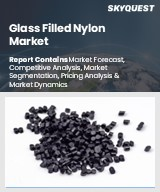
세계의 유리섬유 강화 나일론 시장 규모는 2024년에 12억 8,000만 달러로 평가되었으며, 2025년 13억 6,000만 달러에서 2033년까지 22억 5,000만 달러로 성장할 전망입니다. 예측 기간(2026-2033년) 동안 CAGR은 6.5%로 예측됩니다.
세계 유리섬유 강화 나일론 시장은 자동차, 전자기기를 비롯한 다양한 분야의 강력한 수요에 힘입어 괄목할 만한 성장세를 보이고 있습니다. 자동차 산업은 유리섬유 강화 나일론의 주요 수요처로, 각 제조사들은 유리섬유 강화 나일론의 우수한 강도 대 중량비를 활용하여 주요 부품의 금속 대체재로 채택하여 경량화를 촉진하고 있습니다. 커넥터 및 하우징을 포함한 전기 및 전자부품에 유리섬유 강화 나일론의 사용이 증가함에 따라 시장 전망이 더욱 밝아지고 있습니다. 또한, 석유 및 가스, 농업 등의 산업에서도 임펠러, 밸브 하우징 등의 부품에 이 소재가 채택되고 있습니다. 이러한 성장에도 불구하고, 높은 흡습성, 원자재 가격 변동, 대체 플라스틱과의 경쟁 등 여러 가지 문제들이 시장 확대에 걸림돌이 될 수 있습니다.
세계 유리섬유 강화 나일론 시장 촉진요인
세계 유리섬유 강화 나일론 시장의 성장은 우수한 기계적 강도, 내충격성, 성형성 등 우수한 특성으로 인해 팬 블레이드, 브래킷, 펌프 등의 부품 제조에 이상적인 소재가 되고 있습니다. 세계 가전제품에 대한 수요 증가는 향후 시장 전망에 긍정적인 영향을 미칠 것으로 예상됩니다. 또한, 유리섬유 강화 나일론은 강도와 미관을 해치지 않으면서도 부품의 무게를 줄일 수 있어 제조업체의 채택이 증가하고 있으며, 다양한 산업 분야의 다양한 응용 분야에서 그 매력을 더욱 높여주고 있습니다. 이러한 특성의 조합으로 유리섬유 강화 나일론은 시장에서 우선적으로 선택되는 소재로 자리매김하고 있습니다.
세계 유리섬유 강화 나일론 시장 억제요인
세계 유리섬유 강화 나일론 시장은 재료가 수분을 흡수하는 경향이 있기 때문에 시간이 지남에 따라 치수 안정성과 기계적 특성에 부정적인 영향을 미치는 심각한 문제에 직면해 있습니다. 습도가 높은 환경이나 물에 노출되는 응용 분야에서는 흡수된 수분이 팽창, 강성 저하 등의 문제를 일으켜 결국 성능을 저하시킬 수 있습니다. 이러한 제한은 엄격한 공차와 안정성이 필수적인 중요한 전자부품 및 정밀 부품에 사용하기에 장벽이 됩니다. 그 결과, 많은 산업에서 흡습성이 낮은 대체 엔지니어링 플라스틱으로 눈을 돌릴 가능성이 있으며, 이는 전체 시장의 성장 잠재력을 저해할 수 있습니다.
세계 유리섬유 강화 나일론 시장 동향
세계 유리섬유 강화 나일론 시장은 전기자동차(EV) 제조를 비롯한 다양한 산업 분야에서 경량화 및 고성능 소재에 대한 수요 증가에 힘입어 괄목할만한 성장을 거듭하고 있습니다. 자동차 제조사들이 지속가능성을 중시하고 차량 효율을 높이기 위해 노력하는 가운데, 우수한 강도, 내열성, 경량화를 실현하는 소재에 대한 수요가 급증하고 있습니다. 유리섬유 강화 나일론은 현대 엔지니어링의 까다로운 요구사항을 충족하는 우수한 기계적 특성을 제공하여 최적의 솔루션으로 부상하고 있습니다. 이러한 추세는 첨단 엔지니어링 플라스틱에 대한 의존도가 높아지고 있으며, 유리섬유 강화 나일론은 혁신적이고 지속가능한 모빌리티 솔루션의 진화에 있어 중요한 구성요소로 자리매김하고 있습니다.
Global Glass Filled Nylon Market size was valued at USD 1.28 Billion in 2024 and is poised to grow from USD 1.36 Billion in 2025 to USD 2.25 Billion by 2033, growing at a CAGR of 6.5% during the forecast period (2026-2033).
The global glass filled nylon market is witnessing significant growth fueled by strong demand from various sectors, particularly automotive and electronics. The automotive industry is a key catalyst, as manufacturers leverage glass filled nylon for its impressive strength-to-weight ratio, enabling the replacement of metals in crucial components to promote weight reduction. The increasing use of glass filled nylon in electrical and electronic components, including connectors and housings, further enhances market prospects. Additionally, industries such as oil and gas and agriculture are adopting this material for parts like impellers and valve housings. Despite this growth, challenges such as high moisture absorption, fluctuating raw material prices, and competition from alternative plastics may hinder overall market expansion.
Top-down and bottom-up approaches were used to estimate and validate the size of the Global Glass Filled Nylon market and to estimate the size of various other dependent submarkets. The research methodology used to estimate the market size includes the following details: The key players in the market were identified through secondary research, and their market shares in the respective regions were determined through primary and secondary research. This entire procedure includes the study of the annual and financial reports of the top market players and extensive interviews for key insights from industry leaders such as CEOs, VPs, directors, and marketing executives. All percentage shares split, and breakdowns were determined using secondary sources and verified through Primary sources. All possible parameters that affect the markets covered in this research study have been accounted for, viewed in extensive detail, verified through primary research, and analyzed to get the final quantitative and qualitative data.
Global Glass Filled Nylon Market Segments Analysis
Global Glass Filled Nylon Market is segmented by Fiber Type, Manufacturing Process, End Use Industry, Grade Type, Form and region. Based on Fiber Type, the market is segmented into Glass Fiber, Carbon Fiber and Others. Based on Manufacturing Process, the market is segmented into Injection Molding, Extrusion, Compression Molding and Others. Based on End Use Industry, the market is segmented into Automotive, Electrical & Electronics, Industrial Machinery, Consumer Goods and Others. Based on Grade Type, the market is segmented into Standard Grade and High Performance Grade. Based on Form, the market is segmented into Granules and Pellets. Based on region, the market is segmented into North America, Europe, Asia Pacific, Latin America and Middle East & Africa.
Driver of the Global Glass Filled Nylon Market
The global glass filled nylon market is significantly driven by its superior mechanical strength, impact resistance, and moldability, which make it an ideal material for producing components such as fan blades, brackets, and pumps. The escalating demand for consumer electronics globally is anticipated to positively impact the outlook for this market in the future. Additionally, manufacturers are increasingly opting for glass filled nylon because it allows for the reduction of part weight without compromising on strength or aesthetics, further enhancing its appeal in various applications across multiple industries. This combination of properties positions glass filled nylon as a preferred choice in the market.
Restraints in the Global Glass Filled Nylon Market
The global glass filled nylon market faces significant challenges due to the material's tendency to absorb moisture, which adversely affects its dimensional stability and mechanical properties over time. In environments with high humidity or in applications subject to water exposure, the absorbed moisture can lead to issues such as swelling and diminished stiffness, ultimately compromising performance. This limitation poses obstacles for its use in critical electronic and precision components where meticulous tolerances and stability are crucial. As a result, many industries may turn to alternative engineering plastics that exhibit lower hygroscopicity, thereby inhibiting the market's overall growth potential.
Market Trends of the Global Glass Filled Nylon Market
The Global Glass Filled Nylon market is experiencing significant growth driven by the rising demand for lightweight, high-performance materials in various industries, most notably in electric vehicle (EV) manufacturing. As automakers prioritize sustainability and seek to enhance vehicle efficiency, the need for materials that provide superior strength, heat resistance, and reduced weight has surged. Glass filled nylon emerges as an optimal solution, offering excellent mechanical properties that cater to the rigorous requirements of modern engineering. This trend underscores the increasing reliance on advanced engineering plastics, positioning glass filled nylon as a critical component in the evolution of innovative, sustainable mobility solutions.