


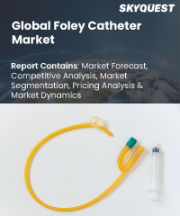
세계의 폴리 카테터 시장 규모는 2024년에 18억 6,000만 달러로 평가되었으며, 2025년 19억 5,000만 달러에서 2033년까지 29억 1,000만 달러로 성장할 전망입니다. 예측 기간(2026-2033년) 동안 CAGR은 5.1%로 예측됩니다.
세계 폴리 카테터 시장은 고령화 인구 증가, 요로질환 발생률 증가, 외과적 수술 증가 등을 배경으로 꾸준한 성장세를 보이고 있습니다. 기술 혁신을 통해 카테터의 재질과 디자인이 개선되어 환자의 편안함 향상과 감염 위험 감소를 도모하고 있습니다. 경쟁 상황에서는 주요 기업들이 제품 혁신과 전략적 제휴를 우선시하는 태도가 두드러집니다. 북미는 선진화된 의료 인프라와 높아진 인식으로 인해 상당한 시장 점유율을 차지하고 있습니다. 한편, 아시아태평양에서는 의료 시설의 발전을 배경으로 큰 폭의 성장이 예상됩니다. 그러나 카테터 관련 감염과 규제 복잡성 등의 문제도 존재하며, 업계에서는 보다 안전하고 효과적인 대체품 개발을 위한 지속적인 연구 노력이 요구되고 있습니다.
세계 폴리 카테터 시장 촉진요인
세계 폴리 카테터 시장은 몇 가지 주요 요인에 의해 크게 주도되고 있습니다. 그 중 하나는 고령 인구의 증가이며, 노인들은 요실금 등 다양한 건강 문제에 직면하는 경우가 많습니다. 또한, 일반 인구의 요실금 발생률 증가도 효과적인 관리 솔루션에 대한 수요 증가에 기여하고 있습니다. 또한, 환자와 의료진 모두 회복 시간 단축과 편안함을 중시하는 경향으로 인해 최소침습적 의료 시술로 전환하는 경향이 두드러지게 나타나고 있습니다. 이러한 추세는 폴리 카테터 시장의 성장과 혁신을 촉진하고 있습니다.
세계 폴리 카테터 시장 억제요인
세계 폴리 카테터 시장의 성장에는 몇 가지 중요한 과제가 존재합니다. 그 중에서도 특히 심각한 것은 환자에게 심각한 건강 위험을 초래하는 카테터 관련 요로감염(CAUTI)에 대한 우려가 커지고 있다는 점입니다. 또한, 카테터의 설계상의 한계로 인해 사용자에게 불편함과 다양한 합병증이 발생할 수 있습니다. 또한, 규제 장벽은 시장에서의 신제품 도입과 승인을 방해하고, 혁신을 저해하며, 의료진의 선택권을 제한할 수 있습니다. 이러한 요인들이 복합적으로 작용하여 폴리 카테터 시장의 성장과 발전을 저해하는 요인으로 작용하고 있습니다.
세계 폴리 카테터 시장 동향
세계 폴리 카테터 시장은 환자의 편안함과 안전을 우선시하는 몇 가지 주요 트렌드에 힘입어 큰 변화를 겪고 있습니다. 기술의 발전으로 감염 위험을 줄이면서 사용 편의성을 높인 혁신적인 카테터 디자인과 소재가 개발되고 있습니다. 요로 질환의 증가 추세와 고령화 사회의 진전은 이러한 의료기기에 대한 수요를 촉진하고 있습니다. 또한, 최소침습 수술의 트렌드가 도입 속도를 더욱 가속화하고 있습니다. 제조업체들은 사용하기 편리한 일회용 카테터 개발에 집중하는 한편, 원격의료와 온라인 플랫폼의 등장으로 제품 접근성이 향상되고 있습니다. 카테터 관련 합병증과 대체 관리 방법의 문제에도 불구하고, 시장은 혁신과 의료 환경의 변화로 형성되고 진화하고 있습니다.
Global Foley Catheter Market size was valued at USD 1.86 Billion in 2024 and is poised to grow from USD 1.95 Billion in 2025 to USD 2.91 Billion by 2033, growing at a CAGR of 5.1% during the forecast period (2026-2033).
The global Foley catheter market is witnessing consistent growth, propelled by an aging population, higher rates of urinary disorders, and increased surgical interventions. Technological innovations are enhancing catheter materials and designs, leading to improved patient comfort and minimized infection risks. The competitive landscape features prominent players prioritizing product innovation and strategic partnerships. North America commands a considerable market share owing to its advanced healthcare infrastructure and heightened awareness. Meanwhile, the Asia-Pacific region is poised for significant growth driven by advancements in medical facilities. Nevertheless, the market faces challenges, including catheter-associated infections and regulatory complexities, necessitating continuous research efforts for the development of safer and more effective alternatives in the industry.
Top-down and bottom-up approaches were used to estimate and validate the size of the Global Foley Catheter market and to estimate the size of various other dependent submarkets. The research methodology used to estimate the market size includes the following details: The key players in the market were identified through secondary research, and their market shares in the respective regions were determined through primary and secondary research. This entire procedure includes the study of the annual and financial reports of the top market players and extensive interviews for key insights from industry leaders such as CEOs, VPs, directors, and marketing executives. All percentage shares split, and breakdowns were determined using secondary sources and verified through Primary sources. All possible parameters that affect the markets covered in this research study have been accounted for, viewed in extensive detail, verified through primary research, and analyzed to get the final quantitative and qualitative data.
Global Foley Catheter Market Segments Analysis
Global Foley Catheter Market is segmented by Product, Material, Indication, End-User and region. Based on Product, the market is segmented into 2-way Foley Catheters, 3-way Foley Catheters and 4-way Foley Catheters. Based on Material, the market is segmented into Silicone, Latex, Hydrophilic Polymer Coated Latex, Silicone Elastomer Coated Latex, Polytetrafluoroethylene PTFE (Teflon) Coated Latex and Others. Based on Indication, the market is segmented into Urinary Incontinence, Enlarged Prostate Gland/BPH, Spinal Cord Injury and Others. Based on End-User, the market is segmented into Hospitals, Long Term Care Facilities and Others. Based on region, the market is segmented into North America, Europe, Asia Pacific, Latin America and Middle East & Africa.
Driver of the Global Foley Catheter Market
The global Foley catheter market is being significantly driven by several key factors, including the expanding elderly demographic, which often faces various health challenges, such as urinary incontinence. Additionally, the rising incidence of urinary incontinence among the general population is contributing to the demand for effective management solutions. Furthermore, there is a notable shift towards minimally invasive medical procedures, as patients and healthcare providers alike favor options that reduce recovery times and enhance comfort. Collectively, these trends are fueling growth and innovation within the Foley catheter market.
Restraints in the Global Foley Catheter Market
The growth of the global Foley catheter market faces several significant challenges. Chief among these are the rising concerns regarding catheter-associated urinary tract infections (CAUTIs), which pose serious health risks to patients. Additionally, limitations in the design of catheters can lead to discomfort and various complications for users. Furthermore, regulatory hurdles can impede the introduction and approval of new products in the market, stifling innovation and limiting options for healthcare providers. Collectively, these factors contribute to the constraints experienced within the Foley catheter market, hindering its expansion and development.
Market Trends of the Global Foley Catheter Market
The global Foley catheter market is undergoing significant transformation, driven by several key trends that prioritize patient comfort and safety. Technological advancements have led to the development of innovative catheter designs and materials, reducing the risk of infections while enhancing usability. The increasing prevalence of urinary disorders, alongside a growing aging population, fuels demand for these medical devices. Additionally, the trend toward minimally invasive procedures has further accelerated adoption rates. Manufacturers are increasingly focusing on creating user-friendly, disposable catheter options, while the rise of telemedicine and online platforms improves product accessibility. Despite challenges posed by catheter-associated complications and alternative management methods, the market continues to evolve, shaped by innovation and shifting healthcare dynamics.