


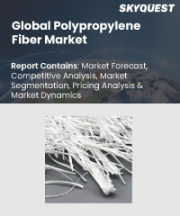
폴리프로필렌 섬유 시장 규모는 2024년에 1,347억 6,000만 달러로 평가되며, 2025년 1,392억 6,000만 달러에서 2033년까지 1,811억 2,000만 달러로 성장할 전망입니다. 예측 기간(2026-2033년)의 CAGR은 3.34%로 예측됩니다.
폴리프로필렌 섬유 시장은 섬유, 자동차, 건설, 위생용품 등 다양한 분야 수요 증가를 배경으로 견고한 성장세를 보이고 있습니다. 진행 중인 인프라 프로젝트와 부직포의 용도 확대가 주요 요인으로 작용하여 시장 성장을 촉진하고 있습니다. 폴리프로필렌 섬유가 가지고 있는 우수한 강도, 경량성, 내화학성 등의 고유한 장점은 다양한 용도로의 채택을 가능하게 합니다. 또한 기술 발전, 혁신적인 제품 개발, 개발도상국 소비자 시장의 부상으로 인해 시장 모멘텀이 더욱 강화될 것으로 예측됩니다. 그러나 환경적 지속가능성 및 경쟁력 있는 가격 책정과 관련된 이슈는 향후 성장 경로에 대한 리스크가 될 수 있으므로, 이해관계자들은 시장의 지속가능성을 유지하기 위해 이러한 복잡한 상황을 신중하게 고려해야 합니다.
폴리프로필렌 섬유 시장 성장 촉진요인
세계 폴리프로필렌 섬유 시장의 주요 시장 성장 촉진요인 중 하나는 다양한 산업 분야에서 가볍고 내구성이 뛰어난 소재에 대한 수요 증가입니다. 폴리프로필렌 섬유는 우수한 강도 대 중량비, 화학적 열화에 대한 내성, 흡습성 등의 특성으로 높은 평가를 받고 있습니다. 이를 통해 자동차 내장재, 지오텍스타일, 스포츠 및 아웃도어 의류에 사용되는 테크니컬 텍스타일 등에 이상적으로 적용될 수 있습니다. 또한 지속가능한 소재에 대한 관심이 높아지면서 폴리프로필렌 섬유의 재활용 가능성과 기존 섬유에 비해 낮은 환경 부하로 인해 폴리프로필렌 섬유에 대한 관심이 더욱 높아지고 있습니다. 이러한 요인들이 결합되어 여러 분야에서 폴리프로필렌 섬유의 매력과 채택을 촉진하고 있습니다.
폴리프로필렌 섬유 시장 성장 억제요인
세계 폴리프로필렌 섬유 시장의 주요 시장 성장 억제요인 중 하나는 합성 섬유의 생산 및 폐기에 따른 환경 문제에 대한 우려 증가입니다. 플라스틱 오염과 지속가능성에 대한 인식이 높아지면서 소비자와 규제 당국은 친환경 대체 소재를 옹호하고 있으며, 제조업체에 혁신과 환경 친화적인 제조 방식을 도입하도록 압박하고 있습니다. 또한 원자재 가격 변동과 공급망 혼란의 가능성은 생산 효율성과 비용 효율성을 저해할 수 있습니다. 이러한 요인들이 복합적으로 작용하여 폴리프로필렌 섬유 산업의 성장에 도전이 되고 있으며, 각 업체들은 경제적 타당성과 환경적 책임의 균형을 유지하면서 시장 수요의 변화에 대응하기 위해 노력하고 있습니다.
폴리프로필렌 섬유 시장 동향
세계 폴리프로필렌 섬유 시장의 주요 동향으로 자동차, 건설, 섬유 등 다양한 산업 분야에서 가볍고 내구성이 뛰어난 소재에 대한 수요가 증가하고 있습니다. 이러한 수요 증가는 지속가능성과 환경 문제에 대한 관심이 높아지면서 기존 섬유에 비해 재활용성이 높고 환경 부하가 적기 때문에 제조업체들이 폴리프로필렌 섬유를 채택하는 경향이 강해졌기 때문입니다. 또한 섬유 기술 및 제조 방법의 발전으로 폴리프로필렌 섬유의 품질과 응용 범위가 향상되어 더 많은 소비자를 끌어들이고 시장 기회가 다양해지고 있습니다. 그 결과, 시장은 강력한 확장과 혁신을 이루고 있습니다.
Polypropylene Fiber Market size was valued at USD 134.76 Billion in 2024 and is poised to grow from USD 139.26 Billion in 2025 to USD 181.12 Billion by 2033, growing at a CAGR of 3.34% during the forecast period (2026-2033).
The polypropylene fiber market is experiencing robust growth driven by heightened demand across diverse sectors including textiles, automotive, construction, and hygiene. Key factors such as ongoing infrastructure projects and the increasing use of nonwoven fabrics are propelling this market forward. The inherent advantages of polypropylene fibers, such as exceptional strength, lightweight nature, and chemical resistance, facilitate their broad application. Furthermore, advancements in technology, innovative product development, and the emergence of consumer markets in developing areas are likely to bolster market momentum. Nonetheless, challenges related to environmental sustainability and competitive pricing could pose risks to future growth avenues, requiring stakeholders to navigate these complexities to maintain market viability.
Top-down and bottom-up approaches were used to estimate and validate the size of the Polypropylene Fiber market and to estimate the size of various other dependent submarkets. The research methodology used to estimate the market size includes the following details: The key players in the market were identified through secondary research, and their market shares in the respective regions were determined through primary and secondary research. This entire procedure includes the study of the annual and financial reports of the top market players and extensive interviews for key insights from industry leaders such as CEOs, VPs, directors, and marketing executives. All percentage shares split, and breakdowns were determined using secondary sources and verified through Primary sources. All possible parameters that affect the markets covered in this research study have been accounted for, viewed in extensive detail, verified through primary research, and analyzed to get the final quantitative and qualitative data.
Polypropylene Fiber Market Segments Analysis
Global Polypropylene Fiber Market is segmented by Form, Process, End-use Industry, and region. Based on Form, the market is segmented into Polypropylene Staple Fiber, Continuous Fiber. Based on Process, the market is segmented into Spun Bonded, Spun Melt, Wet Lay, Dry Lay, Others. Based on End-use Industry, the market is segmented into Construction, Pharmaceutical, Electrical & Electronics, Health Care, Automotive, Others. Based on region, the market is segmented into North America, Europe, Asia Pacific, Latin America and Middle East & Africa.
Driver of the Polypropylene Fiber Market
One of the key market drivers for the global polypropylene fiber market is the increasing demand for lightweight and durable materials across various industries. Polypropylene fibers are favored for their exceptional strength-to-weight ratio, resistance to chemical degradation, and moisture-wicking properties. This makes them ideal for applications in automotive interiors, geotextiles, and technical textiles used in sports and outdoor apparel. Additionally, the growing trend towards sustainable materials has spurred interest in polypropylene fiber due to its recyclability and lower environmental impact compared to conventional fibers. These factors collectively enhance the appeal and adoption of polypropylene fibers across multiple sectors.
Restraints in the Polypropylene Fiber Market
One significant market restraint for the global polypropylene fiber market is the increasing environmental concerns surrounding the production and disposal of synthetic fibers. As awareness of plastic pollution and sustainability rises, consumers and regulatory bodies are advocating for eco-friendly alternatives, putting pressure on manufacturers to innovate and adopt greener practices. Additionally, the fluctuating prices of raw materials and potential supply chain disruptions can hinder production efficiency and cost-effectiveness. These factors collectively pose challenges for growth in the polypropylene fiber industry, as companies strive to balance economic viability with environmental responsibility and respond to the evolving demands of the marketplace.
Market Trends of the Polypropylene Fiber Market
A key market trend in the global polypropylene fiber market is the increasing demand for lightweight and durable materials across various industries, such as automotive, construction, and textiles. This surge is driven by the growing emphasis on sustainability and environmental concerns, leading manufacturers to adopt polypropylene fibers due to their recyclability and low environmental impact compared to traditional fibers. Furthermore, advancements in fiber technology and production methods are enhancing the quality and range of applications for polypropylene fibers, attracting more consumers and diversifying market opportunities. As a result, the market is witnessing robust expansion and innovation.