


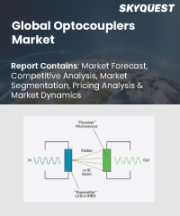
세계의 옵토커플러 시장 규모는 2024년에 31억 달러로 평가되었으며, 2025년 34억 달러에서 2033년까지 71억 8,000만 달러로 성장할 전망입니다. 예측 기간(2026-2033년) 동안 CAGR은 9.8%로 예측됩니다.
옵토커플러 시장은 산업적 용도의 확대와 다양한 분야에서의 신호 절연 기술 채택으로 인해 괄목할 만한 성장세를 보이고 있습니다. 이러한 확장에 기여하는 주요 요인으로는 광무선 네트워크의 급증, 하이브리드 및 전기자동차에 대한 관심 증가, 디지털 옵토커플러의 개발 등을 들 수 있습니다. 특히 자동차, 통신, 산업 분야의 수요가 강하며, 스마트홈 기기, 가전제품, 컴퓨터 주변기기에서 옵토커플러는 필수적인 부품으로 자리 잡고 있습니다. 산업계가 인더스트리 4.0의 틀 안에서 IoT, AI, 자동화 등의 진보를 도입함에 따라 신뢰할 수 있는 신호 절연 기술의 필요성이 매우 중요해집니다. 이러한 성장 추세는 시장을 더욱 확대시키고, 첨단 전력망을 지원하는 인프라에 긍정적인 영향을 미칠 것으로 예상됩니다.
옵토커플러 시장 촉진요인
옵토커플러 시장은 기업이 인적 개입을 최소화하면서 생산성을 높이기 위해 제어 시스템과 기계 간의 안전하고 신뢰할 수 있는 통신에 대한 수요가 증가함에 따라 주도하고 있습니다. 이러한 부품은 전기적 간섭 및 노이즈와 관련된 위험을 효과적으로 감소시키면서 원활한 신호 및 데이터 전송을 가능하게 합니다. 제조, 에너지, 물류 등 다양한 분야의 자동화 프로세스에 옵토커플러의 통합이 진행되고 있는 것이 시장 확대를 촉진하고 있습니다. 이러한 수요 급증은 전기적 절연 및 신호 무결성 강화에 대한 요구가 증가함에 따라 현대 산업 응용 분야에서 옵토커플러의 중요성을 더욱 확고히 하고 있습니다.
옵토커플러 시장 억제요인
옵토커플러를 다양한 전기 시스템에 통합할 때 최적의 성능을 보장하기 위해 세심한 설계와 조정이 필요한 경우가 많습니다. 이러한 복잡성으로 인해 제조 기간의 연장, 비용 증가, 기존 부품과의 호환성 문제가 발생할 수 있습니다. 기술 발전이 계속되는 가운데, 이러한 통합 문제를 해결하는 것은 옵토커플러의 장점을 최대한 활용하고 산업 전반에 걸쳐 보급을 방해하는 장벽을 줄이는 데 매우 중요합니다. 이러한 과제를 극복하는 것은 효율성을 높이고, 다양한 응용 분야에서 옵토커플러의 광범위한 사용을 촉진하고, 궁극적으로 전기 시스템 운영을 보다 합리화하기 위해 매우 중요합니다.
옵토커플러 시장 동향
옵토커플러 시장은 통신, 전기자동차 등 다양한 분야의 고속 데이터 전송 수요 급증에 힘입어 눈에 띄는 상승세를 보이고 있습니다. 효율적인 데이터 처리의 필요성이 증가함에 따라, 옵토커플러는 고속 디지털 환경에서 신뢰할 수 있는 신호의 절연과 무결성을 보장하는 능력으로 점점 더 인정받고 있습니다. 이 기술은 현대 애플리케이션이 요구하는 고속 요구 사항을 지원할 뿐만 아니라 진행 중인 기술 혁신에 원활하게 적응할 수 있습니다. 그 결과, 성능과 데이터 보안에 대한 관심이 높아지면서 첨단 옵토커플러에 대한 수요가 더욱 증가하여 진화하는 전자기기 분야에서 옵토커플러의 중요한 역할을 확고히 하고 있습니다.
Optocouplers Market size was valued at USD 3.1 Billion in 2024 and is poised to grow from USD 3.4 Billion in 2025 to USD 7.18 Billion by 2033, growing at a CAGR of 9.8% during the forecast period (2026-2033).
The optocoupler market is witnessing significant growth driven by increasing industrial applications and the adoption of signal isolation technologies across various sectors. Key factors contributing to this expansion include the surge in optical wireless networks, rising interest in hybrid and electric vehicles, and the development of digital optocouplers. Demand is particularly strong in automotive, telecommunications, and industrial sectors, with optocouplers becoming integral components in smart home devices, consumer electronics, and computer peripherals. As industries embrace advancements like IoT, AI, and automation within the framework of Industry 4.0, the need for reliable signal isolation technologies becomes critical. This growing trend is expected to enhance the market further, positively impacting infrastructure designed to support advanced power grids.
Top-down and bottom-up approaches were used to estimate and validate the size of the Optocouplers market and to estimate the size of various other dependent submarkets. The research methodology used to estimate the market size includes the following details: The key players in the market were identified through secondary research, and their market shares in the respective regions were determined through primary and secondary research. This entire procedure includes the study of the annual and financial reports of the top market players and extensive interviews for key insights from industry leaders such as CEOs, VPs, directors, and marketing executives. All percentage shares split, and breakdowns were determined using secondary sources and verified through Primary sources. All possible parameters that affect the markets covered in this research study have been accounted for, viewed in extensive detail, verified through primary research, and analyzed to get the final quantitative and qualitative data.
Optocouplers Market Segments Analysis
Global Optocouplers Market is segmented by Product, Pin Type, Component, Application and region. Based on Product, the market is segmented into Photo-Darlington, Photo-SCR, Photo-transistor and Photo-Triac. Based on Pin Type, the market is segmented into 4 Pin Optocouplers, 5 Pin Optocouplers, 6 Pin Optocouplers and 7 Pin Optocouplers and above. Based on Component, the market is segmented into Light-Emitting Diode and Photodetector. Based on Application, the market is segmented into Automotive, Consumer Electronics, Industrial and Telecommunication. Based on region, the market is segmented into North America, Europe, Asia Pacific, Latin America and Middle East & Africa.
Driver of the Optocouplers Market
The optocouplers market is driven by the rising demand for secure and reliable communication between control systems and machinery, as companies strive to enhance productivity while minimizing human intervention. These components enable seamless signal and data transmission while effectively mitigating risks associated with electrical interference and noise. The growing integration of optocouplers in automated processes across various sectors, including manufacturing, energy, and logistics, is propelling market expansion. This surge in demand is largely attributed to the increasing need for enhanced electrical isolation and signal integrity, further solidifying the importance of optocouplers in modern industrial applications.
Restraints in the Optocouplers Market
The integration of optocouplers into various electrical systems often demands meticulous design and calibration to ensure optimal performance. This complexity can lead to extended manufacturing timelines, increased costs, and possible compatibility issues with pre-existing components. As advancements in technology continue, addressing these integration challenges becomes vital to fully leverage the benefits of optocouplers and reduce obstacles to their widespread adoption across industries. Overcoming these hurdles is crucial for enhancing efficiency and encouraging broader utilization of optocouplers in diverse applications, ultimately promoting more streamlined operations in electrical systems.
Market Trends of the Optocouplers Market
The optocoupler market is experiencing a notable upward trend driven by the surging demand for high-speed data transmission across various sectors, including telecommunications and electric vehicles. As the need for efficient data handling intensifies, optocouplers are increasingly recognized for their ability to ensure reliable signal isolation and integrity in fast-paced digital environments. This technology not only supports the high-speed requirements of modern applications but also adapts seamlessly to ongoing technological innovations. Consequently, the rising emphasis on performance and data security is further propelling the demand for advanced optocouplers, solidifying their critical role in the evolving electronic landscape.