


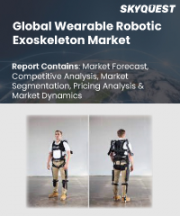
세계의 웨어러블 로봇 외골격 시장 규모는 2024년에 15억 2,000만 달러로 평가되었고, 2025년 21억 달러에서 2033년까지 279억 6,000만 달러로 성장할 전망이며, 예측 기간(2026-2033년) CAGR은 38.2%를 보일 것으로 예측됩니다.
세계 웨어러블 로봇 외골격 시장은 첨단 재활 기술에 대한 수요 증가를 배경으로 괄목할 만한 성장을 거듭하고 있습니다. 이들 장치는 신경근육 질환으로 인해 잃어버린 자연스런 동작을 효과적으로 회복시켜주기 때문에 노년층을 비롯해 제조업, 건설업, 물류업 등 다양한 산업 분야에서 폭넓게 채택되고 있습니다. 웨어러블 로봇 기술의 진화에 따라 적극적인 연구개발이 혁신적인 제품 개발을 촉진하고 있으며, 외골격 장치는 지원 기술의 최첨단에 위치하고 있습니다. 특히 인도와 같은 지역에서는 스타트업 기업들이 척수 손상이나 외상성 뇌손상 등의 재활을 돕는 최첨단 웨어러블 기술을 통해 이동 능력을 향상시키는 데 주력하고 있습니다. 이러한 첨단 시스템에 대한 집중적인 노력은 시장 성장의 주요 요인이며, 장애인의 이동 능력과 재활에 변화를 가져올 수 있는 가능성을 보여주고 있습니다.
세계 웨어러블 로봇 외골격 시장 활성화 요인
세계 웨어러블 로봇 외골격 시장은 다양한 산업 분야에서의 외골격 기술 채택 확대와 지속적인 기술 혁신으로 괄목할 만한 성장을 거듭하고 있습니다. 사물인터넷(IoT), 인공지능(AI), 가상 안내, 대화형 학습, 스마트 디지털 비서 등의 기술 발전은 로봇의 기능을 크게 향상시켜 물류, 의료, 엔지니어링 등의 분야에서 큰 혜택을 가져다주고 있습니다. 또한, 인간의 생리적 데이터를 기반으로 로봇 기능을 실시간으로 조정하는 '휴먼 인 더 루프 최적화(Human in the Loop Optimization)'와 같은 연구 기법의 도입은 로봇공학 분야를 변화시키고 있습니다. 이 기술과 인간의 상호작용이 시장 상황을 발전시키고 있습니다.
세계 웨어러블 로봇 외골격 시장 성장 억제요인
웨어러블 로봇 외골격 시장은 이러한 첨단 장치에 필요한 높은 초기 투자 비용으로 인해 심각한 문제에 직면해 있습니다. 중량물 리프팅, 고령자 지원, 군사작전 강화 등 다양한 분야에서 적용이 증가하고 있는 가운데, 총소유비용(TCO)이 보급의 걸림돌로 작용할 수 있습니다. 여기에는 구매 가격뿐만 아니라 설치 비용, 고급 센서 및 소프트웨어 통합, 사용자 교육, 재활 서비스, 지속적인 유지 보수, 애프터 서비스 등 관련 비용도 포함됩니다. 이러한 요인들이 결합되어 웨어러블 로봇 외골격이 제공하는 장점에도 불구하고 시장의 잠재적 성장을 제한하고 있습니다.
세계 웨어러블 로봇 외골격 시장 동향
세계 웨어러블 로봇 외골격 시장은 기술의 급속한 발전과 환자 편의성 향상에 대한 관심 증가를 배경으로 눈에 띄는 상승세를 보이고 있습니다. 각 업체들은 사용자의 이동 능력과 재활 성과를 향상시킬 수 있는 첨단 외골격 도구 개발을 위해 연구개발에 많은 투자를 하고 있습니다. 의료 시스템이 환자 중심의 솔루션을 우선시하는 가운데, 재활에서 산업 지원까지 다양한 용도의 웨어러블 로봇 외골격에 대한 수요가 증가하고 있습니다. 또한, 업계 내 전략적 제휴 및 파트너십은 제품 개발의 가속화를 촉진하고, 시장 침투를 강화하고 치료 효과를 향상시키는 길을 개척하고 있습니다.
Global Wearable Robotic Exoskeleton Market size was valued at USD 1.52 Billion in 2024 and is poised to grow from USD 2.1 Billion in 2025 to USD 27.96 Billion by 2033, growing at a CAGR of 38.2% during the forecast period (2026-2033).
The global wearable robotic exoskeleton market is witnessing significant growth driven by the rising demand for advanced rehabilitation technologies. These devices effectively restore natural movements lost due to neuromuscular disorders, making them popular among elderly individuals and various industries, including manufacturing, construction, and logistics. As wearable robotics evolve, extensive research and development efforts are fueling innovative product launches, positioning exoskeletons at the forefront of assistive technologies. Startups, particularly in regions like India, are focusing on enhancing mobility through cutting-edge wearable technologies that aid rehabilitation from conditions such as spinal cord and traumatic brain injuries. This emphasis on advanced systems is a key factor in the market's anticipated substantial growth, demonstrating the potential for a transformative impact on mobility and rehabilitation for disabled individuals.
Top-down and bottom-up approaches were used to estimate and validate the size of the Global Wearable Robotic Exoskeleton market and to estimate the size of various other dependent submarkets. The research methodology used to estimate the market size includes the following details: The key players in the market were identified through secondary research, and their market shares in the respective regions were determined through primary and secondary research. This entire procedure includes the study of the annual and financial reports of the top market players and extensive interviews for key insights from industry leaders such as CEOs, VPs, directors, and marketing executives. All percentage shares split, and breakdowns were determined using secondary sources and verified through Primary sources. All possible parameters that affect the markets covered in this research study have been accounted for, viewed in extensive detail, verified through primary research, and analyzed to get the final quantitative and qualitative data.
Global Wearable Robotic Exoskeleton Market Segments Analysis
Global Wearable Robotic Exoskeleton Market is segmented by operation mode, material, application, end user and region. Based on operation mode, the market is segmented into active and passive. Based on material, the market is segmented into exoskeleton and soft exoskeleton. Based on application, the market is segmented into rehabilitation, assistive, body parts support and sports. Based on end user, the market is segmented into healthcare, industrial, defence and commercial. Based on region, the market is segmented into North America, Europe, Asia Pacific, Latin America and Middle East & Africa.
Driver of the Global Wearable Robotic Exoskeleton Market
The global wearable robotic exoskeleton market is experiencing significant growth due to the increased adoption of exoskeleton technology across various industries as innovations continue to emerge. Advancements in technologies such as the Internet of Things (IoT), artificial intelligence (AI), virtual guidance, interactive learning, and smart digital assistants greatly enhance the functionality of robots, particularly benefiting sectors like logistics, healthcare, and engineering. Additionally, the introduction of methodologies such as human-in-the-loop optimization, which allows for real-time adjustments to robotic functions based on human physiological data, is transforming the landscape of robotics. This interplay between technology and human interaction is driving the market forward.
Restraints in the Global Wearable Robotic Exoskeleton Market
The wearable robotic exoskeleton market faces significant challenges, primarily due to the high initial investment needed for these advanced devices. Although their application is increasing across various sectors, including lifting heavy objects and assisting the elderly or enhancing military operations, the total cost of ownership can be a deterrent to wider adoption. This encompasses not only the purchase price but also expenses related to installation, the integration of sophisticated sensors and software, training for users, rehabilitation services, ongoing maintenance, and after-sales support. These factors collectively limit the market's potential growth, despite the advantages offered by wearable robotic exoskeletons.
Market Trends of the Global Wearable Robotic Exoskeleton Market
The Global Wearable Robotic Exoskeleton market is witnessing a significant upward trend, driven by rapid advancements in technology and an increasing focus on improving patient comfort. Companies are heavily investing in research and development to innovate sophisticated exoskeleton tools that enhance mobility and rehabilitation outcomes for users. As healthcare systems prioritize patient-centric solutions, the demand for wearable robotic exoskeletons is expanding, targeting a variety of applications from rehabilitation to industrial support. Additionally, strategic collaborations and partnerships within the industry are facilitating the acceleration of product development, paving the way for enhanced market penetration and improved therapeutic advantages.