


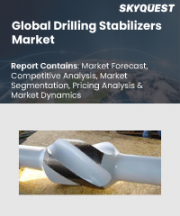
세계의 드릴링 스태빌라이저 시장 규모는 2024년에 85억 9,000만 달러로 평가되었으며, 2025년 89억 9,000만 달러에서 2033년까지 129억 8,000만 달러로 성장할 전망입니다. 예측 기간(2026-2033년) 동안 CAGR은 4.7%로 예측됩니다.
세계 드릴링 스태빌라이저 시장은 바닥 홀 어셈블리(BHA) 내 안정성을 유지하여 시추 작업의 효율성을 높이는 데 중요한 역할을 하고 있습니다. 이 스태빌라이저는 고강도 강철로 제조되며, 중공 원통형으로 설계되어 진동을 최소화하고 측면 트래킹이나 파이프 끼임 등의 사고를 방지하는 역할을 합니다. 이 시장의 주요 촉진요인으로는 비용 효율적인 시추 솔루션에 대한 수요 증가를 들 수 있습니다. 이는 드릴 칼라에서 비트까지의 무게 배분을 최적화하여 진동을 줄이고 측면 안정성을 향상시킵니다. 특히 남미와 아시아태평양과 같은 개발도상국에서 육상 및 해양 시추 활동이 증가함에 따라 드릴링 스태빌라이저 분야에 대한 투자와 성장 기회가 확대되고 에너지 산업에서 그 중요성이 더욱 커질 것으로 예상됩니다.
세계 드릴링 스태빌라이저 시장 촉진요인
세계 드릴링 스태빌라이저 시장은 시추 효율 향상과 비용 효율적인 유정 건설에 대한 수요 증가로 인해 크게 견인되고 있습니다. 드릴링 스태빌라이저는 드릴 칼라와 우물 벽 사이의 최적의 거리를 유지하면서 효과적으로 무게를 드릴 비트에 전달하는 중요한 역할을 합니다. 이 기능은 진동을 최소화하고 측면 안정성을 향상시킬 뿐만 아니라 공급의 유연성을 촉진합니다. 시추 작업자가 시추 공정을 최적화하고 운영 비용을 절감하기 위해 이러한 필수 도구에 대한 수요가 지속적으로 증가하고 있으며, 이는 드릴링 스태빌라이저 분야의 혁신과 성장을 촉진하고 있습니다.
세계 드릴링 스태빌라이저 시장 억제요인
세계 드릴링 스태빌라이저 시장의 주요 억제요인 중 하나는 원자재 가격 변동과 지속적인 공급망 혼란입니다. 드릴링 스태빌라이저의 제조에는 강재, 복합재 등 고품질 소재가 필수적이지만, 시장 수요와 지정학적 요인에 따라 가격이 변동하기 쉬운 경향이 있습니다. 또한, 국제 무역 문제나 자연재해로 인한 자재 조달 문제는 생산 비용의 상승과 지연을 초래할 수 있습니다. 이는 제조업체의 수익성에 영향을 미칠 뿐만 아니라 시추 산업의 수요를 충족시킬 수 있는 능력을 제한하고 궁극적으로 시장의 성장과 혁신을 저해할 수 있습니다.
세계 드릴링 스태빌라이저 시장 동향
세계 드릴링 스태빌라이저 시장에서는 첨단 드릴 비트 기술, 특히 다결정 다이아몬드 콤팩트(PDC) 비트의 부상이라는 두드러진 추세를 볼 수 있습니다. 기존의 롤러 콘 비트에 비해 PDC 비트가 점점 더 선호되고 있습니다. 이러한 변화는 시추 기술과 비트 설계의 혁신을 통해 석유 및 가스 채굴의 효율성과 성능을 향상시키고 있습니다. 고정형 커터 비트가 시장 점유율의 80% 이상을 차지하는 배경에는 움직이는 부품이 없는 고정형 블레이드의 견고한 설계로 높은 신뢰성과 드릴링 정확도 향상을 실현한 점이 있습니다. 따라서 이러한 최신 비트 기술을 최적화하는 드릴링 스태빌라이저에 대한 수요가 급증할 것으로 예상되며, 드릴링 작업과 장비 최적화의 역동적인 진화를 시사하고 있습니다.
Global Drilling Stabilizers Market size was valued at USD 8.59 Billion in 2024 and is poised to grow from USD 8.99 Billion in 2025 to USD 12.98 Billion by 2033, growing at a CAGR of 4.7% during the forecast period (2026-2033).
The global drilling stabilizer market plays a vital role in enhancing the efficiency of drilling operations by maintaining stability within the bottom hole assembly (BHA). These stabilizers, crafted from high-strength steel and designed in a hollow cylindrical shape, serve to minimize vibrations and prevent incidents such as sidetracking and pipe entrapment. Key drivers for this market include the growing demand for cost-effective drilling solutions, as they optimize the distribution of weight from the drill collar onto the bit, thereby reducing vibration and enhancing lateral stability. As onshore and offshore drilling activities rise, particularly in developing regions of South America and the Asia-Pacific, opportunities for investment and growth in the drilling stabilizer sector are expected to proliferate, solidifying its importance in the energy industry.
Top-down and bottom-up approaches were used to estimate and validate the size of the Global Drilling Stabilizers market and to estimate the size of various other dependent submarkets. The research methodology used to estimate the market size includes the following details: The key players in the market were identified through secondary research, and their market shares in the respective regions were determined through primary and secondary research. This entire procedure includes the study of the annual and financial reports of the top market players and extensive interviews for key insights from industry leaders such as CEOs, VPs, directors, and marketing executives. All percentage shares split, and breakdowns were determined using secondary sources and verified through Primary sources. All possible parameters that affect the markets covered in this research study have been accounted for, viewed in extensive detail, verified through primary research, and analyzed to get the final quantitative and qualitative data.
Global Drilling Stabilizers Market Segments Analysis
Global Drilling Stabilizers Market is segmented by type, application, location and region. Based on type, the market is segmented into integral blade stabilizer, welded stabilizer and replaceable sleeve stabilizer. Based on application, the market is segmented into directional well and vertical well. Based on location, the market is segmented into onshore and offshore. Based on region, the market is segmented into North America, Europe, Asia Pacific, Latin America and Middle East & Africa.
Driver of the Global Drilling Stabilizers Market
The global drilling stabilizers market is largely propelled by the growing need for enhanced drilling efficiency and cost-effective well construction. Drilling stabilizers play a crucial role by maintaining the optimal distance between the drill collar and the borehole wall while effectively transferring weight to the drill bit. This functionality not only minimizes vibration and enhances lateral stability but also promotes supply flexibility. As operators seek to optimize their drilling processes and reduce operational expenses, the demand for these essential tools continues to rise, driving innovation and growth within the drilling stabilizers sector.
Restraints in the Global Drilling Stabilizers Market
One significant restraint for the global drilling stabilizers market is the fluctuating prices of raw materials and the ongoing supply chain disruptions. The production of drilling stabilizers often relies on high-quality materials such as steel and composites, whose prices can be volatile due to market demand and geopolitical factors. Additionally, challenges in sourcing these materials, exacerbated by global trade issues or natural disasters, can lead to increased production costs and delays. This not only affects manufacturers' profitability but also limits their ability to meet the demands of the drilling industry, ultimately hindering market growth and innovation.
Market Trends of the Global Drilling Stabilizers Market
The global drilling stabilizers market is experiencing a significant trend characterized by the rise of advanced drill bit technologies, particularly polycrystalline diamond compact (PDC) bits, which are increasingly preferred over traditional roller cone bits. This shift is driven by innovations in drilling techniques and bit designs, enhancing efficiency and performance in oil and gas extraction. As fixed cutter bits account for over 80% of the market share, their robust design, featuring stationary blades and no moving parts, allows for greater reliability and improved drilling precision. Consequently, the demand for drilling stabilizers that optimize these modern bit technologies is expected to surge, indicating a dynamic evolution in drilling operations and equipment optimization.