


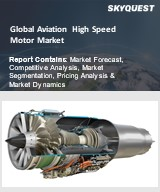
세계의 항공용 고속 모터 시장 규모는 2024년에 30억 5,000만 달러로 평가되었으며, 2025년 32억 4,000만 달러에서 2033년까지 53억 7,000만 달러로 성장할 전망입니다. 예측 기간(2026-2033년) 동안 CAGR은 6.5%로 예측됩니다.
항공용 고속 모터 시장은 민간 및 군용 분야를 막론하고 항공기 성능 및 속도 향상에 대한 관심이 높아지면서 큰 폭의 성장이 예상됩니다. 모터 기술의 혁신과 전기 추진 시스템의 보급 확대는 시장 확대를 더욱 촉진할 것으로 예상됩니다. 지속가능성에 대한 강조와 항공 업계의 배출량 감축 노력은 이 분야의 기업들에게 유리하게 작용할 것입니다. 전기 및 하이브리드 항공기의 판매 급증은 시장 진입 기업에게 새로운 성장 기회를 제공합니다. 또한, 무인항공기(UAV)의 수요 확대와 추진기술의 발전이 시장 역학에 긍정적인 영향을 미칠 것으로 예상됩니다. 그러나 규제 준수 및 설치의 복잡성 등의 문제가 단기 및 중기 성장 전망을 저해할 수 있습니다. 전반적으로 시장 전망은 여전히 유망합니다.
세계 항공용 고속 모터 시장 촉진요인
항공 업계의 탄소배출량 감축에 대한 관심이 높아지면서 전 세계적으로 하이브리드 및 전기 항공기로의 전환이 빠르게 진행되고 있습니다. 이 혁신적인 항공기는 배터리와 연료전지에서 생산된 전력을 동력원으로 하는 모터를 주요 추진 시스템으로 채택하고 있습니다. 이러한 전환은 환경적 지속가능성 목표에 부합할 뿐만 아니라, 효율성과 성능 향상을 위한 모터 기술의 발전을 촉진하고 있습니다. 전 세계적으로 기후변화에 대한 인식이 높아짐에 따라 더 깨끗하고 친환경적인 항공 솔루션에 대한 수요가 고속 모터 시장의 괄목할 만한 성장을 견인할 것으로 예상되며, 이는 항공 여행의 미래에 중요한 요소가 될 것입니다.
세계 항공용 고속 모터 시장 억제요인
항공용 고속 모터의 개발은 복잡한 과제를 수반하기 때문에 세계 항공용 고속 모터 시장은 심각한 장벽에 직면해 있습니다. 무게, 출력, 에너지 요구량, 에너지 밀도 등 몇 가지 중요한 요소를 고려해야 합니다. 이러한 고려 사항은 복잡한 설계 및 제조 공정으로 이어져 결과적으로 모터가 복잡할 뿐만 아니라 비용이 많이 들게 됩니다. 이러한 첨단 기술과 관련된 높은 비용은 전체 시장의 성장과 보급을 저해할 수 있습니다. 제조업체와 항공사는 업계의 수요에 효과적으로 대응하기 위해 성능과 가격의 균형을 찾아야 하기 때문입니다.
세계 항공용 고속 모터 시장 동향
세계 항공용 고속 모터 시장의 주요 트렌드는 보다 효율적이고 친환경적인 추진 시스템에 대한 수요 증가를 들 수 있습니다. 항공 업계가 탄소배출량 감축과 연료 효율 향상을 목표로 하고 있는 가운데, 제조업체들은 전기 추진 및 하이브리드 추진과 같은 첨단 기술을 활용한 첨단 고속 모터에 대한 투자를 진행하고 있습니다. 이러한 변화는 규제 압력과 지속가능성에 대한 관심이 높아지면서, 기업들은 환경에 미치는 영향을 최소화하면서 고성능을 제공하는 모터를 개발 및 혁신하도록 장려하고 있습니다. 또한, 전기 수직이착륙기(eVTOL)의 급격한 증가는 항공 분야의 특수 고속 모터 솔루션에 대한 수요를 더욱 가속화시키고 있습니다.
Global Aviation High Speed Motor Market size was valued at USD 3.05 Billion in 2024 and is poised to grow from USD 3.24 Billion in 2025 to USD 5.37 Billion by 2033, growing at a CAGR of 6.5% during the forecast period (2026-2033).
The aviation high-speed motor market is poised for significant growth, driven by an increased focus on enhancing aircraft performance and speed across both commercial and military sectors. Innovations in motor technology and the rising adoption of electric propulsion systems are expected to further propel market expansion. Emphasizing sustainability and the aviation industry's initiatives to lessen emissions will favor companies in this segment. The surge in electric and hybrid aircraft sales presents new growth opportunities for market participants. Additionally, the demand for UAVs and advancements in propulsion technologies are anticipated to contribute positively to market dynamics. However, challenges such as regulatory compliance and installation complexities may hinder growth prospects in the short to medium term. Overall, the market outlook remains promising.
Top-down and bottom-up approaches were used to estimate and validate the size of the Global Aviation High Speed Motor market and to estimate the size of various other dependent submarkets. The research methodology used to estimate the market size includes the following details: The key players in the market were identified through secondary research, and their market shares in the respective regions were determined through primary and secondary research. This entire procedure includes the study of the annual and financial reports of the top market players and extensive interviews for key insights from industry leaders such as CEOs, VPs, directors, and marketing executives. All percentage shares split, and breakdowns were determined using secondary sources and verified through Primary sources. All possible parameters that affect the markets covered in this research study have been accounted for, viewed in extensive detail, verified through primary research, and analyzed to get the final quantitative and qualitative data.
Global Aviation High Speed Motor Market Segments Analysis
Global Aviation High Speed Motor Market is segmented by Type, Application, End-Use, Platform and region. Based on Type, the market is segmented into AC Motor and DC Motor. Based on Application, the market is segmented into Propulsion System, Flight Control System, Fuel Management System and Others. Based on End-Use, the market is segmented into Commercial Aviation, General Aviation and Others. Based on Platform, the market is segmented into Commercial Aircraft, General Aviation Aircraft, Business Aircraft, Electric Aircraft, Unmanned Aerial Vehicles (UAV) and Helicopters. Based on region, the market is segmented into North America, Europe, Asia Pacific, Latin America and Middle East & Africa.
Driver of the Global Aviation High Speed Motor Market
The increasing focus on minimizing the aviation industry's carbon footprint has resulted in a swift transition towards hybrid and electric aircraft globally. These innovative aircraft utilize motors as their key propulsion systems, relying on electricity generated from batteries or fuel cells. This shift not only aligns with environmental sustainability goals but also encourages advancements in motor technology to enhance efficiency and performance. As global awareness regarding climate change continues to rise, the demand for cleaner and greener aviation solutions is expected to drive significant growth in the high-speed motor market, making it a pivotal factor in the future of air travel.
Restraints in the Global Aviation High Speed Motor Market
The Global Aviation High Speed Motor market faces significant challenges due to the complexity involved in developing high-speed motors for aviation applications. Several critical factors must be considered, including weight, power output, energy requirements, and energy density. These considerations contribute to the intricate design and manufacturing processes, resulting in motors that are not only complicated but also costly. The high expense associated with these advanced technologies can hinder broader market growth and adoption, as manufacturers and aviation companies must navigate the balance between performance and affordability to meet industry demands effectively.
Market Trends of the Global Aviation High Speed Motor Market
A key market trend in the global aviation high-speed motor market is the increasing demand for more efficient and environmentally friendly propulsion systems. As the aviation industry seeks to reduce carbon emissions and improve fuel efficiency, manufacturers are investing in advanced high-speed motors that leverage cutting-edge technologies such as electric and hybrid propulsion. This shift is driven by regulatory pressures and a growing emphasis on sustainability, prompting companies to innovate and develop motors that offer higher performance while minimizing environmental impact. Additionally, the surge in electric vertical takeoff and landing (eVTOL) aircraft is further accelerating the demand for specialized high-speed motor solutions in aviation.