


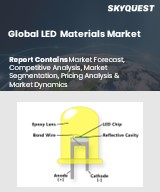
세계의 LED 재료 시장 규모는 2024년에 787억 4,000만 달러로 평가되었고, 2025년 874억 1,000만 달러에서 2033년까지 2,014억 3,000만 달러로 성장할 전망이며, 예측 기간(2026-2033년) CAGR은 11%를 보일 것으로 예측됩니다.
세계 LED 재료 시장의 성장은 IoT, 자동화 등 혁신 기술의 보급 확대에 힘입어 고해상도 디스플레이, 통신기기, 기타 전자기기에서 LED 재료의 활용이 확대되고 있습니다. LED는 기존 백열전구에 비해 에너지 효율 향상, 수명 연장, 내구성 강화, 컴팩트한 디자인 등 눈에 띄는 이점을 제공합니다. 이러한 장점에도 불구하고, LED는 최대 작동 온도 제한, 전압 제한, 변동하는 전원으로부터 안정적인 조명을 유지해야 하는 문제 등의 한계에 직면해 있습니다. 이 시장 분석은 주요 부문, 주류 동향, 성장에 영향을 미치는 요인(잠재적 제약 및 경쟁 구도 포함)을 포괄하고 있습니다. 다양한 LED 응용 분야에 대한 수요가 증가함에 따라 업계는 크게 확장되고 있으며, 이는 세계 조명 및 디스플레이 기술의 미래를 형성할 것입니다.
세계 LED 재료 시장 성장 촉진요인
세계 LED 재료 시장은 각국 정부가 도입한 엄격한 에너지 효율 규제에 의해 크게 견인되고 있습니다. 이러한 정책은 온실가스 배출량과 총 에너지 소비를 줄이는 것을 목표로 하고 있으며, 에너지 소비가 매우 적은 LED가 상업 및 주거 분야 모두에서 점점 더 선호되고 있습니다. 이러한 수요 증가에 따라 각 제조업체들은 규제 압력에 대응하기 위해 LED 기술 혁신과 강화에 힘쓰고 있습니다. 그 결과, 에너지 절감 솔루션에 대한 관심이 높아짐에 따라 LED 제품의 보급 촉진뿐만 아니라 LED 재료 시장의 지속적인 성장과 기술 발전에 기여하고 있습니다.
세계 LED 재료 시장 성장 억제요인
LED 기술의 많은 장점에도 불구하고, 할로겐 램프 및 소형 형광등(CFL)과 같은 기존 조명과의 경쟁은 보급의 장벽으로 작용하고 있습니다. 이러한 기존 솔루션은 초기 비용이 낮은 경우가 많고, 특정 응용 분야에서는 더 매력적이기 때문에 LED로의 전환이 지연될 수 있습니다. LED는 우수한 수명과 에너지 효율을 제공하지만, 이러한 경쟁 제품의 존재는 LED 재료 시장의 성장에 도전이 되고 있습니다. 장기적인 비용 절감과 성능보다 즉각적인 비용 이점이 우선시되는 지역에서는 기존 조명의 매력이 시장 발전의 큰 제약 요인으로 남아있습니다.
세계 LED 재료 시장 동향
세계 LED 재료 시장에서는 스마트 LED 조명 솔루션의 채택이 확대되는 추세가 두드러지게 나타나고 있습니다. 이러한 변화는 주로 자동화, 고급 에너지 관리, 원격 제어 기능을 실현하는 IoT(사물인터넷) 기술의 발전에 의해 주도되고 있습니다. 산업 환경, 스마트 시티 인프라, 홈 오토메이션 등 다양한 분야에 스마트 LED가 도입됨에 따라 조명 제어 및 에너지 효율 향상에 대한 수요가 지속적으로 증가하고 있습니다. 또한, 스마트 조명 옵션이 제공하는 사용자 정의 가능성은 소비자와 기업 모두에게 호평을 받고 있으며, 이러한 지능형 시스템이 일상 생활 환경에 통합되는 움직임을 더욱 가속화하고 있습니다.
Global LED Materials Market size was valued at USD 78.74 Billion in 2024 and is poised to grow from USD 87.41 Billion in 2025 to USD 201.43 Billion by 2033, growing at a CAGR of 11% during the forecast period (2026-2033).
The global LED materials market is driven by the increasing adoption of innovative technologies, including IoT and automation, leading to greater usage in high-definition displays, telecommunications, and other electronic devices. LEDs offer significant advantages over traditional incandescent bulbs, such as enhanced energy efficiency, longevity, increased durability, and compact design. Despite their benefits, LEDs face limitations related to maximum working temperatures, voltage constraints, and challenges in maintaining consistent lighting from fluctuating power sources. The market analysis covers key segments, prevailing trends, and factors influencing growth, including potential constraints and the competitive landscape. As demand for versatile LED applications grows, the industry is poised for substantial expansion, shaping the future of lighting and display technologies worldwide.
Top-down and bottom-up approaches were used to estimate and validate the size of the Global LED Materials market and to estimate the size of various other dependent submarkets. The research methodology used to estimate the market size includes the following details: The key players in the market were identified through secondary research, and their market shares in the respective regions were determined through primary and secondary research. This entire procedure includes the study of the annual and financial reports of the top market players and extensive interviews for key insights from industry leaders such as CEOs, VPs, directors, and marketing executives. All percentage shares split, and breakdowns were determined using secondary sources and verified through Primary sources. All possible parameters that affect the markets covered in this research study have been accounted for, viewed in extensive detail, verified through primary research, and analyzed to get the final quantitative and qualitative data.
Global LED Materials Market Segments Analysis
Global LED Materials Market is segmented by Type, Product, Installation Type, Sales Channel, Application, and region. Based on Type, the market is segmented into Wafers, Substrate/Semiconductor, Epitaxy Material, Phosphor and Others. Based on Product, the market is segmented into Lamps and Luminaires. Based on Installation Type, the market is segmented into New LED and Retrofit LED. Based on Sales Channel, the market is segmented into Online and Offline. Based on Application, the market is segmented into Consumer Electronics, General Lighting, Specialty Lighting, Automotive Interior Lighting, Automotive Exterior Lighting, Healthcare, Displays & Billboards and Others. Based on region, the market is segmented into North America, Europe, Asia Pacific, Latin America and Middle East & Africa.
Driver of the Global LED Materials Market
The global market for LED materials is significantly driven by stringent energy efficiency regulations imposed by governments worldwide. These policies aim to reduce greenhouse gas emissions and overall energy consumption, leading to a growing preference for LEDs in both commercial and residential sectors due to their minimal energy usage. This increasing demand has prompted manufacturers to innovate and enhance LED technologies in response to regulatory pressures. As a result, the heightened focus on energy-efficient solutions not only fosters greater adoption of LED products but also contributes to sustained growth and advancements within the LED materials market.
Restraints in the Global LED Materials Market
Despite the numerous advantages of LED technology, its adoption is hindered by competition from conventional lighting options such as halogen and compact fluorescent lights (CFLs). These traditional solutions often boast lower initial costs, making them more appealing for certain applications, which can delay the transition to LEDs. While LEDs offer superior longevity and energy efficiency, the presence of these competing products poses a challenge to the growth of the LED materials market. In regions where immediate cost benefits take precedence over long-term savings and performance, the appeal of traditional lighting remains a significant restraint on market development.
Market Trends of the Global LED Materials Market
The global LED materials market is witnessing a significant trend towards the increasing adoption of smart LED lighting solutions. This shift is largely driven by advancements in Internet of Things (IoT) technology, which enable these systems to offer automation, enhanced energy management, and remote operation capabilities. As smart LEDs find their way into various applications including industrial settings, smart city infrastructures, and home automation, the demand for improved lighting control and energy efficiency continues to grow. Moreover, the customizability offered by smart lighting options appeals to consumers and businesses alike, further propelling the integration of these intelligent systems into everyday environments.