


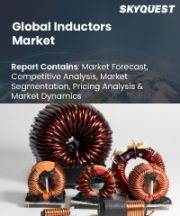
세계의 인덕터 시장 규모는 2024년에 58억 달러로 평가되며, 2025년 61억 8,000만 달러에서 2033년까지 103억 1,000만 달러로 성장할 전망입니다. 예측 기간(2026-2033년)의 CAGR은 6.6%로 예측됩니다.
인덕터 시장은 가전제품의 혁신과 스마트홈 및 스마트 시티의 에너지 절약형 기기에 대한 수요 증가에 힘입어 큰 폭의 성장이 예상됩니다. 무선 및 커넥티드 디바이스의 보급과 함께 시장 확대 기회는 더욱 늘어날 것으로 예측됩니다. 다만, 구리를 비롯한 원자재 가격 변동과 같은 이슈가 성장을 저해할 수 있습니다. 또한 통신 기술 및 칩 통합의 발전은 시장 확대를 억제하는 동시에 인덕터의 새로운 응용 분야를 창출할 것입니다. 소형화 추세 또한 향후 성장을 저해하는 복잡한 요인이 될 수 있습니다. 결국, 인덕터 산업은 장벽에 직면하고 있지만, 첨단 전자 솔루션에 대한 지속적인 수요는 인덕터 산업의 발전 궤도를 계속 긍정적으로 형성하고 있습니다.
세계 인덕터 시장 성장 촉진요인
세계 인덕터 시장은 빠르게 발전하는 가전제품 부문의 영향을 크게 받고 있습니다. 이 분야는 경쟁사 증가와 획기적인 기술 혁신이 특징이며, 이러한 혁신은 가전제품의 기능성과 품질을 향상시키고, 보다 효율적이고 고성능의 부품에 대한 수요를 증가시키고 있습니다. 제조업체가 제품에 고급 기능을 통합하려고 시도함에 따라 인덕터의 필요성이 더욱 두드러질 것입니다. 이러한 인덕터에 대한 의존도 증가는 전자기기의 지속적인 개선에 대한 직접적인 반응이며, 현대 소비자 기술의 복잡한 요구를 지원하는 데 있으며, 인덕터의 중요한 역할을 강조하고 있습니다. 결국, 이러한 역동적인 시장 상황이 세계 인덕터 시장의 성장을 주도하고 있습니다.
세계 인덕터 시장 성장 억제요인
세계 인덕터 시장은 주로 제조에 사용되는 재료로 인해 특정 제약에 직면해 있습니다. 인덕터는 일반적으로 철, 구리, 페라이트로 구성되며, 이들은 우수한 전기 전도성 등 바람직한 특성을 가지고 있지만, 동시에 큰 전력 손실을 발생시킵니다. 구리 코일에 대한 의존도는 현저하며, 구리는 우수한 기계적 강도와 열적 성능을 제공하므로 인덕터 제조에서 선호되는 원자재입니다. 그러나 이러한 재료의 고유한 특성은 효율성과 성능 측면에서 문제를 야기할 수 있으며, 보다 효과적인 유도 부품 개발 시장 성장과 혁신을 저해할 수 있습니다.
세계 인덕터 시장 동향
세계 인덕터 시장은 노트북, 데스크탑, 산업용 컴퓨터를 포함한 고성능 컴퓨팅 장치 수요 증가에 힘입어 견고한 성장세를 보이고 있습니다. 인덕터는 스위칭 전원 공급 장치(SMPS)의 핵심 부품으로서 에너지 저장 및 전압 조정에 필수적이며, 전원 회로의 효율 향상에 기여합니다. 컴팩트하고 에너지 절약형 전자기기에 대한 수요가 증가함에 따라 더 높은 주파수와 개선된 열 성능에 대응할 수 있는 첨단 인덕터에 대한 수요가 증가하고 있습니다. 또한 클라우드 컴퓨팅과 IoT 용도의 부상으로 인덕터의 사용 영역이 더욱 확대되고 있으며, 인덕터는 전자기기 분야의 기술 혁신의 최전선에 자리 잡고 있습니다.
Global Inductors Market size was valued at USD 5.8 Billion in 2024 and is poised to grow from USD 6.18 Billion in 2025 to USD 10.31 Billion by 2033, growing at a CAGR of 6.6% during the forecast period (2026-2033).
The inductor market is poised for substantial growth driven by innovations in consumer electronics and the increasing demand for energy-efficient devices in smart homes and cities. As wireless and connected devices gain popularity, opportunities for market expansion will multiply. However, challenges such as the volatility in raw material prices, particularly copper, may impede growth. Additionally, advancements in telephony and chip integration could temper market expansion but also prompt new applications for inductors. The trend toward miniaturization presents complexities that may hinder future growth as well. Ultimately, while the inductor industry faces obstacles, the ongoing demand for advanced electronic solutions continues to shape its trajectory positively.
Top-down and bottom-up approaches were used to estimate and validate the size of the Global Inductors market and to estimate the size of various other dependent submarkets. The research methodology used to estimate the market size includes the following details: The key players in the market were identified through secondary research, and their market shares in the respective regions were determined through primary and secondary research. This entire procedure includes the study of the annual and financial reports of the top market players and extensive interviews for key insights from industry leaders such as CEOs, VPs, directors, and marketing executives. All percentage shares split, and breakdowns were determined using secondary sources and verified through Primary sources. All possible parameters that affect the markets covered in this research study have been accounted for, viewed in extensive detail, verified through primary research, and analyzed to get the final quantitative and qualitative data.
Global Inductors Market Segments Analysis
Global Inductors Market is segmented by Inductance, Type, Core Type, Shield Type, Mounting Technique, End-Use Industry and region. Based on Inductance, the market is segmented into Fixed Inductors and Variable Inductors. Based on Type, the market is segmented into Power Inductors, RF Inductors, Multi-Layer Inductors, Coupled Inductors and Others. Based on Core Type, the market is segmented into Air Core, Ferrite Core and Iron Core. Based on Shield Type, the market is segmented into Shielded and Unshielded. Based on Mounting Technique, the market is segmented into Surface Mount and Through Hole. Based on End-Use Industry, the market is segmented into Automotive, Industrial, Consumer Electronics, Telecommunications, Healthcare and Others. Based on region, the market is segmented into North America, Europe, Asia Pacific, Latin America and Middle East & Africa.
Driver of the Global Inductors Market
The Global Inductors market is significantly influenced by the rapidly evolving consumer electronics sector, characterized by an increasing number of competitors and groundbreaking technological advancements. These innovations enhance the functionality and quality of consumer electronics, driving demand for more efficient and powerful components. As manufacturers seek to integrate advanced features into their products, the necessity for inductors becomes more pronounced. This heightened reliance on inductors is a direct response to the ongoing improvements in electronic devices, highlighting their essential role in supporting the complex needs of modern consumer technology. Ultimately, this dynamic market landscape propels the growth of the Global Inductors market.
Restraints in the Global Inductors Market
The global inductors market faces certain constraints primarily due to the materials used in their production. Inductors are typically constructed from iron, copper, and ferrite, which possess desirable characteristics such as excellent electrical conductivity, but also exhibit significant power losses. The reliance on copper coils is notable, as copper offers superior mechanical strength and thermal performance, making it a preferred raw material in inductor manufacturing. However, the inherent properties of these materials can lead to challenges in efficiency and performance, which may hinder market growth and innovation in the development of more effective inductive components.
Market Trends of the Global Inductors Market
The Global Inductors market is experiencing a robust trend driven by the increasing demand for high-performance computing devices, including laptops, desktops, and industrial computers. As critical components in switch-mode power supplies (SMPS), inductors are integral for energy storage and voltage regulation, enhancing the efficiency of power supply circuitry. The push for compact and energy-efficient electronics fuels the need for advanced inductors that can handle higher frequencies and improved thermal performance. Additionally, the rise of cloud computing and IoT applications is further expanding the usage of inductors, positioning them at the forefront of technological advancements in the electronics sector.