


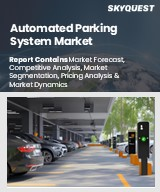
세계의 자동 주차 시스템 시장 규모는 2024년에 32억 6,000만 달러로 평가되며, 2025년 39억 3,000만 달러에서 2033년까지 177억 2,000만 달러로 성장할 전망입니다. 예측 기간(2026-2033년)의 CAGR은 20.7%로 예측됩니다.
세계 자동 주차 시스템 시장의 주요 촉진요인은 도시 인구 증가로 인한 기존 주차 시설용지 부족과 부동산 비용 상승입니다. 도시 개발자 및 도시 계획 담당자들은 주차 효율을 높이고 제한된 공간을 최적화하기 위해 자동 주차 솔루션의 도입을 가속화하고 있습니다. 기존 주차장이 넓은 면적을 필요로 하는 반면, 자동화 시스템은 수직 적층과 로봇에 의한 차량 회수를 활용하여 공간 요구 사항을 크게 줄입니다. 이러한 토지 이용 효율성의 향상은 특히 인구 밀집 지역에서 유용하며, 혼잡 완화 및 토지 이용의 극대화를 위해 부동산 개발업체, 지자체, 상업시설 소유주들의 투자를 촉진하고 있습니다. 또한 이러한 시스템에 AI와 IoT를 통합하여 실시간 공간 관리와 예지보전이 가능해져 효율성이 향상됩니다. 이를 통해 사용자 경험을 개선하고 운영 비용을 절감할 수 있습니다.
세계 자동 주차 시스템 시장을 촉진하는 요인
도시 지역의 자동차 보유 대수가 급증하면서 자동 주차 시스템에 대한 수요가 크게 증가하고 있습니다. 도시가 한정된 주차 공간과 심각한 교통 체증에 직면하고 있는 가운데, 이러한 첨단 솔루션은 효율적인 공간 활용을 실현하고 대기 시간과 전체 교통 문제를 효과적으로 해결합니다. 효율적인 주차 솔루션에 대한 수요 증가는 인구 밀집 지역의 차량 증가에 따른 문제를 완화하기 위해 스마트한 고밀도 주차 기술에 대한 투자를 촉진하고 있습니다. 자동 주차 시스템의 도입은 도시의 이동성 향상과 운전자의 전반적인 주차 경험을 개선하기 위한 효과적인 전략으로 점점 더 많은 관심을 받고 있습니다.
세계 자동 주차 시스템 시장 성장 억제요인
기존 도시 인프라에 자동 주차 시스템을 통합하는 것은 상당한 도전과 비용을 수반합니다. 많은 오래된 구조물이나 도시 설계는 자동화에 대응하기 위해 필요한 구조적 지원을 갖추지 못하고 있습니다. 이러한 시스템을 개조하려면 대대적인 개조가 필요하며, 이는 혼란과 비용 증가를 초래합니다. 이러한 요인은 특히 기존 주차시설이 주류를 이루는 도시환경에서 보급의 장벽이 되고 있습니다. 그 결과, 많은 지자체들이 이러한 첨단 기술을 지원하기 위한 인프라 업데이트에 따른 복잡성과 재정적 영향에 직면하여 자동 주차 솔루션으로의 전환에 어려움을 겪고 있습니다.
세계 자동 주차 시스템 시장 동향
세계 자동 주차 시스템 시장에서는 AI를 활용한 스마트 주차 솔루션으로의 큰 전환이 진행되고 있으며, 도시 모빌리티의 혁신을 주도하고 있습니다. 이 시스템은 고급 AI 알고리즘과 IoT 연결을 활용하여 주차 프로세스를 효율화합니다. 실시간 빈 공간 식별, 예측 분석, 효율적인 차량 회수를 실현합니다. 주차 공간의 이용률을 최적화하여 혼잡을 완화하고, 보안을 강화하며, 전반적인 운영 효율을 향상시킵니다. 스마트 시티에 대한 수요가 증가함에 따라 이러한 자동 주차 솔루션은 효율적인 공간 관리의 필요성에 부응하고 사용자에게 원활한 운전 및 주차 경험을 제공함으로써 지속가능한 도시 교통의 필수 요소로 점점 더 인식되고 있습니다.
Global Automated Parking System Market size was valued at USD 3.26 Billion in 2024 and is poised to grow from USD 3.93 Billion in 2025 to USD 17.72 Billion by 2033, growing at a CAGR of 20.7% during the forecast period (2026-2033).
The global automated parking system market is primarily driven by urban population growth, leading to a scarcity of land for traditional parking facilities and a rise in real estate costs. Urban developers and city planners are increasingly adopting automated parking solutions to enhance parking efficiency and optimize limited space. Unlike conventional parking lots requiring extensive surface area, automated systems utilize vertical stacking and robotic retrieval, significantly reducing spatial requirements. This improved land utilization is particularly beneficial in densely populated areas, spurring investment from real estate developers, municipalities, and commercial property owners to mitigate congestion and maximize land usage. Furthermore, the integration of AI and IoT in these systems elevates efficiency by enabling real-time space management and predictive maintenance, thereby enhancing user experience and lowering operational costs.
Top-down and bottom-up approaches were used to estimate and validate the size of the Global Automated Parking System market and to estimate the size of various other dependent submarkets. The research methodology used to estimate the market size includes the following details: The key players in the market were identified through secondary research, and their market shares in the respective regions were determined through primary and secondary research. This entire procedure includes the study of the annual and financial reports of the top market players and extensive interviews for key insights from industry leaders such as CEOs, VPs, directors, and marketing executives. All percentage shares split, and breakdowns were determined using secondary sources and verified through Primary sources. All possible parameters that affect the markets covered in this research study have been accounted for, viewed in extensive detail, verified through primary research, and analyzed to get the final quantitative and qualitative data.
Global Automated Parking System Market Segments Analysis
Global Automated Parking System Market is segmented by Automation Level, System Type, End-User, Design Model, Platform Type, Parking Level, Structure Type and region. Based on Automation Level, the market is segmented into Semi-automated and Fully-automated. Based on System Type, the market is segmented into Hardware and Software. Based on End-User, the market is segmented into Commercial, Residential and Mixed-use. Based on Design Model, the market is segmented into Hydraulic and Electro-mechanical. Based on Platform Type, the market is segmented into Palleted and Non-palleted. Based on Parking Level, the market is segmented into Less than Level 5, Level 5-Level 10 and More than Level 15. Based on Structure Type, the market is segmented into AGV system, Silo system, Tower system, Rail Guided Cart (RGC) system, Puzzle system and Shuttle system. Based on region, the market is segmented into North America, Europe, Asia Pacific, Latin America and Middle East & Africa.
Driver of the Global Automated Parking System Market
The surge in vehicle ownership across urban areas is significantly fueling the demand for automated parking systems. As cities grapple with limited parking availability and escalating traffic congestion, these advanced solutions provide efficient space utilization, effectively reducing both wait times and overall traffic woes. This growing need for streamlined parking solutions encourages investment in smart and high-density parking technologies, aiming to alleviate the challenges posed by rising numbers of vehicles in densely populated regions. The implementation of automated parking systems is increasingly seen as a viable strategy to enhance urban mobility and improve the overall parking experience for drivers.
Restraints in the Global Automated Parking System Market
The integration of automated parking systems within existing urban infrastructure presents significant challenges and expenses. Numerous older structures and urban designs are not equipped with the necessary structural support to accommodate automation. Retrofitting these systems entails substantial modifications, leading to disruptions and increased costs. Such factors serve as obstacles to widespread adoption, particularly in urban environments dominated by traditional parking facilities. As a result, the transition to automated parking solutions is hindered, as many municipalities grapple with the complexities and financial implications of updating their infrastructures to support these advanced technologies.
Market Trends of the Global Automated Parking System Market
The Global Automated Parking System market is witnessing a significant shift toward AI-powered smart parking solutions, driving innovation in urban mobility. These systems utilize advanced AI algorithms and IoT connectivity to streamline the parking process, offering real-time space identification, predictive analytics, and efficient vehicle retrieval. By optimizing parking space utilization, they reduce congestion, enhance security, and improve overall operational efficiency. As the demand for smart city initiatives rises, these automated parking solutions are increasingly viewed as essential components for sustainable urban transportation, catering to the need for efficient space management and creating a seamless driving and parking experience for users.