


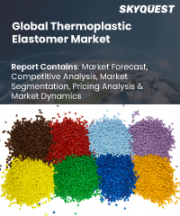
열가소성 엘라스토머 시장 규모는 2024년에 266억 4,000만 달러로 평가되며, 2025년 288억 5,000만 달러에서 2033년까지 546억 달러로 성장할 전망입니다. 예측 기간(2026-2033년)의 CAGR은 8.3%로 예측됩니다.
열가소성 엘라스토머(TPE)는 플라스틱과 엘라스토머의 우수한 특성을 결합하여 성형성, 내열성, 내마모성, 내스크래치성 등의 장점을 제공하므로 다양한 최종사용자 분야에서 활용도가 높습니다. COVID-19 이후 자동차 및 건설 산업이 회복세를 보이고 전기자동차의 보급이 확대됨에 따라 TPE 수요는 증가 추세에 있습니다. 시장 성장의 주요 촉진요인으로는 엄격한 탄소 배출 규제로 인해 자동차 산업이 친환경 소재로 전환하고 있다는 점을 들 수 있습니다. 이에 따라 배출량 감소를 위해 금속이나 합금을 TPE로 대체하는 움직임이 제조업체들 사이에서 진행되고 있습니다. 또한 TPE 가공기술의 발전으로 다양한 응용 분야에서 TPE의 매력도가 높아지고 있으며, 다양한 응용 분야와 자동차 부품 제조의 소비량 증가에 따라 세계 열가소성 엘라스토머 산업은 지속적인 성장이 예상됩니다.
열가소성 엘라스토머 시장 성장 촉진요인
세계 열가소성 엘라스토머 시장은 자동차, 건설, 전자, 의료, 신발 등 다양한 최종사용자 분야에서 채택이 확대되면서 크게 성장하고 있습니다. 이들 소재는 의료 분야에서 매우 중요하며, 카테터, 수술기구의 그립, 각종 임플란트 등 의료기기 제조에 우수한 성능 특성으로 활용되고 있습니다. 열가소성 엘라스토머의 다양한 장점에 대한 인식이 확산됨에 따라 열가소성 엘라스토머의 인기는 계속 증가하고 있습니다. 환경 친화적 특성, 생산 비용 효율성, 가공 및 재활용의 용이성이 그 매력을 더욱 높여주고 있습니다. 또한 건설 활동과 인프라 프로젝트의 급증은 시장 성장을 더욱 가속화할 것으로 예측됩니다.
열가소성 엘라스토머 시장 성장 억제요인
열가소성 엘라스토머 시장은 성장을 저해할 수 있는 몇 가지 중대한 문제에 직면해 있습니다. 원자재 가격의 변동은 생산 비용에 영향을 미치고, 제조업체에게 불확실성을 야기합니다. 또한 이 분야의 숙련된 인력 부족은 업무 효율성과 기술 혁신을 저해할 수 있습니다. 또한 많은 중저소득 국가에서는 첨단 기술에 대한 접근성이 부족하여 이 분야의 과학적 진보와 발전을 제약하고 있습니다. 이러한 문제들은 종합적으로 큰 장벽이 되어 결국 열가소성 엘라스토머의 성장 잠재력과 시장 역학을 제한합니다. 이러한 제약에 대응하는 것은 업계의 미래 성공과 지속가능성을 위해 매우 중요합니다.
열가소성 엘라스토머 시장 동향
열가소성 엘라스토머(TPE) 시장에서는 자동차용 경량 재료에 대한 수요 증가를 배경으로 두드러진 추세가 관찰되고 있습니다. TPE가 기존 부품을 대체할 수 있는 능력은 차량 무게와 밀도를 줄여 연비를 향상시킬 뿐만 아니라 탄소 배출로 인한 환경과 건강에 미치는 영향을 줄이기 위한 전 세계적인 노력에 부합합니다. 또한 다양한 규제기관의 엄격한 규제가 TPE의 채택을 촉진하고 있으며, 제조업체는 이러한 의무를 준수하는 지속가능한 대체 재료를 찾고 있습니다. 그 결과, TPE 시장은 기술 혁신과 친환경에 대한 관심이 높아짐에 따라 다양한 산업 분야에서 큰 폭의 성장이 예상됩니다.
Thermoplastic Elastomer Market size was valued at USD 26.64 Billion in 2024 and is poised to grow from USD 28.85 Billion in 2025 to USD 54.6 Billion by 2033, growing at a CAGR of 8.3% during the forecast period (2026-2033).
Thermoplastic elastomers (TPEs) blend the desirable qualities of plastics and elastomers, offering benefits like moldability, heat stability, and wear and scratch resistance, making them versatile for various end-user sectors. As industries such as automotive and construction recover post-pandemic and electric vehicle adoption rises, the demand for TPEs is on the rise. Key drivers of market growth include the automotive sector's shift towards environmentally friendly materials due to stringent carbon emissions regulations, which has prompted manufacturers to replace metals and alloys with TPEs to reduce emissions. Advances in TPE processing technology further enhance their appeal across applications, positioning the global thermoplastic elastomer industry for continued growth as consumption increases in diverse applications and auto parts manufacturing.
Top-down and bottom-up approaches were used to estimate and validate the size of the Thermoplastic Elastomer market and to estimate the size of various other dependent submarkets. The research methodology used to estimate the market size includes the following details: The key players in the market were identified through secondary research, and their market shares in the respective regions were determined through primary and secondary research. This entire procedure includes the study of the annual and financial reports of the top market players and extensive interviews for key insights from industry leaders such as CEOs, VPs, directors, and marketing executives. All percentage shares split, and breakdowns were determined using secondary sources and verified through Primary sources. All possible parameters that affect the markets covered in this research study have been accounted for, viewed in extensive detail, verified through primary research, and analyzed to get the final quantitative and qualitative data.
Thermoplastic Elastomer Market Segments Analysis
Global Thermoplastic Elastomer Market is segmented by Type, Application and region. Based on Type, the market is segmented into Styrene block copolymer (SBC), Thermoplastic polyurethane (TPU), Thermoplastic polyolefin (TPO), Thermoplastic vulcanizate (TPV), Polyester ether elastomer (COPE), Polyether block amide (PEBA). Based on application, the market is segmented into Automotive, Building & Construction, Footwear, Electrical & Electronics, Wire & Cable, Medical, Engineering and Others. Based on region, the market is segmented into North America, Europe, Asia Pacific, Latin America and Middle East & and Africa.
Driver of the Thermoplastic Elastomer Market
The global thermoplastic elastomer market is significantly propelled by their rising adoption across diverse end-user sectors including automotive, construction, electronics, healthcare, and footwear. These materials are pivotal in the healthcare sector, utilized in producing medical devices such as catheters, surgical tool grips, and various implants due to their outstanding performance characteristics. As awareness regarding the numerous advantages of thermoplastic elastomers expands, their popularity continues to rise. Their eco-friendly nature, cost-effectiveness in production, and ease of processing and recycling further contribute to their growing appeal. Additionally, the surge in construction activities and infrastructure projects is anticipated to further accelerate market growth.
Restraints in the Thermoplastic Elastomer Market
The thermoplastic elastomer market faces several significant challenges that may impede its expansion. Fluctuations in raw material prices can disrupt production costs, creating uncertainty for manufacturers. Additionally, a shortage of skilled labor in the sector can hinder operational efficiency and innovation. Moreover, many low and middle-income economies struggle with inadequate access to advanced technology, which restrains scientific advancements and developments in this field. Collectively, these issues pose considerable obstacles, ultimately restricting the growth potential and market dynamics of thermoplastic elastomers. Addressing these constraints will be crucial for the industry's future success and sustainability.
Market Trends of the Thermoplastic Elastomer Market
The Thermoplastic Elastomer (TPE) market is witnessing a notable trend driven by the growing demand for lightweight materials in automotive applications. TPE's ability to replace traditional components not only enhances fuel efficiency by reducing vehicle weight and density but also aligns with global efforts to mitigate environmental and health impacts from carbon emissions. Stringent regulations imposed by various governing bodies further propel the adoption of TPE, as manufacturers seek sustainable alternatives that comply with these mandates. Consequently, the TPE market is poised for substantial growth across various industries, fueled by innovation and an increasing emphasis on eco-friendly practices.