


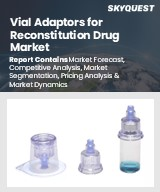
세계의 바이알 용재구성 어댑터 시장 규모는 2024년에 24억 달러로 평가되며, 2025년 26억 1,000만 달러에서 2033년까지 52억 1,000만 달러로 성장할 전망입니다. 예측 기간(2026-2033년)의 CAGR은 9%로 예측됩니다.
만성질환 및 감염성 질환이 증가함에 따라 재구성이 필요한 주사 요법에 대한 수요가 증가하고 있으며, 바이알 어댑터는 필수 불가결한 존재가 되고 있습니다. 이 장치는 희석제를 약품 바이알에 안전하고 정확하게 옮길 수 있으며, 재구성 공정을 효율화하고 약물 오투약의 위험을 줄일 수 있습니다. 치료법이 점점 더 복잡해짐에 따라 특히 병원과 재택의료 환경에서 바이알 어댑터가 환자의 안전과 치료 결과를 향상시키는 역할은 매우 중요합니다. 엄격한 규제 기준을 준수하고, 오염 위험을 최소화하며, 의료진을 유해한 약물 노출로부터 보호합니다. 정확한 투약량을 중시하면서 바늘 사용을 줄이는 것은 침 찔림 사고를 예방하는 노력과도 일치합니다. 환자의 안전이 최우선 과제인 만큼, 의료 현장의 업무 효율성과 규제 준수 강화를 위해 바이알 어댑터의 도입이 증가하고 있습니다.
세계 약물 재구성 약물용 바이알 어댑터 시장 성장 촉진요인
모노클로널 항체, 유전자 치료제 등 생물제제에 대한 관심이 높아지면서 약물 재구성 약물용 바이알 어댑터 세계 시장 성장에 크게 기여하고 있습니다. 이러한 혁신적인 치료법은 사용 전에 재구성해야 하는 경우가 많기 때문에 신뢰할 수 있고 효율적인 바이알 어댑터에 대한 수요가 증가하고 있습니다. 이러한 장치는 복잡한 생물제제의 정확하고 안전한 투여를 촉진하는 데 중요한 역할을 하며, 의료진이 이러한 첨단 치료법을 효과적으로 시행할 수 있도록 돕습니다. 그 결과, 생물제제의 보급 확대에 따라 제약업계의 고품질 바이알 어댑터에 대한 수요가 지속적으로 증가하고 있습니다.
세계 약물 재구성 약물용 바이알 어댑터 시장 성장 억제요인
바이알 어댑터에 대한 세계 표준화의 부재는 시장에 심각한 문제입니다. 지역과 제약사마다 디자인, 재질, 기능성이 다르기 때문에 호환성 문제가 발생하여 약물 재구성 공정의 효율성과 안전성을 모두 저해할 수 있습니다. 이러한 불일치는 바이알 어댑터의 채택을 방해하고, 혁신을 제한하며, 궁극적으로 시장의 성장 잠재력을 제한합니다. 이해관계자들이 이러한 차이점을 해결해 나가는 과정에서 통일성 부족은 신규 시장 진출기업에게 장벽이 되고, 규제 준수를 복잡하게 만들며, 약물 재구성 바이알 어댑터 세계 시장 동향에 더 큰 영향을 미칠 수 있습니다.
세계 약물 재구성 약물용 바이알 어댑터 시장 동향
세계 약물 재구성 바이알 어댑터 시장은 치료 계획에서 생물제제 및 바이오시밀러의 채택 증가에 힘입어 괄목할 만한 성장을 보이고 있습니다. 의료진이 이러한 첨단 치료법으로 전환함에 따라 정확하고 효율적인 약물 재조합의 필요성이 매우 중요해지고 있습니다. 바이알 어댑터는 이 과정에서 중요한 툴로 작용하여 환자의 안전과 치료 효과를 보장하면서 원활한 약물 투여를 실현합니다. 이러한 추세는 제약 및 생명공학 분야에서 약물 투여 시스템의 고도화를 위한 광범위한 전환을 강조하고 있으며, 진화하는 의료 환경에 대응하기 위해 바이알 어댑터 기술에 대한 혁신과 투자 확대를 촉진하고 있습니다.
Global Vial Adaptors for Reconstitution Drug Market size was valued at USD 2.4 Billion in 2024 and is poised to grow from USD 2.61 Billion in 2025 to USD 5.21 Billion by 2033, growing at a CAGR of 9% during the forecast period (2026-2033).
The increasing prevalence of chronic and infectious diseases is elevating the demand for injectable therapies requiring reconstitution, where vial adaptors are becoming essential. These devices facilitate the safe and accurate transfer of diluents into drug vials, streamlining the reconstitution process and reducing medication errors. As therapies grow more complex, the role of vial adaptors in enhancing patient safety and treatment outcomes is crucial, particularly in both hospital and homecare environments. They comply with strict regulatory standards, minimizing contamination risks and protecting healthcare workers from hazardous drug exposure. Emphasizing dose accuracy while reducing needle usage also aligns with needle-stick injury prevention efforts. As patient safety remains paramount, the adoption of vial adaptors is on the rise to enhance operational efficiency and regulatory compliance in healthcare settings.
Top-down and bottom-up approaches were used to estimate and validate the size of the Global Vial Adaptors for Reconstitution Drug market and to estimate the size of various other dependent submarkets. The research methodology used to estimate the market size includes the following details: The key players in the market were identified through secondary research, and their market shares in the respective regions were determined through primary and secondary research. This entire procedure includes the study of the annual and financial reports of the top market players and extensive interviews for key insights from industry leaders such as CEOs, VPs, directors, and marketing executives. All percentage shares split, and breakdowns were determined using secondary sources and verified through Primary sources. All possible parameters that affect the markets covered in this research study have been accounted for, viewed in extensive detail, verified through primary research, and analyzed to get the final quantitative and qualitative data.
Global Vial Adaptors for Reconstitution Drug Market Segments Analysis
Global Vial Adaptors for Reconstitution Drug Market is segmented by Material, Product Size, Product Type, Therapeutic Area, Delivery Mode, End-User and region. Based on Material, the market is segmented into Plastic, Glass, Rubber, Silicone and Other Materials. Based on Product Size, the market is segmented into 20 mm Vial Adaptors, 13 mm Vial Adaptors and Other Sizes. Based on Product Type, the market is segmented into Single-Use Vial Adaptors and Multi-Use Vial Adaptors. Based on Therapeutic Area, the market is segmented into Oncology, Autoimmune Diseases, Infectious Diseases, Genetic Disorders and Other Therapeutic Areas. Based on Delivery Mode, the market is segmented into Injection and Infusion. Based on End-User, the market is segmented into Hospitals / Clinics, Ambulatory Surgical Centers and Others. Based on region, the market is segmented into North America, Europe, Asia Pacific, Latin America and Middle East & Africa.
Driver of the Global Vial Adaptors for Reconstitution Drug Market
The expanding interest in biologic medications, such as monoclonal antibodies and gene therapies, significantly contributes to the growth of the global vial adaptors for drug reconstitution market. As these innovative therapies often necessitate reconstitution before use, there is a rising need for dependable and efficient vial adaptors. These devices play a crucial role in facilitating accurate and safe delivery of complex biologics, supporting healthcare providers in their efforts to administer these advanced treatments effectively. Consequently, the increasing prevalence of biologic drugs continues to enhance the demand for high-quality vial adaptors in the pharmaceutical industry.
Restraints in the Global Vial Adaptors for Reconstitution Drug Market
The absence of global standardization for vial adaptors presents a significant challenge to the market. Differences in design, materials, and functionality among various regions and pharmaceutical companies result in compatibility issues, which can compromise both the efficiency and safety of drug reconstitution processes. This inconsistency hinders the adoption of vial adaptors and restricts innovation, ultimately limiting the growth potential of the market. As stakeholders navigate these disparities, the lack of uniformity can create barriers to entry for new players and complicate regulatory compliance, further impacting the overall dynamics of the global vial adaptor market for drug reconstitution.
Market Trends of the Global Vial Adaptors for Reconstitution Drug Market
The Global Vial Adaptors for Reconstitution Drug market is experiencing significant growth, primarily fueled by the rising adoption of biologics and biosimilars in therapeutic regimens. As healthcare providers shift towards these advanced treatments, the necessity for accurate and efficient drug reconstitution becomes paramount. Vial adaptors serve as crucial tools in this process, facilitating seamless drug delivery while ensuring patient safety and treatment efficacy. This trend underscores a broader shift in the pharmaceuticals and biotechnology sectors towards enhanced drug administration systems, driving innovation and increasing investment in vial adaptor technologies to meet the evolving healthcare landscape.