


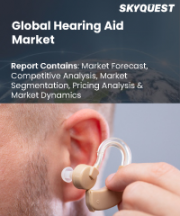
세계의 보청기 시장 규모는 2024년에 87억 2,000만 달러로 평가되었고, 2025년 92억 7,000만 달러에서 2033년까지 151억 1,000만 달러로 성장할 전망입니다. 예측 기간(2026-2033년) CAGR은 6.3%를 나타낼 것으로 예상됩니다.
세계의 보청기 시장은 특히 고령층에서의 난청 증가를 배경으로 견조한 성장을 보이고 있습니다. 이 동향은 평균 수명의 연장과 치료되지 않은 청력 상실로 인한 영향에 대한 인식 증가에 의해 촉진되어 조기 진단과 개입에 대한 수요로 이어지고 있습니다. AI 통합, 블루투스 연결, 소형 충전식 또는 일회용 배터리와 같은 기술적 진보는 사용자 경험과 인지 가치를 높여줍니다. 그러나 과제도 여전히 존재하고 특히 의료 자금이 제한된 신흥 시장에서는 장비의 고비용이 보급 장벽이 되고 있습니다. 또한 사회적 편견과 자격을 갖춘 청각 전문가의 부족과 같은 접근성 문제도 보급을 방해하고 있습니다. 그럼에도 불구하고 혁신에 초점을 맞추고 디지털 솔루션을 확대함으로써 경제적이고 종합적인 대응을 도모하면서 업계는 지속적인 성장을 이룰 것으로 예측됩니다.
세계의 보청기 시장 성장 촉진요인
세계 보청기 시장의 주요 성장 촉진요인 중 하나는 다양한 연령대의 난청의 유병률 증가입니다. 고령화, 소음공해 증가, 생활습관병 등의 요인이 더해져, 청각장애를 경험하는 사람들의 수는 증가 경향에 있습니다. 이 난청 사례의 급증은 청각 건강에 대한 의식을 높이고 첨단 보청기 기술 수요를 견인하고 있습니다. 게다가 무선 연결 기술의 혁신과 장비의 소형화로 보청기는 보다 입수하기 쉽고 매력적이 되어 사용자 경험이 향상됨으로써 더 많은 사람들이 청각 과제에 대한 해결책을 요구하게 되었습니다.
세계 보청기 시장의 제약 요인
세계의 보청기 시장에 영향을 미치는 큰 제약 중 하나는 이러한 장비의 구매 및 유지와 관련된 고가의 비용입니다. 많은 잠재적인 사용자는 필요한 보청기를 얻기 위해 경제적인 장벽에 직면하고 있습니다. 이러한 제품은 일반적으로 고가의 가격 설정 외에도 피팅, 애프터 케어, 액세서리 등의 추가 비용이 발생하기 때문입니다. 이 상황은 보험 적용 범위가 제한된 지역이나 의료 제도가 불충분한 지역에서는 더욱 심각해져 보급률의 저하를 초래하고 있습니다. 결과적으로, 이 경제적 부담은 시장 성장을 방해할 뿐만 아니라 청각 장애를 가진 개인이 더 나은 청각 솔루션을 통해 삶의 질을 향상시킬 수 있는 능력을 제한합니다.
세계의 보청기 시장 동향
세계의 보청기 시장에서는 경도에서 중등도의 난청을 가진 분들의 액세스 향상을 도모하는 최근의 규제 변경이 크게 영향을 받으며, 시판(OTC) 디바이스의 대두에 의해 현저한 변화가 발생하고 있습니다. 이 동향은 기술 기업이 제품 설계와 자기 조정 기능의 향상을 도모하면서 비용 절감에 노력하고 혁신과 다양화를 진행함으로써 경쟁 구도를 촉진하고 있습니다. 소비자의 의식 향상과 개별 대응형 청각 솔루션에 대한 수요 증가가 이 시장 확대를 더욱 가속화하고 있습니다. 또한 연결성 및 AI와 같은 선진 기술의 통합으로 기존의 판매 채널이 변혁되어 세계 사용자에게 보청 케어가 보다 저렴한 가격이 될 뿐만 아니라 편리성도 향상하고 있습니다.
Global Hearing Aid Market size was valued at USD 8.72 Billion in 2024 and is poised to grow from USD 9.27 Billion in 2025 to USD 15.11 Billion by 2033, growing at a CAGR of 6.3% during the forecast period (2026-2033).
The global hearing aid market is witnessing robust growth driven by the rising incidence of hearing loss, particularly among the aging population. This trend is fueled by increased life expectancy and heightened awareness of the repercussions of untreated hearing loss, leading to a demand for early diagnosis and intervention. Technological advancements, including AI integration, Bluetooth connectivity, and compact rechargeable or disposable batteries, enhance user experience and perceived value. However, challenges persist, notably the high cost of devices, which hampers access in emerging markets with limited healthcare funding. Additionally, social stigma and accessibility issues, such as a shortage of qualified audiologists, hinder uptake. Nonetheless, an emphasis on innovation and expanding digital solutions positions the industry for continued growth while addressing affordability and inclusivity.
Top-down and bottom-up approaches were used to estimate and validate the size of the Global Hearing Aid market and to estimate the size of various other dependent submarkets. The research methodology used to estimate the market size includes the following details: The key players in the market were identified through secondary research, and their market shares in the respective regions were determined through primary and secondary research. This entire procedure includes the study of the annual and financial reports of the top market players and extensive interviews for key insights from industry leaders such as CEOs, VPs, directors, and marketing executives. All percentage shares split, and breakdowns were determined using secondary sources and verified through Primary sources. All possible parameters that affect the markets covered in this research study have been accounted for, viewed in extensive detail, verified through primary research, and analyzed to get the final quantitative and qualitative data.
Global Hearing Aid Market Segments Analysis
Global Hearing Aid Market is segmented by Product Type, Technology, Patient Type, Indication, Price Range, Distribution Channel and region. Based on Product Type, the market is segmented into Hearing Aid Devices and Hearing Implants. Based on Technology, the market is segmented into Analog Hearing Aids and Digital Hearing Aids. Based on Patient Type, the market is segmented into Pediatrics and Adults. Based on Indication, the market is segmented into Sensorineural Hearing Loss, Conductive Hearing Loss, Mixed Hearing Loss and Others. Based on Price Range, the market is segmented into Economical, Medium and Premium. Based on Distribution Channel, the market is segmented into Online, Retail Stores and Others. Based on region, the market is segmented into North America, Europe, Asia Pacific, Latin America and Middle East & Africa.
Driver of the Global Hearing Aid Market
One of the key market drivers for the global hearing aid market is the increasing prevalence of hearing loss across various demographics. Factors such as an aging population, rising noise pollution, and lifestyle-related conditions contribute to a growing number of individuals experiencing hearing impairment. This surge in hearing loss cases has led to a heightened awareness of auditory health, driving demand for advanced hearing aid technologies. Furthermore, innovations in wireless connectivity and miniaturization of devices have made hearing aids more accessible and appealing, enhancing user experience and encouraging more people to seek solutions for their hearing challenges.
Restraints in the Global Hearing Aid Market
One significant restraint affecting the global hearing aid market is the high cost associated with purchasing and maintaining these devices. Many potential users face financial barriers that prevent them from accessing essential hearing aids, as these products often come with substantial price tags, compounded by additional expenses such as fittings, aftercare, and accessories. This situation is exacerbated in regions with limited insurance coverage or inadequate healthcare systems, resulting in a reduced adoption rate. Consequently, the financial burden not only hinders market growth but also limits the ability of individuals with hearing impairments to improve their quality of life through better auditory solutions.
Market Trends of the Global Hearing Aid Market
The Global Hearing Aid market is witnessing a notable shift driven by the rise of over-the-counter (OTC) devices, largely influenced by recent regulatory changes that enhance accessibility for individuals with mild to moderate hearing loss. This trend fosters a competitive landscape as tech companies innovate and diversify offerings, reducing costs while improving product design and self-fitting capabilities. Enhanced consumer awareness and demand for personalized hearing solutions further propel this market expansion. Additionally, the integration of advanced technologies, such as connectivity and AI, is transforming traditional sales channels, making hearing care not only more affordable but also more convenient for users worldwide.