


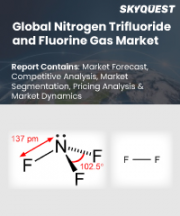
삼불화질소 및 불소 가스 시장 규모는 2024년에 46억 1,000만 달러로 평가되었고 2025년 47억 2,000만 달러에서 2033년까지 57억 1,000만 달러로 성장할 전망입니다. 예측 기간(2026-2033년)에 있어서 CAGR은 2.4%를 나타낼 것으로 예상됩니다.
세계의 전자기기 섹터의 급성장에 의해 특히 아시아태평양에서 삼불화질소(NF3)나 불소가스(F2) 등의 화학물질에 대한 수요가 대폭 증가하고 있습니다. 이 지역에서는 전자기기 제조업체나 제품조합업자 증가를 볼 수 있습니다. 미국, 독일, 일본, 영국 등의 주요 전자 시장에서도 전자기기 세정 용도 수요 증가에 따라 이러한 화학물질에 대한 관심이 높아지고 있습니다. 모바일 기기, 노트북, 스마트 TV, 자동차용 디스플레이에 대한 지출 증가를 특징으로 하는 소비자 동향은 북미 및 유럽 전역에서 NF3 및 F2에 대한 수요를 더욱 높일 것으로 예측됩니다. 그러나 불소화 가스의 독성 및 가연성에 대한 우려는 향후 수년간 시장 성장에 어려움을 겪을 수 있습니다.
삼불화질소 및 불소 가스 시장 성장 촉진요인
삼불화질소 및 불소 가스 시장 성장을 가속하는 중요한 요인은 전자기기 수요 증가입니다. 삼불화물은 스마트폰, 태블릿, 노트북 등 다양한 전자기기에 필수적인 반도체 제조에 중요한 역할을 합니다. 세계 인구 증가와 이러한 전자기기의 사용 확대에 따라 반도체 수요는 계속 증가하고 있습니다. 그 결과, 반도체에 대한 이러한 증가하는 수요는 삼불화질소 및 불소가스의 필요성을 촉진하고, 전자기기 제조 분야에서 그 중요한 역할을 부각시키고 있습니다.
삼불화질소 및 불소 가스 시장 성장 억제요인
삼불화질소 및 불소 가스 시장은 이러한 물질의 사용과 폐기를 규제하는 엄격한 규제 조치로 심각한 과제에 직면하고 있습니다. 지구온난화계수가 높은 것으로 알려진 삼불화질소는 환경에 대한 영향을 줄이기 위해 다양한 환경보호기관에 의한 엄격한 감시의 대상이 되고 있습니다. 마찬가지로, 불소 가스는 심각한 독성 위험을 수반하기 때문에 건강과 생태계에 대한 위협을 피하기 위해 면밀한 관리와 폐기 절차가 필수적입니다. 이러한 엄격한 규제는 컴플라이언스 비용과 운영상의 제약을 부과함으로써 시장 성장을 저해하고, 안전·환경 기준을 준수하면서 산업용도로 이러한 가스를 활용하는 제조자의 능력에 영향을 미치고 있습니다.
삼불화질소 및 불소 가스 시장 동향
삼불화질소 및 불소 가스 시장에서의 현저한 동향으로서 스마트폰이나 노트북 등의 선진 전자기기의 급속한 보급에 견인되어 전자기기 분야에서 수요가 급증하고 있습니다. 이러한 가스는 반도체 제조 및 고성능 전자 부품의 생산에 있어 매우 중요한 역할을 하고 있습니다. 기술의 진화가 계속되고, 보다 고도로 효율적인 디바이스에 대한 수요가 증가함에 따라, 삼불화질소 및 불소가스에 대한 의존도가 더욱 강해질 것으로 예측됩니다. 이러한 지속적인 수요는 전자제조에서 혁신과 성능의 중요한 추진력으로서 이러한 가스가 필수적인 존재로 자리매김되는 중요한 전환점을 보여줍니다.
Nitrogen Trifluoride and Fluorine Gas Market size was valued at USD 4.61 Billion in 2024 and is poised to grow from USD 4.72 Billion in 2025 to USD 5.71 Billion by 2033, growing at a CAGR of 2.4% during the forecast period (2026-2033).
The surge in the global electronics sector is driving significant demand for chemicals like nitrogen trifluoride (NF3) and fluorine gas (F2), particularly in Asia Pacific, which is witnessing a rise in electronics manufacturers and product formulators. Major electronic markets, including the United States, Germany, Japan, and the United Kingdom, are also experiencing increased interest in these chemicals due to the growing need for electronic cleaning applications. Consumer trends, characterized by rising expenditures on mobile devices, laptops, smart TVs, and automotive displays, are further anticipated to elevate the demand for NF3 and F2 across North America and Europe. However, concerns regarding the toxicity and flammability of fluorinated gases may pose challenges for market growth in the coming years.
Top-down and bottom-up approaches were used to estimate and validate the size of the Nitrogen Trifluoride and Fluorine Gas market and to estimate the size of various other dependent submarkets. The research methodology used to estimate the market size includes the following details: The key players in the market were identified through secondary research, and their market shares in the respective regions were determined through primary and secondary research. This entire procedure includes the study of the annual and financial reports of the top market players and extensive interviews for key insights from industry leaders such as CEOs, VPs, directors, and marketing executives. All percentage shares split, and breakdowns were determined using secondary sources and verified through Primary sources. All possible parameters that affect the markets covered in this research study have been accounted for, viewed in extensive detail, verified through primary research, and analyzed to get the final quantitative and qualitative data.
Nitrogen Trifluoride and Fluorine Gas Market Segments Analysis
Global Nitrogen Trifluoride and Fluorine Gas Market is segmented by Type, Nitrogen Triflouride Application, Flourine Gas Applications and region. Based on Type, the market is segmented into Chemical Synthesis and Electrolyzing Synthesis. Based on Nitrogen Triflouride Application, the market is segmented into Semiconductor Displays, Flat Panel Displays and Solar Cells. Based on Flourine Gas Applications, the market is segmented into Uranium Enrichment, Electronic Cleaning and Sulphur Hexafluoride. Based on region, the market is segmented into North America, Europe, Asia Pacific, Latin America and Middle East & Africa.
Driver of the Nitrogen Trifluoride and Fluorine Gas Market
A significant factor propelling the growth of the Nitrogen Trifluoride and Fluorine Gas market is the rising demand for electronic devices. Nitrogen trifluoride plays a crucial role in semiconductor production, which is integral to various electronic gadgets like smartphones, tablets, and laptops. As the global population expands and the usage of these electronic devices becomes more prevalent, the need for semiconductors continues to rise. Consequently, this heightened demand for semiconductors drives the necessity for nitrogen trifluoride and fluorine gas, highlighting their essential role in the electronics manufacturing sector.
Restraints in the Nitrogen Trifluoride and Fluorine Gas Market
The Nitrogen Trifluoride and Fluorine Gas market faces significant challenges due to stringent regulatory measures governing the use and disposal of these substances. Nitrogen trifluoride, recognized for its high global warming potential, falls under strict scrutiny from various environmental agencies, aiming to mitigate its environmental impact. Likewise, fluorine gas poses considerable toxicity risks, necessitating meticulous management and disposal protocols to avert potential health and ecological threats. These rigorous regulations hinder market growth by imposing compliance costs and operational limitations, thus affecting manufacturers' ability to leverage these gases in industrial applications while maintaining adherence to safety and environmental standards.
Market Trends of the Nitrogen Trifluoride and Fluorine Gas Market
A significant trend in the nitrogen trifluoride and fluorine gas market is the surging demand in the electronics sector, driven by the rapid proliferation of advanced electronic devices like smartphones and laptops. These gases play a critical role in semiconductor manufacturing and the production of high-performance electronic components. As technology continues to evolve and the need for more sophisticated and efficient devices escalates, the reliance on nitrogen trifluoride and fluorine gas is projected to intensify. This sustained demand underscores a pivotal shift, positioning these gases as essential enablers of innovation and performance in electronics manufacturing.