


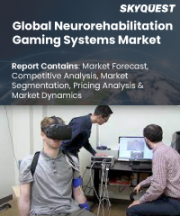
신경 재활 게임 시스템 시장 규모는 2024년에 26억 1,000만 달러로 평가되었고, 2025년 29억 6,000만 달러에서 2033년까지 80억 9,000만 달러로 성장할 전망입니다. 예측 기간(2026-2033년) CAGR은 13.4%로 성장이 예측되고 있습니다.
신경 재활 게임 시스템 시장은 신경질환 증가 경향 및 혁신적인 재활 기법에 대한 주목도의 높아짐을 배경으로 현저한 성장을 이루고 있습니다. 이러한 시스템은 가상현실과 게이미피케이션을 활용하여 재활 성과를 향상시키고 치료를 더욱 매력적이고 효과적으로 만듭니다. 기술 진보로 다양한 신경 질환에 특화된 고급 게이밍 솔루션의 개발이 진행되고 있습니다. 인지도 향상과 지원 상환 정책이 시장 확대를 더욱 촉진하고 있습니다. 북미와 유럽은 확립된 의료 인프라로 시장을 선도하고 있지만, 아시아태평양에서는 최신 기술의 채용과 의료 투자 증가를 통해 성장 기회가 탄생하고 있습니다. 주목할만한 동향으로는 인공지능의 통합과 신경 재활 게임 시스템의 효율성 향상을 목표로 하는 지속적인 연구를 들 수 있습니다.
신경 재활 게임 시스템 시장 성장 촉진요인
뇌졸중 및 외상성 뇌 손상을 포함한 신경 질환의 발생률 증가는 효과적인 재활 솔루션의 긴급성을 돋보이게 합니다. 신경 재활 게임 시스템은 고급 가상현실 기술 및 게이미피케이션 기법을 활용하여 환자의 참여를 촉진하고 재활 경험을 향상시킵니다. 전통적인 치료법을 양방향적이고 즐거운 활동으로 전환함으로써 이러한 시스템은 환자 참여 의지와 치료 결과를 크게 향상시킵니다. 이 혁신적인 접근법은 회복을 위한 보다 의욕적인 환경을 키울 뿐만 아니라 필수적인 인지 기능과 운동 능력의 발달을 촉진하고 신경 질환의 재활을 받는 분들의 복잡한 요구에 대응합니다.
신경 재활 게임 시스템 시장 성장 억제요인
신경 재활 게임 시스템 시장에 있어서 큰 제약은 고급 게임 기술의 도입 및 운용에 수반하는 높은 초기 비용이며, 이것이 보급의 방해가 될 가능성이 있습니다. 게다가, 상환 정책 및 보험 적용 범위는 이러한 혁신적인 솔루션의 도입을 지원하기에 불충분할 수 있으며 특정 의료 환경에서의 사용을 더욱 제한하고 있습니다. 이러한 재정적 장벽은 이러한 시스템의 가용성에 영향을 미칠 뿐만 아니라 재활 실천에 대한 통합을 제한하고, 궁극적으로 환자가 변화를 초래할 수 있는 치료 옵션에 접근할 수 있는 기회를 손상시킵니다. 따라서 시장의 잠재력을 높이기 위해서는 이러한 경제적 과제를 해결하는 것이 필수적입니다.
신경 재활 게임 시스템 시장 동향
신경 재활 게임 시스템 시장에서는 인공지능(AI)의 통합을 위한 현저한 동향을 볼 수 있어 개별화 및 적응형 치료 체험을 촉진하고 있습니다. 이 혁신은 몰입형 가상현실(VR) 및 증강현실(AR) 환경을 통해 환자의 참여를 강화하고 재활의 효과를 높입니다. 또한 원격 환자 모니터링 및 텔레리하빌리테이션 솔루션에 대한 주목이 높아지고 있으며, 치료에 대한 접근성 향상과 환자에 대한 지속적인 지원을 실현하고 있습니다. 이러한 기술의 진화는 치료 성과를 향상시킬 뿐만 아니라 신경 재활 서비스의 제공 범위를 확대하고 게임 시스템을 현대 치료 실천의 중요한 구성 요소로 자리매김하고 있습니다.
Neurorehabilitation Gaming Systems Market size was valued at USD 2.61 Billion in 2024 and is poised to grow from USD 2.96 Billion in 2025 to USD 8.09 Billion by 2033, growing at a CAGR of 13.4% during the forecast period (2026-2033).
The Neurorehabilitation Gaming Systems market is experiencing significant growth driven by the increasing prevalence of neurological disorders and a heightened focus on innovative rehabilitation methods. These systems utilize virtual reality and gamification to improve rehabilitation outcomes, making therapy more engaging and effective. Technological advancements are fostering the development of sophisticated gaming solutions tailored for various neurological conditions. Rising awareness and supportive reimbursement policies are further enhancing market expansion. While North America and Europe lead the market due to their established healthcare infrastructure, the Asia-Pacific region presents growth opportunities through the adoption of modern technologies and increased healthcare investments. Notable trends include the integration of artificial intelligence and ongoing research aimed at boosting the effectiveness of neurorehabilitation gaming systems.
Top-down and bottom-up approaches were used to estimate and validate the size of the Neurorehabilitation Gaming Systems market and to estimate the size of various other dependent submarkets. The research methodology used to estimate the market size includes the following details: The key players in the market were identified through secondary research, and their market shares in the respective regions were determined through primary and secondary research. This entire procedure includes the study of the annual and financial reports of the top market players and extensive interviews for key insights from industry leaders such as CEOs, VPs, directors, and marketing executives. All percentage shares split, and breakdowns were determined using secondary sources and verified through Primary sources. All possible parameters that affect the markets covered in this research study have been accounted for, viewed in extensive detail, verified through primary research, and analyzed to get the final quantitative and qualitative data.
Neurorehabilitation Gaming Systems Market Segments Analysis
Global Neurorehabilitation Gaming Systems Market is segmented by Type of Gaming System, Product Type, Component, Modality, Application, End User and region. Based on Type of Gaming System, the market is segmented into Console-based Systems, PC-based Systems, Motion Capture Systems, Gesture-tracking Systems and VR Systems, AR Systems. Based on Product Type, the market is segmented into Cortical Simulation Systems, Neural Re-education Systems and Others. Based on Component, the market is segmented into Hardware and Software. Based on Modality, the market is segmented into PC, Tablet and Smartphones. Based on Application, the market is segmented into Brain Stroke Rehabilitation, Traumatic Brain Injury Rehabilitation, Parkinson's Disease Rehabilitation, Multiple Sclerosis Rehabilitation, Spinal Cord Injury, Dystonia, Schizophrenia, Cerebral Palsy and Others. Based on End User, the market is segmented into Hospitals, Rehabilitation Centers and Homecare Settings. Based on region, the market is segmented into North America, Europe, Asia Pacific, Latin America and Middle East & Africa.
Driver of the Neurorehabilitation Gaming Systems Market
The growing incidence of neurological disorders, including strokes and traumatic brain injuries, underscores the urgent need for effective rehabilitation solutions. Neurorehabilitation gaming systems utilize advanced virtual reality and gamification techniques to engage patients and enhance their rehabilitation experience. By transforming traditional therapy methods into interactive and enjoyable activities, these systems significantly improve patient participation and outcomes. This innovative approach not only fosters a more motivating environment for recovery but also facilitates the development of essential cognitive and motor skills, thereby addressing the complex needs of individuals undergoing rehabilitation for neurological conditions.
Restraints in the Neurorehabilitation Gaming Systems Market
A significant constraint in the Neurorehabilitation Gaming Systems market is the elevated initial costs linked to acquiring and deploying advanced gaming technologies, which can hinder widespread accessibility. Furthermore, reimbursement policies and insurance coverage may fall short in supporting the adoption of these innovative solutions, further limiting their use in specific healthcare environments. This financial barrier not only impacts the availability of such systems but also restricts their integration into rehabilitation practices, ultimately affecting patient access to potentially transformative therapy options. Hence, addressing these economic challenges is essential for enhancing the market's potential.
Market Trends of the Neurorehabilitation Gaming Systems Market
The neurorehabilitation gaming systems market is experiencing a significant trend towards the integration of artificial intelligence (AI), facilitating personalized and adaptive therapeutic experiences. This innovation fosters enriched patient engagement through immersive virtual reality (VR) and augmented reality (AR) environments that enhance rehabilitation effectiveness. Furthermore, the market demonstrates a growing focus on remote patient monitoring and tele-rehabilitation solutions, enabling greater accessibility to care and continuous support for patients. As these technologies evolve, they not only improve treatment outcomes but also broaden the reach of neurorehabilitation services, positioning gaming systems as a vital component of modern therapeutic practices.