


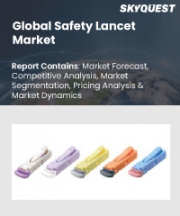
세이프티 랜싯 시장 규모는 2024년에 19억 1,000만 달러로 평가되며, 2025년 20억 9,000만 달러에서 2033년까지 43억 1,000만 달러로 성장할 전망입니다. 예측 기간(2026-2033년)의 CAGR은 9.5%로 예측됩니다.
당뇨병과 감염성 질환의 발생률 증가를 주요 요인으로 세이프티 랜싯 시장이 크게 확대되고 있습니다. 란셋은 의료 현장, 특히 혈당 측정 및 진단에 있으며, 필수적인 존재로 자리 잡고 있습니다. 안전성과 편의성을 높인 일회용 랜싯에 대한 수요가 급증하고 있습니다. 인도, 중국 등 신흥 시장에서는 의료시설 증가와 건강문제에 대한 국민들의 인식이 높아짐에 따라 랜싯 제조업체들에게 큰 성장의 기회가 생기고 있습니다. 그러나 의료진을 위협하는 침 찔림 사고로 인한 감염 전파 우려 등 과제도 여전히 존재합니다. 또한 랜싯 재사용에 따른 위험은 의료 현장의 안전 대책 추진과 더 광범위한 일회용 제품 사용으로 전환을 촉진하고 있습니다.
세이프티 랜싯 시장 성장 촉진요인
세이프티 랜싯 시장은 괄목할 만한 성장세를 보이고 있으며, 그 배경에는 전 세계적인 건강 문제인 당뇨병 유병률 증가가 있습니다. 이러한 추세는 앞으로도 가속화될 것으로 예상되며, 1형과 2형 당뇨병 환자 증가는 전 세계 의료 시스템에 막대한 재정적 부담을 안겨주고 있습니다. 이러한 경향에 기여하는 요인으로는 비만, 흡연, 운동 부족과 같은 건강에 해로운 생활습관, 그리고 도시화 추세 등이 있습니다. 또한 인구 고령화에 따라 당뇨병 발병률은 증가할 것으로 예상되며, 이 시급한 건강 문제를 해결하기 위한 필수적인 해결책으로 세이프티 랜싯에 대한 수요가 증가할 것으로 예측됩니다.
세이프티 랜싯 시장 성장 억제요인
세이프티 랜싯 시장의 성장은 몇 가지 도전에 의해 방해받고 있습니다. 특히 많은 개발도상국에서 가정용 랜싯에 대한 인지도가 낮다는 점이 눈에 띕니다. 이러한 이해의 격차는 기본적인 진단 및 모니터링 요구에 있으며, 이러한 의료기기로부터 큰 혜택을 받을 수 있는 개인 계층의 수용과 활용을 크게 저해하고 있습니다. 가정용 랜싯의 장점과 가용성에 대한 지식 부족이 보급을 제한하고 있으며, 이는 이 시장 부문의 확대에 큰 장벽으로 작용하고 있습니다. 이러한 인지도 문제를 해결하는 것은 세이프티 랜싯의 잠재력을 이끌어내고, 의료서비스가 부족한 지역의 의료 접근성을 높이는 데 매우 중요합니다.
세이프티 랜싯 시장 동향
안전 랜싯 시장은 사용자의 안전과 편안함을 높여주는 혁신적인 기술 개발에 힘입어 괄목할 만한 성장을 보이고 있습니다. 현대의 안전 랜싯은 사용 후 바늘을 안전하게 보관할 수 있는 개폐식 메커니즘과 같은 고급 기능을 갖추고 있으며, 바늘에 찔리는 사고의 위험을 크게 줄일 수 있습니다. 기존의 기본 설계에서 보다 진보적이고 사용자 친화적인 옵션으로 진화한 것은 의료 현장에서 환자 안전과 감염 관리에 대한 중요성이 높아진 것을 반영합니다. 또한 당뇨병 유병률 증가와 자가 혈당 측정 시스템에 대한 수요 증가는 시장 역학을 더욱 촉진하여 소비자가 보다 안전하고 효율적인 채혈 솔루션을 찾는 경향이 더욱 강해지고 있습니다.
Safety Lancet Market size was valued at USD 1.91 Billion in 2024 and is poised to grow from USD 2.09 Billion in 2025 to USD 4.31 Billion by 2033, growing at a CAGR of 9.5% during the forecast period (2026-2033).
The safety lancet market is experiencing significant expansion, largely fueled by the rising incidence of diabetes and infectious diseases. Lancets are increasingly essential in healthcare, particularly for blood glucose monitoring and diagnostics. Demand is soaring for user-friendly, single-use lancets that enhance safety and convenience. Emerging markets like India and China offer substantial growth prospects for lancet manufacturers, driven by an increase in healthcare facilities and heightened public awareness of health issues. However, challenges persist, notably concerns over needlestick injuries that threaten healthcare workers through potential infectious disease transmission. Additionally, the risks associated with reusing lancets underscore the shift towards adopting single-use options more broadly within healthcare settings, promoting safer practices.
Top-down and bottom-up approaches were used to estimate and validate the size of the Safety Lancet market and to estimate the size of various other dependent submarkets. The research methodology used to estimate the market size includes the following details: The key players in the market were identified through secondary research, and their market shares in the respective regions were determined through primary and secondary research. This entire procedure includes the study of the annual and financial reports of the top market players and extensive interviews for key insights from industry leaders such as CEOs, VPs, directors, and marketing executives. All percentage shares split, and breakdowns were determined using secondary sources and verified through Primary sources. All possible parameters that affect the markets covered in this research study have been accounted for, viewed in extensive detail, verified through primary research, and analyzed to get the final quantitative and qualitative data.
Safety Lancet Market Segments Analysis
Global Safety Lancet Market is segmented by Product Type, Application, End User and region. Based on Product Type, the market is segmented into Push Button Safety Lancet, Pressure Activated Safety Lancet and Side Button Safety Lancet. Based on Application, the market is segmented into Blood Glucose Testing, Haemoglobin Testing, Cholesterol Testing and Coagulation Testing. Based on End User, the market is segmented into Hospitals and Clinics, Diagnostic Centers and Pathology Laboratories, Home Diagnostics and Others. Based on region, the market is segmented into North America, Europe, Asia Pacific, Latin America and Middle East & Africa.
Driver of the Safety Lancet Market
The Safety Lancet market is experiencing remarkable growth, driven by the increasing prevalence of diabetes, a significant global health challenge that is expected to escalate over time. This rise in diabetes cases, encompassing both type 1 and type 2 variants, represents a considerable financial strain on healthcare systems across the globe. Factors contributing to this trend include unhealthy lifestyle choices such as obesity, smoking, lack of physical activity, and the ongoing trend of urbanization. Additionally, as the population ages, the incidence of diabetes is likely to rise, leading to a greater demand for safety lancets as a necessary solution to manage this pressing health issue.
Restraints in the Safety Lancet Market
The growth of the safety lancet market is hindered by several challenges, particularly the limited awareness surrounding homecare lancets in many developing regions. This gap in understanding significantly impedes the acceptance and utilization of these medical devices among individuals who could greatly benefit from them for essential diagnostic and monitoring needs. The insufficient knowledge about the advantages and availability of homecare lancets restricts their adoption, thereby posing a notable hurdle to the expansion of this market segment. Addressing these awareness issues is critical for unlocking the potential of safety lancets and improving healthcare accessibility in underserved areas.
Market Trends of the Safety Lancet Market
The safety lancet market is witnessing remarkable expansion, fueled by innovative technological developments that enhance user safety and comfort. Modern safety lancets now incorporate advanced features such as retractable mechanisms, which significantly reduce the risk of needlestick injuries by ensuring needles are safely contained after use. This evolution from traditional, basic designs to more advanced, user-friendly options reflects a growing emphasis on patient safety and infection control within healthcare settings. Additionally, the rising prevalence of diabetes and the demand for self-monitoring blood glucose systems further propel market dynamics, as consumers increasingly seek safer and more efficient blood collection solutions.