


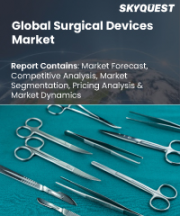
세계의 외과용 기기 시장 규모는 2024년에 196억 8,000만 달러로 평가되며, 2025년 215억 5,000만 달러에서 2033년까지 445억 3,000만 달러로 성장할 전망입니다. 예측 기간(2026-2033년)의 CAGR은 9.5%로 예측됩니다.
세계 외과용 기기 시장은 로봇 기술 및 파워 어시스트 시스템의 발전과 더불어 최소침습 수술 증가 추세에 힘입어 견고한 성장세를 보이고 있습니다. 이러한 기술은 수술의 정확성, 효율성, 환자의 치료 결과를 향상시킵니다. 그러나 COVID-19 팬데믹의 영향으로 효과적인 멸균 조치의 중요성이 부각되면서 시장은 심각한 문제에 직면했습니다. 이로 인해 의료시설에서 수술기구의 멸균을 우선순위에 두면서 소독 솔루션에 대한 수요가 증가했습니다. 의료시스템이 적응하는 과정에서 미뤄졌던 수술 시술에 대한 대응에 집중하고 있으며, 향후 성장이 기대되는 분야입니다. 특히 인구 고령화 및 노화 관련 질병의 확산과 같은 인구 통계학적 변화는 정형외과 분야를 중심으로 외과적 개입에 대한 수요를 더욱 촉진하고 있습니다. 또한 저비용 내시경 수술 기기의 도입은 시장에서 혁신과 접근성을 추구하는 추세를 반영하고 있습니다.
세계 외과용 기기 시장 성장 촉진요인
심혈관 질환, 암, 정형외과 질환을 포함한 만성질환의 유병률 증가는 외과적 개입에 대한 수요를 크게 증가시켜 세계 외과용 기기 시장의 성장을 주도하고 있습니다. 이러한 수술 툴은 다양한 건강 문제를 효과적으로 진단, 치료 및 관리하는 데 중요한 역할을 하고 있으며, 의료 분야에서 필수적인 역할을 하고 있습니다. 의료 서비스 프로바이더가 환자의 치료 결과를 개선하고 만성질환 증가하는 부담에 대응하기 위해 첨단 외과용 기기에 대한 의존도가 점점 더 중요해지면서 시장을 발전시키고 수술 기술의 혁신을 촉진하고 있습니다.
세계 외과용 기기 시장 성장 억제요인
세계 수술용 의료기기 시장은 의료진이 수술 툴, 특히 첨단 로봇 시스템 및 최신 기술과 통합된 툴을 적절히 사용하기 위해 종합적인 교육을 받아야 하는 어려움에 직면해 있습니다. 이러한 광범위한 교육 및 기술 개발의 필요성은 시간과 자금 측면에서 막대한 투자를 수반하므로 시장의 성장과 보급을 저해할 수 있습니다. 훈련에 따른 추가 부담은 의료 기관이 새로운 수술 의료기기를 도입하는 것을 주저하게 만드는 요인이 될 수 있으며, 궁극적으로 의료계의 혁신적인 수술 기술의 전반적인 발전과 보급에 영향을 미칠 수 있습니다.
세계 외과용 기기 시장 동향
세계 외과용 기기 시장에서는 회복기간 단축, 수술 후 불편감 감소, 입원기간 단축 등의 장점으로 인해 저침습 수술로 전환하는 추세가 두드러지게 나타나고 있습니다. 이러한 수술 패러다임의 변화로 인해 이러한 기술에 특화된 첨단 수술 기구에 대한 수요가 급증하고 있습니다. 의료진과 환자들이 이러한 혁신적 방법을 점점 더 선호함에 따라 제조업체들은 제품 라인 확대와 연구개발 투자를 통해 이에 대응하고 있습니다. 그 결과, 시장은 빠르게 성장하고 있으며, 최소침습 수술 기기는 전 세계 외과적 개입의 지형을 재구성할 수 있는 잠재력을 가진 중요한 분야로 자리매김하고 있습니다.
Global Surgical Devices Market size was valued at USD 19.68 Billion in 2024 and is poised to grow from USD 21.55 Billion in 2025 to USD 44.53 Billion by 2033, growing at a CAGR of 9.5% during the forecast period (2026-2033).
The global surgical devices market is experiencing robust growth driven by advancements in robotic and power-assisted systems, coupled with the rising trend of minimally invasive surgeries. These technologies enhance surgical precision, efficiency, and patient outcomes. However, the market faced significant challenges due to the impact of the COVID-19 pandemic, which highlighted the critical necessity for effective sterilization measures. This led to increased demand for disinfection solutions as healthcare facilities prioritized the sterilization of surgical instruments. As healthcare systems adapt, they focus on addressing postponed surgical procedures, promising future growth. Demographic shifts, particularly among the aging population and the prevalence of age-related conditions, further support demand for surgical interventions, particularly in orthopedics. Additionally, the introduction of low-cost endosurgical instruments reflects a growing trend towards innovation and accessibility within the market.
Top-down and bottom-up approaches were used to estimate and validate the size of the Global Surgical Devices market and to estimate the size of various other dependent submarkets. The research methodology used to estimate the market size includes the following details: The key players in the market were identified through secondary research, and their market shares in the respective regions were determined through primary and secondary research. This entire procedure includes the study of the annual and financial reports of the top market players and extensive interviews for key insights from industry leaders such as CEOs, VPs, directors, and marketing executives. All percentage shares split, and breakdowns were determined using secondary sources and verified through Primary sources. All possible parameters that affect the markets covered in this research study have been accounted for, viewed in extensive detail, verified through primary research, and analyzed to get the final quantitative and qualitative data.
Global Surgical Devices Market Segments Analysis
Global Surgical Devices Market is segmented by Product, Application, Type, End-User and region. Based on Product, the market is segmented into Surgical Sutures & Staplers, Handheld Surgical Devices, Electrosurgical Devices, Laparoscopic Devices and Robotic-Assisted Surgical Devices. Based on Application, the market is segmented into Neurosurgery, Plastic & Reconstructive Surgery, Orthopedic Surgery, Cardiovascular Surgery, General Surgery, Gynecology Surgery and Urology Surgery. Based on Type, the market is segmented into Reusable and Disposable. Based on End-User, the market is segmented into Hospitals, Ambulatory Surgical Centers and Specialty Clinics. Based on region, the market is segmented into North America, Europe, Asia Pacific, Latin America and Middle East & Africa.
Driver of the Global Surgical Devices Market
The increasing prevalence of chronic diseases, including cardiovascular conditions, cancer, and orthopedic disorders, has significantly heightened the demand for surgical interventions, driving growth in the global surgical devices market. These surgical instruments play a critical role in providing effective diagnosis, treatment, and management of a wide array of health issues, underscoring their essential function within the healthcare sector. As healthcare providers focus on enhancing patient outcomes and addressing the growing burden of chronic illnesses, the reliance on advanced surgical devices becomes increasingly vital, propelling the market forward and fostering innovation in surgical technology.
Restraints in the Global Surgical Devices Market
The Global Surgical Devices market faces challenges stemming from the necessity for comprehensive training of healthcare professionals in the proper utilization of surgical instruments, particularly those integrated with advanced robotic systems and modern technologies. This requirement for extensive education and skill development can hinder market growth and adoption, as it involves significant investments of both time and financial resources. The added burden of training may deter healthcare institutions from adopting new surgical devices, ultimately impacting the overall advancement and accessibility of innovative surgical technologies within the medical community.
Market Trends of the Global Surgical Devices Market
The Global Surgical Devices market is witnessing a significant trend towards minimally invasive procedures, driven by their advantages such as reduced recovery time, minimized postoperative discomfort, and shorter hospital stays. This paradigm shift in surgical practices has created a burgeoning demand for advanced surgical tools tailored for such techniques. As healthcare professionals and patients increasingly favor these innovative methods, manufacturers are responding by enhancing their product offerings and investing in research and development. Consequently, the market is expanding rapidly, positioning minimally invasive surgical devices as a pivotal segment that promises to reshape the landscape of surgical interventions globally.