


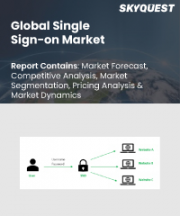
싱글 사인온 시장 규모는 2024년에 35억 9,000만 달러로 평가되었으며, 2025년 40억 2,000만 달러에서 2033년까지 100억 3,000만 달러로 성장할 전망입니다. 예측 기간(2026-2033년) 동안 CAGR은 12.1%로 예측됩니다.
세계 싱글 사인온 시장은 사용자 경험과 보안 강화에 대한 수요에 힘입어 크게 성장하고 있습니다. 데이터 유출, 신원 도용 등 사이버 위협이 만연하면서 기업들은 강력한 보안 대책에 점점 더 집중하고 있습니다. 싱글 사인온 솔루션은 사용자의 비밀번호 관리 부담을 줄이고, 다중 인증(MFA)을 통합하여 보호 기능을 강화하는 데 크게 기여합니다. 또한, 다양한 산업에서 데이터 보안 및 사용자 인증에 대한 엄격한 규제 요건에 직면하고 있습니다. SSO 솔루션을 도입하면 조직은 이러한 컴플라이언스 문제를 효과적으로 극복하고 ID 및 액세스 관리 프로세스를 효율화할 수 있습니다. 전반적으로 싱글 사인온 기술의 도입은 여러 애플리케이션과 서비스에서 사용자 액세스를 간소화하는 동시에 보안 조치를 강화하는 중요한 요소입니다.
싱글 사인온 시장 촉진요인
여러 부문에 걸친 조직들 사이에서 사이버 위협과 데이터 침해에 대한 인식이 높아지면서 싱글 사인온(SSO) 솔루션에 대한 수요가 크게 증가하고 있습니다. 이러한 시스템은 기존의 비밀번호 기반 접근 방식에서 벗어나 무단 액세스에 대한 강력한 보호 계층을 제공함으로써 전체 보안을 강화합니다. 또한, 조직이 클라우드 기반 애플리케이션과 서비스를 점점 더 많이 채택함에 따라 이러한 리소스에 대한 효율적이고 안전한 액세스의 필요성이 매우 중요해지고 있습니다. 이러한 클라우드 컴퓨팅으로의 전환은 기밀 정보를 보호하면서 원활한 사용자 경험을 촉진하는 데 있어 SSO의 중요성을 강조하고, 궁극적으로 이러한 솔루션의 시장을 주도하고 있습니다.
싱글 사인온 시장 억제요인
싱글 사인온(SSO) 시장은 특히 레거시 시스템이 존재하는 복잡한 IT 환경에서 조직이 도입 시 직면하는 문제로 인해 큰 제약에 직면해 있습니다. 온프레미스 환경이든 클라우드 기반이든 다양한 애플리케이션과 SSO를 통합하려면 상당한 시간과 리소스를 투자해야 하는 경우가 많으며, 이는 기업의 기술 도입 의욕을 저해할 수 있습니다. 또한, 기존 비밀번호 인증에 익숙한 사용자들은 SSO로의 전환에 거부감을 가질 수 있으므로, SSO의 장점을 강조하고 보안 및 사용 편의성에 대한 우려를 완화하기 위해 광범위한 교육 및 훈련 조치가 필요합니다.
싱글 사인온 시장 동향
싱글 사인온(SSO) 시장에서는 조직이 업무 운영에 클라우드 애플리케이션과 서비스에 대한 의존도가 높아짐에 따라 클라우드 기반 솔루션의 채택이 두드러진 추세입니다. 이러한 전환으로 인해 다양한 디지털 환경에서 사용자 경험을 향상시키는 끊김 없고 안전한 액세스 솔루션에 대한 수요가 증가하고 있습니다. 또한, 지문인식, 안면인식 등 생체인식 기술의 도입도 확대되고 있습니다. 이러한 기술들은 사용자의 편의성을 우선시하면서 고도의 보안 대책을 제공합니다. 이러한 진화는 강력한 보안 프로토콜과 사용자 친화적인 인증의 균형을 추구하는 업계의 태도를 반영하며, 안전하고 접근하기 쉬운 디지털 환경 구축을 촉진하고 있습니다.
Single Sign-on Market size was valued at USD 3.59 Billion in 2024 and is poised to grow from USD 4.02 Billion in 2025 to USD 10.03 Billion by 2033, growing at a CAGR of 12.1% during the forecast period (2026-2033).
The global single sign-on market is witnessing notable expansion, driven by the demand for enhanced user experience and security. As cyber threats such as data breaches and identity theft become more prevalent, businesses are increasingly focusing on robust security measures. Single sign-on solutions significantly contribute by minimizing password management burden on users and integrating multi-factor authentication (MFA) to bolster protection. Furthermore, various industries face rigorous regulatory demands related to data security and user authentication. Implementing SSO solutions enables organizations to effectively navigate these compliance challenges, thereby streamlining identity and access management processes. Overall, the adoption of single sign-on technology serves as a vital component in fortifying security measures while simplifying user access across multiple applications and services.
Top-down and bottom-up approaches were used to estimate and validate the size of the Single Sign-on market and to estimate the size of various other dependent submarkets. The research methodology used to estimate the market size includes the following details: The key players in the market were identified through secondary research, and their market shares in the respective regions were determined through primary and secondary research. This entire procedure includes the study of the annual and financial reports of the top market players and extensive interviews for key insights from industry leaders such as CEOs, VPs, directors, and marketing executives. All percentage shares split, and breakdowns were determined using secondary sources and verified through Primary sources. All possible parameters that affect the markets covered in this research study have been accounted for, viewed in extensive detail, verified through primary research, and analyzed to get the final quantitative and qualitative data.
Single Sign-on Market Segments Analysis
Global Single Sign-on Market is segmented by Type, Deployment Mode, Organization Size, Industry Vertical and region. Based on Type, the market is segmented into Enterprise Single Sign-on, Federated & Web-based Single Sign-on and Windows Integrated Single Sign-on. Based on Deployment Mode, the market is segmented into Cloud and On-Premises. Based on Organization Size, the market is segmented into Large Enterprises and SME's. Based on Industry Vertical, the market is segmented into BFSI, IT & Telecom, Retail & CPG, Public Sector & Utilities, Education, Communications Media & Services, Healthcare & Life Sciences, Travel & Hospitality and Others. Based on region, the market is segmented into North America, Europe, Asia Pacific, Latin America and Middle East & Africa.
Driver of the Single Sign-on Market
The growing recognition of cyber threats and data breaches among organizations across multiple sectors is significantly propelling the demand for Single Sign-On (SSO) solutions. These systems offer a strong layer of protection against unauthorized access, moving away from conventional password-based approaches and thereby strengthening overall security. Furthermore, as organizations increasingly adopt cloud-based applications and services, the necessity for efficient and secure access to these resources becomes crucial. This shift towards cloud computing underscores the importance of SSO in facilitating seamless user experiences while safeguarding sensitive information, ultimately driving the market for these solutions.
Restraints in the Single Sign-on Market
The Single Sign-on (SSO) market faces significant restraints due to the challenges organizations encounter during implementation, especially in complex IT environments featuring legacy systems. The integration of SSO with various applications, whether on-premises or cloud-based, often demands a considerable investment of time and resources, which can discourage businesses from adopting this technology. Additionally, users who are accustomed to traditional password-based authentication may resist transitioning to SSO, necessitating extensive education and training initiatives to highlight the advantages of this approach and to alleviate any concerns regarding security and ease of use.
Market Trends of the Single Sign-on Market
The Single Sign-on (SSO) market is witnessing a significant trend towards the adoption of cloud-based solutions as organizations increasingly rely on cloud applications and services for their operations. This shift is prompting the demand for seamless and secure access solutions that enhance user experience across diverse digital environments. Additionally, the incorporation of biometric authentication methods, including fingerprint recognition and facial scanning, is gaining traction, as these technologies provide elevated security measures while prioritizing user convenience. This evolution reflects the industry's commitment to balancing robust security protocols with user-friendly authentication, fostering a secure yet accessible digital landscape.