


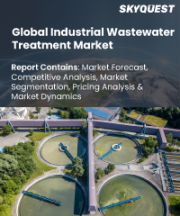
산업 폐수 처리 시장 규모는 2024년에 197억 6,000만 달러로 평가되었고, 2025년 210억 2,000만 달러에서 2033년까지 345억 4,000만 달러로 성장할 전망입니다. 예측기간(2026-2033년)의 CAGR은 6.4%를 나타낼 것으로 보입니다.
산업 폐수 처리 부문은 환경 문제의 심화와 오염된 물과 관련된 만성 질환 발생률 증가로 인해 상당한 성장을 경험하고 있습니다. 폐수 오염이 토양 및 해양 생태계에 미치는 해로운 영향은 효과적인 처리 솔루션의 시급성을 높였습니다. 또한 폐수는 다양한 심각한 질병의 매개체로 인식되어 전 세계적으로 건강 위험을 증가시키고 있습니다. 처리 효율 향상을 위해 막 여과 및 고급 산화 공정과 같은 혁신 기술이 도입되고 있습니다. 더불어 정부 및 국제 기구의 엄격한 규제는 책임 있는 폐수 관리의 중요성을 강조하며, 폐수를 단순한 폐기물이 아닌 가치 있는 자원으로 인식하는 방향으로의 전환을 촉진하고 있습니다. 이러한 요소들이 종합적으로 첨단 산업 폐수 처리 솔루션 및 시설에 대한 수요를 강화하고 있습니다.
산업 폐수 처리 시장 성장 촉진요인
산업 폐수의 부적절한 처리는 병원체, 독성 물질, 오일, 그리스, 염류, 영양소, 중금속, 슬러지, 산 및 염기 등 유해 성분을 포함하고 있어 주요 환경 문제입니다. 이에 전 세계 정부는 이러한 오염 물질을 효과적으로 관리 및 처리하기 위한 엄격한 규제를 마련하고 있습니다. 미국의 청정수법(Clean Water Act)과 같은 정책은 수질 보호에 대한 의지를 보여주는 대표적인 사례입니다. 마찬가지로 중국, 스페인, 네덜란드 등 다른 국가들도 적절한 폐수 관리를 보장하기 위한 조치를 시행하고 있습니다. 이러한 과제를 해결하기 위해 첨단 물 재이용 시스템은 향상된 처리를 위해 점차적으로 막 여과 기술을 도입하고 있습니다.
산업 폐수 처리 시장 성장 억제요인
산업 폐수 처리 시장은 전력에 대한 높은 의존도로 인해 상당한 도전에 직면해 있습니다. 이는 자원을 소모하고 운영 비용을 증가시킵니다. 전 세계 폐수의 절반 조금 넘게만 처리되고 있어 심각한 오염은 여전히 중대한 문제로 남아 있으며, 특히 수생 생태계가 심각하게 훼손된 국가에서 더욱 그렇습니다. 처리 공정의 재정적 부담과 낮은 이익 마진이 결합되어 시장 성장과 투자를 제한하고 있습니다. 또한 특정 지역의 제한된 폐수 처리 시설 수는 이러한 문제를 악화시켜 효율적이고 지속 가능한 폐수 관리 솔루션에 대한 증가하는 수요를 효과적으로 해결하기 더욱 어렵게 만듭니다.
산업 폐수 처리 시장 동향
산업 폐수 처리 시장은 기업이 환경책임을 강화하기 위해 '감축-재활용-재사용' 모델을 채택함에 따라 산업 폐수 처리 시장은 점차 지속가능성 중심으로 전환되고 있습니다. 이 추세는 관개, 산업 공정, 화장실 세척 등 다양한 용도로 처리된 폐수를 재사용하는 중요성을 강조하며, 이는 귀중한 수자원 보존은 물론 운영 비용 절감 효과도 가져옵니다. 기업들이 더욱 엄격해진 환경 규제 준수 및 물 부족 문제 해결에 대한 압박을 받으면서, 재사용을 위한 특정 수질 기준을 충족하는 첨단 처리 기술에 대한 수요가 급증하고 있습니다. 이러한 지속 가능한 접근 방식은 자원 보존을 촉진할 뿐만 아니라 폐수 관리 솔루션 분야의 혁신을 주도하여 다양한 산업 분야에서 장기적인 생존 가능성을 보장합니다.
Industrial Wastewater Treatment Market size was valued at USD 19.76 Billion in 2024 and is poised to grow from USD 21.02 Billion in 2025 to USD 34.54 Billion by 2033, growing at a CAGR of 6.4% during the forecast period (2026-2033).
The industrial wastewater treatment sector is experiencing significant growth due to escalating environmental concerns and the rising incidence of chronic illnesses linked to contaminated water. The detrimental effects of wastewater pollution on soil and marine ecosystems have heightened the urgency for effective treatment solutions. Moreover, wastewater is recognized as a carrier of various serious diseases, prompting increased health risks globally. Innovations such as membrane filtration and advanced oxidation processes are being adopted to enhance treatment efficiency. Additionally, stringent regulations by governments and international bodies emphasize the importance of responsible wastewater management, encouraging a shift in perception towards wastewater as a valuable resource rather than mere waste. These factors collectively reinforce the demand for advanced industrial wastewater treatment solutions and facilities.
Top-down and bottom-up approaches were used to estimate and validate the size of the Industrial Wastewater Treatment market and to estimate the size of various other dependent submarkets. The research methodology used to estimate the market size includes the following details: The key players in the market were identified through secondary research, and their market shares in the respective regions were determined through primary and secondary research. This entire procedure includes the study of the annual and financial reports of the top market players and extensive interviews for key insights from industry leaders such as CEOs, VPs, directors, and marketing executives. All percentage shares split, and breakdowns were determined using secondary sources and verified through Primary sources. All possible parameters that affect the markets covered in this research study have been accounted for, viewed in extensive detail, verified through primary research, and analyzed to get the final quantitative and qualitative data.
Industrial Wastewater Treatment Market Segments Analysis
Global Industrial Wastewater Treatment Market is segmented by Type, Process, Application, End-Use Industry and region. Based on Type, the market is segmented into Coagulants, Flocculants, Corrosion Inhibitors, Scale Inhibitors, Biocides and Disinfectants, Anti-foaming Agents, pH Adjusters and Stabilizers, Chelating Agents and Others. Based on Process, the market is segmented into Ultrafiltration Systems, Vacuum Evaporation and Distillation, Reverse Osmosis Systems, Paper Bed Filters, Solid Bowl Centrifuges, Tramp Oil Separators, Vacuum Filters and Others. Based on Application, the market is segmented into Biological, Sludge Treatment, Filtration, Demineralization, Disinfection and Others. Based on End-Use Industry, the market is segmented into Power Generation, Mining, Oil and Gas, Chemical, Food and Beverage, Pulp and Paper, Healthcare, Poultry and Agriculture and Others. Based on region, the market is segmented into North America, Europe, Asia Pacific, Latin America and Middle East & Africa.
Driver of the Industrial Wastewater Treatment Market
The improper disposal of industrial wastewater is a major environmental concern, as it contains harmful elements such as pathogens, toxic substances, oils, greases, salts, nutrients, heavy metals, sludge, as well as acids and bases. This has prompted governments worldwide to establish stringent regulations to manage and treat these pollutants effectively. Initiatives like the Clean Water Act in the United States exemplify the commitment to safeguarding water quality. Similarly, other countries, including China, Spain, and the Netherlands, are implementing measures to ensure proper wastewater management. To address these challenges, advanced water reclamation systems increasingly incorporate membrane filtration technologies for enhanced treatment.
Restraints in the Industrial Wastewater Treatment Market
The industrial wastewater treatment market faces significant challenges due to its heavy reliance on electricity, which strains resources and increases operational costs. With only a little over half of the global wastewater being treated, severe pollution remains a critical issue, particularly in countries where aquatic ecosystems are heavily compromised. The financial burden of treatment processes, combined with narrow profit margins, restricts market growth and investment. Additionally, the limited number of wastewater treatment plants in certain regions exacerbates these issues, making it more difficult to effectively address the rising demand for efficient and sustainable wastewater management solutions.
Market Trends of the Industrial Wastewater Treatment Market
The Industrial Wastewater Treatment market is increasingly shifting towards sustainability as industries adopt the reduce-recycle-reuse model to enhance their environmental responsibility. This trend emphasizes the importance of reusing treated wastewater for various applications such as irrigation, industrial processes, and toilet flushing, thereby not only conserving precious water resources but also reducing operational costs. As businesses face mounting pressure to comply with stricter environmental regulations and address water scarcity issues, the demand for advanced treatment technologies that meet specific water quality standards for reuse is surging. This sustainable approach not only fosters resource conservation but also drives innovation in wastewater management solutions, ensuring long-term viability in diverse sectors.