


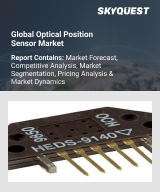
세계의 광학식 위치 센서 시장의 규모는 2024년에 39억 6,000만 달러로 평가되었고 2025년 43억 6,000만 달러에서 2033년까지 93억 4,000만 달러로 성장할 전망입니다. 예측기간(2026-2033년) 동안의 CAGR은 10%로 예측되고 있습니다.
세계의 광학식 위치 센서 시장은 자동화 및 로봇 기술의 채용 확대 외에도 비용 효율적이고 범용성이 높은 센서 솔루션에 대한 수요로 견조한 성장을 이루고 있습니다. 이러한 센서는 가전, 자동차, 항공우주, 의료기기 등 다양한 부문의 다양한 용도에서 중요한 역할을 합니다. 가전의 급증과 차량 안전성에 대한 주목 증가가 시장 확대를 견인하고 있으며, 비용 효율적인 센서가 제품 기능에 필수적인 요소가 되고 있습니다. 또한, 웨어러블 의료기기의 보급과 첨단 센서 성능의 필요성이 수요를 더욱 뒷받침하고 있습니다. 그러나 정확도가 낮고 사용자 정의 기능이 제한되어 있기 때문에 발생하는 문제가 장벽이 되었습니다. 이러한 과제에도 불구하고 소비자 차량 이용과 기술 통합이 지속적으로 증가하고 있기 때문에 시장은 대폭적인 성장이 예상되고 있습니다.
세계의 광학식 위치 센서 시장의 성장 촉진요인
첨단 자동화 기술 및 기계 개발을 위한 투자 확대는 시장 내 전략적 제휴 증가와 관련이 있습니다. 또한, 연구개발을 위한 자금의 증강은 제조 공정에서 중요한 기술적 진보를 촉진할 것으로 예측됩니다. 기업이 협력하고 자원을 공유함으로써 발생하는 혁신은 광학식 위치 센서의 효율성을 높이고 이는 다양한 용도에 대한 수요를 더욱 촉진할 것으로 기대됩니다. 이러한 연구개발과 기술 개선에 대한 주력은 제품 성능의 향상과 소비자의 진화하는 요구에 대응하기 위한 노력을 강조하며 궁극적으로 시장 성장에 기여합니다.
세계의 광학식 위치 센서 시장의 성장 억제요인
세계의 광학식 위치 센서 시장은 성장을 방해할 수 있는 몇 가지 과제에 직면하고 있습니다. 다양한 산업에 부과되는 엄격한 환경 규제는 시장 확대를 제한할 수 있습니다. 또한 제품 승인 프로세스를 둘러싼 복잡성은 시장 개발 기회를 줄일 수 있습니다. 특히 예상치 못한 세계적 사고에 의한 사업 운영의 혼란 가능성이 상황을 더욱 복잡하게 하고 있습니다. 이러한 요인들이 결합되어 시장의 전반적인 성장 가능성을 제한하고 광학식 위치 센서 기술에 대한 투자와 혁신을 방해할 수 있는 어려운 상황을 초래하고 있습니다. 그 결과 이해관계자는 지속적인 시장 성장을 달성하기 위해 이러한 제약을 극복해야 합니다.
세계의 광학식 위치 센서 시장의 동향
세계의 광학식 위치 센서 시장은 광학 센서 기술의 진보에 견인되어 현저한 성장을 이루고 있습니다. 주변광, 적외선, 자외선을 포함한 광범위한 파장 스펙트럼을 전기 신호로 변환할 수 있는 광학 센서는 여러 산업에서 센서 응용을 확대하고 있습니다. 이 기술적 진화는 안전한 얼굴 인증 시스템, 디스플레이 내장형 지문 스캐너, 자율주행 차량 내비게이션 등의 혁신을 촉진하고, 첨단 감지 솔루션에 대한 수요를 뒷받침하고 있습니다. 산업 분야에서 자동화, 보안, 효율성이 점점 더 중시되고 있는 가운데, 광학식 위치 센서 시장은 사용자 경험과 시스템 성능을 향상시키는 폭넓은 용도에 대응하여 지속적인 확대가 예상되고 있습니다.
Global Optical Position Sensor Market size was valued at USD 3.96 Billion in 2024 and is poised to grow from USD 4.36 Billion in 2025 to USD 9.34 Billion by 2033, growing at a CAGR of 10% during the forecast period (2026-2033).
The global optical position sensor market is witnessing robust growth due to the increasing adoption of automation and robotics technologies, alongside the demand for cost-effective and versatile sensor solutions. These sensors play a crucial role in various applications across sectors such as consumer electronics, automotive, aerospace, and medical equipment. The surge in consumer electronics and a heightened focus on vehicle safety are driving market expansion, as cost-efficient sensors become integral to product functionality. Additionally, the popularity of wearable medical devices and the necessity for advanced sensor performance are further fueling demand. However, challenges arising from low accuracy and limited customization capabilities pose obstacles. Despite these hurdles, the market is poised for significant growth as consumer vehicle use and technology integration continue to rise.
Top-down and bottom-up approaches were used to estimate and validate the size of the Global Optical Position Sensor market and to estimate the size of various other dependent submarkets. The research methodology used to estimate the market size includes the following details: The key players in the market were identified through secondary research, and their market shares in the respective regions were determined through primary and secondary research. This entire procedure includes the study of the annual and financial reports of the top market players and extensive interviews for key insights from industry leaders such as CEOs, VPs, directors, and marketing executives. All percentage shares split, and breakdowns were determined using secondary sources and verified through Primary sources. All possible parameters that affect the markets covered in this research study have been accounted for, viewed in extensive detail, verified through primary research, and analyzed to get the final quantitative and qualitative data.
Global Optical Position Sensor Market Segments Analysis
Global Optical Position Sensor Market is segmented by Type, Application, End-User and region. Based on Type, the market is segmented into One-Dimensional Optical Position Sensors, Two-Dimensional Optical Position Sensors and Multi-Axial Optical Position Sensors. Based on Application, the market is segmented into Automotive, Consumer Electronics, Healthcare, Industrial, Aerospace & Defense and Others. Based on End-User, the market is segmented into OEMs (Original Equipment Manufacturers) and Aftermarket. Based on region, the market is segmented into North America, Europe, Asia Pacific, Latin America and Middle East & Africa.
Driver of the Global Optical Position Sensor Market
The expansion of investments dedicated to the advancement of cutting-edge automated technologies and machinery can be linked to the rising number of strategic partnerships within the market. Additionally, the enhanced funding directed toward research and development will facilitate significant technological progress in manufacturing processes. As companies collaborate and pool resources, the resulting innovations are expected to propel the effectiveness and efficiency of optical position sensors, further driving demand across various applications. This focus on R&D and technological enhancement underscores a commitment to improving product performance and meeting the evolving needs of consumers, ultimately contributing to market growth.
Restraints in the Global Optical Position Sensor Market
The Global Optical Position Sensor market faces several challenges that may hinder its growth. Stringent environmental regulations imposed on various industries are likely to limit market expansion. Additionally, the complexities surrounding product approval processes can diminish opportunities for market development. The situation is further complicated by potential disruptions in business operations, particularly due to unforeseen global events. These factors combined create a challenging landscape that could restrict the overall growth potential of the market and may deter investment and innovation in optical position sensor technologies. As a result, stakeholders must navigate these constraints to achieve sustained market progress.
Market Trends of the Global Optical Position Sensor Market
The Global Optical Position Sensor market is witnessing significant growth driven by advancements in optical sensor technology. Optical sensors, capable of converting a broad spectrum of wavelengths-including ambient, infrared, and ultraviolet-into electrical impulses, are enhancing sensor applications across multiple industries. This technological evolution is facilitating innovations such as secure facial recognition systems, in-display fingerprint scanners, and autonomous vehicle navigation, propelling demand for sophisticated sensing solutions. As industries increasingly prioritize automation, security, and efficiency, the market for optical position sensors is poised for continued expansion, catering to a wide range of applications that enhance user experience and system performance.