


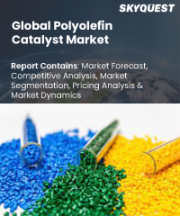
세계의 폴리올레핀 촉매 시장 규모는 2024년에 2,862억 9,000만 달러로 평가되었으며, 2025년 3,008억 9,000만 달러에서 2033년까지 4,479억 5,000만 달러로 성장할 전망입니다. 예측 기간(2026-2033년) 동안 CAGR은 5.1%로 예측됩니다.
폴리올레핀 촉매에 대한 세계 지식에 따르면, 자동차, 포장, 의료, 섬유 등 다양한 산업 분야에서 광범위하게 적용되고 있습니다. 이들 촉매는 필름 제조, 섬유 생산, 튜브 합성에 중요한 역할을 하며, 포장 트레이, 생활용품, 배터리 케이스, 첨단 의료기기 등 다양한 제품 생산에 기여하고 있습니다. 자동차 분야에서는 내구성과 효율성이 뛰어난 부품 제조에 필수적이며, 포장 분야에서는 상품의 안전성과 보존성을 높입니다. 의료 분야에서는 이러한 촉매를 통해 복잡한 장비를 정밀하게 가공할 수 있습니다. 전체적으로, 폴리올레핀 촉매는 필수 올레핀을 생성하는 화학 반응에서 매우 중요한 역할을 하고 있으며, 다양한 응용 분야와 산업에서 그 중요성이 부각되고 있습니다.
세계 폴리올레핀 촉매 시장 촉진요인
아시아태평양과 중동 지역을 비롯한 경제권과 산업 활동의 확대는 다양한 용도의 폴리올레핀 수요를 크게 견인하고 있습니다. 이러한 수요 증가로 인해 이러한 폴리머 생산을 촉진하는 효과적인 촉매의 필요성이 증가하고 있습니다. 산업의 혁신과 다양화가 진행되면서 생산 공정의 최적화와 폴리올레핀 공급량 증가에 대응하기 위해 고성능 촉매의 필요성이 대두되고 있습니다. 이러한 추세는 촉매가 효율을 높이고 전 세계 폴리올레핀 시장의 진화하는 수요를 지원하는 데 있어 촉매가 중요한 역할을 한다는 것을 뒷받침합니다.
세계 폴리올레핀 촉매 시장 억제요인
세계 폴리올레핀 촉매 시장은 주로 첨단 기술과 복잡한 제조 공정이 필요하기 때문에 심각한 도전에 직면해 있습니다. 생산자들은 폴리올레핀 생산에서 원하는 효율을 달성하기 위해 필수적인 촉매 성능을 최적화하는 데 어려움을 겪고 있습니다. 또한, 작은 변화도 촉매의 전반적인 효과와 신뢰성에 영향을 미칠 수 있기 때문에 다양한 규모의 생산에서 균일한 품질을 보장하는 것은 더욱 어려운 문제입니다. 이러한 기술적 요건과 품질 관리의 어려움은 제조업체의 사업 규모 확대와 시장 수요에 대한 효과적인 대응을 가로막는 큰 제약이 되고 있습니다.
세계 폴리올레핀 촉매 시장 동향
세계 폴리올레핀 촉매 시장에서는 첨단 촉매 기술 개발을 위한 뚜렷한 추세가 나타나고 있습니다. 시장 기업들은 폴리올레핀 생산의 활성, 선택성, 효율성을 향상시키기 위해 많은 투자를 하고 있습니다. 촉매 설계의 혁신으로 분자량 분포, 분지 구조, 열 안정성과 같은 중요한 폴리머 특성이 개선되어 다양한 산업 분야에서 고성능 소재에 대한 수요를 주도하고 있습니다. 이러한 변화는 생산 효율을 향상시킬 뿐만 아니라, 진화하는 환경 규제와 지속가능성에 대한 노력에 부합하며, 시장 내 새로운 성장 기회와 경쟁 우위를 확보할 수 있는 길을 열어주고 있습니다. 그 결과, 폴리올레핀 생산 환경은 이러한 기술 발전으로 인해 변화하고 있습니다.
Global Polyolefin Catalyst Market size was valued at USD 286.29 Billion in 2024 and is poised to grow from USD 300.89 Billion in 2025 to USD 447.95 Billion by 2033, growing at a CAGR of 5.1% during the forecast period (2026-2033).
Global insights on polyolefin catalysts reveal their extensive applicability across various industries, including automotive, packaging, medical, and textiles. These catalysts play a crucial role in film fabrication, fiber production, and tubing synthesis, contributing to the manufacture of a wide array of products such as packaging trays, household items, battery casings, and sophisticated medical devices. In the automotive sector, they are essential for producing durable and efficient components, while in packaging, they enhance the safety and preservation of goods. In the medical field, precision in crafting intricate devices is enabled by these catalysts. Overall, polyolefin catalysts serve as pivotal enablers in the chemical reactions that generate essential olefins, highlighting their significance across diverse applications and industries.
Top-down and bottom-up approaches were used to estimate and validate the size of the Global Polyolefin Catalyst market and to estimate the size of various other dependent submarkets. The research methodology used to estimate the market size includes the following details: The key players in the market were identified through secondary research, and their market shares in the respective regions were determined through primary and secondary research. This entire procedure includes the study of the annual and financial reports of the top market players and extensive interviews for key insights from industry leaders such as CEOs, VPs, directors, and marketing executives. All percentage shares split, and breakdowns were determined using secondary sources and verified through Primary sources. All possible parameters that affect the markets covered in this research study have been accounted for, viewed in extensive detail, verified through primary research, and analyzed to get the final quantitative and qualitative data.
Global Polyolefin Catalyst Market Segments Analysis
Global Polyolefin Catalyst Market is segmented by Type, Technology, Molecular Weight, Application, End Use and region. Based on Type, the market is segmented into Ziegler-Natta Catalysts and Metallocene Catalysts. Based on Technology, the market is segmented into Supported Catalysts and Unsupported Catalysts. Based on Molecular Weight, the market is segmented into High-Molecular-Weight Catalysts, Medium-Molecular-Weight Catalysts and Low-Molecular-Weight Catalysts. Based on Application, the market is segmented into Ethylene Polymerization, Propylene Polymerization and Butene-1 Polymerization. Based on End Use, the market is segmented into Automotive, Packaging, Construction and Consumer Goods. Based on region, the market is segmented into North America, Europe, Asia Pacific, Latin America and Middle East & Africa.
Driver of the Global Polyolefin Catalyst Market
The expansion of economies and industrial activities, particularly in regions like Asia Pacific and the Middle East, is significantly fueling the demand for polyolefins across a range of applications. This rising demand consequently creates an increased necessity for effective catalysts that facilitate the production of these polymers. As industries continue to innovate and diversify, the requirement for high-performance catalysts becomes essential to optimize production processes and meet the growing supply of polyolefins. This trend underscores the vital role catalysts play in enhancing efficiency and supporting the evolving needs of the polyolefin market on a global scale.
Restraints in the Global Polyolefin Catalyst Market
The Global Polyolefin Catalyst market encounters significant challenges primarily due to the necessity for sophisticated technology and complex manufacturing processes. Producers struggle with the optimization of catalyst performance, which is essential for achieving desired efficiency in polyolefin production. Furthermore, ensuring uniform quality across various scales of production adds another layer of difficulty, as even minor variations can affect the overall effectiveness and reliability of the catalysts. This combination of technical demands and quality control issues serves as a substantial restraint for manufacturers, hindering their ability to scale operations and meet market demands effectively.
Market Trends of the Global Polyolefin Catalyst Market
The global polyolefin catalyst market is experiencing a notable trend towards the development of advanced catalyst technologies, with significant investments from market players aimed at leveraging higher activity, selectivity, and efficiency in polyolefin production. Innovations in catalyst design are enhancing critical polymer properties, including molecular weight distribution, branching, and thermal stability, thereby driving the demand for high-performance materials across various industries. This shift not only improves production efficiency but also aligns with evolving environmental regulations and sustainability efforts, opening up new avenues for growth and competitive advantage within the market. As a result, the landscape of polyolefin production is being transformed by these technological advancements.