


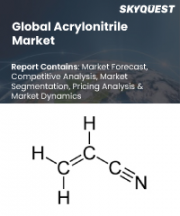
아크릴로니트릴 시장 규모는 2024년에 118억 8,000만 달러로 평가되었으며, 2025년 123억 8,000만 달러에서 2033년까지 172억 달러로 성장할 전망입니다. 예측 기간(2026-2033년) 동안 CAGR은 4.2%로 예측됩니다.
아크릴로니트릴은 합성섬유, 플라스틱, 수지, 엘라스토머 제조에 필수적인 무색 액체로 아크릴 섬유 제조에 중요한 역할을 하고 있습니다. 섬유 산업 및 산업용 아크릴 섬유에 대한 수요 증가는 자동차, 건설 등 다양한 분야에서 시장 성장을 촉진하고 있습니다. 또한, 포장재 및 자동차 부품용 플라스틱 및 수지 소비 증가는 아크릴로니트릴 시장 확대에 기여하고 있습니다. 아시아태평양, 특히 중국은 섬유산업과 자동차 산업의 견조한 성장에 힘입어 가장 큰 시장이자 주요 생산지로서 두각을 나타내고 있습니다. 그러나 시장 확대에는 아크릴로니트릴 생산에 따른 환경 문제, 프로필렌과 암모니아 등 원재료 가격 변동 등의 문제가 발생할 수 있습니다.
아크릴로니트릴 시장 부문 분석
아크릴로니트릴 시장 촉진요인
아크릴로니트릴 시장은 주로 아크릴 섬유 생산에서 중요한 역할에 의해 주도되고 있습니다. 아크릴 섬유는 섬유제품, 의류, 각종 소비재에 광범위하게 사용되고 있습니다. 세계 인구의 증가와 가처분 소득 수준의 상승에 따라, 특히 개발도상국에서 섬유제품에 대한 수요가 급증하고 있습니다. 이러한 추세는 소비자 행동, 경제 성장, 섬유 산업에서 사용되는 필수 소재 간의 강한 상호 관계를 보여 주며, 아크릴로니트릴 수요를 크게 확대할 것으로 예상됩니다. 따라서 다양한 섬유 제품에 대한 수요 증가는 가까운 미래에도 아크릴로니트릴 시장의 성장 모멘텀을 유지할 가능성이 높을 것으로 보입니다.
아크릴로니트릴 시장 억제요인
아크릴로니트릴 시장은 주로 프로필렌과 암모니아를 주원료로 사용하고 있기 때문에 심각한 제약에 직면해 있습니다. 이러한 원자재 가격은 수급 불균형, 지정학적 긴장, 예기치 못한 자연재해 등의 요인으로 인해 큰 폭의 변동이 발생할 수 있습니다. 이러한 변동은 제조업체의 수익률에 악영향을 미치고, 소비자에게는 비용 증가로 이어질 수 있습니다. 결과적으로 이러한 가격 상승은 아크릴로니트릴의 수요를 억제하고 시장 내 문제를 야기할 수 있습니다. 따라서 아크릴로니트릴 분야의 전반적인 안정성과 성장은 이러한 근본적인 경제적, 환경적 요인에 의해 저해될 수 있습니다.
아크릴로니트릴 시장 동향
아크릴로니트릴 시장에서는 바이오 기반 아크릴로니트릴 생산에 대한 수요 증가를 주요 요인으로 하여 지속가능성을 향한 뚜렷한 추세가 나타나고 있습니다. 환경문제에 대한 관심이 높아지면서 업계는 화석연료에 의존하는 기존의 에너지 집약적인 방식에서 벗어나고 있습니다. 대신 재생 가능한 바이오매스를 원료로 하는 혁신적인 생산 기술에 대한 투자가 증가하고 있습니다. 이러한 전환은 온실가스 배출을 줄일 수 있을 뿐만 아니라 유해 화학제품 사용에 따른 환경 부하를 최소화할 수 있습니다. 바이오 기반 아크릴로니트릴로의 전환은 화학 산업 전반에 걸친 환경 친화적 노력의 확산을 상징하며, 지속가능한 개발과 자원 보존에 대한 노력을 반영하고 있습니다.
Acrylonitrile Market size was valued at USD 11.88 Billion in 2024 and is poised to grow from USD 12.38 Billion in 2025 to USD 17.2 Billion by 2033, growing at a CAGR of 4.2% during the forecast period (2026-2033).
Acrylonitrile, a colorless liquid integral to the production of synthetic fibers, plastics, resins, and elastomers, plays a crucial role in the manufacturing of acrylic fibers. The increasing demand for acrylic fibers in textiles and industrial applications propels market growth across various sectors, including automotive and construction. Additionally, the rising consumption of plastics and resins for packaging and automotive parts further enhances the acrylonitrile market. The Asia-Pacific region, particularly China, stands out as the largest market and major producer, driven by robust growth in textiles and automotive industries. However, market expansion may encounter challenges, including environmental concerns tied to acrylonitrile production and volatile raw material prices, particularly those of propylene and ammonia.
Top-down and bottom-up approaches were used to estimate and validate the size of the Acrylonitrile market and to estimate the size of various other dependent submarkets. The research methodology used to estimate the market size includes the following details: The key players in the market were identified through secondary research, and their market shares in the respective regions were determined through primary and secondary research. This entire procedure includes the study of the annual and financial reports of the top market players and extensive interviews for key insights from industry leaders such as CEOs, VPs, directors, and marketing executives. All percentage shares split, and breakdowns were determined using secondary sources and verified through Primary sources. All possible parameters that affect the markets covered in this research study have been accounted for, viewed in extensive detail, verified through primary research, and analyzed to get the final quantitative and qualitative data.
Acrylonitrile Market Segments Analysis
Global Acrylonitrile Market is segmented by Process Technology, Application and region. Based on Process Technology, the market is segmented into Ammoxidation Process and Other Production Processes. Based on Application, the market is segmented into Acrylic Fiber, Acrylonitrile Butadiene Styrene (ABS)/Styrene-Acrylonitrile Resin (SAN), Acrylamide, Nitrile Butadiene Rubber (NBR), Adiponitrile, Styrene Acrylonitrile and Other Applications. Based on region, the market is segmented into North America, Europe, Asia Pacific, Latin America and Middle East & Africa.
Driver of the Acrylonitrile Market
The acrylonitrile market is primarily driven by its essential role in manufacturing acrylic fibers, which find extensive applications in textiles, apparel, and various consumer products. As the global population continues to rise and disposable income levels increase, there is a corresponding surge in demand for textile products, especially in developing regions. This trend is anticipated to significantly enhance the demand for acrylonitrile, reflecting the strong interconnection between consumer behavior, economic growth, and the essential materials used in the textile industry. Consequently, the growing appetite for diverse textile offerings will likely sustain the acrylonitrile market's momentum in the foreseeable future.
Restraints in the Acrylonitrile Market
The acrylonitrile market faces significant constraints primarily due to the reliance on propylene and ammonia as essential feedstock. The prices of these raw materials are subject to considerable volatility, influenced by factors like supply and demand imbalances, geopolitical tensions, and unexpected natural disasters. Such fluctuations can adversely impact the profit margins of manufacturers, potentially leading to increased costs for consumers. As a result, these price hikes may deter demand for acrylonitrile, creating challenges within the market. Consequently, the overall stability and growth of the acrylonitrile sector can be hindered by these underlying economic and environmental factors.
Market Trends of the Acrylonitrile Market
The acrylonitrile market is witnessing a significant trend towards sustainability, largely driven by the growing demand for bio-based acrylonitrile production. As environmental concerns intensify, the industry is shifting away from traditional, energy-intensive methods reliant on fossil fuels. Instead, there is increasing investment in innovative production techniques utilizing renewable biomass as a feedstock. This transition not only reduces greenhouse gas emissions but also minimizes the environmental footprint associated with toxic chemical usage. The shift towards bio-based acrylonitrile is emblematic of the broader movement within the chemical sector towards eco-friendly practices, reflecting a commitment to sustainable development and resource conservation.