


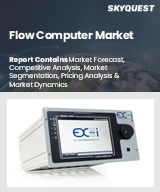
세계의 플로우 컴퓨터 시장 규모는 2024년에 9억 달러로 평가되며, 2025년 9억 6,000만 달러에서 2033년까지 16억 4,000만 달러로 성장할 전망입니다. 예측 기간(2026-2033년)의 CAGR은 6.9%로 예측됩니다.
석유 및 가스, 화학, 발전 등 다양한 분야의 자동화 및 정밀 측정에 대한 수요 증가를 배경으로 세계 유량계 시장은 견고한 성장세를 보이고 있습니다. 이러한 장비는 유체역학의 실시간 모니터링, 철저한 규정 준수, 정확한 데이터 관리를 통한 안전성 향상에 필수적입니다. 산업계가 효율성과 비용 절감을 추구하면서 안정적인 운영을 위한 유지보수 및 시스템 통합을 원하는 조직이 증가함에 따라 소프트웨어 및 지원 서비스와 같은 보완적인 시장도 활기를 띠고 있습니다. 또한 석유 및 가스 분야의 급속한 디지털 전환은 실시간 데이터 분석 및 클라우드 리포팅을 가능하게 하는 첨단 소프트웨어 플랫폼의 도입을 촉진하고 있습니다. 이러한 진화를 통해 운영 효율성을 높이고, 성능 최적화 및 장애 최소화를 위한 더 심층 인사이트를 제공합니다.
세계 플로우 컴퓨터 시장 성장 촉진요인
세계 유량 컴퓨터 시장은 석유 및 가스 등의 분야에서 유량 컴퓨터의 중요한 역할에 의해 크게 견인되고 있습니다. 이 분야에서는 파이프라인, 처리 플랜트, 정제소 전체에서 원유, 천연가스, 정제된 제품의 정밀한 측정에 필수적입니다. 이러한 산업은 매출 계산뿐만 아니라 규제 준수와 누출 및 이상 징후를 파악하기 위해 정확하고 지속적인 유량 데이터에 의존하고 있습니다. 세계 에너지 수요 증가와 운영 효율성 향상에 대한 관심이 높아짐에 따라 실시간 데이터 분석과 모니터링 및 제어 시스템과의 원활한 통합을 위한 첨단 플로우 컴퓨팅 솔루션에 대한 수요가 증가하고 있습니다. 이는 전 세계 셰일 탐사 및 신규 파이프라인 프로젝트의 진전에 따라 더욱 촉진되고 있습니다.
세계 플로우 컴퓨터 시장 성장 억제요인
세계 유량 계산기 시장은 주로 고급 시스템에 필요한 막대한 자본 투자로 인해 큰 제약에 직면해 있습니다. 커스터마이징, 설치, 교정, 지속적인 유지보수와 관련된 비용은 특히 중소기업(SME)에 큰 부담이 될 수 있습니다. 또한 이러한 첨단 시스템을 운영 및 유지보수하기 위해 숙련된 기술자가 필요하다는 점도 운영비용을 더욱 증가시킵니다. 그 결과, 신흥 시장의 기업은 장기적인 이점이 분명함에도 불구하고 하이엔드 플로우 컴퓨터를 도입하는 데 어려움을 겪는 경우가 많습니다. 이러한 재정적 장벽은 시장 성장을 저해하고, 이 분야에서 사업을 운영하는 많은 기업이 혁신적인 기술에 대한 접근을 제한할 수 있습니다.
세계 플로우 컴퓨터 시장 동향
세계 플로우 컴퓨터 시장에서는 클라우드 기반 및 엣지 컴퓨팅 솔루션의 통합을 향한 뚜렷한 추세를 볼 수 있습니다. 산업계가 방대한 유량 데이터를 보다 효율적으로 관리하고 분석할 수 있는 방법을 모색하는 가운데, 클라우드로 연결된 유량 컴퓨터는 전략적 의사결정을 촉진하고 컴플라이언스를 준수하는 데 필수적인 요소로 자리 잡고 있습니다. 동시에 엣지 컴퓨팅 기술도 주목받고 있는데, 데이터 발생지에서 직접 실시간 처리를 함으로써 지연을 최소화하고 중앙 집중식 네트워크에 대한 의존도를 낮출 수 있습니다. 이러한 시너지 효과는 업무의 연속성을 높이고 신속한 대응을 가능하게 할 뿐만 아니라, 식품 및 음료, 발전, 제약 등의 분야에 고급 분석 기능과 적시에 경보를 제공하여 다양한 용도의 혁신을 촉진하고 효율성을 향상시키는 데 기여하고 있습니다.
Global Flow Computer Market size was valued at USD 0.9 Billion in 2024 and is poised to grow from USD 0.96 Billion in 2025 to USD 1.64 Billion by 2033, growing at a CAGR of 6.9% during the forecast period (2026-2033).
The global flow computer market is witnessing robust growth fueled by the rising demand for automation and precise measurement across various sectors, including oil and gas, chemicals, and power generation. These devices are crucial for the real-time monitoring of fluid dynamics, enforcing compliance, and enhancing safety through accurate data management. As industries pursue efficiency and cost savings, the complementary market for software and support services is also thriving, as organizations seek maintenance and system integration for reliable operation. Additionally, the rapid digital transformation within the oil and gas sector is driving the adoption of advanced software platforms that facilitate real-time data analytics and cloud reporting. This evolution enhances operational efficiency, offering greater insights for optimizing performance and minimizing disruptions.
Top-down and bottom-up approaches were used to estimate and validate the size of the Global Flow Computer market and to estimate the size of various other dependent submarkets. The research methodology used to estimate the market size includes the following details: The key players in the market were identified through secondary research, and their market shares in the respective regions were determined through primary and secondary research. This entire procedure includes the study of the annual and financial reports of the top market players and extensive interviews for key insights from industry leaders such as CEOs, VPs, directors, and marketing executives. All percentage shares split, and breakdowns were determined using secondary sources and verified through Primary sources. All possible parameters that affect the markets covered in this research study have been accounted for, viewed in extensive detail, verified through primary research, and analyzed to get the final quantitative and qualitative data.
Global Flow Computer Market Segments Analysis
Global Flow Computer Market is segmented by Component, Product Type, Application, End Use Industry, Distribution Channel and region. Based on Component, the market is segmented into Hardware, Software and Services. Based on Product Type, the market is segmented into Wired Flow Computers and Wireless Flow Computers. Based on Application, the market is segmented into Custody Transfer, Pipeline Flow Monitoring, Wellhead Monitoring and Others. Based on End Use Industry, the market is segmented into Oil and Gas, Energy and Power, Water and Waste Water, Chemical, Food and Beverage, Pulp and Paper, Metal and Mining and Others. Based on Distribution Channel, the market is segmented into Direct Sales and Indirect Sales. Based on region, the market is segmented into North America, Europe, Asia Pacific, Latin America and Middle East & Africa.
Driver of the Global Flow Computer Market
The Global Flow Computer market is significantly driven by the essential role of flow computers in sectors such as oil and gas, where they are crucial for precise metering of crude oil, natural gas, and refined products throughout pipelines, processing plants, and refineries. These industries depend on accurate and continuous flow data not only for revenue calculations but also to meet regulatory compliance and identify leaks or anomalies. With rising global energy demands and a focus on enhancing operational efficiency, there is a growing need for advanced flow computing solutions that deliver high precision, real-time data analytics, and seamless integration with supervisory control systems, further spurred by developments in shale exploration and new pipeline projects worldwide.
Restraints in the Global Flow Computer Market
The global flow computer market faces significant restraints primarily due to the substantial capital investment required for advanced systems. The expenses associated with customization, installation, calibration, and ongoing maintenance can be daunting, particularly for small and mid-sized enterprises (SMEs). Additionally, the necessity of skilled technicians to operate and maintain these sophisticated systems further escalates operational costs. As a result, companies in emerging markets often struggle to adopt high-end flow computers, even when the long-term advantages are apparent. These financial barriers can hinder market growth and restrict access to innovative technologies for many businesses operating within this sector.
Market Trends of the Global Flow Computer Market
The Global Flow Computer market is witnessing a notable trend towards the integration of cloud-based and edge computing solutions. As industries seek more efficient ways to manage and analyze vast amounts of flow data, cloud-connected flow computers are becoming essential for facilitating strategic decision-making and ensuring compliance. Simultaneously, edge computing technology is gaining traction, enabling real-time data processing directly at the source to minimize latency and reliance on centralized networks. This synergistic approach not only enhances operational continuity and provides quicker responses but also equips sectors such as food and beverage, power generation, and pharmaceuticals with advanced analytics and timely alerts, driving innovation and improving efficiency in various applications.