



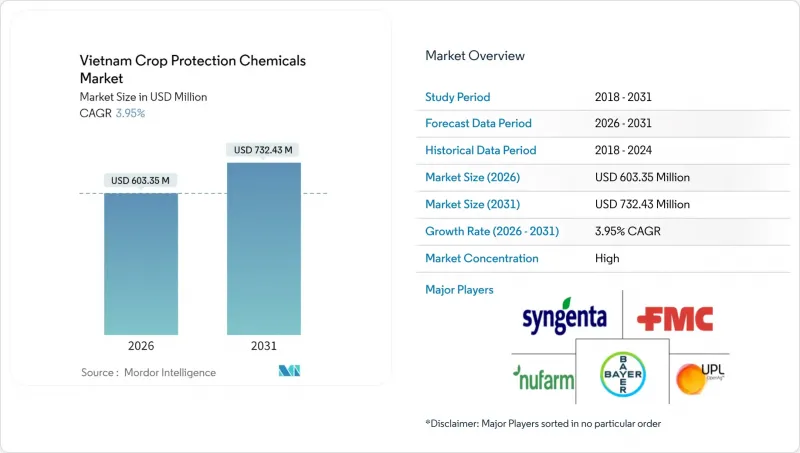
베트남의 작물 보호 화학제품 시장은 2025년 5억 8,042만 달러에서 2026년에는 6억 335만 달러로 성장하며, 2026-2031년에 CAGR 3.95%로 추이하며, 2031년까지 7억 3,243만 달러에 달할 것으로 예측되고 있습니다.
수출 기회 증가, 농장의 급속한 현대화, 기후 변화로 인한 해충 피해 증가가 결합되어 기존 및 저잔류성 제제에 대한 수요가 증가하고 있습니다. 합성농약과 바이오 농약을 결합한 종합적 해충관리(IPM)로의 전국적인 전환은 기존 브랜드가 제품군을 확대하는 한편, 국내 기업이 제네릭 제품군을 확대하는 움직임을 촉진하고 있습니다. 이와 함께 디지털 계약 농업 플랫폼은 라스트 마일 배송을 효율화하고, 제품 추적성을 향상시키며, 농가를 브랜드화된 투입물 패키지로 연결하여 베트남 농약 시장을 지원하고 있습니다. 쌀 수출 적합성을 위한 정부 보조금 프로그램, 특수 과수원 확대, 제초제 내성 곡물 종자 채택이 결합하여 대상 재배 면적을 확대하는 한편, 위조품 거래, 잔류 기준 강화, 농촌 노동력 부족이 성장 곡선을 억제하고 있습니다.
베트남의 농업 수출 전략은 국제기준을 충족하는 농가에 보상금을 지급하는 품질 연동형 재정 인센티브를 통해 농약 수요의 구조적 변화를 추진하고 있습니다. 농업농촌개발부 고시 01/2024/TT-BNNPTNT에 따라 인증된 작물 보호 프로토콜을 채택한 농가에 직접 보조금을 지급하고, EU 유기농 잔류 기준을 충족하는 쌀에 대해는 시장 가격의 15%를 초과하는 프리미엄 지급이 적용됩니다. 수출 품질 적합성 요건은 생물학적 솔루션과 화학적 솔루션을 결합한 종합적인 해충 관리 프로토콜의 채택을 촉진하고, 단일 활성 성분 솔루션이 아닌 종합적인 제품 포트폴리오를 제공하는 기업에게 시장 기회를 확대할 것입니다.
특산 과일 재배는 베트남 농업의 변화를 주도하는 고부가가치 산업으로 부상하고 있으며, 2024년에는 용과 수출액만 28억 달러에 달하고, 전년 대비 23%의 성장세를 보이고 있습니다. 중부 고원 및 남부 지방의 과수원 확대는 열대과수 생산에 특화된 살균제 및 살충제에 대한 수요를 창출하고 있습니다. 열대 지역에서는 단 한 번의 해충 발생으로 수백만 달러 규모의 계절 수확이 전멸할 수 있기 때문입니다. 중국, 일본, 한국 등 고급 과일 수출 시장에서는 엄격한 잔류 기준이 적용되므로 첨단 살포 시기 조정과 제품 선택이 요구되며, 농가는 고가이면서 잔류량이 적은 제제를 선택할 수밖에 없습니다. 자급자족 농업에서 상업적 과수원 경영으로 전환하면서 전문적인 작물 보호 기법이 도입되고, 현지 제네릭 제품보다 잘 알려진 국제 브랜드가 선택되는 경향이 있습니다.
위조 농약의 유입은 정품보다 30-50% 저렴한 가격으로 규격 미달 제품을 유통시켜 정당한 시장 성장을 저해합니다. 이로 인해 불공정한 경쟁이 발생하여 업계 전체의 이익률을 압박하고 있습니다. 중국 및 캄보디아 국경 지역에서는 규제 허점 및 집행 자원 부족을 악용한 국경 밀수 네트워크로 인해 위조품 유입이 특히 심각하게 발생하고 있습니다. 위조품은 유효 성분의 농도가 부정확하거나 금지된 물질이 포함되어 있는 경우가 많아 작물 불황을 초래하고 농가의 화학적 작물 보호 방법에 대한 신뢰를 떨어뜨립니다. 위조품의 확산으로 인해 정품 제조업체는 위조 방지 대책과 농가 교육 프로그램에 많은 투자를 해야 하고, 제품 개발 및 시장 확대에 투입할 수 있는 자원이 줄어들고 있습니다.
살균제는 2025년 시장 가치의 37.80%를 차지할 것으로 예측됩니다. 이는 논에 일정한 습도가 유지되면 이삭도열병, 이삭도열병, 갈색무늬병이 발생하기 때문입니다. 베트남 농약 시장의 살균제 규모는 여전히 트리아졸계와 스트로빌린계가 주를 이루고 있지만, 수출 승인을 받은 저잔류성 SDHI계 혼합제로 수요가 이동하고 있습니다. 조개류 방제제는 골든 애플스 네일(Golden Apple Snail)이 15개 성(省)에 새로 진입하면서 CAGR 6.48%로 성장을 주도하고 있습니다. 농가는 잔류감사를 충족시키면서 효과를 유지하기 위해 메타알데히드 대체제와 생물학적 사료제를 함께 사용하는 경우가 증가하고 있습니다.
살선충제는 규모는 작지만 성장 분야이며, 특히 기후 변화의 영향으로 뿌리혹선충 피해가 심각해지는 채소 생산 지역에서 수요가 증가하고 있습니다. 이러한 기능성 제품 구성은 수출 품질 기준을 충족하기 위해 철저한 병해충 관리가 필요한 쌀과 특수 작물을 중시하는 베트남의 작물 포트폴리오를 반영하고 있습니다. 뿌리혹선충 발생이 증가함에 따라 채소 재배지역을 위한 살선충제 등 소규모 부문도 틈새 시장으로 확대되고 있습니다. 작용기전 로테이션과 내성관리 표시의 발전으로 고부가가치 멀티액티브 제제의 전망은 밝아지고 있습니다. 국제적인 공급업체들이 특허 받은 살균제 및 살충제 분야를 장악하고 있는 반면, 국내 업체들은 단일 유효성분 제초제 제네릭 시장에서 성장세를 보이고 있습니다.
베트남 농약 시장 보고서는 기능별(살균제, 제초제, 살충제, 살충제, 살조제 등), 적용 방법별(화학 관개, 엽면 살포, 훈증, 종자 처리 등), 작물 유형별(상업용 작물, 과일 및 채소, 곡물, 두류 및 유지 종자 등)로 분류됩니다. 시장 예측은 금액(USD) 및 수량(미터톤)으로 제공됩니다.
The Vietnam crop protection chemicals market is expected to grow from USD 580.42 million in 2025 to USD 603.35 million in 2026 and is forecast to reach USD 732.43 million by 2031 at 3.95% CAGR over 2026-2031.
Mounting export opportunities, fast-modernizing farms, and climate-induced pest loads combine to propel demand for both conventional and low-residue formulations. A nationwide pivot toward integrated pest management that blends synthetic and biological solutions is encouraging established brands to widen portfolios while domestic players scale generic lines. In parallel, digital contract-farming platforms streamline last-mile delivery, improving product traceability and locking farmers into branded input packages that underpin the Vietnam crop protection chemicals market. Government subsidy programs for rice-export compliance, specialty fruit orchard expansion, and herbicide-tolerant grain seed adoption collectively enlarge addressable acres, while counterfeit trade, residue-limit tightening, and rural labor scarcity temper the growth curve.
Vietnam's agricultural export strategy fundamentally reshapes crop protection demand through quality-linked financial incentives that reward farmers for meeting international standards. The Ministry of Agriculture and Rural Development's Circular 01/2024/TT-BNNPTNT establishes direct subsidies for farmers adopting certified crop protection protocols, with premium payments reaching 15% above market rates for rice meeting EU organic residue standards. Export quality compliance requirements drive adoption of integrated pest management protocols that combine biological and chemical solutions, expanding market opportunities for companies offering comprehensive product portfolios rather than single-active ingredient solutions.
Specialty fruit cultivation emerges as a high-value driver transforming Vietnam's agricultural landscape, with dragon fruit exports alone reaching USD 2.8 billion in 2024, representing 23% growth from previous year levels. Orchard expansion in the Central Highlands and southern provinces creates demand for specialized fungicides and insecticides tailored to tropical fruit production, where single pest outbreaks can destroy entire seasonal harvests worth millions of dollars. Premium fruit export markets in China, Japan, and South Korea enforce strict maximum residue limits that require sophisticated application timing and product selection, driving farmers toward higher-priced, low-residue formulations. The shift from subsistence farming to commercial orchard management introduces professional crop protection practices that favor established international brands over local generic products.
Counterfeit pesticide infiltration undermines legitimate market growth by offering substandard products at prices 30-50% below authentic formulations, creating unfair competition that pressures profit margins across the industry. Border provinces with China and Cambodia experience particularly acute counterfeit penetration, where cross-border smuggling networks exploit regulatory gaps and limited enforcement resources. Counterfeit products often contain incorrect active ingredient concentrations or banned substances, leading to crop failures that damage farmer confidence in chemical crop protection methods. The proliferation of fake products forces legitimate manufacturers to invest heavily in anti-counterfeiting measures and farmer education programs, reducing resources available for product development and market expansion.
Other drivers and restraints analyzed in the detailed report include:
For complete list of drivers and restraints, kindly check the Table Of Contents.
Fungicides captured 37.80% of the 2025 value as perennial humidity in paddies breeds blast, sheath blight, and brown spot. The Vietnam crop protection chemicals market size for fungicides remains anchored by triazoles and strobilurins, yet demand migrates toward low-residue SDHI blends that win export approvals. Molluscicides, propelled by golden apple snail incursions into 15 new provinces, headline growth at 6.48% CAGR. Farmers increasingly integrate metaldehyde alternatives with biological baits to satisfy residue audits while preserving efficacy.
Nematicides represent a smaller but growing segment, particularly in vegetable production areas where root-knot nematode pressure intensifies under climate change conditions. The functional mix reflects Vietnam's crop portfolio emphasis on rice and specialty crops that require intensive disease and pest management to meet export quality standards. Minor segments, namely nematicides for vegetable zones, enjoy niche expansion as root-knot outbreaks rise. Advances in mode-of-action rotation and resistance-management labeling bolster prospects for premium multi-active packs. International suppliers dominate patented fungicide and insecticide niches, while local firms thrive in single-active herbicide generics.
The Vietnam Crop Protection Chemicals Market Report is Segmented by Function (Fungicide, Herbicide, Insecticide, Molluscicide, and More), Application Mode (Chemigation, Foliar, Fumigation, Seed Treatment, and More), and Crop Type (Commercial Crops, Fruits and Vegetables, Grains and Cereals, Pulses and Oilseeds, and More). The Market Forecasts are Provided in Terms of Value (USD) and Volume (Metric Tons).