



2026년 벽돌 시장 규모는 1조 7,800억 달러로 추정되며, 2025년 1조 7,300억 달러에서 성장하여 2031년에는 2조 300억 달러에 이를 것으로 예측됩니다.
2026년부터 2031년까지 연평균 복합 성장률(CAGR) 2.74%로 확대될 것으로 예측됩니다.

아시아태평양은 도시 인구 증가와 인프라 계획의 확대로 가장 큰 판매량과 가장 강력한 성장 모멘텀을 공급하는 핵심 지역입니다. 제품 혁신은 기후 규제 강화에 대응하는 저탄소 플라이애쉬 및 규산칼슘 변종에 초점을 맞추고 있으며, 계약자가 중개자를 줄이려고 하는 가운데 직접 프로젝트 기반 조달이 가속화되고 있습니다. 비주택 건설(특히 창고, 데이터센터, 교통 허브) 수요가 주택 건설을 넘어섰으며, 이는 디지털 경제의 확대와 유틸리티 지출 증가를 반영합니다. 한편, 유럽 생산자들은 탄소 국경 조정 메커니즘으로 인한 비용 압박에 직면하고 있으며, 선진 기업들은 탈탄소화 가마 및 대체 연료에 대한 투자를 촉진하고 있습니다.
아시아 주요 도시로의 빠른 회귀는 중층 주택 프로젝트 파이프라인을 보충하고 벽돌 시장 수요는 안정적으로 유지되고 있습니다. 유엔 아시아태평양경제사회위원회(UN ESCAP)는 2030년까지 이 지역의 도시 인구가 32억 명에 달하고 22개의 메가시티가 출현할 것으로 예측했습니다. 중층 건축 형식에서는 비용 효율적인 내력벽과 현지 노동자들에게 익숙한 기술인 조적조 공법을 채택하고 있습니다. 정부는 주택난 해소를 위해 사회주택 예산을 확대하고 있습니다. 인도는 2024년 1,870만 가구, 인도네시아는 1,250만 가구의 부족을 기록해 각각 벽돌 기초 수요를 확대시키고 있습니다. 공급업체는 운송비 절감을 위해 주요 성장 통로와 가까운 곳에 공급 거점을 배치했습니다. 연료 소비를 늘리지 않고 가마의 생산 능력을 높이는 설비 개선으로 건설 수요가 주기적으로 급증하는 시기에도 시공사에 대한 납기 준수를 실현하고 있습니다.
유럽의 2040년까지 배출량 90% 감축 목표는 벽돌 시장을 재편하고, 탄소 배출량이 적은 플라이애쉬 벽돌과 규산칼슘 벽돌의 채택을 가속화하고 있습니다. 규산칼슘 벽돌은 1차 에너지 소비량이 241kWh/t인 반면, 기존 점토 벽돌은 이보다 더 높은 값을 나타냅니다. 이는 영국 순 탄소 제로 건축 기준 인증을 목표로 하는 설계자에게 매력적입니다. 소성공정을 생략한 콘크리트 벽돌은 1가구당 2.4톤의 CO2를 절감할 수 있으며, 라이프사이클 전체에서 순흡수재가 됩니다. 유틸리티에서는 최소 재생재 사용률 기준이 도입되어 유리카렛과 소각 고형폐기물 배합이 촉진되고 있습니다. 제조업체가 제조부터 현장까지의 라이프사이클 데이터를 검증함으로써 개보수 공사 및 공공 조달 입찰에서 사양상의 우위를 확보할 수 있습니다.
노동력 부족이 심화되면서 북미와 유럽의 건설업체들은 벽돌 외벽을 생략한 체적 모듈로 전환하고 있습니다. 프리팹 솔루션은 현장 작업 시간을 30-50% 단축하고 인건비를 50-80% 절감할 수 있습니다. 미국에서는 2025년까지 50만1천 명의 숙련공이 추가로 필요하기 때문에 계약업체들은 표준 패널을 리스크 헤지 수단으로 보고 있습니다. 얇은 벽돌과 기계 고정식 장식용 벽돌로 인해 석공 자재 공급업체는 존재의 의미를 유지할 수 있지만, 전체 침대 벽돌이 대체되는 분야에서는 전반적인 수요가 감소하고 있습니다. 제조업체들은 하이브리드 벽면 패널을 위해 로봇 설치 라인에 투자하고 있지만, 축소되는 기존 수요 기반에서 자본을 상각해야 하기 때문에 수익률이 압박을 받고 있습니다.
2025년 기준 점토 벽돌이 시장 수익의 64.35%를 차지했지만, 플라이애쉬 벽돌은 2031년까지 연평균 복합 성장률(CAGR) 3.12%를 기록하며 탄소 규제가 강화되는 지역에서 입지를 확대하고 있습니다. 이러한 변화는 산업폐기물 이용에 의해 뒷받침되고 있으며, 공장은 소성 온도를 20% 낮춰 순환 경제의 요구에 부응할 수 있게 됩니다. 플라이애쉬 벽돌 시장 규모는 재생재 함유량을 평가하는 공공조달 기준에 힘입어 다른 유형보다 성장할 것으로 예측됩니다. 유럽의 추운 기후에서는 열용량의 이점을 원하는 건축가들이 규산칼슘 벽돌을 선호하고 있으며, 가마 소성을 생략한 콘크리트 블록은 전력 공급이 보장되면서도 연료 안전성이 불안정한 지역에서 수요가 증가하고 있습니다.
기술 혁신으로는 탄화물을 기판으로 한 박형 벽돌을 들 수 있습니다. 흡수율 4-7%로 시중 제품을 능가하는 성능을 갖췄으면서도 1평방미터당 25.83달러로 기존 제품의 절반 이하로 저렴하게 공급하고 있습니다. 제조업체들은 또한 제조 과정에서 CO2 배출량을 줄이고 물류 부하를 줄이기 위해 중공 구조를 추진하고 있습니다. 이러한 혁신 기술들은 구조적 신뢰성을 훼손하지 않고 탈탄소화를 목표로 하는 벽돌 시장의 목표를 강화하는 것입니다. 특허를 보유한 기업은 극히 일부에 국한되어 있으며, 벽돌 산업 내 수익구조를 재편할 수 있는 가능성을 내포하고 있어, 가까운 미래에 라이선싱 수입원이 될 수 있을 것으로 보입니다.
2025년 벽돌 시장의 59.10%는 건축용이 차지할 것으로 예상되며, 이는 구조용 벽과 파사드에서 벽돌의 역사적 역할을 반영합니다. 기밀성과 내화성을 촉진하는 건축 기준의 업데이트가 이 핵심 수요를 뒷받침하고 있습니다. 한편, 보도 및 포장 솔루션용 벽돌 시장은 가정의 옥외 개보수 투자 및 지자체의 보행자 증가에 따른 보도 개보수로 인해 3.02%의 연평균 복합 성장률(CAGR)로 확대되고 있습니다.
벽돌 업계 제조업체들은 탈색되지 않는 점토와 고마찰 텍스처를 활용하여 디자인 다양성과 낮은 유지관리성을 원하는 조경 고객에 대응하고 있습니다. 서로 맞물려 있는 가장자리 모양의 벽돌은 시공을 가속화하여 시공사의 비용 절감과 단기간의 개보수 일정에 맞출 수 있도록 도와줍니다. 고급 주택가에서는 미적 차별화를 통한 고수익을 추구하는 경향으로 화단용 및 장식용 정원용 벽돌이 재조명되고 있습니다. 산업 고객들은 용광로 내벽과 화학 처리 구덩이에 내산성 벽돌을 선호하고 있으며, 다양한 최종 용도는 생산자를 단일 부문의 침체로부터 보호합니다.
아시아태평양은 2025년 세계 매출의 47.30%를 차지할 것으로 예상되며, 기록적인 도시로의 인구 이동과 교통 인프라 메가 프로젝트에 힘입어 2031년까지 연평균 3.30%의 성장이 예상됩니다. 중국과 인도에서는 공공주택 수요 증가와 지하철, 공항, 산업단지 건설이 결합하여 벽돌 소비를 견인하고 있습니다. 생산자는 폐열 회수 기능이 있는 터널 가마를 도입하여 지방정부의 배출 규제에 대응하고 석탄 의존도를 낮추었습니다. 수요 급증 시 공급 안정성을 확보하고 있습니다.
북미에서는 금리인하 기대감으로 침체된 프로젝트가 재개될 것이라는 기대감을 배경으로 시장 가치의 성장을 볼 수 있습니다. AIA 컨센서스 건설 전망에 따르면, 비주택 건설 지출은 2023년부터 2024년까지 견조한 성장세를 보이다가 2025년 2.2%, 2026년 2.6% 증가할 것으로 예측됩니다. 플라이애쉬 벽돌은 LEED 인증 포인트 획득을 목표로 하는 설계자들 사이에서 지지를 받고 있으며, 박형 벽돌 패널은 도시 지역의 공동주택 건설을 가속화하고 있습니다. 캐나다의 추운 기후로 인해 주택 개보수 시 고열용량 점토벽돌에 대한 수요가 지속되고 있으며, 난방부하 절감에 기여하고 있습니다.
유럽은 성장률에서는 뒤처지지만 CBAM(탄소국경조정메커니즘)이 탄소집약적 수입품을 부각시키고 지역의 저탄소 선구자들을 우대하는 가운데 혁신을 주도하고 있습니다. 이 지역은 2022년에 5억 개 이상의 벽돌을 수입하고 28만 8,190톤의 CO2를 배출할 것으로 예측됩니다. 이에 따라 보다 친환경적인 생산능력의 국내 회귀를 요구하는 목소리가 높아지고 있습니다. 스칸디나비아 국가에서는 공공조달 정책으로 탄소 함량 상한을 규정하여 칼슘 규산염 벽돌과 미소성 콘크리트 벽돌의 발주를 촉진하고 있습니다. 동유럽 국가들은 자재 부족에 직면한 국내 시장과 독일 시장에 대응하기 위해 생산 능력을 확충하고 있습니다.
남미 벽돌 시장은 전자상거래가 촉매제가 된 창고 및 물류시설 개발을 중심으로 발전하고 있습니다. 브라질에서는 신칸센을 따라 산업단지 정비가 가속화되면서 적재 시간을 단축하는 대형 블록에 대한 수요가 증가하고 있습니다. 자재 공급업체들은 환율 변동과 수입 관세를 피하기 위해 현지 공장에 투자를 진행하고 있습니다. 중동 및 아프리카은 현재 규모는 작지만 2040년까지 필요한 건물의 70%가 미착공 상태이기 때문에 가장 높은 성장 여력을 가지고 있습니다. 케냐, 나이지리아, 이집트에서는 저렴한 주택 공급을 위한 민관협력(PPP)을 추진하고, 입찰 서류에 벽돌 조달 목표를 명시하여 국내 제조업 활성화를 도모하고 있습니다.
Brick Market size in 2026 is estimated at USD 1.78 trillion, growing from 2025 value of USD 1.73 trillion with 2031 projections showing USD 2.03 trillion, growing at 2.74% CAGR over 2026-2031.
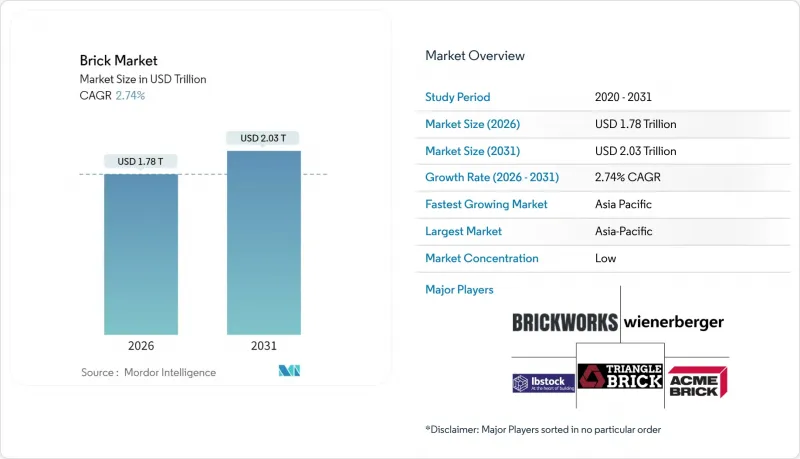
Asia-Pacific remains the anchor, supplying both the largest sales volumes and the strongest growth momentum as urban populations rise and infrastructure programs scale up. Product innovation focuses on low-carbon fly-ash and calcium-silicate variants in response to tightening climate rules, while direct project-based procurement accelerates as contractors seek fewer intermediaries. Demand from non-residential construction-especially warehouses, data centers, and transport hubs-outpaces residential activity, reflecting the expanding digital economy and public-works spending. Meanwhile, European producers face cost pressures from the Carbon Border Adjustment Mechanism, prompting early movers to invest in decarbonized kilns and alternative fuels.
Rapid migration back to major Asian cities is refilling pipelines for mid-rise housing projects, sustaining steady brick market demand. UN ESCAP projects the region's urban population will touch 3.2 billion by 2030, spawning 22 megacities. Mid-rise formats rely on masonry for cost-effective load-bearing walls and local labor familiarity. Governments are increasing social-housing budgets to narrow deficits-India alone recorded an 18.7-million-unit gap in 2024, while Indonesia tallied 12.5 million units, each amplifying baseline need for bricks. Vendors position supply hubs close to Tier-1 growth corridors to minimize freight costs. Equipment upgrades that raise kiln capacity without higher fuel burn ensure contractors receive on-time deliveries during cyclical building surges.
Europe's 90% emissions-cut target for 2040 is reshaping the brick market, accelerating the adoption of fly-ash and calcium-silicate bricks with smaller carbon footprints. Calcium-silicate units consume 241 kWh/t of primary energy versus higher values for traditional clay, appealing to designers seeking certification under the UK Net Zero Carbon Buildings Standard. Concrete bricks that bypass firing processes can save 2.4 tonnes of CO2 per house and become net absorbers over their lifecycle. Public-sector projects now embed minimum recycled-material thresholds, pushing plants to integrate glass cullet and combusted solid waste into mixes. Manufacturers that verify cradle-to-site life-cycle data lock in specification advantage for renovation and public procurement tenders.
As labor shortages intensify, builders in North America and Europe pivot toward volumetric modules that sideline brick facades. Prefab solutions remove 30-50% of on-site time and lower labor costs by 50-80%. With the United States needing another 501,000 skilled workers in 2025, contractors view standard panels as risk hedges. Thin-brick slips and mechanically fixed veneers let masonry suppliers stay relevant, yet overall unit demand dips where full-bed bricks are displaced. Manufacturers invest in robotic laying lines to service hybrid wall panels but must amortize capital across a shrinking traditional volume base, squeezing margins.
Other drivers and restraints analyzed in the detailed report include:
For complete list of drivers and restraints, kindly check the Table Of Contents.
Clay bricks dominated the brick market with 64.35% of revenue in 2025, yet fly-ash bricks record a 3.12% CAGR through 2031, widening their presence in regions tightening carbon rules. This shift is anchored in industrial-waste utilization, enabling plants to cut firing temperatures by 20% and align with circular-economy mandates. The brick market size for fly-ash variants is forecast to expand faster than any other type, helped by public procurement criteria that reward recycled content. Calcium-silicate units attract architects pursuing thermal-mass advantages in Europe's cool climates, while concrete blocks that skip kiln firing appeal where electricity is available and fuel security is uncertain.
Technological advances include char-based thin bricks exhibiting 4-7% water absorption, outperforming commercial peers and costing USD 25.83 per sq m, less than half the prevailing price for traditional options. Makers also promote hollow configurations that cut embodied CO2 and lighten logistics loads. Collectively, these innovations reinforce the brick market goal of decarbonization without sacrificing structural reliability. Only a handful of early adopters own patents, hinting at near-term licensing revenue streams that could reshape profit pools within the brick industry.
Building applications accounted for 59.10% of brick market share in 2025, reflecting masonry's historic role in structural walls and facades. Code updates promoting airtight envelopes and fire resistance sustain this core demand. The brick market size for path and paving solutions, however, is expanding at a 3.02% CAGR as households invest in outdoor upgrades and municipalities retrofit sidewalks to endure heavier pedestrian flows.
Manufacturers in the brick industry exploit colorfast clays and high-friction textures to serve landscaping customers seeking design variety with low maintenance. Bricks configured with interlocking edges accelerate installation, lowering contractor costs and aligning with quick-turn renovation schedules. Parterre and decorative garden formats resurface in premium estates where aesthetic differentiation commands higher margins. Industrial customers favor acid-resistant bricks for furnace linings and chemical-processing pits, reinforcing a diverse end-use spread that shelters producers from single-sector downturns.
The Brick Market Report is Segmented by Brick Type (Clay, Sand Lime, Fly-Ash Clay, and More), Application (Buildings, Path, Parterre, and More), End-Use Industry (Residential Buildings and Non-Residential Buildings), Distribution Channel (Direct and Dealer and Retail Network), and Geography (Asia-Pacific, North America, Europe, South America, and Middle East and Africa). The Market Forecasts are Provided in Terms of Value (USD).
Asia-Pacific generated 47.30% of 2025 global sales and is projected to grow 3.30% annually to 2031, buoyed by record urban migration and transport megaprojects. China and India spearhead masonry consumption as public-sector housing pushes converge with subway, airport, and industrial-park builds. Producers deploy tunnel kilns with waste-heat recovery to meet provincial emission caps and reduce coal dependence, safeguarding supply resiliency during demand spikes.
North America is experiencing growth in market value, driven by pending interest-rate cuts that are unlocking stalled projects. The AIA Consensus Construction Forecast sees non-residential spending rising 2.2% in 2025 and 2.6% in 2026 after a strong 2023-2024 run. Fly-ash bricks gain traction among designers chasing LEED points, while thin-brick panels speed up urban multifamily builds. Canada's colder climate sustains demand for high-thermal-mass clay units in residential retrofits to cut heating loads.
Europe trails in growth but leads innovation as the CBAM exposes carbon-intensive imports and rewards local low-carbon pioneers. The continent imported over 500 million bricks in 2022, generating 288,190 tonnes of CO2, prompting calls for onshoring greener capacity. Scandinavia's public-procurement policies stipulate embodied-carbon ceilings, channeling orders toward calcium-silicate or unfired concrete bricks. Eastern Europe builds capacity to serve domestic and German markets facing material tightness.
South America's brick market pivots on warehouse and logistics developments catalyzed by e-commerce. Brazil accelerates industrial parks along new highways, increasing demand for large-format blocks that reduce lay-rate time. Material suppliers invest in local plants to sidestep currency volatility and import duties. Middle East and Africa, although smaller today, hold the loftiest upside as 70% of buildings required by 2040 are yet to be built. Kenya, Nigeria and Egypt roll out public-private partnerships to deliver affordable homes, embedding brick procurement targets into tender documents to stimulate domestic manufacturing.