



2026년 화장품 포장기계 시장 규모는 34억 1,000만 달러로 추정되며, 2025년 32억 7,000만 달러에서 성장이 전망됩니다.
2031년에는 42억 1,000만 달러에 달할 것으로 예상되며, 2026년부터 2031년까지 연평균 복합 성장률(CAGR) 4.29%로 확대될 것으로 전망됩니다.

꾸준한 성장세는 다양한 포장재와 제품 형태에 대응하는 자동화 및 지속가능성 대응 라인에 대한 수요 증가를 반영하고 있습니다. 가볍고 운송에 적합한 포장에 대한 전자상거래의 압력과 엄격한 재활용 목표가 결합되어 제조업체는 유연한 필름, 리필 가능한 용기, 고급 유리 용기 등 신속하게 전환할 수 있는 장비를 도입해야 하는 상황에 처해 있습니다. 가동률 향상, 노동력 의존도 억제, 에너지 사용량 절감을 실현하는 AI 탑재 검사 장비와 전기 서보 드라이브에 집중 투자하고 있습니다. 경쟁 활동은 충전, 밀봉 및 육안 검사 기능을 확장하는 인수를 중심으로 전개되고 있습니다. 한편, 부품 가격 변동과 수출 규제로 인해 비용과 리드타임의 리스크가 발생하고 있습니다.
2024년부터 2025년까지 향수, 스킨케어, 고급 컬러 라인은 두 자릿수 매출 성장을 기록할 것으로 예상되며, 제조업체들은 병 모양, 뚜껑, 장식 효과의 다양화를 추진하고 있습니다. 롬슨의 1,500가지 디자인 조합 등 신제품에는 수성 래커 도장, 홀로그램 부착, 인체공학적 리필 기능을 갖춘 기계가 요구됩니다. 에스티로더가 2024년 바이오 폴리머로 전환한 사례는 기존과 다른 수지를 다루면서 제품의 무결성을 보호할 수 있는 정밀한 충진, 밀봉, 라벨링 장비의 필요성을 보여줍니다. 장비 공급업체들은 턴키 모듈을 패키징하는 경향이 증가하고 있으며, 이를 통해 화장품 제조업체는 광범위한 점도 범위에서 충전, 캡핑, 검사를 동기화할 수 있습니다. 고급화 추세에 따라 고급 유리 용기부터 경량 파우치까지 유연하게 대응할 수 있는 다기능 라인에 대한 수요는 계속 높은 수준을 유지하고 있습니다.
자동화 도입 기업의 85%가 기술자 부족을 호소하는 가운데, 화장품 제조업체들은 전체 라인의 자동화에 박차를 가하고 있습니다. 신테그노의 SPC 1000은 수작업 개입을 80% 감소시켜 연간 300시간의 생산 시간을 확보할 수 있습니다. 전동 리니어 액추에이터는 에너지 소비와 설치 공간을 줄였습니다. 메리케이의 2024년 마스카라 라인 도입 사례는 통합 로봇, 분산형 구동장치, 디지털 트윈을 통해 포맷 전환 시간을 단축하고 OEE(종합 설비 효율)를 향상시켰습니다. 플러그 앤 플레이 모듈 수요 증가에 따라 중견기업에서도 검사, 팔레타이징, 세척 공정에 협동로봇을 도입하고 있습니다. 재교육 비용을 줄이면서 자동화 역량을 확대하고 있습니다.
완전한 고속 라인의 비용은 50만-200만 달러에 달하며, 많은 중소 제조업체는 단계적으로 구매하거나 임대할 수밖에 없습니다. PMMI는 2027년까지 수주가 견조할 것으로 전망하는 한편, 금리 상승으로 인해 투자 회수 기간은 3-5년으로 연장되었습니다. Summit Packaging의 2024년 조사에 따르면, 기업들은 현재 단계적 자동화를 지향하고 있으며, 시각적 검사보다 라벨링과 케이스 포장에 우선순위를 두고 있다고 합니다. 이에 반해 설비 개발 업체들은 진입장벽을 낮추기 위해 엔트리 레벨의 써모포머나 위험분담형 서비스 계약을 제공합니다.
폼-필-씰링 장비는 2025년 화장품 포장 기계 시장 점유율의 28.03%를 차지했습니다. 크림, 세럼, 물티슈 제품의 계량, 밀봉, 파우치 성형의 일관 처리 수요가 이를 뒷받침하고 있습니다. IMA의 향수 라인은 16레인에서 분당 80 사이클을 달성하여 스킨케어 및 향수 충전업체가 필요로 하는 처리 능력을 보여주고 있습니다. 포장 및 묶음 단위는 6.56%의 가장 높은 CAGR을 기록했습니다. 이는 EC 채널에서 배송 시 충격을 견딜 수 있는 보호 기능을 갖춘 멀티팩이 필요하기 때문입니다. AI 탑재 검사 모듈은 현재 모든 충전기와 연동하여 고급스러운 마무리를 보장하고 있습니다. 리필형 포맷이 주류가 되는 가운데, 캡핑, 카톤, 케이스 패킹은 안정적인 수요를 유지하고 있습니다.
유연성 필름에 대한 지속적인 투자로 기계 제조업체들은 바이오 라미네이트에 대한 온도 제어 및 씰링 바 프로파일을 개선하고 있습니다. 레이저 점수 기술의 발전으로 장벽성은 그대로 유지하면서 개봉성을 향상시켰습니다. 경질에서 연포장으로의 전환이 가속화됨에 따라 화장품 포장 기계 시장은 단일 프레임으로 삼면 밀봉 파우치와 스탠드업 파우치 모두에 대응할 수 있는 라인의 혜택을 누리고 있습니다. 각 모듈 후방에 설치된 비전 검사 카메라는 실시간 속도 조정을 유도하는 분석 대시보드에 데이터를 공급합니다.
2025년에는 전자동 라인이 매출의 64.87%를 차지하며 5.58%의 연평균 복합 성장률(CAGR)로 선두를 유지할 것으로 예측됩니다. 통합 로봇에 의한 피킹, 방향 조정, 캡 장착은 소매 시 미관과 위생을 유지하는 속도로 처리됩니다. 신테그노의 RMA 기계는 규제 대상 마이크로 로트 생산에 대응하며, 수동 피더와 로봇 조립을 연계하여 생산자가 단계적으로 완전 자동화로 전환할 수 있도록 지원합니다. 진동 센서 기반의 예지보전을 통해 예기치 못한 다운타임을 줄이고 부품 수명을 연장합니다.
반자동 플랫폼은 여전히 장인정신과 계절 상품에 있어서는 여전히 중요하지만, 사용자 친화적인 프로그래밍으로 인해 전체 라인 도입에 대한 기술 장벽이 낮아지면서 성장이 둔화되고 있습니다. 자동화추진협회의 프로그램은 작업자가 볼트-온 충전기에서 업스트림 공정과 생산 데이터를 공유하는 완전 네트워크화된 셀로 전환할 수 있도록 지원합니다. 클라우드 대시보드는 막힘 위험을 관리자에게 알려주고, 소규모 브랜드도 인력 증원 없이도 대량 판매점 수준의 품질을 달성할 수 있게 해줍니다.
화장품 포장 기계 시장은 기계 유형(충전 및 밀봉 기계, 라벨링 기계 등), 자동화 수준(전자동 시스템, 반자동 시스템), 포장 유형(경질 용기 및 병, 튜브, 봉지 및 파우치 등), 화장품 제품(스킨케어 제품, 헤어케어 제품 등), 그리고 지역별로 분류됩니다. 시장 예측은 금액(USD)으로 제공됩니다.
아시아태평양은 2025년 매출의 38.05%를 차지하며 7.03%의 가장 빠른 CAGR을 나타낼 것으로 예측됩니다. 지역 생산자들은 비용 우위를 유지하면서 세계 브랜드의 감사에 대응하기 위해 인더스트리 4.0의 리트로피트를 통합하고 있습니다. 중국, 한국, 인도의 강력한 내수 수요가 공장 확장을 촉진하고 있으며, 유럽과 미국산과 현지산 기계를 모두 도입하고 있습니다. 스마트 제조에 대한 정부의 우대정책이 AI 검사 및 에너지 절약형 구동장치의 도입을 더욱 가속화하고 있습니다.
북미는 여전히 고급 장비의 주요 구매 지역입니다. 독립 브랜드가 시장에 진입하고, 단납기 인쇄기, 모듈식 충진기, 비전 시스템 보급. 이를 통해 장인적 창의성을 산업적 속도로 유지하고 있습니다. 재활용 소재 함유 규제에 따라 다국적 기업과 위탁 포장업체 모두 PCR 수지 및 단일 소재 라미네이트 대응 라인으로의 갱신을 추진하고 있습니다. 부품 생산의 국내 회귀가 관세 관련 비용 급등을 일부 상쇄하고 있습니다.
유럽에서는 가장 엄격한 지속가능성 규제가 시행되고 있습니다. 이 지역 브랜드는 PFAS 차단재를 대체하고 포장 추적용 디지털 여권을 도입했습니다. 이에 따라 인쇄기, 충진기, 씰링 기계에 고속 데이터 캐리어 통합이 요구되고 있습니다. 현지 OEM 제조업체는 서보 전기 구동 및 폐쇄 루프 CIP를 선도하여 물과 화학 물질 사용량을 줄였습니다. 남유럽과 동유럽에서는 세제 혜택과 EU 시장과의 근접성을 겸비한 신규 화장품 공장이 건설되고 있습니다.
중동 및 아프리카에서는 현지 화장품 브랜드가 고급 향수에서 스킨케어 분야로 확장함에 따라 설비 도입이 증가하고 있습니다. 고온 환경에서의 안정성을 최적화한 턴키 라인이 보급되고 있습니다. 남미에서는 브라질이 간헐적인 정전에도 가동이 가능한 저보수 플렉소 라벨러와 파우치 포머 수요를 주도하고 있습니다. 환율 변동이 심하기 때문에 원격 진단과 현지 예비 부품 거점이 도입의 핵심입니다.
The cosmetic packaging machinery market size in 2026 is estimated at USD 3.41 billion, growing from 2025 value of USD 3.27 billion with 2031 projections showing USD 4.21 billion, growing at 4.29% CAGR over 2026-2031.
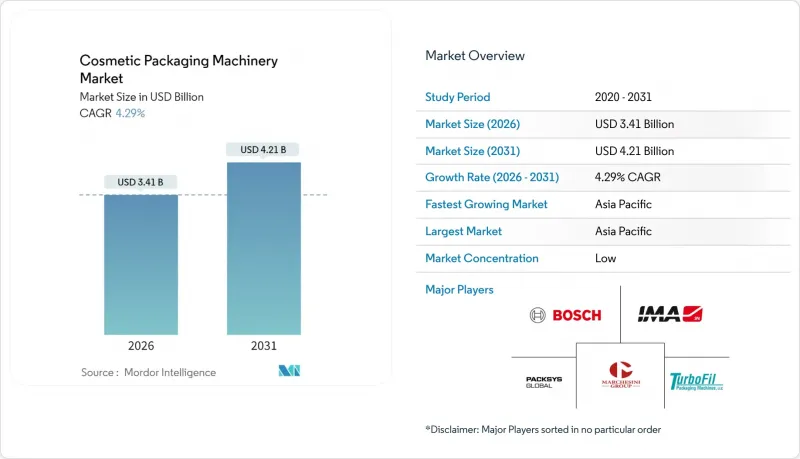
Steady growth mirrors rising demand for automated, sustainability-ready lines that support a widening mix of packaging materials and product formats. E-commerce pressure for lightweight, shipment-friendly packs, coupled with stricter recyclability targets, compels manufacturers to install equipment that can switch rapidly between flexible films, refillable jars, and premium glass. Investments concentrate on AI-enabled inspection and electric servo drives that lift uptime, curb labor dependence, and reduce energy use. Competitive activity centers on acquisitions that extend filling, sealing, and vision capabilities, while component price volatility and export controls create cost and lead-time risk.
Fragrance, skincare, and premium color lines recorded double-digit sales in 2024-2025, pushing producers to widen bottle shapes, caps, and decoration effects. New launches such as Lumson's 1,500 design combinations require machinery capable of water-based lacquering, hologram application, and ergonomic refillable features. Estee Lauder's 2024 switch to bio-based polymers illustrates the need for precise form/fill/seal and labeling units that protect product integrity while handling non-traditional resins. Equipment suppliers increasingly package turnkey modules so that beauty houses can synchronize filling, capping, and inspection across wider viscosity ranges. Continuous premiumization keeps demand high for versatile lines that can flex between luxury glass and lightweight pouches.
With 85% of automation employers reporting technician shortages, beauty manufacturers accelerate full-line automation. Syntegon's SPC 1000 reduced manual interventions by 80% and freed 300 production hours annually, while electric linear actuators lowered energy use and installation space. Case implementations such as Mary Kay's 2024 mascara line show how integrated robots, decentralized drives, and digital twins shorten format changeovers and raise OEE. Growing preference for plug-and-play modules means medium-sized firms adopt collaborative robots for inspection, palletizing, and wash-down cleaning, making automated capacity accessible without prohibitive retraining.
Complete high-speed lines cost USD 500,000-2 million, forcing many small producers to stagger purchases or lease. While PMMI projects strong order books through 2027, higher interest rates lengthen payback periods to 3-5 years. Summit Packaging's 2024 survey showed that firms now favor phased automation where labeling and case-packing receive priority before vision inspection. Equipment developers respond with entry-level thermoformers and shared-risk service contracts to lower barriers.
Other drivers and restraints analyzed in the detailed report include:
For complete list of drivers and restraints, kindly check the Table Of Contents.
Form/fill/seal equipment accounted for 28.03% of cosmetic packaging machinery market share in 2025, supported by demand for integrated dosing, sealing, and pouch forming across creams, serums, and wipes. IMA's sachet line reaches 80 cycles per minute on 16 lanes, illustrating throughput that skincare and fragrance fillers require. Wrapping and bundling units post the highest 6.56% CAGR because e-commerce channels need protective multi-packs that withstand shipping shocks. Inspection modules equipped with AI now pair with every filler to guarantee luxury finish. Capping, cartoning, and case packing maintain stable uptake as refillable formats enter the mainstream.
Continuous investment in flexible films means machine builders refine temperature control and seal-bar profiles for bio-based laminates. Advance in laser-score technology eases openability without sacrificing barrier. As rigid-to-flexible conversions accelerate, the cosmetic packaging machinery market benefits from lines that handle both 3-side sachets and stand-up pouches on a single frame. Vision inspection cameras mounted after each module feed analytics dashboards that guide real-time speed balancing.
Fully automatic lines held 64.87% revenue in 2025 and will keep the lead with a 5.58% CAGR. Integrated robots pick, orient, and cap at rates that preserve retail aesthetics and hygiene. Syntegon's RMA machine covers regulated microlot runs, linking manual feeders with robotic assembly so producers transition to full automation in stages. Predictive maintenance based on vibration sensors trims unplanned downtime and extends part life.
Semi-automatic platforms still matter for artisan and seasonal products but growth plateaus as user-friendly programming lowers the skill barrier for full lines. Association for Advancing Automation programs help operators move from bolt-on fillers to fully networked cells that share production data upstream. Cloud dashboards alert supervisors to jam risk, ensuring smaller brands can reach mass-retail quality without high headcount.
Cosmetic Packaging Machinery Market is Segmented by Machine Type (Form/Fill/Seal Machinery, Labeling Machinery, and More), Automation Level (Fully-Automatic Systems, Semi-Automatic Systems), Packaging Type (Rigid Containers and Jars, Tubes, Sachets and Pouches, and More), Cosmetic Product (Skin-Care Products, Hair-Care Products, and More), and by Geography. The Market Forecasts are Provided in Terms of Value (USD).
Asia-Pacific holds 38.05% of 2025 revenue and records the fastest 7.03% CAGR. Regional producers integrate Industry 4.0 retrofits to comply with global brand audits while maintaining cost leadership. Strong domestic demand in China, South Korea, and India fuels factory expansions that source both Western and local machinery. Government incentives for intelligent manufacturing further accelerate adoption of AI inspection and energy-efficient drives.
North America remains a premium equipment buyer. Indie labels crowd the market and encourage short-run presses, modular fillers, and vision systems that maintain artisanal creativity at industrial speed. Regulations on recycled content push both multinationals and contract packers to upgrade lines for PCR resins and monomaterial laminates. Domestic reshoring of component production partially offsets tariff-related cost spikes.
Europe enforces the strictest sustainability rules. The continent's brands replace PFAS barriers and add digital passports for pack traceability, requiring printers, fillers, and sealers to integrate data carriers at high speed. OEMs here pioneer servo-electric actuation and closed-loop CIP that lower water and chemical use. Southern and Eastern Europe see green-field cosmetic plants that combine tax incentives with proximity to EU markets.
The Middle East and Africa register rising installations as local cosmetic brands expand beyond premium fragrances into skincare. Turnkey lines optimized for hot climate stability gain traction. In South America, Brazil leads demand for low-maintenance flexo labelers and pouch formers that thrive despite episodic power outages. Exchange-rate volatility makes remote diagnostic and local spares hubs critical to adoption.