


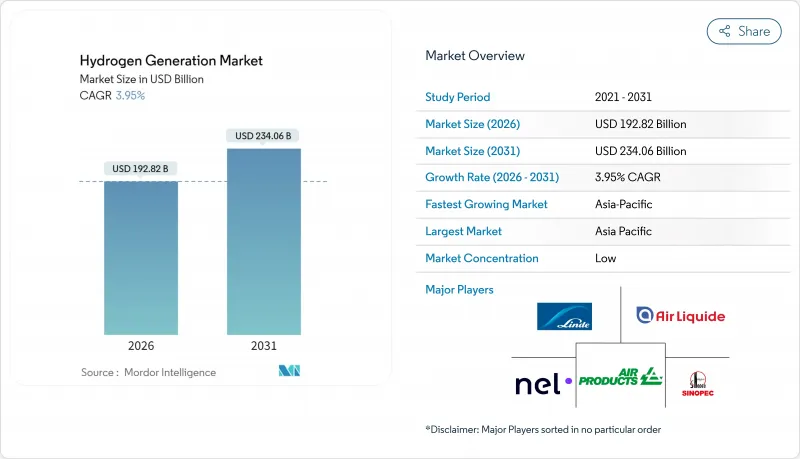
수소 생산 시장은 2025년에 1,854억 9,000만 달러로 평가되었고, 2026년 1,928억 2,000만 달러에서 2031년까지 2,340억 6,000만 달러에 이를 것으로 예측됩니다.
예측기간(2026-2031년)의 CAGR은 3.95%를 나타낼 전망입니다.
이러한 확장은 정책 지원에 따른 저탄소 분자에 대한 수요가 화석 유래 공급을 대체하면서 발생하며, 이는 전기분해 및 탄소 포집 개조 설비에 대한 투자를 가속화합니다. 유럽연합의 비생물학적 재생 연료(RFNBO) 규정과 미국의 섹션 45V 생산세 공제 같은 규제 메커니즘은 자발적 탈탄소화 노력을 준수 의무로 전환시켜 수소 생산 시장에 예측 가능한 수익 기반을 제공합니다. 재생에너지 전기 가격 하락과 전해조 기가팩토리 규모의 확대로 기술 비용이 재설정되는 동시에, 탄소 가격 책정 제도가 회색 분자와 청정 분자 간 비용 격차를 확대합니다. 동시에 철강, 암모니아, 메탄올 등 산업 부문이 장기 구매 계약을 체결함으로써 기가와트급 프로젝트의 위험을 완화하고, 수소 생산 시장을 기존 정유소 중심에서 다각화합니다.
RFNBO 프레임워크는 정유소, 화학 공장, 철강업체에 검증된 재생 수소 조달을 의무화하여 그린 분자를 규제 준수 상품으로 전환합니다. 첫 7억 2천만 유로 규모 경매는 화석 기반 공급과 재생 공급 간 비용 격차를 좁혀 기가와트급 전해조 배열에 대한 최종 투자 결정을 가능하게 했습니다. 추가성과 시간적 상관관계에 대한 인증 규정은 프리미엄 제품 등급을 차별화하고 전용 재생 PPA를 촉발합니다. EWE와 같은 유틸리티 기업은 육상 풍력 단지에 연결된 280MW 전해조를 설치 중이며, 2027년 가동 예정입니다. 구조화된 오프테이크 계약은 프로젝트 금융을 뒷받침하고 장비 공급업체에 다년간의 주문 가시성을 제공합니다.
2025년 1월 확정된 섹션 45V는 CO2-e/kg 기준 4kg 미만으로 생산된 수소에 대해 kg당 최대 3달러를 지원하여 다수 미국 프로젝트의 수익성을 즉시 확보시켰다. 3단계 인센티브는 시간별 재생에너지 연계성을 보상하여 그리드 규모 저장 및 첨단 에너지 관리 시스템을 촉진합니다. 넬 ASA는 미시시피 전해조 공장 확장을 위한 연방 자금을 확보했으며, 플러그 파워는 호주 그린 암모니아 프로젝트에 3GW 규모 장비 수주를 따내며 미국 정책이 주도하는 세계의 제조 규모를 입증했습니다. 10년간의 세액 공제 확정은 장기 전력구매계약(PPA) 체결을 가능케 하지만, 개발사들은 하방 리스크 헤지를 위해 정치적 변화 시나리오를 모델링합니다.
유럽의 130GW 전해조 파이프라인 중 극히 일부만 자금 조달을 확정했는데, 개발사들이 경쟁력 있는 가격으로 장기 재생에너지 PPA를 확보하지 못했기 때문입니다. 데이터센터, 전기차 충전망, 전통 산업이 동일한 인증 전력을 확보하려 경쟁하면서 수소 프로젝트 마진을 잠식하고 있습니다. 독일의 전국 수소 간선 요금(kWh당 25유로)과 네덜란드의 4% 녹색 사용 의무는 PPA 프리미엄을 더욱 높인다. 해상 풍력 입찰이 가속화되지 않으면 다수 프로젝트가 2027년 이후로 연기되며 단기 공급 일정이 압박받을 전망입니다.
2025년 시점에서 세계의 수소 수요의 97.21%를 그레이 수소가 공급하여 수증기 개질법과 석탄 가스화에 대한 역사적 의존을 굳혔습니다. 이 지배적 상황은 전해 공급의 급성장 궤도를 가리고 있으며, 그린 수소 공급량은 2031년까지 연평균 복합 성장률(CAGR) 32.6%로 증가할 것으로 예측되고 있습니다. 이러한 급증으로 규제 준수를 중시하는 고객이 신재생에너지 한정 계약범위를 설정하는 움직임이 넓어져 조달 패턴이 변화하고 있습니다. 그린 수소 시장 규모는 정책 인센티브가 평준화 비용 상승을 상쇄하는 유럽과 북미에서 가장 확대될 것으로 전망됩니다. 기존 자산 소유자는 저탄소 인증을 보장하기 위해 특정 플랜트에 탄소 포집 설비를 뒷받침하고 프로젝트 개발자는 재생에너지 PPA와 파이프라인 액세스를 장기 공급 계약에 통합하고 있습니다.
블루 수소는 특히 고갈된 저류층을 CO2 저장에 활용할 수 있는 가스 자원이 풍부한 지역에서 과도적인 교량 역할을 합니다. 고체 탄소 제품을 생산하는 터키석 수소의 제조 공정은 벤처 자금을 모으고 있지만 상업화 전 단계에 있습니다. 핑크수소는 원자력발전용량이 높고 재생가능에너지용지의 한정된 나라에서 틈새 존재를 유지하고 있으며, 전력회사에 간헐성위험이 없는 기반로드 탈탄소화의 옵션을 제공합니다. 각 제조 공정의 성숙도에 따라 투자 타이밍을 조정할 수 있어 수소 생산 시장에서 분산 투자 포트폴리오의 선택이 넓어집니다.
수소 생산 시장 보고서는 원료별(그레이 수소, 블루 수소, 그린 수소, 기타), 기술별(수증기 개질법, 석탄 가스화, 전해법, 기타), 용도(석유 정제, 화학 공정, 철강, 운송용 연료, 전력 및 에너지 저장, 기타), 지역(북미, 유럽, 아시아태평양, 남미, 중동 및 아프리카)별로 분류되어 있습니다.
2025년 시점에서 아시아태평양은 세계의 수익의 54.08%를 차지하고 있으며, 중국의 광범위한 석탄 가스화 설비군과 전해조 도입의 가속이 이를 지원하고 있습니다. 베이징의 이중립 모델은 기존 그레이 수소 생산을 유지하면서 내몽골과 연안 공업지대를 연결하는 세계 최대의 전용 수소 파이프라인을 정비하고 있습니다. 인도의 「국가 그린 수소 미션」은 채산 갭 자금과 전해조 스택의 수입 관세 면제에 의해 지원되어, 동국을 다음의 성장 프론티어로서 자리매김하고 있습니다. 높은 일사량의 ASEAN 국가, 특히 인도네시아와 말레이시아는 일본과 한국의 구매자와 연결되는 수출 지향형 암모니아 회랑을 개발 중입니다.
유럽은 시장 규모로는 2위지만 정책 강도에서는 1위다. RFNBO 할당량, 240억 유로 규모의 독일 백본 파이프라인, HYBRIT 같은 수소 기반 철강 사업이 이 지역을 대규모 청정 분자 채택으로 이끌고 있습니다. 프로젝트 병목 현상은 주로 저비용 재생에너지 전력구매계약(PPA) 부족에서 비롯되나, 가속화된 해상풍력 입찰 일정이 추가 용량 확보를 목표로 합니다. 북유럽 수력발전은 스칸디나비아 전해조 프로젝트에 안정적이고 저탄소 전력 공급을 제공하여 대륙 내 경쟁사 대비 수소 공급 비용을 낮춘다.
북미에서는 45V 인센티브, 풍부한 풍력 및 태양광 자원, 걸프 연안 및 중서부 지역의 확립된 산업 클러스터로 혜택을 본다. 캐나다의 탄소 가격 정책과 수력 자원이 풍부한 주들은 아시아와 유럽을 겨냥한 수출 등급 청정 암모니아 프로젝트를 지원합니다. 물 관리 및 허가 절차 소요 시간은 특히 건조한 서부 주에서 미국 개발자들에게 핵심적인 장애 요소로 남아 있습니다. 중동은 사우디아라비아, 오만, 아랍에미리트에서 GW급 통합 허브를 개발하며, 경쟁력 있는 재생 에너지를 활용해 기존 탱커 항로를 따라 그린 암모니아를 운송합니다. 아프리카의 초기 파이프라인은 나미비아와 모리타니에 집중되어 있으며, 세계적 수준의 태양광 자원, 토지 가용성, EU와의 근접성이 결합되어 초기 자본을 유치하고 있습니다.
The Hydrogen Generation Market was valued at USD 185.49 billion in 2025 and estimated to grow from USD 192.82 billion in 2026 to reach USD 234.06 billion by 2031, at a CAGR of 3.95% during the forecast period (2026-2031).
This expansion occurs as policy-backed demand for low-carbon molecules displaces fossil-derived supply, accelerating investment in electrolysis and carbon-capture retrofits. Regulatory mechanisms such as the European Union's Renewable Fuels of Non-Biological Origin (RFNBO) rules and the United States' Section 45V production tax credit turn voluntary decarbonization efforts into compliance obligations, giving the hydrogen generation market a predictable revenue base. Technology costs reset as renewable electricity prices fall and electrolyzer gigafactories scale while carbon-pricing regimes widen the cost gap between grey and clean molecules. Simultaneously, industrial sectors-including steel, ammonia, and methanol-lock in long-term offtake contracts that de-risk gigawatt-scale projects and diversify the hydrogen generation market beyond its historical refinery focus.
The RFNBO framework obliges refineries, chemical plants, and steelmakers to source verified renewable hydrogen, turning green molecules into compliance commodities. The inaugural €720 million auction narrowed the cost gap between fossil-based and renewable supply, enabling final investment decisions for gigawatt-scale electrolyzer arrays. Certification rules on additionality and temporal correlation differentiate premium product grades and trigger dedicated renewable PPAs. Utilities such as EWE are installing a 280 MW electrolyzer linked to onshore wind parks, with commissioning slated for 2027. Structured offtake contracts underpin project finance and give equipment vendors multi-year order visibility.
Finalized in January 2025, Section 45V grants up to USD 3 per kilogram for hydrogen produced below 4 kg CO2-e/kg, instantly moving many U.S. projects into the money. The three-tier incentive rewards hourly renewable matching, fostering grid-scale storage and advanced energy-management systems. Nel ASA secured federal funding to expand its Mississippi electrolyzer plant, while Plug Power landed a 3 GW equipment order for an Australian green ammonia scheme, demonstrating the global manufacturing scale driven by U.S. policy. Ten-year credit certainty unlocks long-dated PPAs, though developers model political-change scenarios to hedge downside risk.
Only a small fraction of Europe's 130 GW electrolyzer pipeline has locked financing because developers cannot secure long-duration renewable PPAs at competitive prices. Data centers, EV charging networks, and traditional industry chase the same certified power, cutting into hydrogen project margins. Germany's nationwide hydrogen trunkline tariff of €25 per kWh and the Netherlands' 4% green-use mandate further elevate PPA premiums. Unless offshore wind auctions accelerate, many projects will slip beyond 2027, compressing the short-term delivery schedule.
Other drivers and restraints analyzed in the detailed report include:
For complete list of drivers and restraints, kindly check the Table Of Contents.
Grey hydrogen supplied 97.21% of global demand in 2025, cementing the historical reliance on steam methane reforming and coal gasification. That dominance masks the breakout trajectory of electrolytic supply, with green volumes projected to climb at a 32.6% CAGR by 2031. This surge shifts procurement patterns as compliance-driven customers carve out renewable-only contract pools. The hydrogen generation market size for green output is expected to expand most in Europe and North America, where policy incentives offset higher levelized costs. Legacy asset owners retrofit carbon capture on select plants to secure low-carbon certificates, while project developers bundle renewable PPAs and pipeline access into long-term supply contracts.
Blue hydrogen is an interim bridge, particularly in gas-rich regions that can leverage depleted reservoirs for CO2 storage. Turquoise pathways, producing solid carbon coproducts, attract venture funding but remain pre-commercial. Pink hydrogen retains a niche among countries with high nuclear capacity and limited renewable land availability, giving utilities a baseload decarbonization option without intermittency risk. Each pathway's maturation timeline influences investment sequencing, creating optionality for diversified portfolios within the hydrogen generation market.
The Hydrogen Generation Market Report is Segmented by Source (Grey Hydrogen, Blue Hydrogen, Green Hydrogen, and Others), Technology (Steam Methane Reforming, Coal Gasification, Electrolysis, and Others), Application (Oil Refining, Chemical Processing, Iron and Steel, Transportation Fuel, Power and Energy Storage, and Others), and Geography (North America, Europe, Asia-Pacific, South America, and Middle East and Africa).
Asia-Pacific controlled 54.08% of global revenue in 2025, anchored by China's extensive coal-gasification fleet and accelerated electrolyzer uptake. Beijing's dual-track model sustains existing grey output while underwriting the world's largest dedicated hydrogen pipeline between Inner Mongolia and coastal industrial zones. India's National Green Hydrogen Mission, backed by viability-gap funding and import-duty waivers on electrolyzer stacks, positions the country as the next big growth frontier. High-solar-irradiance ASEAN nations, notably Indonesia and Malaysia, develop export-oriented ammonia corridors linked to Japanese and Korean buyers.
Europe ranks second in market size but first in policy intensity. RFNBO quotas, a €24 billion German backbone pipeline, and hydrogen-based steel ventures like HYBRIT move the region toward large-scale clean-molecule adoption. Project bottlenecks stem largely from scarce low-cost renewable PPAs, although accelerated offshore-wind auction schedules aim to unlock additional capacity. Nordic hydropower gives Scandinavian electrolyzer projects a stable, low-carbon electricity supply, lowering delivered-hydrogen costs relative to continental peers.
North America benefits from Section 45V incentives, abundant wind-solar resources, and established industrial clusters along the Gulf Coast and Midwest. Canadian carbon-pricing policies and hydro-rich provinces support export-grade clean-ammonia projects targeting Asia and Europe. Water stewardship and permitting timelines remain the key gating items for U.S. developers, especially in arid Western states. The Middle East develops GW-scale integrated hubs in Saudi Arabia, Oman, and the United Arab Emirates, using competitive renewables to ship green ammonia along existing tanker routes. Africa's nascent pipeline focuses on Namibia and Mauritania, where world-class solar resources, land availability, and EU proximity combine to attract early-stage capital.